

Lilly Receives Complete Response Letter from FDA for Sintilimab BLA in First-Line Non-Squamous NSCLC

Eli Lilly
Global Pharmaceutical R&D and Production Company

Innovent
High-end Biologics Developer
FDA
U.S. Food and Drug Administration
On March 24, Eli Lilly announced that it had received a Complete Response Letter (CRL) from the U.S. FDA regarding the New Drug Application (NDA) for sintilimab (Tyvyt) in combination with pemetrexed and platinum-based chemotherapy for the first-line treatment of non-squamous non-small cell lung cancer (NSCLC). This also means that the FDA did not approve the application.
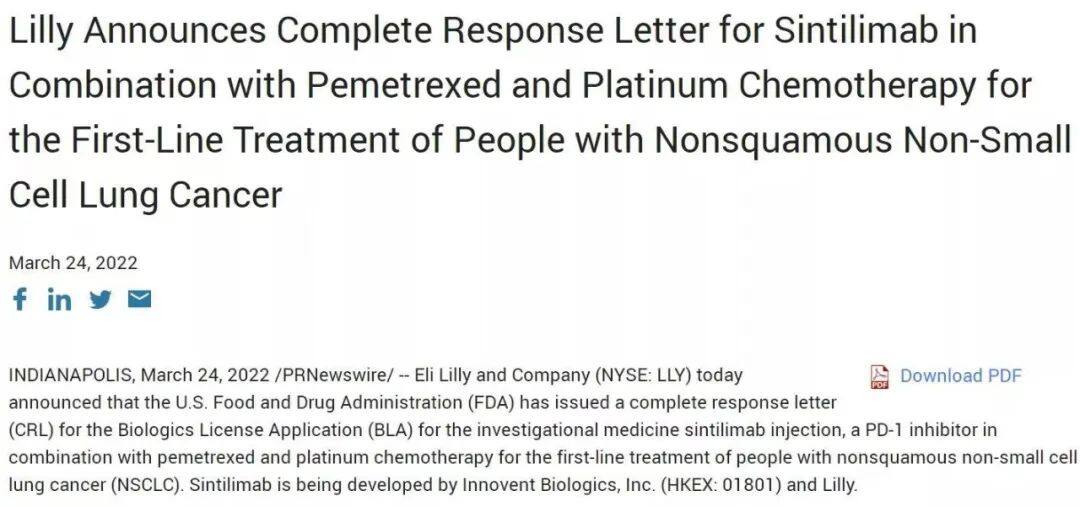
Sintilimab was initially developed by Innovent Bio and has been co-developed with Eli Lilly and Company under a licensing agreement reached in 2015 as a PD-1 inhibitor. Sintilimab was officially approved in China in December 2018 for the treatment of relapsed/refractory classical Hodgkin's lymphoma, and in February 2021, it was approved in China for first-line treatment of non-squamous non-small cell lung cancer in combination with pemetrexed and platinum-based chemotherapy.
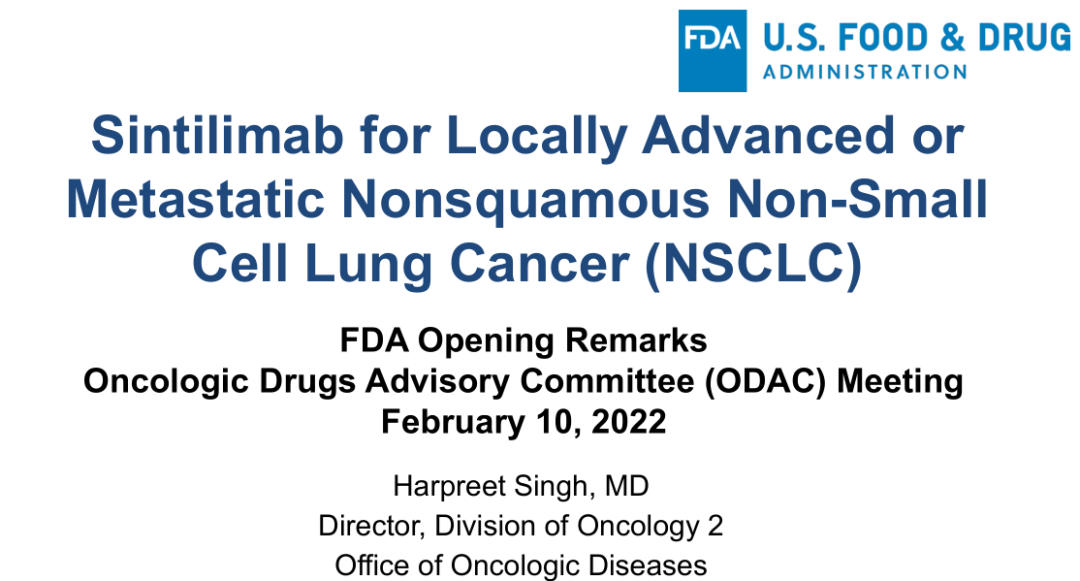
On February 10, the FDA's Oncologic Drugs Advisory Committee held a meeting to discuss whether to approve the BLA application for this drug. After six hours of discussion, the independent review panel voted 14 to 1 against the approval of this BLA application. It was announced that another clinical trial must be conducted to demonstrate the drug's efficacy for American patients before approval can be granted.
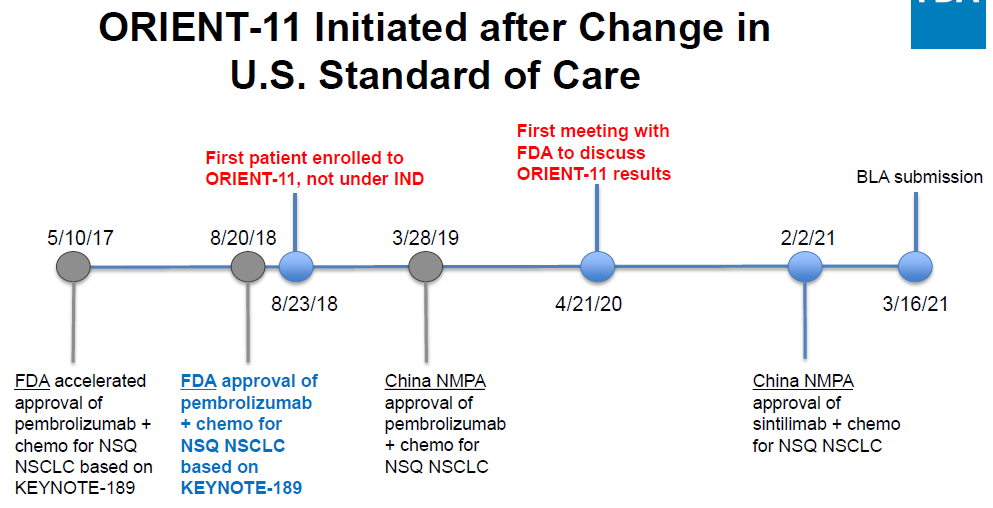
The expert committee raised various concerns about the submitted Phase III clinical trial (Orient-11) data, including that the study did not use overall survival (OS) as the primary endpoint but instead used progression-free survival (PFS) as the primary endpoint.
The FDA stated that using PFS as the primary endpoint "does not meet U.S. regulatory standards or U.S. medical practices." "(Since 2019) there have been at least seven approvals for non-small cell lung cancer. All of them were based on overall survival." "The situation has changed significantly."
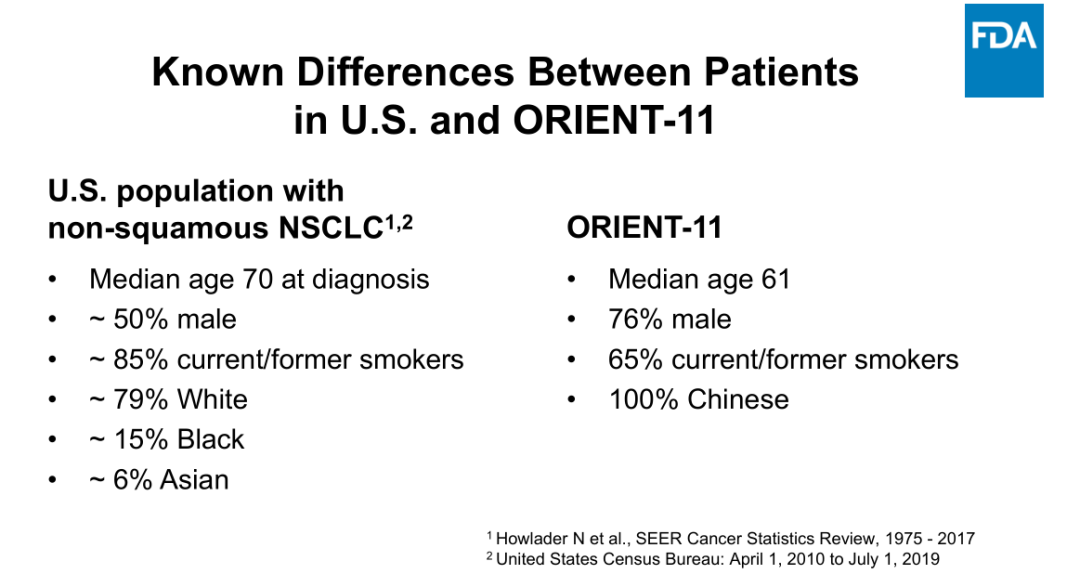
In addition, the FDA stated that other demographic data in the study differed from the typical pool of non-small cell lung cancer patients in the United States. For example, Orient-11 had a higher proportion of males, fewer smokers, a lower median age, and there were also differences in ethnicity.
FDA Issues CRL Consistent with February Oncology Drug Advisory Committee Meeting Outcome; Recommends Additional Clinical StudyThe FDA's issuance of the Complete Response Letter (CRL) aligns with the outcome of the February Oncology Drug Advisory Committee meeting. In the CRL, the FDA also recommended conducting an additional clinical study, specifically an international multicenter clinical trial, using a non-inferiority design and overall survival endpoint to compare the differences between sintilimab and standard therapy as first-line treatments for metastatic NSCLC.