

AstraZeneca Submits IND Application in China for B7-H4 ADC AZD8205, the Second Domestic Filing for This Target

AstraZeneca
Biopharmaceutical Manufacturer
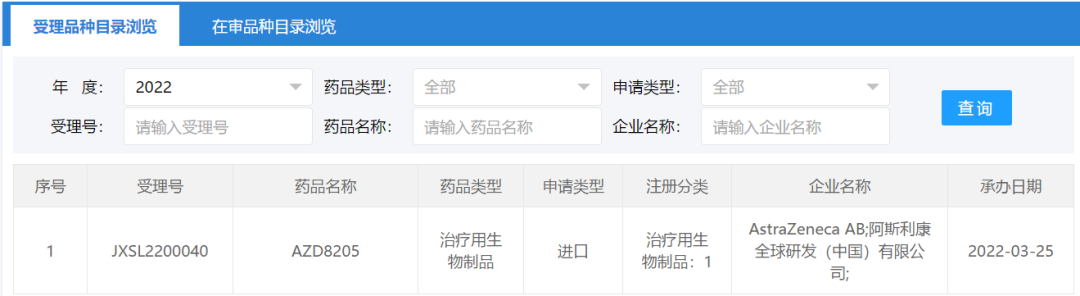
On March 25, the CDE website showed that AstraZeneca's AZD8205 has applied for clinical trials in China. This product is an antibody-drug conjugate (ADC) targeting B7-H4, and it is also the second ADC drug targeting this point applied in China after Hansoh Pharma.
The cell surface glycoprotein B7-H4 is overexpressed in a series of solid tumors, including breast cancer, ovarian serous carcinoma, endometrial cancer, and cholangiocarcinoma, but its expression in normal tissues is limited, making it an attractive target for ADC.
AZD8205 is a B7-H4-targeted ADC composed of a novel topoisomerase 1 inhibitor (TOP1i) — linker — and an antibody targeting B7-H4. Its mechanism of action involves delivering the TOP1i warhead to B7-H4-positive cells, resulting in DNA damage and cell death.
According to the AstraZeneca 2022 AACR conference abstract, in a study of 26 human TNBC PDX tumor models, the overall response rate to a single IV dose of 3.5 mg/kg AZD8205 was 69% (tumor regression ≥30% from baseline), with complete responses observed in 9/26 (36%) of the models.
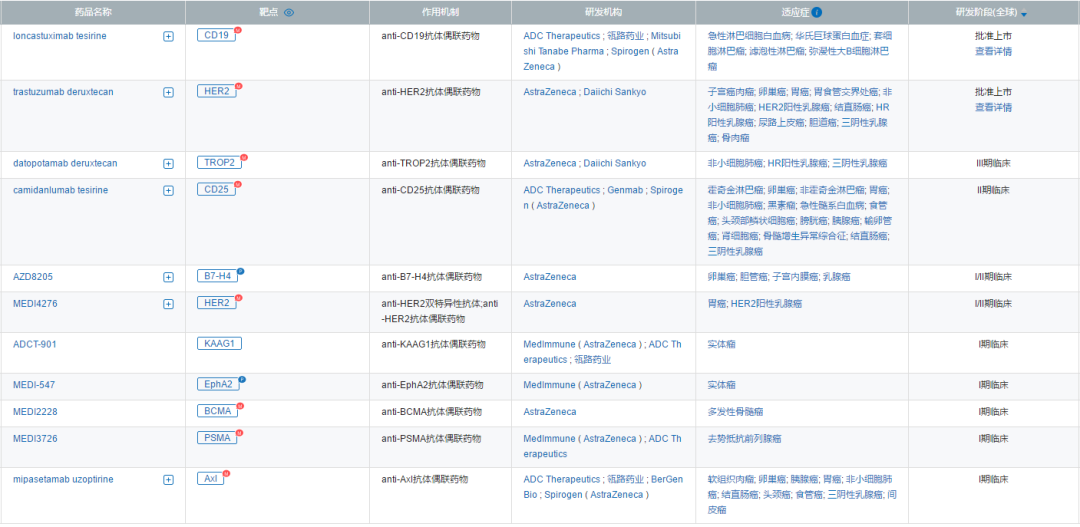
According to the PharmaCube NextPharma database, AstraZeneca has 11 ADC products under development, targeting HER2, TROP2, CD25, PCMA, and others.
It is worth mentioning that Enhertu, the significant HER2 ADC jointly developed by AstraZeneca and Daiichi Sankyo, has recently been submitted for marketing approval in China (Recommended reading: AstraZeneca/Daiichi Sankyo's Significant ADC Submitted for Marketing Approval in China).