

Unveiling the Critical Link Between α-Synuclein and Immune Hyperactivation: A Breakthrough Toward Therapeutics for Parkinson’s Disease and Neurodegenerative Disorders

AliveX Biotech
Precision Medicine Solution Provider
In February 2022, Professor Zhang Jing's research group from Zhejiang University School of Medicine and the First Affiliated Hospital, along with Dr. Robin Chan, Strategic Vice President of AliveX Biotech, jointly published an article titled "α-Synuclein-containing erythrocytic extracellular vesicles: essential contributors to hyperactivation of monocytes in Parkinson's disease" in the Journal of Neuroinflammation (Impact Factor: 8.322). The study focused on an important characteristic of the pathogenesis of Parkinson's disease (PD) — the high level of peripheral immune system-related monocyte activation, and clarified the central role of red blood cell extracellular vesicles (RBC-EVs) containing α-synuclein (α-syn) in the process of excessive monocyte activation in PD patients.
Although the characteristics of Parkinson's disease were discovered by humans 200 years ago, the academic and industrial communities still do not fully understand its pathogenesis, and there are currently no available drugs for treatment. What is the significance of revealing the excessive activation process of monocytes in the study of the pathogenesis of Parkinson’s disease, and what advancements does it bring to the development of therapeutic drugs for Parkinson’s disease (PD)?
We invited Dr. Robin Chan, the co-author of this study, and combined his previously published article in the authoritative neurology journal *GLIA* (Impact Factor: 7.452) on α-syn protein and blood-brain barrier (BBB) damage, titled “Astrocytic VEGFA: An essential mediator in blood-brain-barrier disruption in Parkinson's disease,” to engage in a dialogue on the research and development of mechanisms and clinical diagnosis and treatment plans for Parkinson’s disease (PD). We hope this will provide insights for colleagues in the industry who are engaged in the study of mechanisms and diagnosis and treatment plans for Parkinson’s disease and even neurodegenerative diseases.

Robin Chan, Ph.D. in Biochemistry from the National University of Singapore under the tutelage of Professor Markus R. Wenk, conducted postdoctoral research on lipid metabolism and neurological diseases at Columbia University, and holds an MBA from Columbia Business School.
Dr. Chan focuses on research in neurodegenerative diseases, pathology, and cell biology, with over a decade of achievements in lipid metabolism and neurological disorders. He served as the founding director of the Lipidomics Core Laboratory at Columbia University, published over 38 papers in top international journals (Nature, Nat Neurosci., etc.), and received multiple research grants from the National Institutes of Health (NIH) and non-profit research foundations. After transitioning from academic research to the commercial sector, Dr. Chan accumulated extensive industry experience and joined AliveX Biotech as the Vice President of Strategic Partnerships. In this role, he leads the company’s strategic collaborations, promotes in-depth cooperation with international MNCs and biotech firms, accelerates progress in joint R&D and commercial strategies, and empowers AliveX Biotech to engage in deeper collaborations within the industrial ecosystem.
VCBeat: You have consecutively published two articles in top-tier journals so far. Could you introduce the respective research progress of these two articles?
Dr Robin Chan :These two articles focus on the mechanisms of two pathogenic characteristics of Parkinson's disease (PD), including blood-brain barrier (BBB) damage caused by astrocyte activation and peripheral monocyte hyperactivation induced by erythrocyte extracellular vesicles containing α-syn.
An earlier article primarily elucidated the significant role of harmful oligomeric α-synuclein proteins in the damage process of the blood-brain barrier (BBB) within the pathogenesis of Parkinson's disease (PD). We discovered that oligomeric α-synuclein proteins from extracellular vesicles of peripheral red blood cells (RBC-EVs) can cross the blood-brain barrier (BBB) into astrocytes, leading to their activation. Once activated, astrocytes produce two proteins: VEGFA growth factor (vascular endothelial growth factor in astrocytes) and NOS nitric oxide synthase protein. The research findings indicate that the production and release of VEGFA and NO ultimately compromise the integrity of the blood-brain barrier (BBB).
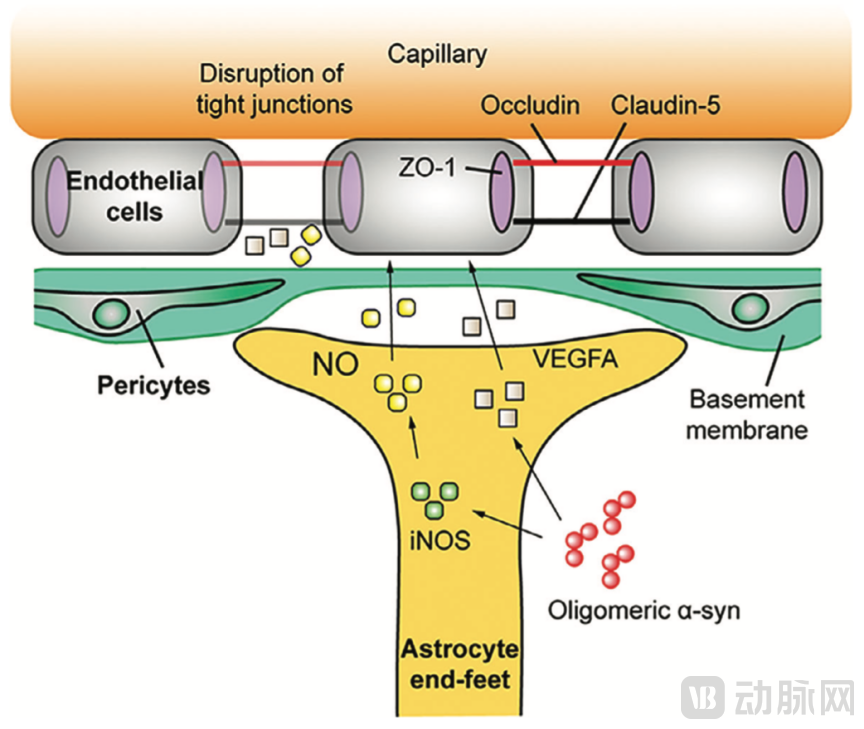
Mechanism of Blood-Brain Barrier (BBB) Dysfunction Induced by Astrocyte Oligomeric a-Syn Activation
(Source: Lan et al. Glia. 2022. 70(2):337-353.)
This is a relatively significant research finding, as blood-brain barrier (BBB) damage is not only present in Parkinson's disease (PD) but also in other neurodegenerative diseases. The revelation of this mechanism provides evidence that the VEGFA and NO signaling pathways could serve as potential therapeutic targets for BBB protection in Parkinson’s disease (PD).
Another article focuses on the reaction mechanism of excessive activation of peripheral monocytes in the pathogenesis of Parkinson's disease (PD), describing the interactions among red blood cell extracellular vesicles (RBC-EVs) containing α-syn protein, endocytosis, and LRRK2.
Current studies have shown that the activation level of immune cells in peripheral blood can influence the severity of Parkinson's disease. The results of our study confirm that α-syn protein in peripheral blood can activate immune cells in the blood.
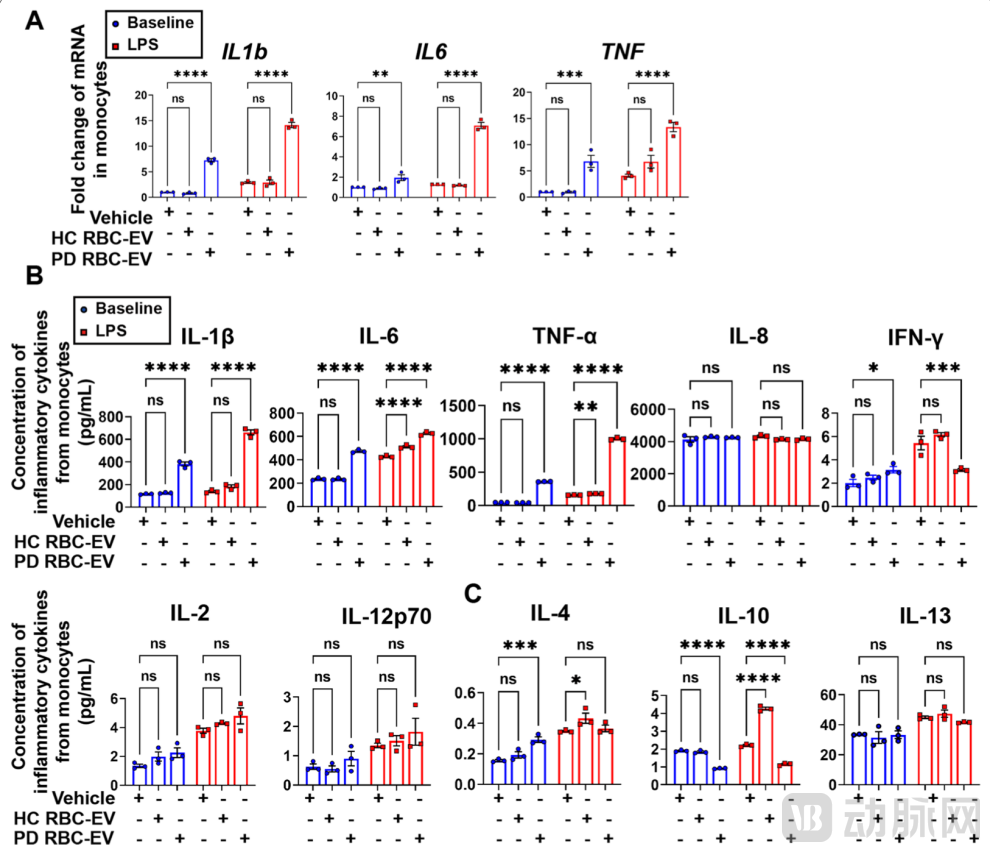
Inflammatory Sensitivity of Monocytes Induced by RBC-EVs in PD Patients
(A) Quantitative analysis of IL1b, IL6, and TNF mRNA levels using qPCR
Quantitative analysis using MSD (B) Pro-inflammatory cytokines and (C) Anti-inflammatory cytokines
(Source: Liu et al. J Neuroinflammation, 2022, 19(1):53.)
VCBeat: What are the values of these advances for the research/development of potential therapeutic drugs and diagnostic technologies for Parkinson's disease?
Dr Robin Chan :Let me first talk about the research on the blood-brain barrier (BBB). This study actually explains how the damage to the blood-brain barrier (BBB) occurs and which cells and factors cause it. Our research also includes in vitro and in vivo studies on inhibitors of the VEGFA and NO signaling pathways, demonstrating that these inhibitors have a protective effect on the blood-brain barrier (BBB). If this signaling pathway can be blocked at the early stage of the disease, the occurrence of such damage might be prevented. This provides a clearer direction for the transformation of disease solutions, allowing us to identify relevant targets based on this research and develop appropriate drugs.
However, further exploration is needed for the translation of research on immune cell activation in peripheral blood into therapeutic approaches. The level of immune system activation correlates to some extent with the patient's degree of inflammation. Our current idea is to explore whether there might be a specific biomarker in the immune cells of peripheral blood, and based on this biomarker, develop a more precise early screening solution.
VCBeat: Why has the research on the association between α-syn/peripheral immune system dysfunction and PD onset become a hot topic in academia? Which studies are worth attention? What is the significance of these studies for the research/development of clinical solutions?
Dr Robin Chan :This question requires a recounting of some history. Inside the brains of patients with Parkinson's disease (PD), there are abnormal protein aggregates known as Lewy bodies, which were first observed 100 years ago.
The abnormal aggregation of this protein is actually a common feature of many neurodegenerative diseases, with different neurodegenerative diseases corresponding to different types of protein aggregates. The Lewy bodies in Parkinson's disease (PD) correspond to the abnormal aggregation of α-syn protein, which is hypothesized to be a key cause of the disease. Therefore, in the field of Parkinson's disease research, studies on oligomeric α-syn protein have become a research hotspot in academia. After years of research, a more comprehensive understanding has been gained regarding the harmful effects of oligomeric α-syn on the pathogenesis of Parkinson’s disease (PD), ranging from impairing synaptic signaling, to activating microglial cells, to triggering neuroinflammation. Our two current studies explore two new dimensions of oligomeric α-syn: how oligomeric α-syn disrupts the BBB and the impact of oligomeric α-syn on the peripheral immune system.
These two studies highlight the connection between Parkinson's disease and immune system dysfunction, which has become a significant research topic in the Parkinson's disease research community.
American research team Sulzer and Sette discovered that T cells in peripheral blood recognize α-syn-derived peptides, thereby triggering an immune response in T cells that infiltrates the brains of patients, leading to neuronal death in the brains of Parkinson's disease (PD) patients. This finding was published in *Nature* in 2017.
In 2020, subsequent research by the team found that early-stage Parkinson's disease (PD) is associated with immune responses of T cells containing α-syn protein. This also indicates that monitoring T cell immune responses can aid in the early screening of Parkinson's disease (PD) and patient treatment.
In addition, genome-wide association studies have identified many risk genes encoding proteins that regulate immune cell function, such as LRRK2 and PRKN. On the other hand, polymorphisms in immune-related genes such as TNF and IL1B also influence PD risk and age of onset.
However, it needs to be emphasized that the presence of these risk genes does not necessarily mean that one will definitely develop the disease. Therefore, we need to understand the importance of these identified genetic risk factors more comprehensively beyond genetics (genome), and functionally comprehend how the encoded proteins and metabolites interact to cause immune system dysfunction.
In summary, all these research findings suggest that Parkinson's disease (PD) shares similarities with autoimmune diseases, as the peripheral immune system is chronically activated and produces inflammatory mediators, which may stimulate neuroinflammation and thereby contribute to the pathogenesis of PD. These studies are significant for promoting the development of new therapies aimed at slowing the progression of Parkinson's disease (PD) in patients and preventing the onset during the pre-Parkinson’s stage (before the disease manifests).
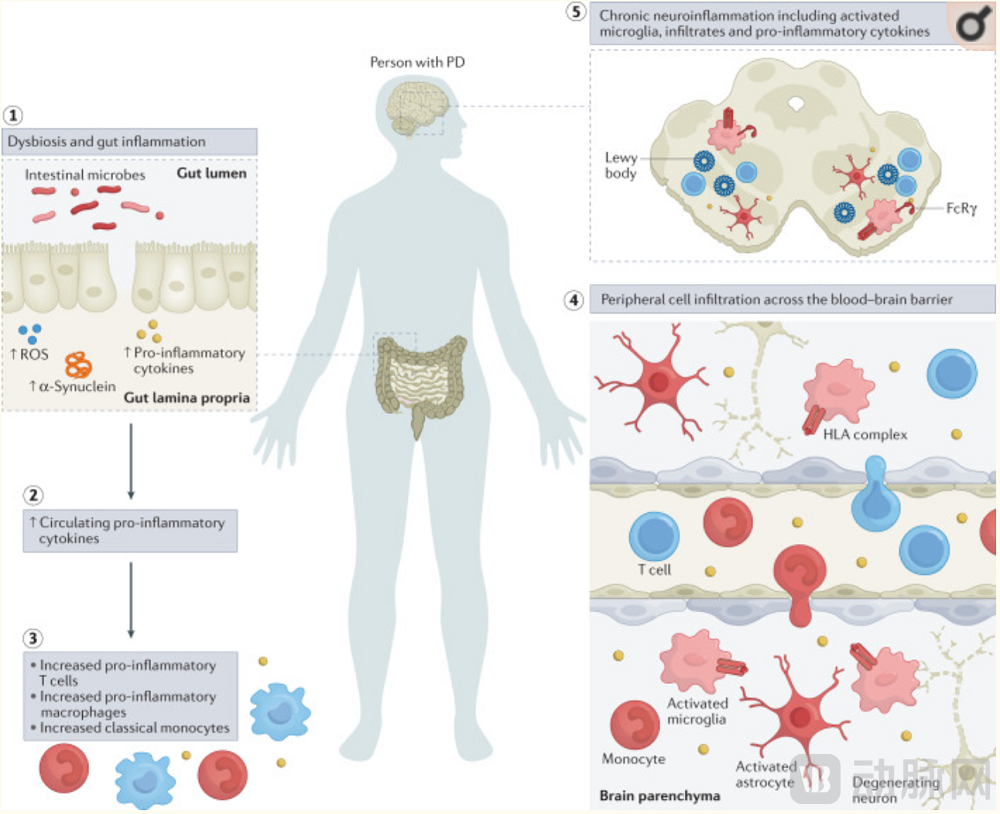
Inflammatory Clinical Manifestations of Parkinson's Disease (Source: Tansey et al. Nat Rev Immunol. 2022, 1-17.)
In addition, there is a significant amount of research in academia focused on biomarkers for early screening and disease monitoring. Previously, most biomarker studies for Parkinson's disease (PD) concentrated on single protein markers, such as α-synuclein and tau proteins in cerebrospinal fluid (CSF). However, with substantial breakthroughs in scientists' understanding of the disease and advancements in multi-omics technologies, the direction of academic research has shifted towards multidimensional biomarkers, including exosomes, immune cells, genetic markers, non-α-synuclein/tau proteins, lipids, and other types of molecules. New studies have also moved from focusing on cerebrospinal fluid (CSF) to more accessible liquid sources such as peripheral blood and saliva.
In addition to liquid-based biomarkers, the development of advanced AI technology has also enhanced the research-assisting value of brain and retina imaging, electronic mobility analysis, and other techniques. The emergence of novel biomarkers provides crucial tools for the early screening and treatment of Parkinson's disease (PD).
Orange Fruit Bureau: Based on the current research evidence, can we consider immune response as a causative factor for Parkinson's disease?
Dr Robin Chan :This is a very difficult question to answer. Parkinson's disease (PD) is an extremely complex condition. The onset of Parkinson's disease (PD) results from the simultaneous action of various concurrent pathogenic mechanisms, including abnormal aggregation of α-syn protein, dysregulation of endolysosomal trafficking, intrinsic changes in acquired immunity, and environmental factors such as exposure to viruses or diet-induced alterations in gut microbiota. I can only say that there is indeed a strong association between Parkinson's disease (PD) and immune dysregulation.
Initially, we believed that Parkinson's disease (PD) occurs when nerve cells fail to break down excess proteins. However, as more evidence has emerged and our understanding of the disease has deepened, protein breakdown is now considered just one of several possible mechanisms. An overactive immune response and the influence of microbiota metabolites on the gut-brain axis may also be related to the pathogenesis of Parkinson’s disease.
However, it remains inconclusive which of these various pathogenic mechanisms is the root cause of Parkinson's disease (PD). Therefore, I would like to propose a hypothesis: Parkinson's disease may develop through different pathways, and the causes or pathways of the disease may vary among patients, but the end result is still Parkinson's disease. This also suggests that in order to successfully treat PD patients, it is necessary to identify which pathway is most relevant to a specific patient. This requires more precise biomarkers to help guide personalized medication for patients.
VCBeat: You previously mentioned that there are commonalities between neurodegenerative diseases. What are they specifically? Are these commonalities beneficial for the research and development of treatments for other neurodegenerative diseases?
Dr Robin Chan :There are indeed some commonalities among neurodegenerative diseases. One of them is the abnormal accumulation of harmful proteins within neurons. Specifically, this refers to the aggregation of various pathogenic proteins and other disease-related proteins due to dysfunction in the endolysosomal and autophagy pathways.
Another commonality is the association between neurodegenerative diseases and immune activation, with chronic neuroinflammation and immune system dysfunction leading to disease onset and progression. For instance, T cells in Alzheimer's disease (AD) patients have been found to recognize Aβ protein, just as T cells in Parkinson's disease (PD) patients can recognize α-syn protein.
Based on these commonalities, I believe that research related to Parkinson's disease (PD) can largely assist in the study of other neurological disorders, and will also be beneficial for subsequent disease research and drug development; vice versa.
Of course, other similarities among neurodegenerative diseases remain to be further explored. For instance, the interaction mechanisms of the gut-brain axis, as well as the impact of environmental factors and immune interactions on the occurrence and development of neurodegeneration. Some metabolic products of the gut can also influence the peripheral blood and immune system, which in turn directly affects the brain. This direction is worth our observation and exploration.
VCBeat: What are the next research plans?
Dr Robin Chan :AliveX Biotech's main research focus in neurodegenerative diseases is on drug targets and diagnostic biomarkers for Parkinson's disease (PD) and Alzheimer's disease (AD). AliveX Biotech is utilizing multi-omics technologies and AI-driven mechanistic modeling approaches, combined with an immune knowledge graph and its self-developed end-to-end bio-computing platform, to deeply understand neuroimmune mechanisms from multiple dimensions. This effort aims to enhance the efficiency and success rate of drug development, ultimately empowering the advancement of precision diagnosis and treatment for neurological diseases.