

Companion Care IBD Patient Support Centers Launch Across 10 Provinces and Municipalities in China

Takeda
Biopharmaceutical Manufacturer
ShanghaiMarch 31, 2022PR Newswire -- Recently, the "Always with You · Inflammatory Bowel Disease (IBD) Offline Patient Care Center" (hereinafter referred to as the "Offline Care Center"), initiated by the China Red Cross Foundation and supported by Takeda China, has been successively established and officially put into use in 13 hospitals across 10 provinces and municipalities in China. The Offline Care Center mainly focuses on the clinical diagnosis and treatment needs of IBD patients, aiming to create a comfortable, safe, and standardized infusion treatment environment, alleviate hospital bed pressure, and improve the medical experience for IBD patients. Moving forward, the center will also actively carry out various forms of patient education, providing scientific and efficient full-course management advice for IBD patients. Additionally, it will prepare to build a medical volunteer workstation to better serve patients and help achieve dual improvements in treatment outcomes and quality of life.
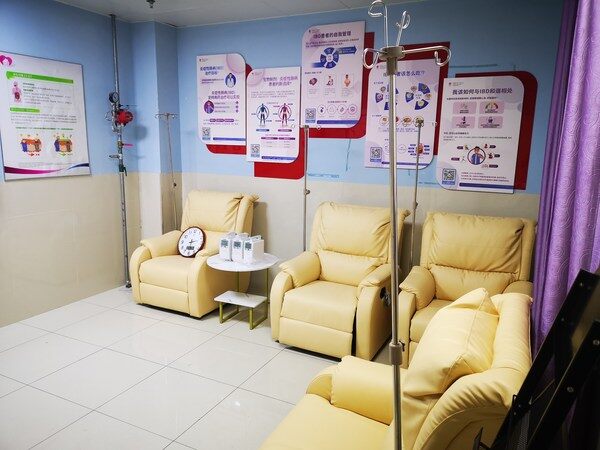
Wuhan University Zhongnan Hospital Offline Care Center
IBD is a chronic, non-specific intestinal inflammatory disease with an unclear etiology, including Ulcerative Colitis (UC) and Crohn's Disease (CD). Due to its incurable nature, lifelong recurrent progression, and potential to cause disability, patients often face repeated symptoms, prolonged hospital stays, and increased hospitalization rates, bearing significant physical suffering and mental burdens.
Statistics show that the number of IBD patients in China is expected to reach 1.5 million by 2025.[1]. With the number of IBD patients constantly on the rise[2],The clinical treatment needs of patients are increasing year by year, and issues such as hospital treatment beds and treatment services urgently need attention. Professor Guo Hong, Director of the Gastroenterology Department of Chongqing People's Hospital, introduced: "In clinical practice, due to the limited number of hospital treatment beds, IBD patients often experience delays in their infusion cycles, leading to poor treatment compliance and affecting treatment outcomes. At the same time, with the continuous promotion of chronic disease management concepts, the demand for safer, more convenient, and more comfortable treatment services from medical staff is growing. However, the current limited medical resources and traditional patient management models struggle to meet the increasing treatment needs of IBD patients."
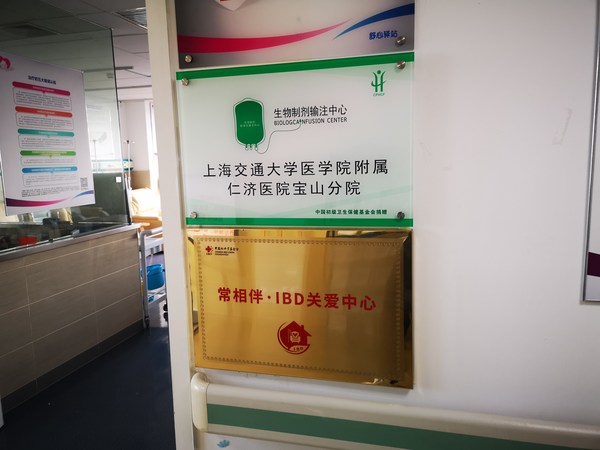
Baoshan Branch of Renji Hospital, School of Medicine, Shanghai Jiao Tong University Offline Care Center
In response to this issue, the offline Care Center, supported by the China Red Cross Foundation in terms of platform materials, aims to create a comfortable, safe, and standardized treatment environment. It provides IBD patients with scientific and rigorous infusion therapy to reduce adverse reactions and comprehensively improve patient treatment adherence. At the same time, the center will offer more options for infusion times and locations, optimize the appointment system to shorten waiting times for medical visits, and establish a volunteer workstation to bring tangible convenience to IBD patients. Additionally, it will provide patients with scientific knowledge about IBD treatment, helping them better understand IBD and empowering them to adopt a more positive self-management approach to their condition. Professor Xu Hong, Director of the Gastroenterology Department at the First Hospital of Jilin University, stated: "As a chronic disease management platform based on a standardized infusion center, the establishment of the IBD Patient Care Center will help us better integrate various resources and strengths, draw on the concepts and experiences of care centers abroad, leverage the treatment advantages of our hospital's gastroenterology department, enhance the hospital's research capabilities and clinical treatment standards related to IBD, and ultimately provide higher quality treatment services to IBD patients."
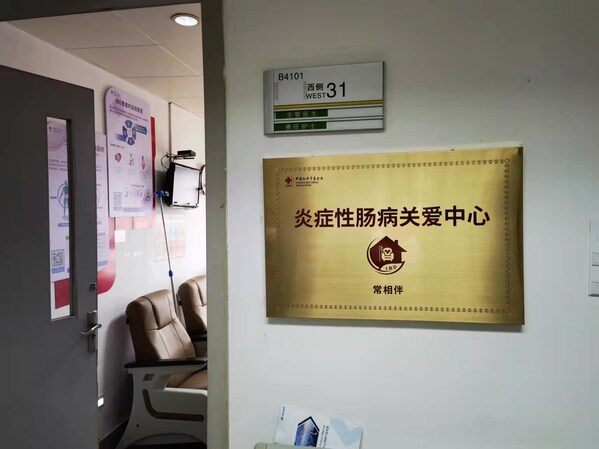
Shantou University Medical College First Affiliated Hospital Offline Care Center
The establishment of this offline Care Center marks an important extension and offline implementation of the "Always with You · Full-course Online Care Center" IBD patient public welfare project. The online Care Center was officially launched in November 2020, with the vision of building a diagnosis and treatment ecosystem that involves multiple parties, including patients, the government, healthcare providers, and social welfare organizations in collaborative management. It is committed to creating a new "Internet + full-course management system" model. This platform addresses the key pain points in the treatment journey of IBD patients, covering early screening for IBD, diagnostic and treatment support, disease education, self-management, personalized care, and more. By establishing mechanisms for information sharing and interconnectivity, it allows more Chinese IBD patients to receive efficient full-course management. The official launch of the Care Center combines high-quality offline services with online digital applications, not only providing IBD patients with a one-stop, comprehensive care upgrade but also injecting more vitality into China's IBD diagnosis and treatment ecosystem.
Bei Xiaochao, Chairman of the China Red Cross Foundation, stated: "The China Red Cross Foundation has always been committed to improving the living and development conditions of people, safeguarding life and health. Through the IBD Patient Public Welfare Care Project, we hope to bring together patients, the government, public welfare organizations, and healthcare service providers, adopting an online and offline comprehensive coverage, one-stop full-process management model. We will work together to provide the IBD patient community with more scientific and efficient treatment service support, offer more high-quality medical resources, and help patients lead healthier lives."
[1] Kaplan G G. The global burden of IBD: from 2015 to 2025[J]. Nature Reviews Gastroenterology & Hepatology, 2015, 12(12): 720-727.
[2] Alatab S, Sepanlou S G, Ikuta K, et al. The global, regional, and national burden of inflammatory bowel disease in 195 countries and territories, 1990–2017: a systematic analysis for the Global Burden of Disease Study 2017[J]. The Lancet Gastroenterology & Hepatology, 2020, 5(1): 17-30.