

From Bench to Bedside: Intraocular Fluid Testing as a Diagnostic Foundation for Precision Ophthalmology — An Interview with Dr. Tao Yong, Founder of Zhide Diagnostics

Zhidezhen Medical
Ophthalmic Disease Testing Service Provider
At six years old, one should be innocent and carefree.
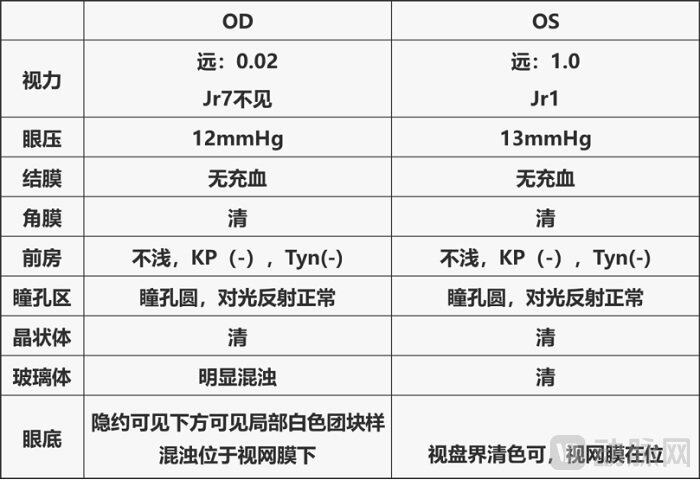
But Nini (pseudonym) was unable to be like other children her age. Her right eye had been experiencing blurred vision for as long as six months. Even though her parents were extremely worried, and despite the hospital prescribing oral Prednisone treatment for her condition of "no obvious cause for redness, pain, and blurred vision in the right eye," Nini’s vision did not improve at all.
In the blood routine test, only the absolute value of monocytes was slightly abnormal at 0.68 * 10^9/L (> 0.6), with no other abnormalities observed. With no family history of related diseases and no other medical history, Nini's condition once left doctors at a loss.
Source: Screenshot from Zhidezhen Medical's official website
But the development of modern medicine leaves no place for the "real culprit" to hide — through diagnostic vitrectomy, vitreous samples were taken during surgery for IgG detection of Toxocara canis (ELISA method), and the results showed a positive result of 28.261 Units (normal value <3 Units). Nini was eventually diagnosed with ocular toxocariasis. Knowing the cause of the disease makes targeted treatment much easier. During the one-and-a-half-year follow-up, Nini's right eye vision remained at 0.8.
As in the case of Nini, many patients suffering from eye diseases often face challenges in "diagnosis confirmation." Typically, the detection of pathogenic microorganisms and immune indicators in the blood can hardly reflect the conditions inside the eye and may even be misleading. However, testing the intraocular fluid (a general term for the liquid inside the eyeball, including aqueous humor, vitreous fluid, subretinal fluid, suprachoroidal fluid accumulation, etc.), as Nini underwent, not only better reflects changes in the ocular microenvironment but also holds significant importance for identifying the causes of infectious eye diseases and assessing variations in immune indicators.
With the promotion and development of minimally invasive vitrectomy surgical systems, as well as advancements in molecular detection technology that have expanded the types and range of detectable microorganisms, improved detection accuracy, and reduced testing time, intraocular fluid testing is increasingly being accepted by clinicians.
But another problem facing everyone is that, due to the numerous causes of eye diseases, there are many screening items that need to be carried out. Hospitals in China often cannot perform comprehensive intraocular fluid testing for patients. In view of this, in 2016, Beijing Zhidezhen Medical Inspection Co., Ltd. (hereinafter referred to as "Zhidezhen Medical"), the first third-party professional service agency in China for screening unexplained eye diseases, was established. While providing professional third-party "intraocular fluid testing" services, Zhidezhen Medical benefits a wide range of doctors and patients by offering one-stop services including etiological testing, medical consultation, treatment recommendations, and research cooperation for clinicians and patients.
From Lab to Clinic: Research Achievements Should Benefit the Public
Compared to his identity as the founder of Zhidezhen Medical, Tao Yong's other identity might be more familiar to us, that is, "Tao Yong, an ophthalmologist in Beijing" on Weibo. The profession of being a doctor may make Tao Yong, the "entrepreneur," appear somewhat unconventional — "As a researcher," he sincerely described, "there is actually a kind of sentiment, which is the hope that the results of research can truly be applied to produce practical value. From bench to bedside, from bench to public — science should not only move from the laboratory to the bedside, but also reach the media and the public."
As Professor Tao Yong puts it, he is fortunate. He has caught up with a great era where the country is vigorously promoting the transformation of scientific and technological achievements — the technical patent for intraocular fluid testing has become the first project of technological achievement transformation at the Scientific Innovation Center of Beijing Chaoyang Hospital.
"As a doctor, he has witnessed too many patients suffering from vision impairment or even blindness due to eye diseases. 'For me, seeing those patients in the outpatient ward every day who have lost their best chance for treatment because their condition could not be diagnosed early is the main driving force behind the transformation of scientific research results. Feedback from my peers also makes me realize that intraocular fluid testing genuinely helps them, so I am confident in continuing this endeavor.'"
Naming the company "Zhide" is more like a reaffirmation of this belief. "Zhi" itself symbolizes "high technology," while "De" stands for "something meaningful to society." Dr. Tao Yong mentioned in an interview that the original intention of founding the company was to rapidly promote the achievements in the field of ophthalmic testing to ophthalmic medical institutions across China and even the world through the form of a business, thereby benefiting more patients.
This also means that Zhidezhen Medical needs to operate continuously over the long term. Like Dr. Tao Yong, many people hold this belief. Currently, Zhidezhen Medical Inspection has built a team of up to 83 people, consisting of technical and management talents from prestigious universities such as Yale University, University of Kentucky, Peking University, Tsinghua University, and Shanghai Jiao Tong University in the United States. At the same time, Zhidezhen Medical has also established an advisory board mainly composed of ophthalmology experts from the United States, Japan, and Germany.
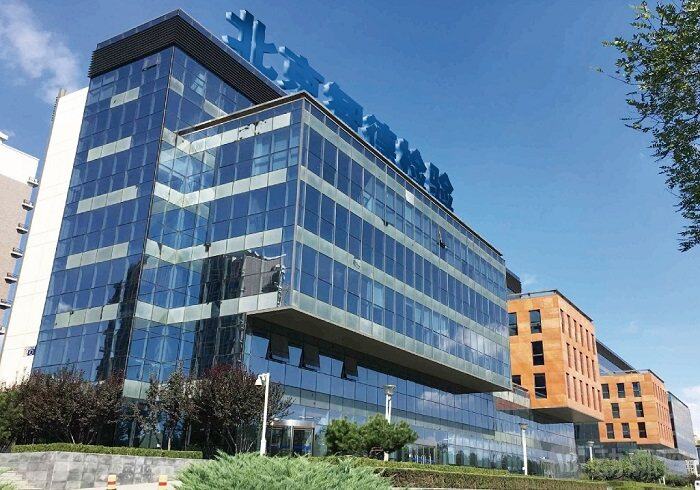
Since its establishment in 2016, Zhidezhen Medical has been moving forward steadily. In the following year, Zhidezhen Medical obtained the medical institution license. In 2018, Zhidezhen Medical became a national high-tech enterprise. In 2019, Zhidezhen Medical was recognized as a Zhongguancun high-tech enterprise. In 2021, Zhidezhen Medical was honored as a "specialized, refined, distinctive, and innovative" enterprise in Beijing. In the same year, it secured Pre-A round funding led by Northern Light Venture Capital, established a subsidiary in Wuxi, and began producing in vitro diagnostic kits and rapid testing products for tear analysis.
In the lost year of 2020, Dr. Tao Yong encountered a vicious attack on medical staff. At that time, An Kefeng, General Manager of Zhidezhen Medical, consoled him during a visit: "Don't worry, Zhidezhen (Medical) is doing well." Despite the shadow of the vicious attack, Dr. Tao Yong responded: "If anything happens to me, you must continue to carry on with Zhidezhen (Medical)." Perhaps Zhidezhen Medical is no longer just a company belonging to an individual, but a belief in benefiting doctors and patients that will not change regardless of any circumstances.
Expand the "Rapid Testing" Product Line, and Perfect the "Service" Chain
There are many causes of intraocular inflammation, including viruses, bacteria, fungi, parasites, spirochetes, mycobacterium tuberculosis, autoimmune disorders, and malignant tumors, all of which may become contributing factors. In clinical practice, infectious endophthalmitis often occurs post-surgery. The clinical manifestations of inflammation caused by different etiologies may be similar, but the treatment methods vary greatly. Misdiagnosis and improper treatment can lead to vision loss or even life-threatening conditions for patients.
In clinical practice, precise and rapid etiological identification needs to rely on laboratory methods. However, traditional microbial culture in the lab and microscopic observation after staining fail to satisfy clinicians. On one hand, the positive rate of microbial culture is low (34-60%); on the other hand, the long culture time (3 days to 3 weeks) can easily cause patients to miss the optimal clinical treatment window. Relying on PCR amplification technology, ELISA technology, CBA technology, gene chip technology, and metagenomic sequencing technology, Zhidezhen Medical achieves the goal of completing tests within 24 hours (for some projects, within 4 hours) after receiving specimens. Compared with the 3 days or even 1 week required by traditional hospital testing, this greatly shortens the detection time and significantly improves clinical diagnosis and treatment efficiency.
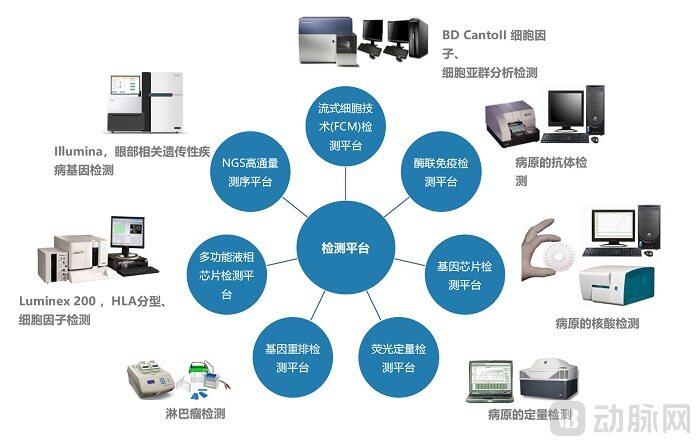
As of now, Zhidezhen Medical has completed testing for over 60,000 specimens submitted by more than 400 hospitals across 30 provinces, municipalities, and autonomous regions in China. Relying on leading domestic and international next-generation sequencing platforms, immunoassay platforms, PCR platforms, as well as self-developed analytical software and a top-tier analysis team, Zhidezhen Medical is currently capable of conducting more than 600 testing projects.
Currently, Zhidezhen Medical's main testing products include tear immune component testing, intraocular fluid immune component testing, intraocular fluid pathogenic microorganism testing, and intraocular fluid and tear collection devices. It is reported that Zhidezhen Medical also plans to invest in the development of some therapeutic products this year, such as engineered exosomes for treating fundus diseases and dry eye syndrome.
Previously, Beijing Chaoyang Hospital held a roadshow to help clinical researchers quickly transform their research results. Professor Tao Yong's exosome project, "Development of a Novel Anti-VEGF Targeted Drug System for Treating Fundus Diseases," won the first prize in Beijing Chaoyang Hospital’s Science and Technology Innovation Project Roadshow and the championship in the global final of the Overseas Talent Entrepreneurship Conference. The judges commented that "this is an excellent hard-tech project."
Unlike the lengthy service chains commonly found in third-party testing institutions, Zhidezhen Medical strives to make its service processes more standardized and efficient. During its continuous development, Zhidezhen Medical has established comprehensive laboratory quality management control procedures and laboratory operation guidelines, as well as built a complete set of automated information management systems. From the receipt of specimens to the issuance of test reports, the entire process is managed in a standardized, procedural, and automated manner.
In order to further promote standardization and adapt to future development trends, they are gradually transitioning "from selling services to selling products." Specifically, this involves developing in vitro diagnostic kits and rapid testing products suitable for on-site use by doctors, thereby shortening the intermediate steps of sample submission, reducing the cost per test, and improving profitability. This choice is also related to the nature of certain ocular surface diseases (such as dry eye syndrome and allergic conjunctivitis). These conditions generally have mild symptoms, and patients' willingness to pay is relatively low. The introduction of rapid testing products can better serve this population.
In addition, in order to better meet the relevant needs of medical institutions after sample submission, Zhidezhen Medical, unlike other third-party testing institutions that only provide test reports, has fully utilized the advantages of its professional team to build a closed-loop service. Based on the extensive clinical experience of ophthalmology experts within the team in diagnosing and treating intraocular inflammatory diseases, Zhidezhen Medical has established its own medical department, which can interpret test results for referring doctors and patients while helping doctors choose better treatment options.
Absorb and transform research results to establish a technical barrier for "intraocular fluid testing"
In fact, it is extremely challenging to detect thousands of components in only 0.1ml of intraocular fluid with high repeatability, high sensitivity, and high specificity. Zhidezhen Medical continuously absorbs and draws on the testing strengths of different countries and regions around the world, such as diagnostic technologies for intraocular lymphoma in the United States, diagnostic techniques for intraocular tuberculosis in India, and diagnostic methods for intraocular viral infections in Japan.
In addition, Zhidezhen Medical is continuously expanding its moat by transforming scientific research achievements. For instance, it previously relied on the transformation of research results from Professor Tao Yong's team at Beijing Chaoyang Hospital. The next step involves plans to transform research findings in the exosome field jointly studied by Professor Tao Yong and Researcher Wei Wei from the Institute of Process Engineering, Chinese Academy of Sciences.
Zhidezhen Medical is currently collaborating with numerous hospitals, including Tongren Hospital, Zhongshan University Eye Center, Peking University Third Hospital, Beijing Chaoyang Hospital, and Shaanxi Provincial Eye Hospital, on joint scientific research projects. At the same time, it has applied for several national invention patents in the field of intraocular fluid based on its own research achievements. Additionally, as a participating party, it co-developed the "Expert Consensus on the Process of Intraocular Fluid Virus Nucleic Acid Testing and Its Standardized Clinical Application," which was published in a core academic journal in China.
For Zhidezhen Medical, their ultimate goal is precision diagnosis and precision treatment in ophthalmology.
The early development also built a relatively high technical barrier for the company. While continuously conducting tests, inspections, and providing professional test results for different types of medical service institutions, Zhidezhen Medical has accumulated 60,000 cases of intraocular fluid testing data. The accumulation of testing experience and processes, as well as the expansion of a vast information database, also laid the foundation for the dynamic advancement of Zhidezhen Medical's core technology.
For Zhidezhen Medical, there is no doubt that it will further increase the intensity of transforming scientific research achievements in the future. By continuously absorbing the results of more research teams in China, it will further realize the transformation of industry-university-research collaboration. By applying these scientific research achievements to clinical practice, it will better benefit patients.
Modern Medicine Moves Towards Precision Diagnosis, Intraocular Fluid Testing to Become a Key Component
Precision medicine is increasingly demonstrating its value today.
Whether it is the new era of precise treatment for lung cancer initiated by EGFR tyrosine kinase inhibitors (EGFR-TKI) in respiratory medicine, or the application of non-invasive DNA detection technology in obstetrics for the clinical diagnosis of fetal aneuploid chromosomal abnormalities, or the early indication of colorectal cancer through quantitative detection of vimentin gene methylation in stool in gastroenterology, all these developments are heralding the arrival of a new era of precise diagnosis and precise treatment.
For the first time, the content of intraocular fluid testing has been written into ophthalmology textbooks. Meanwhile, the Chinese Journal of Ocular Fundus Diseases has released a special issue on intraocular fluid testing, and the concept of precision medicine is gradually taking root in the field of ophthalmology. Perhaps, we can borrow Professor Tao Yong's analysis in "Clinical Application of Intraocular Fluid Testing" as a conclusion:
"All signs indicate that the concept of precision medicine will continue to deepen in the field of ophthalmology in the future. The testing of intraocular fluid aligns with the principles of evidence-based medicine and precision medicine, bringing new methods to clinical disease diagnosis and treatment. Its rise and gradual recognition by professionals mainly stem from ophthalmologists' dissatisfaction with relying solely on empiricism and imaging-based diagnostic approaches in clinical practice. There is a growing desire to collect first-hand pathogenic and immunological information from within the eye, which allows for a more comprehensive understanding of intraocular diseases. This leads to earlier diagnosis, reduced misdiagnosis, and precise determination of treatment direction."
It can be said that imaging examinations, refractive examinations, functional examinations, as well as intraocular fluid pathogen and immunological examinations, are four parallel branches in the diagnostic tools for eye diseases, each with its own characteristics and strengths and weaknesses. With the passage of time and the improvement of various modern detection technologies, the types and scope, accuracy, and detection time of available tests will continue to progress. Also, with the promotion and development of minimally invasive vitrectomy surgery systems, it is believed that intraocular fluid testing will become better and increasingly accepted and applied by clinicians.
While recognizing the promising future of the intraocular fluid testing field, we must also face the current issues in the industry to better promote its continued development:
"We should also recognize that intraocular fluid testing is still somewhat a novel field, and there remains much systematic work to be done for professionals both within China and internationally. For instance, the minute quantity of intraocular fluid poses high demands on laboratory testing methods, which must ensure accuracy while using as little fluid as possible to complete multiple tests. Therefore, standardizing testing methods across different laboratories to achieve universally high-quality results and mutual recognition of these results has become an urgent matter. Additionally, setting normal reference ranges for testing parameters is another pressing systemic challenge. Take cytokines, for example: their normal reference ranges vary across different age groups and disease states. Defining these reference ranges is crucial for clinicians in interpreting test results. The author (Professor Tao Yong) calls on domestic peers to collaborate on joint efforts, initiate multi-center studies, and take the lead in proposing comprehensive solutions on the international stage."