

AACR 2022: Hansoh Pharma's PI3Kα Inhibitor HS-10352 Demonstrates 100% Disease Control Rate and Favorable Safety Profile in Phase I Trial for Advanced Breast Cancer
Hansoh Pharma
Pharmaceutical Research, Production, and Sales
Recently, at the 2022 Annual Meeting of the American Association for Cancer Research (AACR), Professor Hu Xichun from Fudan University Shanghai Cancer Center orally presented the Phase I dose-escalation trial data of HS-10352-101, a phosphatidylinositol 3-kinase α (PI3Kα) inhibitor developed by Hansoh Pharma, drawing widespread attention from experts and scholars in the global breast cancer field.

HS-10352 is a Class 1 innovative drug independently developed by Hansoh Pharma. In May 2020, it received the clinical trial notification issued by the National Medical Products Administration, intended for the treatment of advanced breast cancer that is positive for phosphatidylinositol 3-kinase α mutation (PIK3CAm+), hormone receptor-positive (HR+), and human epidermal growth factor receptor 2-negative (HER2-). To date, no similar drugs have been approved for marketing in China.
Professor Xichun Hu pointed out in his AACR report that HS-10352 demonstrated good safety, tolerability, and pharmacokinetic (PK) characteristics in subjects with HR+HER2- advanced breast cancer who had no standard treatment options, could not access or tolerate standard treatments. Preliminary anti-tumor activity was observed, with superior anti-tumor activity seen in the population carrying PIK3CA mutations, which is expected to bring clinical benefits to patients with HR+HER2-PIK3CAm+ advanced breast cancer.
HS-10352-101 Phase I Dose-Escalation Study is a single-arm, open-label Phase I clinical trial evaluating the safety, tolerability, pharmacokinetics (PK), and efficacy of oral administration of HS-10352 in patients with HR+HER2- advanced breast cancer who have no standard treatment options available, cannot access, or cannot tolerate standard treatments. The study start date (first informed consent date) was August 28, 2020, with four dose escalation groups enrolling a total of 18 patients: three patients in the 2mg group, three in the 4mg group, six in the 6mg group, and six in the 8mg group.
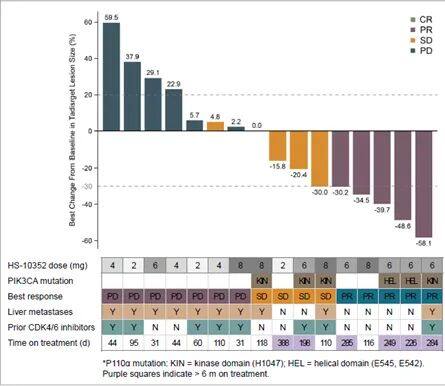
Tolerability: Among 18 subjects, only 2 experienced dose-limiting toxicity (DLT), which was Grade 3 hyperglycemia, with no other types of DLT observed. Meanwhile, HS-10352 demonstrated a low discontinuation rate and a low dose reduction rate. The maximum tolerated dose (MTD) was determined to be 6 mg daily. The median treatment duration was 111.5 days, with the longest treatment duration reaching 388 days, and the subject is still on continuous treatment.
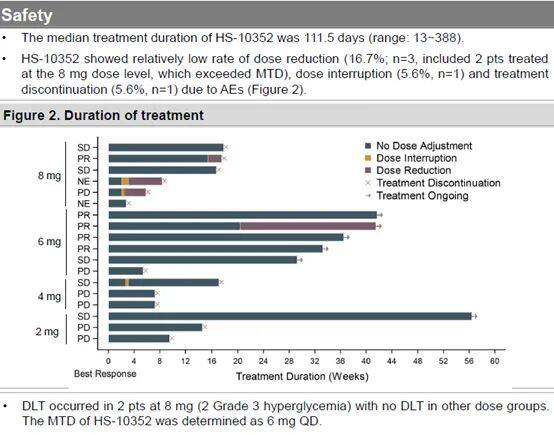
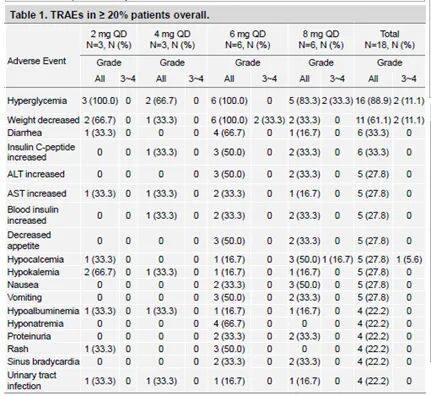
In terms of safety: The incidence of rash at all levels is much lower than that of similar drugs. The incidence of rash is low, all being grade 1-2, with no grade 3 cases. It was controlled with topical medications without causing discontinuation or dose reduction of HS-10352. The proportion of dose adjustments due to hyperglycemia is significantly lower than that of similar drugs, demonstrating that hyperglycemia is manageable and controllable.
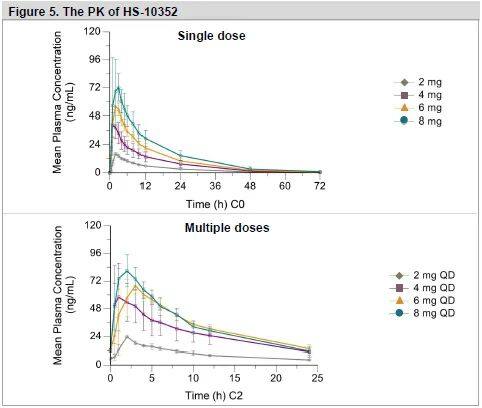
PK: After single and repeated dosing, the exposure of HS-10352 showed a linear relationship with the dose within the range of 2~6mg; moreover, the plasma concentration tended to reach saturation at 8mg after repeated dosing. The overall variability of each PK parameter was small across all dose groups, indicating that the PK characteristics of HS-10352 are relatively stable, which is beneficial for subsequent development.
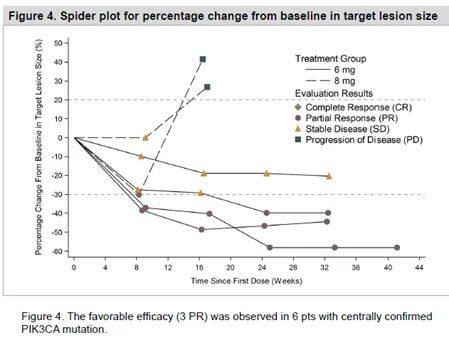
Efficacy: In HR+HER2-PIK3CAm+ subjects with advanced breast cancer, the ORR of HS-10352 monotherapy at all dose levels was 50%, the DCR was 100%, and the 9-month PFS rate was 66.7% (95% CI: 28.9%~100%); at the MTD level (6mg QD), the ORR of monotherapy was 75%, the DCR was 100%, and the PFS exceeded 7.4 months.
A Phase Ib study of HS-10352 in combination with endocrine therapy for the treatment of HR+HER2-PIK3CAm+ advanced breast cancer is actively underway, with expectations to bring more clinical benefits to patients with this type of advanced breast cancer. Clinical development is also being laid out for various other solid tumors.
PI3K, fully known as phosphatidylinositol-3-kinase, is one of the important signaling pathways in cells. The PI3K/AKT/mTOR (mammalian target of rapamycin) pathway plays a crucial role in regulating cell growth, movement, survival, metabolism, and angiogenesis. Studies have shown that overactivation of the PI3K/AKT/mTOR pathway not only leads to tumor development but also causes drug resistance. Dysregulation of this pathway exists in various human cancers, including hematological malignancies, breast cancer, and colorectal cancer. Notably, hyperactivity of the PI3K signaling pathway is significantly correlated with tumor progression, increased tumor microvessel density, and enhanced chemotaxis and invasiveness of cancer cells. The PI3K signaling pathway has become one of the key targets in the development of novel anti-tumor drugs in recent years.
For HR+HER2-PIK3CAm+ advanced breast cancer patients, the NCCN Breast Cancer Clinical Practice Guidelines recommend fulvestrant plus Alpelisib (Category 1 recommendation) and other endocrine therapy regimens as second-line treatment options. However, other regimens are not Category 1 recommendations. Since no PIK3CA inhibitors, including Alpelisib, have been approved in China, there are currently no recommended treatment options in the 2021 CSCO Breast Cancer Diagnosis and Treatment Guidelines for HR+HER2- advanced or metastatic breast cancer patients with PIK3CA mutations. This highlights a significant unmet clinical need for PIK3CA inhibitors in HR+HER2-PIK3CAm+ advanced breast cancer patients.
The American Association for Cancer Research (AACR) Annual Meeting is one of the world's oldest and largest academic conferences on cancer research. The release of the latest clinical results of the innovative Class 1 PI3Kα inhibitor marks the second appearance of Hansoh Pharma’s self-developed achievements at the AACR. At the 111th AACR Annual Meeting in 2020, Professor Lu Shun from Shanghai Chest Hospital, affiliated with Shanghai Jiao Tong University, delivered an oral presentation on the APOLLO study data of the innovative Class 1 drug Almonertinib Mesylate Tablets (brand name: Amelie®), drawing widespread attention from the international oncology community. Hansoh Pharma is a leading innovation-driven pharmaceutical company in China, committed to improving human health through continuous innovation. The field of oncology is one of its key focus areas in the treatment of major diseases.

Hu Xichun
Professor, Chief Physician, Doctoral Supervisor
Director of the Department of Medical Oncology, Fudan University Shanghai Cancer Center
Deputy Director of the Clinical Trial Institution
ESMO Breast Cancer Faculty Member
ABC5 panelist
Chairman of the Multi-Primary and Unknown Primary Tumor Committee of the Chinese Anti-Cancer Association
Vice Chairman of the Medical Oncology Committee of the Chinese Medical Association's Tumor Branch
Director of Shanghai Chemotherapy Quality Control Center
Vice Chairman of the Breast Cancer Committee of the Chinese Research Hospital Association
Standing Committee Member and Secretary General of the Breast Cancer Professional Committee of the Chinese Anti-Cancer Association
Chairman of the Cancer Rehabilitation and Palliative Care Committee of the Shanghai Anti-Cancer Association
Expert Reviewer of the Center for Drug Evaluation, National Medical Products Administration