

2022 AACR Highlights: Seven Key Therapeutic Areas and Ten Promising Domestic Innovative Drug Candidates from China

RedCloudBio
Innovative Drug Developer
As the 2022 AACR concludes, China's innovative pharmaceutical companies have completed the unveiling of their new drug data and research progress. Which new drug data caught your attention, and whose product pipeline has left you intrigued? Here, we have selected a few based on chosen targets to provide a brief report for reference.
NO.1 EGFR Succession

Two third-generation EGFR drugs produced in China have already been launched, with another 4-5 currently in the approval process for market entry. As national medical insurance negotiations proceed, competition among third-generation drugs is becoming increasingly intense. Although the competition within the third-generation EGFR drug category has yet to settle, the race for fourth-generation EGFR drugs appears to be heating up.
At the 2022 AACR conference, Qilu Pharmaceutical announced the preclinical data of the fourth-generation EGFR inhibitor QLH11811. The data shows that the enzymatic activity of QLH11811 is highly competitive.
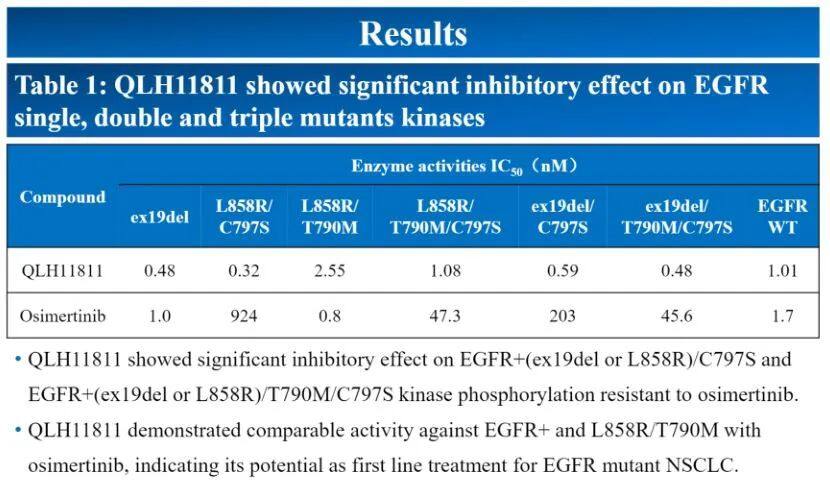
It is not difficult to speculate that QLH11811 will also cover a variety of clinical medication scenarios. QLH11811 not only reverses the C797S mutation that causes osimertinib resistance but also exhibits inhibitory activity against common mutations such as ex19del, L858R, and T790M. Although it does not demonstrate selectivity for wild-type EGFR, compared to other fourth-generation products that can only target the C797S mutation, it represents significant progress. In preclinical tumor models, QLH11811 has indeed reduced tumor growth in multiple tumor xenograft models. Unfortunately, QLH11811 also does not seem to describe activity data related to the central nervous system.
In addition, RedCloudBio also announced the preclinical data of the fourth-generation EGFR inhibitor H002, which has obtained clinical approval, at the AACR conference. Professor Caihong Yun from RedCloudBio was one of the core members involved in the development of the allosteric inhibitor EAI045. However, the previously disclosed fourth-generation EGFR patent of RedCloudBio was developed based on Brigatinib and did not continue the molecular framework of EAI045.

The preclinical data of H002 is also excellent, covering a combination of various drug-resistant mutations, and it has the potential for both first-line and later-line treatment. Meanwhile, H002 is one of the few fourth-generation EGFR products globally with the ability to cross the blood-brain barrier, and its clinical advantages and market prospects are not to be underestimated.
NO.2 China-produced KRAS Debuts for the First Time


KRAS is also one of the highly sought-after targets in China, with companies such as Innovent Biologics, Jacobio Pharmaceuticals, Betta Pharmaceuticals, and others actively pursuing its development and successively initiating clinical research.
2022 AACR: Innovent Biologics presented the early clinical Phase I data of the KRAS G12C inhibitor D-1553, making D-1553 the first China-produced KRAS inhibitor to disclose clinical data.
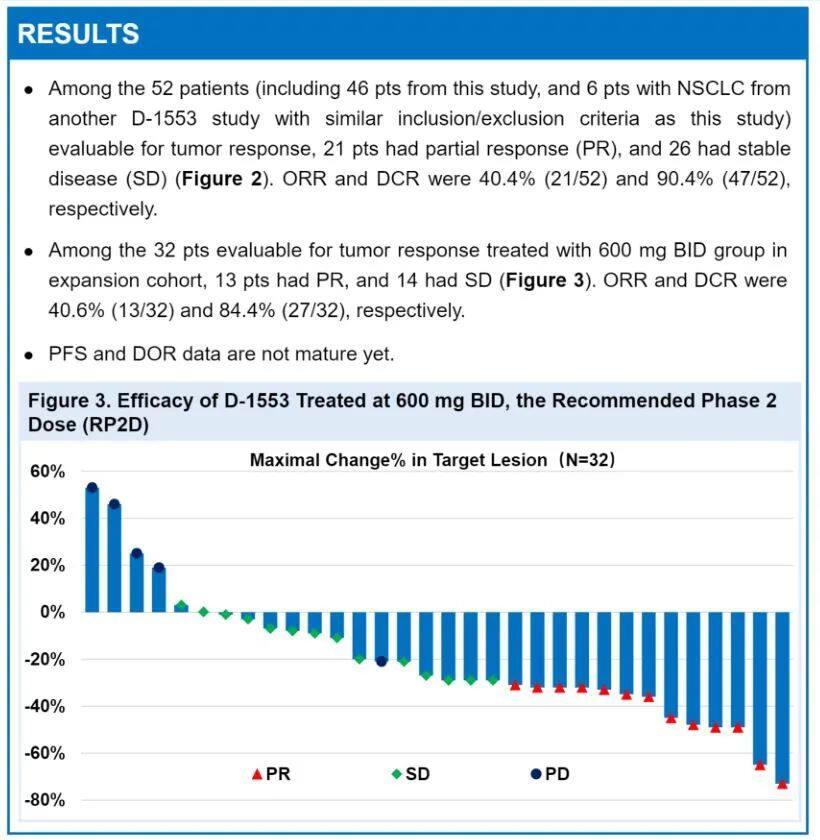
Data show that at the PR2D dose, the ORR of D-1553 evaluated in 32 patients reached 40.6%, with a DCR of 84.4%. In terms of safety, D-1553 was well-tolerated without reaching dose-limiting toxicity. In another concurrent AACR safety assessment study, grade 3 anemia and hypokalemia as well as grade 4 hypertension adverse events occurred in 2 out of 22 patients (9.1%). One patient (4.5%) discontinued D-1553 treatment due to cerebral hemorrhage; however, the investigator assessed that this event was possibly unrelated to D-1553.
NO.3 PRMT5 Iterative Upgrade

In 2022, while announcing its 2021 performance, GlaxoSmithKline disclosed the termination of its collaboration with Epizyme, and will return the global rights to two drugs: the PRMT5 inhibitor GSK3326595 and the PRMT1 inhibitor GSK3368715. GSK3326595 is a key representative of first-generation PRMT5 inhibitors. Possibly due to a lack of selectivity between tumor cells and normal cells, this class of products has encountered Grade 3 or Grade 4 adverse events to varying degrees in clinical studies. MRTX9768 represents the second generation, capable of selectively binding to the PRMT5-MTA complex, killing tumor cells with MATP deficiency without affecting normal cells.
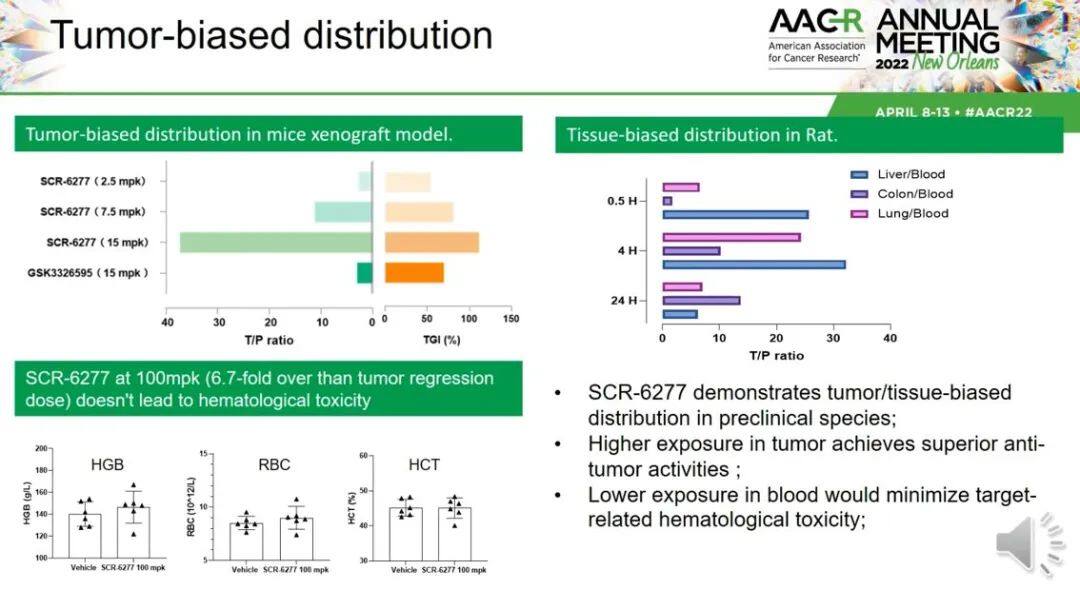
In China, Shenghe Pharmaceutical has already started clinical research on related drugs, while Simcere Pharmaceutical and CSPC Pharmaceutical Group have also obtained clinical approval respectively. At the 2022 AACR, Simcere Pharmaceutical, as a representative of domestic PRMT5 inhibitor development, delivered an oral presentation at the conference. However, the PRMT5 inhibitor reported by Simcere Pharmaceutical this time was SCR-6277, not SCR-6920, which was submitted for clinical trials.
Data show that SCR-6277 has the potential for intratumoral specific distribution, with a significantly better tumor-to-plasma drug concentration ratio (T/P) compared to GSK3326595, and demonstrates growth inhibition in tumor cells or grafts such as CLL (Z-138).
In addition to PRMT5, Simcere Pharmaceutical also presented preclinical data on MAT2A inhibitor SCR-7952, RAD51 inhibitor SCR-6992, and CDK2/4/6 inhibitor SCR-8079 at the conference.
NO.4 BTK Is Not Willing to Fall Behind

Bruton's Tyrosine Kinase (BTK) is an important signaling molecule in the B-cell receptor pathway, expressed at all stages of B-cell development, and participates in regulating the proliferation, differentiation, and apoptosis of B cells. It has become a highly regarded target in the fields of cancer treatment and immune diseases and is also a typical representative of China's innovative drug exports.
With the clinical application of non-covalent inhibitors, the C481S mutation has become a common known resistance mechanism for these products. Merck and Eli Lilly were the first to make moves, and Chinese companies are certainly not willing to fall behind. Similar products from Hutchmed and Yaho Pharmaceutical have already entered clinical research, and Haibei Pharmaceuticals has completed its IND application.
2022 AACR, Fochon Pharmaceuticals presented preclinical data for the BTK C481S inhibitor FCN-589. Compared to ARQ531, FCN-589 achieved higher tumor growth inhibition at similar or lower dose levels.

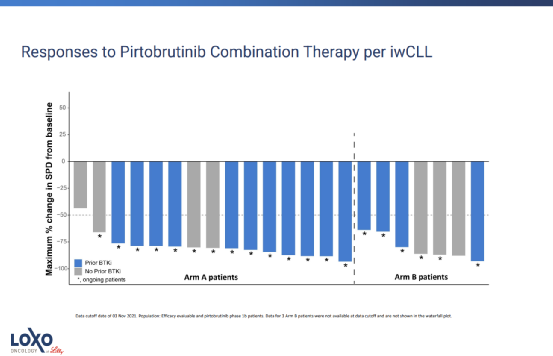
Moreover, pirtobrutinib once again appeared at the AACR, continuing to demonstrate strong tumor suppression and clinical potential.
NO.5 PD-L1 Adds Another Small Molecule Player

Immune therapies represented by PD-1/L1 have significantly extended the survival period of tumor responders, especially in the field of lung cancer, where they have become the new standard therapy. However, in the PD-1/L1 field, only antibody drugs are currently on the market, while small-molecule PD-1/L1 is still in the clinical exploration stage.
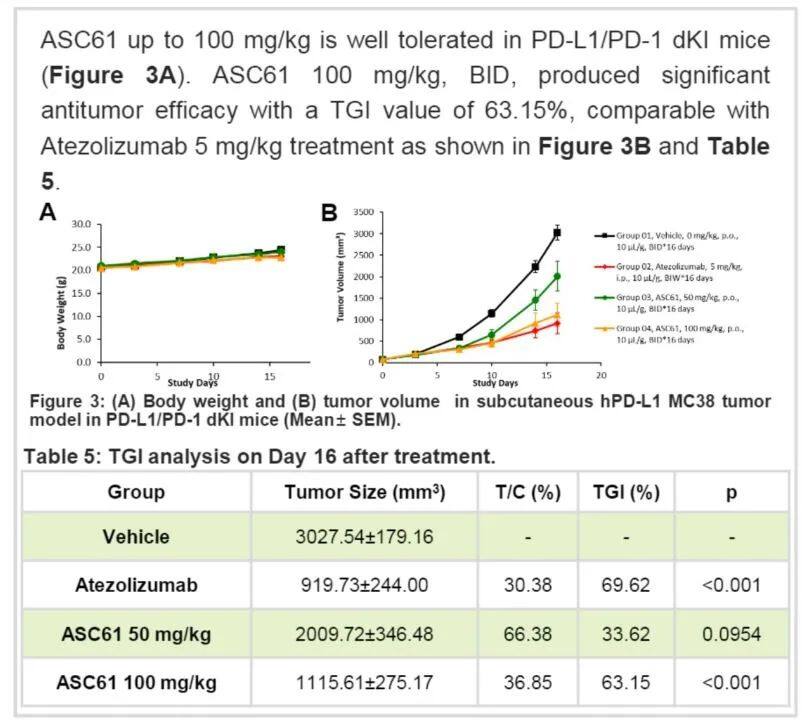
2022 AACR: Ascletis Pharma, Hebei Pharma, and Betta Pharmaceuticals Present Preclinical Data on PD-L1 Small Molecule Drugs in Clinical Development. ASC61, a PD-L1 small molecule drug developed by Ascletis Pharma, demonstrated in preclinical in vivo studies that it can achieve tumor inhibition comparable to atezolizumab (5mg/kg) at a dose of 100mg/kg.
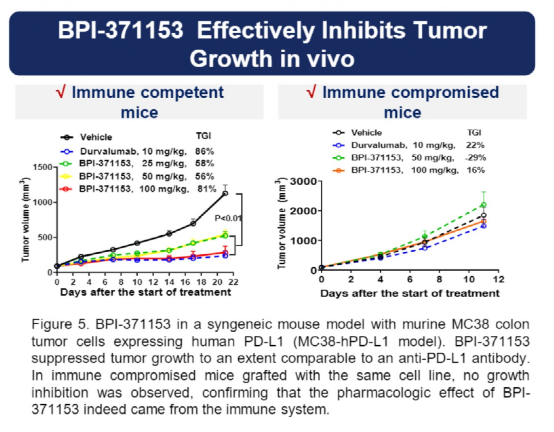
ABSK043 from Hebao Pharmaceuticals mainly conducted animal in vivo efficacy comparisons with chemotherapy drugs, while BPI-371153 from Betta Pharma conducted in vivo efficacy comparisons with durvalumab. Compared to durvalumab (10mg/kg), BPI-371153 demonstrated similar tumor inhibition effects at a dose of 100mg/kg.
Small-molecule drugs are believed to penetrate tumor tissues, particularly achieving the killing of tumor cells far from blood vessels. With the added advantages of convenient oral administration and more, they are also considered a promising field. However, the final efficacy, and whether they can replace antibody drugs, still needs clinical validation.
NO.6 PI3K Rebirth

By the end of 2021, the wave of AA indication withdrawals initiated by PI3K inhibitors began, with duvelisib being the first to withdraw its indication for relapsed and refractory follicular lymphoma (FL). In 2022, other marketed PI3K drugs also faced indication withdrawals or investigations. Gilead announced the withdrawal of FL and SLL indications in the U.S. market, the FDA initiated a safety investigation into umbralisib, Bayer withdrew its marketing application for MZL in the EU, Incyte withdrew its marketing applications for FL, MZL, and MCL from the FDA, and MEI Pharma was required by the FDA to add new clinical studies before submitting a marketing application. It can be said that PI3K inhibitors in the field of hematological tumors, whether selective or not, were all affected in this round, reflecting the regulatory authorities' concerns about the efficacy or safety of such drugs.
In China, through authorized introduction and independent research and development, a vast PI3K pipeline has been established, with 25 PI3K clinical products currently active (excluding MNCs, including INDs). At the 2022 AACR, companies such as Hansoh Pharma, Hutchmed, ZheroPharm, and Fosun Pharma also showcased related products. Among them, Hansoh released clinical data on the selective PI3Kα inhibitor HS-10352 in breast cancer research.
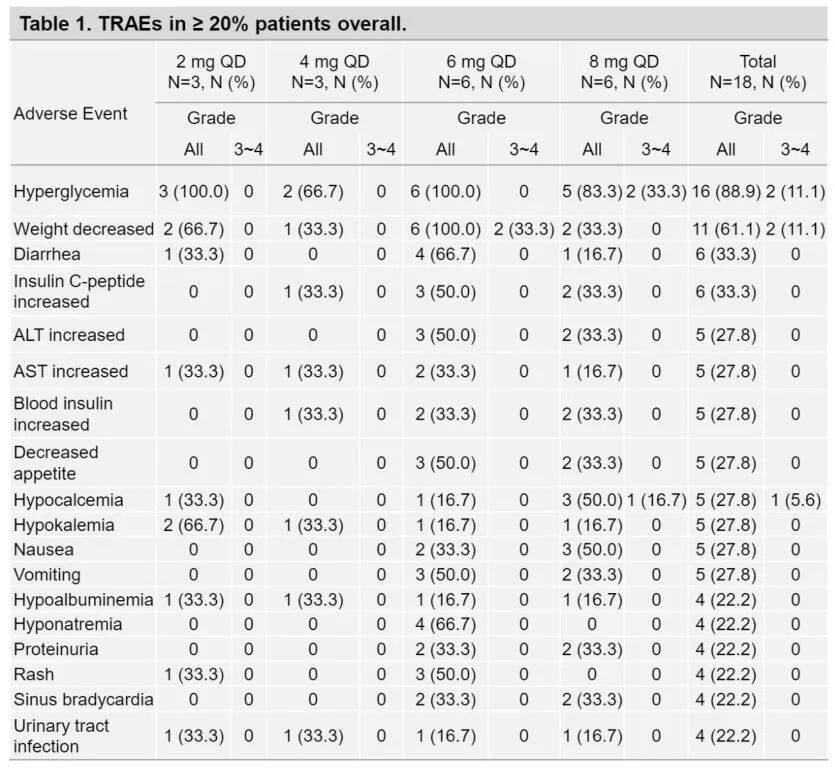
Preliminary results showed that HS-10352 has acceptable safety potential, with the maximum tolerated dose being 6mg QD. The most common (≥ 30%) treatment-related adverse events (TRAEs) were hyperglycemia (88.9%, n=16), weight loss (61.1%, n=11), increased insulin C-peptide and diarrhea (each 33.3%, n=6). Grade 3-4 TRAEs included hyperglycemia (8 mg, n=2), weight loss (6 mg, n=2), fatigue (8 mg, n=1), blurred vision (8 mg, n=1), hyperkalemia (8 mg, n=1), and hypocalcemia (8 mg, n=1). Among all patients (n=18), the overall response rate (ORR) and disease control rate (DCR) were 27.8% and 55.6%, respectively. In six patients carrying PIK3CA mutations, ORR was 50.0% (3 cases of 6 mg PR), and DCR was 100.0% (6 mg, n=4; 8 mg, n=2). At the tolerable dose (6 mg), the ORR in four PIK3CA-mutated patients reached 75.0%.
NO.7 CCR8 New Opportunity Arrives

CCR8 is highly expressed specifically on tumor-infiltrating regulatory T cells (Treg), while the levels of CCR8+ Treg cells in blood and normal tissues are low. Targeting CCR8 may be more selective compared to other methods of depleting Treg. Meanwhile, CCR8 is also a target for new drug development opportunities at this year's AACR selected by PharmaCube.
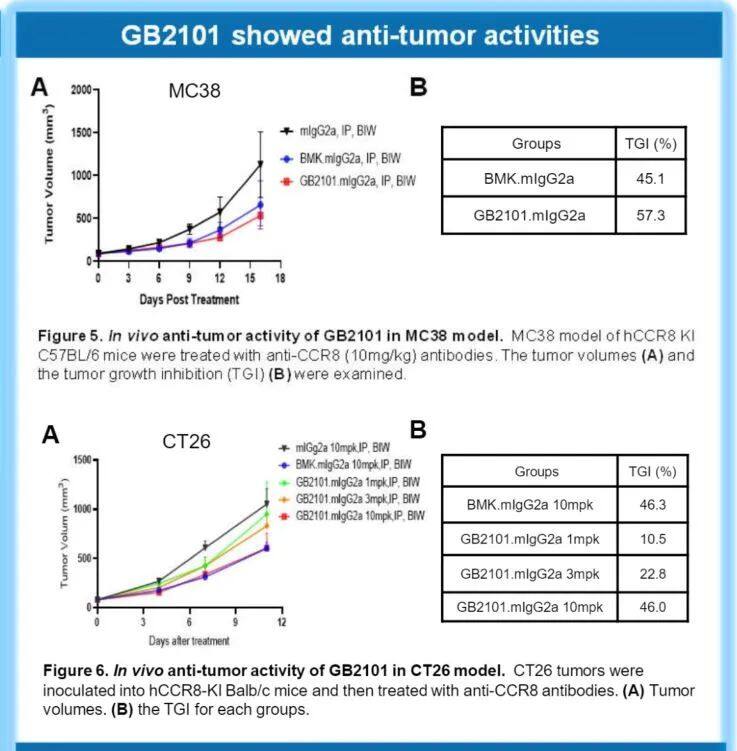
2022 AACR: Genor Biopharma and Zai Lab both disclosed preclinical data of CCR8 antibody drugs at the conference. GB2101, a CCR8 antibody drug developed by Genor Biopharma through hybridoma technology, demonstrated effective binding with CCR8-expressing cells in both in vitro and in vivo studies. It was able to effectively block CCL1 binding and CCL1-induced signaling. Additionally, the afucosylated modification of GB2101 enhanced ADCC responses and exhibited ADCC activity against target cells.
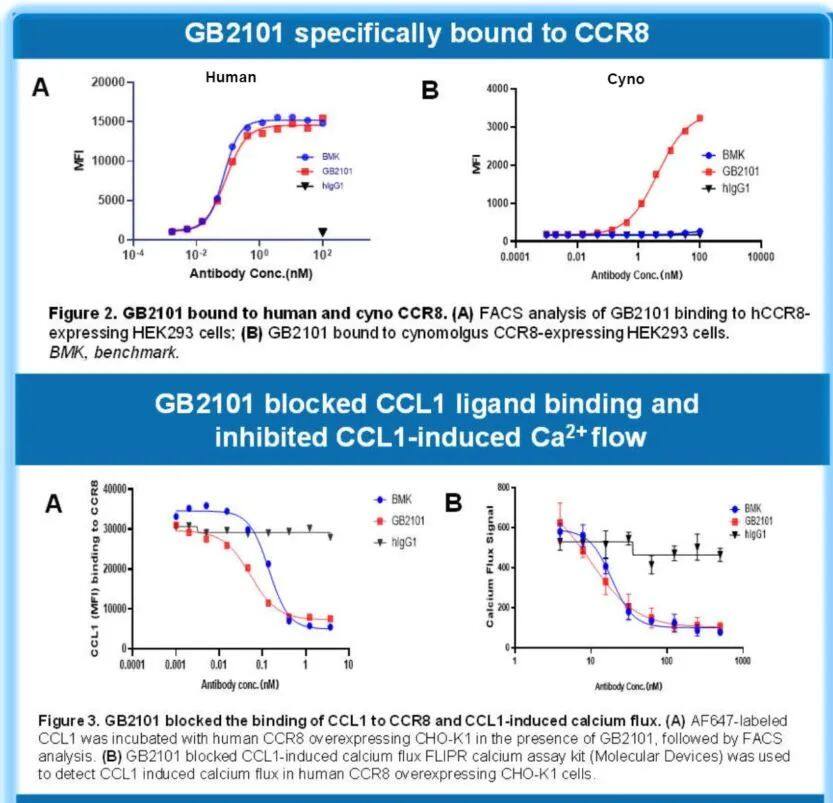
GB2101 demonstrated preliminary inhibition of tumor growth in a syngeneic xenograft model, and its clinical potential remains to be further validated.
ZL-1218 is a humanized therapeutic antibody developed by Zai Lab. It binds to human CCR8 with high affinity and specificity and can induce potent ADCC activity, thereby enabling strong NK cell-mediated killing of CCR8-expressing Tregs.
The disclosed preclinical data show that in the CCR8 knock-in mouse model carrying syngeneic tumors, ZL-1218 can reduce intratumoral Treg cells, thereby significantly inhibiting tumor growth in a dose-dependent manner. Particularly, when used in combination with a PD-1 antibody, it demonstrates enhanced and significant anti-tumor activity.
The international voice of China's innovative drugs is increasing. In addition to the seven major tracks and ten products mentioned above, numerous innovative drugs from Chinese pharmaceutical companies were showcased at this year’s AACR, including various ADC drugs, differentiated bispecific antibody drugs, or cell therapies, among others. Limited by space, they will not be listed one by one. For this year’s AACR, if there are any research advances or interesting report content worth special attention, feel free to leave comments for discussion.