

MoleculeMind Secures Tens of Millions in USD in Angel Funding to Advance AI-Driven De Novo Protein Drug Design
MoleculeMind
AI Protein Design Platform Developer
HongShan
Business Consulting, Enterprise Management Consulting Investment Institutions
Neux Capital
Investment Firm in the Interdisciplinary Field of Intelligent Computing and Life Sciences

Baidu Ventures
AI Investment Firm

LSV CAPITAL
Equity Investment and Investment Management Institutions
Recently, MoleculeMind, an AI protein design platform company, announced that it has completed an angel round of financing worth tens of millions of US dollars, led by HongShan, with participation from Baidu Ventures, LSV CAPITAL, Neux Capital, and Future Qichuang. The proceeds from this round will be used to further expand the team, continue the evolution of the AI protein platform, and facilitate the commercialization of research achievements.
Xu Jinbo said: "Proteins are the most spectacular machines in nature. Protein drugs or related products have an unimaginably vast space in treating diseases and advancing social productivity. MoleculeMind will apply top-tier AI capabilities to deeply explore this field, establish a world-class computational biology discipline in China, and promote the industrial-level transformation of scientific achievements. Talents from artificial intelligence, biology, pharmaceuticals, and other fields are welcome to join MoleculeMind."
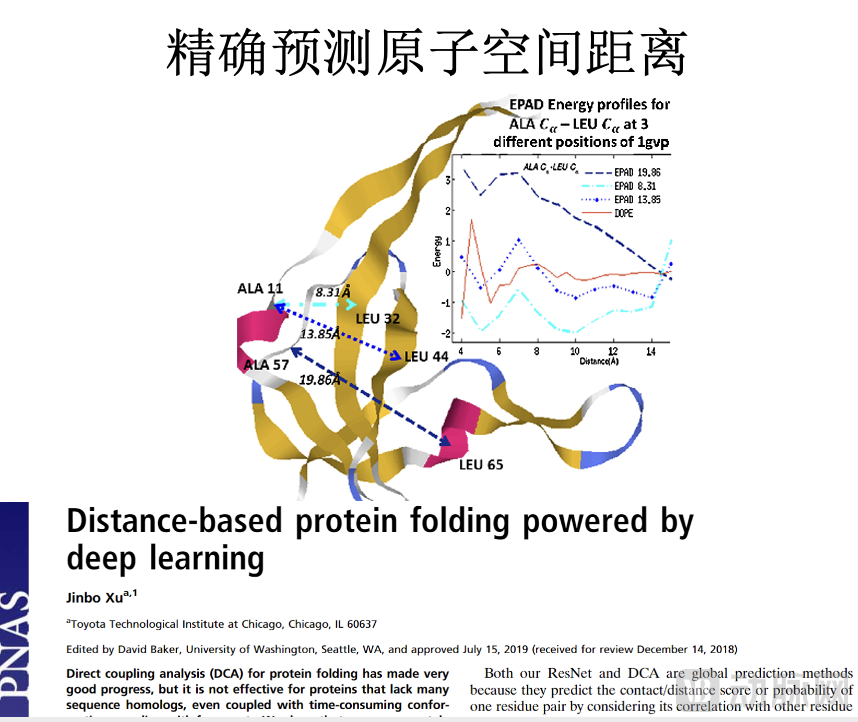
Xu Jinbo is acclaimed in the industry as the "Pioneer of AI Protein Folding Technology." In 2016, he developed the RaptorX-Contact method, which was the first to demonstrate that deep learning methods could significantly improve the accuracy of protein structure prediction, thus ushering in the era of AI-driven protein structure prediction. In 2020, the AlphaFold algorithm developed by Google's DeepMind achieved a breakthrough in protein structure prediction, building upon this methodology. The industry widely acknowledges that the rapid advancements in protein structure prediction technology are rewriting the technical pathways in healthcare and life sciences, enabling leapfrog development.
The AI algorithms and software developed by Xu Jinbo have been continuously used by companies such as Merck and Genentech for protein structure and function prediction. In recognition of his contributions to the field of proteins, Xu Jinbo has been awarded numerous honors including the American Sloan Research Fellowship, the U.S. National Science Foundation Early Career Award, the Innovation Breakthrough Award from "PLoS Computational Biology," the Best Paper Award and Test-of-Time Award from RECOMB, a top international conference in computational biology. He is also an editorial board member of the official journal of international computational biology, "Bioinformatics." Professor Xu Jinbo graduated from the University of Science and Technology of China and completed postdoctoral training at the MIT Mathematics Department and Artificial Intelligence Laboratory. He previously served as a professor at the Toyota Technological Institute at Chicago and is one of the world’s leading Chinese scientists at the intersection of artificial intelligence and life sciences. He is currently a visiting professor at BIOPIC, Peking University.
Xu Jinbo mentioned that although AI is currently still in an auxiliary role in protein research and development, it is expected to become a key driver of innovation through the joint efforts of academia and industry. MoleculeMind will leverage top-tier AI algorithms to accelerate the entire drug discovery process and the discovery and design of proteins in industrial, agricultural, and other fields, bringing greater benefits to human health and social progress. Xu Jinbo expressed his hope that MoleculeMind could become "the Merck of the AI era."
This world-leading computational biologist is also a forward-thinking and highly influential industry expert. Led by Jinhong Xu, MoleculeMind has built a professional team of top global computational biology experts in China, all of whom have research backgrounds from renowned overseas universities. MoleculeMind is also actively collaborating with international peers, planning to simultaneously establish specialized R&D laboratories worldwide.
Currently, the MoleculeMind team is building on Jinhui Xu's earlier scientific research achievements, following an integrated "industry-academia-research-application" approach, to conduct scientific research and industrial application in AI protein prediction and design. They have developed an AI large-molecule optimization and design platform with independent intellectual property rights called "MoleculeOS." This platform uses data-driven deep learning methods to help biotechnology experts quickly identify and generate the most suitable proteins, rapidly scaling laboratory research results for industrial-level applications. This platform serves as infrastructure in the field of intelligent life sciences, applicable not only to the research and design of peptides, antibodies, enzymes, and small proteins, transforming the development of large-molecule innovative drugs into a predictable and programmable process that enhances efficiency across the entire drug development pipeline, but also flexibly and broadly usable for protein optimization and design in fields such as chemistry, materials, industry, and agriculture.
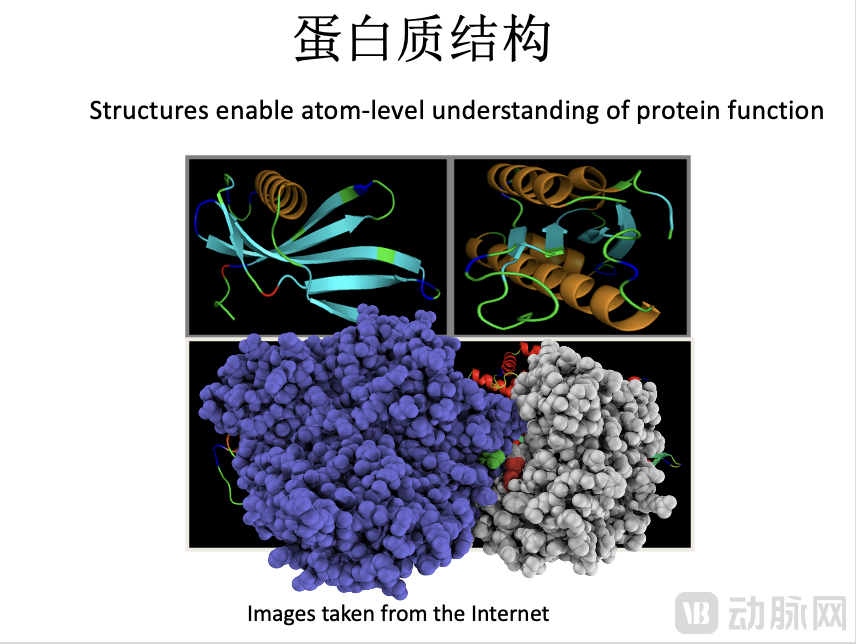
"By utilizing a high-throughput, integrated dry and wet biological computing engine, MoleculeOS has already achieved world-leading capabilities in protein structure and property prediction, as well as peptide and protein design. In the future, it will play an even greater role in drug development and the prediction of protein-protein interactions." Professor Xu Jinbo believes that in the future, AI may even be able to predict the relationship between genetic mutations and diseases, or redesign protein structures and entirely new antibodies that do not exist in nature.
Based on this platform, MoleculeMind is conducting research on monoclonal antibody drugs targeting special epitopes, small protein drugs, and dual-epitope antibody drugs, and has established collaborations with national-level life science and medical laboratories to promote the transformation of AI-driven protein research and design achievements.
In addition to biopharmaceutical R&D, the AI-powered macromolecule optimization and design platform is also applied in fields such as synthetic biology, bringing transformative changes to a broader range of sectors including energy, materials, agriculture, industry, food, consumer goods, and more. For instance, producing renewable biofuels with higher manufacturing efficiency to address energy and environmental issues, or using AI to create industrial enzymes with novel and stable functionalities for use in industrial production.
The top-notch founding team of MoleculeMind, along with the revolutionary opportunities that the integration of life sciences and AI could bring to the healthcare field, has garnered significant attention and favor from heavyweight investment institutions in its early startup phase.
Baidu Ventures CEO Gao Xue stated: "Protein drug design is the jewel in the crown of biopharmaceuticals. The remarkable performance of AI in protein structure prediction has made AI-based de novo protein drug design possible. Baidu Ventures is one of the few funds in China that focuses deeply on early-stage projects in the AI field, and we are optimistic about innovative applications of AI in the life sciences. We believe that given Professor Xu Jinbo's milestone contributions and long-term scientific research accumulation in the AI protein field, this will bring a historic breakthrough to de novo protein drug design, greatly promoting the development of protein drugs such as antibodies, enzymes, and cytokines."