

Third Annual National Conference on Standardized Psoriasis Diagnosis and Treatment Successfully Concludes in Beijing

Novartis
Drug Development and Manufacturing
BeijingApril 19, 2022/PR Newswire/ --On April 16, the "Gathering Strength, Leading the Future – The 3rd Summary and Development Conference of the Psoriasis Standardized Treatment Center" successfully convened, hosted by the National Clinical Research Center for Skin and Immune Diseases and the Psoriasis Standardized Treatment Center, and co-organized by Novartis.On the day of the meeting, the third batch of construction units for the Psoriasis Standardized Diagnosis and Treatment Center and the second batch of specialized medical consortium construction units were officially awarded. At the same time, to establish a unified routine quality control management mechanism in China, the Provincial Quality Control Alliance for the Psoriasis Standardized Diagnosis and Treatment Center was officially established.
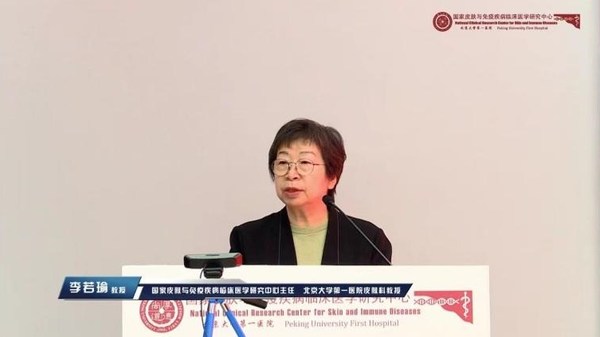
Professor Li Ruoyu, Director of the National Clinical Research Center for Skin and Immune Diseases, Delivers a Speech
Professor Li Ruoyu, Director of the National Clinical Research Center for Skin and Immune Diseases, stated in her opening remarks: "Since the establishment of the Psoriasis Standardized Diagnosis and Treatment Center project in August 2020, we have overcome the impact of the pandemic and forged ahead with determination. In less than two years, we have achieved fruitful results. From advancing the construction of diagnosis and treatment centers to initiating regional medical consortiums, from building a real-world big data collection platform for psoriasis to launching provincial quality control alliances, we have responded to the government’s call by steadily promoting the standardized development of psoriasis diagnosis and treatment across different regions, levels, and types of medical institutions in China. This has improved the overall medical standards and scientific, refined management of psoriasis in China, bringing a higher quality of life to more Chinese patients with psoriasis."
Establishment of a Three-Level Quality Control System: Provincial Quality Control Alliance for Standardized Diagnosis and Treatment Centers of Psoriasis Officially Founded
The construction of a quality control system is of great significance to the development of standardized psoriasis diagnosis and treatment centers. Professor Wang Mingyue from the Department of Dermatology at Peking University First Hospital stated: "To ensure the continuous improvement of the work of standardized psoriasis diagnosis and treatment centers and the authenticity and validity of real-world big data, we have established a three-level quality control system where 'the national center takes the lead — the provincial quality control alliance plays a key role — individual quality control units form the main body.' We founded the Provincial Quality Control Alliance for Standardized Psoriasis Diagnosis and Treatment Centers to establish a unified, routine quality control management mechanism across China, promote the standardization, normalization, and equalization of psoriasis medical services, enhance clinical diagnostic capabilities, and advance high-quality healthcare."

Launch and Plaque Ceremony of the Provincial Quality Control Alliance for Standardized Diagnosis and Treatment of Psoriasis
The goal of the alliance is to promote the homogeneous management of psoriasis diagnosis and treatment across China, benefiting patients with psoriasis. This includes promoting quality control in the collection of real-world big data on psoriasis diagnosis and treatment; assisting participating organizations in establishing and improving operational mechanisms and regulations for big data collection and chronic disease management; and comprehensively advancing various tasks of the standardized psoriasis diagnosis and treatment center.
Promote the Construction of Standardized Psoriasis Diagnosis and Treatment Centers, and Fully Advance Standardized Psoriasis Diagnosis and Treatment
Demonstration Center
The Second Hospital of Dalian Medical University
The First Affiliated Hospital of Guangxi Medical University
The Second Hospital of Hebei Medical University
The Second Affiliated Hospital of Kunming Medical University
Linyi People's Hospital
First Affiliated Hospital of Army Medical University
The First Affiliated Hospital of Nanchang University
Affiliated Hospital of Southwest Medical University
General Hospital of Northern Theater Command, PLA
Center
Ansteel Group Corporation General Hospital
The Second Central Hospital of Baoding City
Beijing Huaxin Hospital
Donggang Central Hospital
Liangxiang Hospital of Fangshan District
Foshan Hospital of Traditional Chinese Medicine
The Second Affiliated Hospital of Fujian Medical University
Ganzhou People's Hospital
Affiliated Hospital of Guangdong Medical University
Nanxi Mountain Hospital, Guangxi Zhuang Autonomous Region
Affiliated Hospital of Guilin Medical University
Anyang District Hospital, Henan Province
The Second Affiliated Hospital of Hunan University of Traditional Chinese Medicine
Sanmenxia Hospital of Yellow River
Affiliated Hospital of Jining Medical University
The Affiliated Hospital of Jiangxi University of Traditional Chinese Medicine
Central Hospital of Jiaozuo Coal Industry (Group) Co., Ltd.
Affiliated Hospital of Jiujiang University
Kaifeng People's Hospital
Leshan Traditional Chinese Medicine Hospital
Lixin County People's Hospital
Linyi Central Hospital
Meishan People's Hospital
Meizhou City Hospital of Traditional Chinese Medicine
Ningbo Hospital of Traditional Chinese Medicine
Qiqihar First Hospital
Ruzhou First People's Hospital
Shandong University Second Hospital
Shandong Provincial Hospital
Shandong University of Traditional Chinese Medicine Affiliated Hospital
Shangqiu First People's Hospital
Beijing Anzhen Hospital, Capital Medical University
Xuanwu Hospital, Capital Medical University
Suining Central Hospital
Tanghe County People's Hospital
Tangshan Union Hospital
Tianjin Beichen District Traditional Chinese Medicine Hospital
Second Hospital of Tianjin Medical University
Tianmen First People's Hospital
The Second Affiliated Hospital of Wannan Medical College
Xixian People's Hospital
Xiangyang Hospital of Traditional Chinese Medicine
Yantai Yantai Mountain Hospital
Yichang First People's Hospital
Yichun People's Hospital
Yuzhou People's Hospital
Northern Guangdong People's Hospital
PLA Army Characteristic Medical Center
Zhongshan Hospital of Traditional Chinese Medicine
Medical Consortium
Baofeng County Hospital of Traditional Chinese Medicine
Beijing Hui People's Hospital
Bortala Mongol Autonomous Prefecture People's Hospital
Boxing County People's Hospital
Cao County Hospital of Traditional Chinese Medicine
Dali County Hospital
Shan County Central Hospital
Dancheng County People's Hospital
Dengzhou Central Hospital
Fengqiu County People's Hospital
Foshan Shunde District Chronic Disease Prevention and Control Center
Funan County People's Hospital
Gaomi City Dermatology Prevention and Treatment Station
Gaoqing County People's Hospital
Guangning County Chronic Disease Prevention and Control Station
Guangrao County People's Hospital
Guiping People's Hospital
Hanzhong Railway Central Hospital
Neiqiu County Traditional Chinese Medicine Hospital, Xingtai City, Hebei Province
The First Affiliated Hospital of Henan University
Huazhou Chagen Hospital
Huazhou People's Hospital
Huantai County Hospital of Traditional Chinese Medicine
Huanghua Shennongju Hospital
Jining City Dermatology Prevention and Treatment Hospital
Laizhou City Chronic Disease Prevention and Treatment Hospital
Leling People's Hospital
Liyang Hospital of Traditional Chinese Medicine
The Second People's Hospital of Liangshan Yi Autonomous Prefecture
Central Hospital of Lingyuan City, Liaoning Province
Linzhou People's Hospital
People's Hospital of Linquan County
Linchu County People's Hospital
Longyan First Hospital
Lushan County People's Hospital
Luoding Sixth People's Hospital
Luoyang Central Hospital
Meihekou Central Hospital
Minquan County People's Hospital
Shunde Hospital, Southern Medical University
Nanzhao County People's Hospital
Ningbo Beilun District Traditional Chinese Medicine Hospital
Ningjin County People's Hospital
Pucheng County Hospital
Qinghe County Hospital of Traditional Chinese Medicine
Qingyang People's Hospital
Quyang County Hospital of Traditional Chinese Medicine
Shandong Coal Linyi Hot Spring Sanatorium
Shaanxi Fourth People's Hospital
Shangluo Central Hospital
Shaoguan Municipal Chronic Disease Prevention and Treatment Hospital
Fuxing Hospital, Capital Medical University
Siyang Hospital of Traditional Chinese Medicine
Suzhou High-tech Zone People's Hospital
Taishan City Chronic Disease Prevention Station
Taizhou Enze Medical Center (Group) Enze Hospital
Taizhou Second People's Hospital
Taihe County People's Hospital
Tancheng County First People's Hospital
Tang County Di's Dermatology Hospital
Tongliao City Hospital
Central Hospital of Weishi County
Wenling First People's Hospital
Wenzhou Central Hospital
Wudi County Hospital of Traditional Chinese Medicine
Xi'an First Hospital
The First Affiliated Hospital of Xi'an Medical University
Xixia County People's Hospital
Xinyang Vocational and Technical College Affiliated Hospital
Yinan County People's Hospital
Yingde City Chronic Disease Prevention and Treatment Hospital
Ying Shang County People's Hospital
Yucheng People's Hospital
Yuhuan People's Hospital
Taizhou Hospital of Zhejiang Province
Zhuhai Hospital of Integrated Traditional Chinese and Western Medicine
Zouping Traditional Chinese Medicine Hospital
(Units are sorted alphabetically by pinyin, without any particular order.
The Third Batch of Psoriasis Standardized Diagnosis and Treatment Center Construction Units and the Second Batch of Special Disease Medical Consortium Construction Units Have Been Officially Awarded
Currently, the Psoriasis Standardized Diagnosis and Treatment Center Project has covered 339 treatment centers and 471 specialized medical consortium units across 31 provincial administrative regions in China. In January 2022, the certification process for the third batch of Psoriasis Standardized Diagnosis and Treatment Centers and the second batch of specialized medical consortium units was initiated. A total of 166 units submitted online certification applications, with 135 units passing the review, including 9 demonstration centers, 49 central units, and 77 medical consortium units. Since the project's inception, the three batches of lists contain a total of 186 centers and 136 specialized medical consortium units that have passed the review and been officially accredited.
Professor Li Ruoyu pointed out: "In the future, the scope of the project will be further expanded, and more centers and medical consortium units will be certified, ultimately building a standardized management network for psoriasis with Chinese characteristics in a new era. This system needs continuous improvement and refinement, with the ultimate goal of providing a green channel for diagnosis and treatment for psoriasis patients, helping them receive timely, authoritative, and standardized care. The road ahead is long and arduous, so let us work together."。”
Intensifying Real-World Research, Exploring Psoriasis Frontier Treatments and Prospects from Multiple Dimensions
During the thematic report session, several authoritative experts in China shared the latest findings and prospects in different fields.
Professor Ding Yangfeng, Director of the Department of Dermatology at Shanghai Skin Disease Hospital, provided an in-depth explanation on the frontier exploration of psoriasis diagnosis, treatment, and management. Currently, the application of biologics has driven the continuous elevation of treatment goals for psoriasis. The focus of clinicians has shifted from skin lesion clearance to the systemic comorbidity management of psoriasis. Suppressing systemic inflammation can inhibit both disease progression and comorbidity progression, which are the two core objectives of treatment. Early suppression of systemic inflammation is the key approach, treating both the disease and its comorbidities. Dermatologists’ attention to early detection of comorbidities, rational drug selection, and collaboration with other departments will enhance comprehensive psoriasis management and improve patient outcomes.
Professor Yu-Zhen Li from the Second Affiliated Hospital of Harbin Medical University provided a detailed explanation on the treatment of psoriasis in special areas. Psoriasis in special areas most commonly affects the scalp, but can also involve the nails, genitalia, face, palms, soles, and other parts of the body, impacting patients' quality of life and imposing significant psychological burdens. Various biologics and targeted small-molecule drugs can be used as systemic treatments for patients with psoriasis in special areas. Currently, there remains considerable research space for the treatment of psoriasis in special areas, and more in-depth analyses will be conducted in real-world studies in the future.
Professor Tao Juan, Director of the Department of Dermatology and Venereology at Xiehe Hospital affiliated with Tongji Medical College of Huazhong University of Science and Technology, shared insights on the application of large real-world psoriasis databases from foreign countries. Currently, many countries worldwide have established psoriasis registries. Utilizing these psoriasis databases allows for research and discussion on various clinical issues such as gender differences among patients, disease severity, the usage of biologics, and the incidence of psoriatic arthritis. However, real-world psoriasis research in China still lags behind international standards to some extent, lacking standardized, feasible technical guidelines as well as top-level design and conceptualization.
Professor Li Ruoyu, on behalf of the research collaboration group, shared with everyone the preliminary results of a nationwide multicenter prospective study on nail psoriasis using real-world big data on psoriasis. In response to the high incidence of nail psoriasis, the difficulties in diagnosis, and the lack of attention to treatment, this study, with the strong support of dermatology colleagues from 27 hospitals across China, enrolled a total of 817 patients, with 669 valid cases, accounting for 11.91% of psoriasis patients enrolled during the same period. This study is currently...Large sample in ChinaMulticenter Prospective Observational Study on Nail Psoriasis in China: A Preliminary Summary of the Demographic Data, Clinical Characteristics, Relationship Between Nail Psoriasis Severity and Skin Psoriasis Severity, Combined Arthritic Symptoms, and Combined Fungal Infections in Chinese Patients With Nail Psoriasis; A Preliminary Summary of the Current Treatment Status of Nail Psoriasis in China Reveals a Low Treatment Rate for Nail Psoriasis; Future Efforts Should Focus on Improving Case Completeness, Increasing Case Follow-up Rates; Further Strengthening the Supervision of Data Collection, Enhancing the Diagnosis and Treatment Level of Nail Psoriasis, and Truly Benefiting Patients.
Currently, China's real-world big data collection platform for psoriasis has achieved phased results. As of the end of March 2022, the center has recorded 74,000 patient cases. Professor Wang Mingyue pointed out that in the future,WillBased on the real-world big data collection platform for the diagnosis and treatment of psoriasis, actively carry out retrospective/prospective research to support real-world research on psoriasis in China.