

Oncostatin M Identified as Key Mediator of Bacterial LPS-Induced Airway Inflammation and Mucus Hypersecretion in Severe Asthma

Genentech
Pharmaceutical R&D Manufacturer
In a new study, researchers from Genentech, Inc. in the United States have identified a single molecule that may explain how bacteria can trigger a more severe form of asthma, marking the first time the "missing link" between exposure to bacterial components and extreme inflammation in lung airways has been identified. The related findings were published in the journal Science Translational Medicine, with the paper titled "Oncostatin M expression induced by bacterial triggers drives airway inflammatory and mucus secretion in severe asthma".
This new study not only sheds light on how a severe form of asthma affects patients but also further underscores how bacterial dysbiosis — the disruption of beneficial bacteria when exposed to pathogenic bacteria — impacts vulnerable lungs. During the research, scientists already knew that bacterial molecules could trigger inflammatory activity in the lung airways, as the bacterial populations in patients with severe asthma often undergo changes. However, the exact mechanism by which bacteria exacerbate asthma remains unclear.
To seek answers, the authors focused on a type of asthma known as non-Type 2 inflammatory asthma to understand why it is one of the most severe inflammatory respiratory diseases. They have also embarked on the daunting task of developing a tailored therapy.
These authors described the research that enhances the understanding of this form of asthma, as well as the first step in developing therapies specifically targeting patients with non-Type 2 inflammatory asthma. They began by analyzing cells and tissues from patients with bacteria-associated severe asthma and compared these findings with those from patients with mild to moderate asthma, as well as individuals without asthma.
These authors studied airway biopsy tissues from 57 patients with severe asthma, 28 patients with mild or moderate asthma, and 16 healthy individuals. The key finding was the abnormally high activity of oncostatin M (OSM), which is associated with inflammation and aggressiveness.ImmunityThe protein associated with the response is uniquely present in patients with severe asthma. Additionally, exposure to lipopolysaccharide (LPS) — a component of bacterial cell walls — triggers the activity of OSM.
The first author of the paper, Dr. Sarah Headland, wrote, "Dysbiosis of bacterial flora and opportunistic bacteriaInfectionIt has been observed in more severe asthma and may lead to even more severe asthma. However, the molecular mechanisms driving these exacerbations remain unclear. In this new study, we found that bacterial LPS induces OSM expression, and airway biopsies from patients with severe asthma exhibit an OSM-driven transcriptional signature."
Headland added, "This situation is associated with the activation of inflammatory pathways and mucus production pathways." She noted that using "natural human lung tissue or human epithelial and stromal cells, we confirmed that OSM is necessary and sufficient for driving the pathophysiological features of severe asthma observed after exposure to LPS."
Although this new analysis helps scientists gain a deeper understanding of the potential drivers of severe bacteria-associated asthma, their research also suggests that one day a monoclonal antibody might block OSM. These findings offer a glimmer of hope for patients suffering from this condition, widely known as non-Type 2 inflammatory asthma.
Asthma was once thought to be a single disease, but now doctors understand that it is several complex yet related conditions with different underlying triggers. Severe asthma has two main categories: Type 2 inflammatory asthma and non-Type 2 inflammatory asthma. Each of these categories is defined based on the biological mechanisms driving the disease. For instance, Type 2 inflammatory asthma includes allergic asthma and eosinophilic asthma.
Asthma and Allergy in the United StatesFundAllergic asthma is defined as an inflammatory disease triggered by allergens, such as exposure to cockroaches, pollen, dust mites, mold, or pet dander. The immune system responds by producing excessive amounts of an immunoglobulin (antibody) called Immunoglobulin E (IgE). Extremely high levels of IgE can cause inflammation in the airways of the lungs.
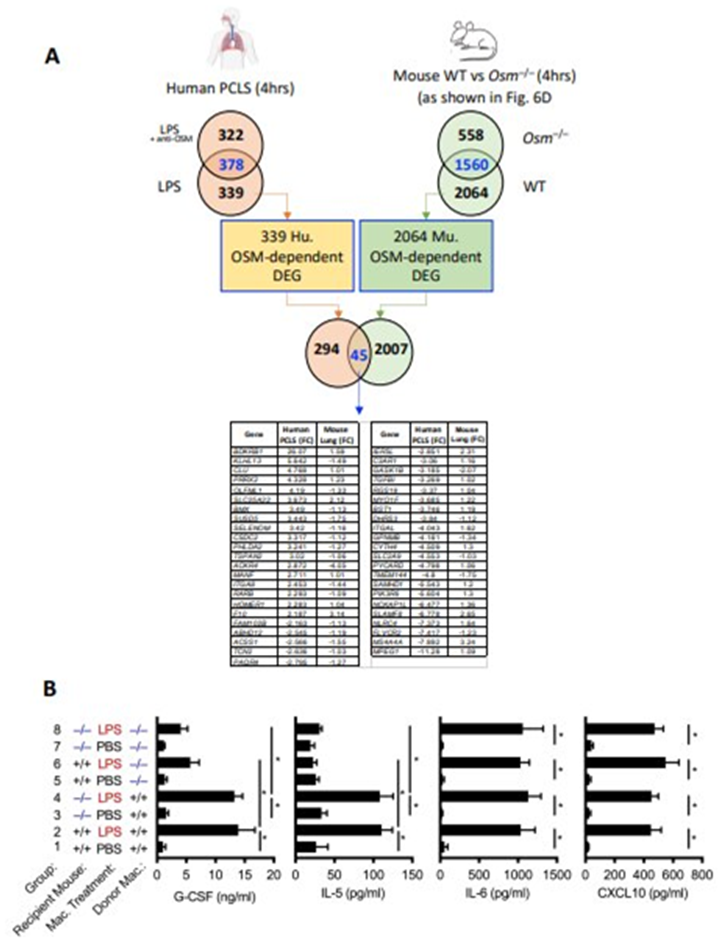
LPS triggers common and unique responses in human and mouse lung tissues and drives systemic responses. Image from Science Translational Medicine, 2022, doi:10.1126/scitranslmed.abf8188.
Another form of type 2 inflammatory asthma is eosinophilic asthma, characterized by high levels of a type of white blood cell called eosinophils. A hallmark of this type of asthma is generalized swelling throughout the respiratory tract, extending from the nasal area to the smallest airways in the lungs. Individuals with this form of asthma experience symptoms such as wheezing, shortness of breath, chest tightness, and abnormal lung function.
Non-type 2 inflammatory asthma has been defined as lacking eosinophils. However, doctors say this form of asthma is characterized by a range of issues, from extreme inflammation of the lung airways to shortness of breath and difficulty controlling the condition. In terms of treatment, medical experience...
However, the doctor said that this kind of asthma is characterized by a series of problems, ranging from extreme inflammation of the lung's airways to shortness of breath and being difficult to control.
In terms of treatment, medical experts have long known that non-Type 2 inflammatory asthma does not respond to inhaled corticosteroids, which are a standard treatment effective for other forms of asthma. Therefore, these authors reported that the discovery of an OSM-associated bacterial dysbiosis has opened a new window for understanding this debilitating disease.
In fact, the needs of patients suffering from this form of asthma are clearly unmet, as there is no specific therapy that addresses the unique manifestations of this disease.
These authors found that when exposed to LPS or a common bacterial pathogen, Klebsiella pneumoniae, OSM drives core asthma features such as inflammatory signaling and excessive mucus production. Given the unique role of OSM, they are developing a potent monoclonal antibody that can block this protein and suppress the occurrence of airway inflammation.
So far, the experimental results in mouse models seem promising. It is hoped that a treatment method that can be tested in human clinical trials will be developed. These authors concluded, "In summary, these results provide a scientific basis for the clinical development of OSM-targeted therapies to prevent asthma progression."BioValley Bioon.com)
References:
1. Saba Ghassemi et al. Oncostatin M expression induced by bacterial triggers drives airway inflammatory and mucus secretion in severe asthma. Science Translational Medicine, 2022, doi:10.1126/scitranslmed.abf8188.
2. Scientists discover 'missing link' in a severe form of asthma, paving the way to new therapy
https://medicalxpress.com/news/2022-04-scientists-link-severe-asthma-paving.html