

Beyang Therapeutics Files IPO Prospectus: The 'DreamWorks' of Early-Stage Drug Discovery
Beyang Therapeutics
Biopharmaceutical R&D Developer
In recent years, China's innovative drug industry has been developing vigorously, giving rise to a group of outstanding local listed companies. However, at the same time, the industry generally reveals problems such as insufficient innovation, crowded targets, and weak subsequent pipelines. To address these issues, Mr. Hu Qiyue, a senior expert who has worked in leading pharmaceutical companies for many years and is engaged in computational simulation and molecular design, proposed the "DreamWorks" model for innovative drugs. Like the legendary studio in the film industry, "DreamWorks™", it may not be large in scale but can continuously and efficiently produce blockbuster products. Shenzhen Beyang Therapeutics Co., Ltd., founded by Mr. Hu Qiyue, is precisely a company dedicated to building an innovative "DreamWorks" in China's biopharmaceutical field.
The core value of innovative drug projects lies in preclinical candidate molecules, the quality of which will largely determine the clinical value of the project as well as its commercial value after approval and market launch. Therefore, enhancing early-stage drug design and drug-likeness optimization capabilities, obtaining high-quality preclinical candidate molecules more quickly and efficiently, and fully demonstrating the competitive advantages of the project are key to breaking through industry challenges.
In April 2021, Shenzhen Beyang Therapeutics Co., Ltd. was officially established with the collaboration of two long-time friends: a former senior expert from Pfizer and a former senior algorithm expert from Chemical Computing Group (CCG). They shared a common dream—to build an innovative drug "dream factory" capable of continuously producing high-quality preclinical candidate molecules, helping China's innovative drugs go global and reach international markets.
Hu Qiuyue went to the United States for further studies after graduating from the School of Pharmaceutical Sciences at Peking University, where he obtained a master's degree in organic chemistry. He then joined Agouron Pharmaceutical, a mid-sized biopharmaceutical company located in San Diego on the West Coast of the United States, working in its computational modeling department. This department focused on building a computational platform for structure-based drug design (SBDD) and became a pioneer in this field. The company was later fully acquired by Pfizer due to its unique technical platform and distinctive pipeline of drugs under development.
While working at Pfizer, Hu Qiyue also pursued systematic advanced studies in programming, algorithms, and computation at the University of California, San Diego. During his 12-year tenure at Pfizer's La Jolla laboratory, he advanced from Associate Scientist to Principal Scientist and participated in over 20 early-stage drug discovery projects across four disease areas. One of the molecules, PF04691502, successfully progressed to Phase 2 clinical trials. He was also one of the key developers of Pfizer’s ultra-large virtual library (Pfizer Global Virtual Library, PGVL), which by early 2010 had reached a capacity to encompass 10 million compounds.18The retrieval and screening of chemical space have been widely applied by Pfizer's R&D staff in multiple small-molecule new drug projects. Due to his excellent performance, he has received the Pfizer Individual Outstanding Contribution Award multiple times.
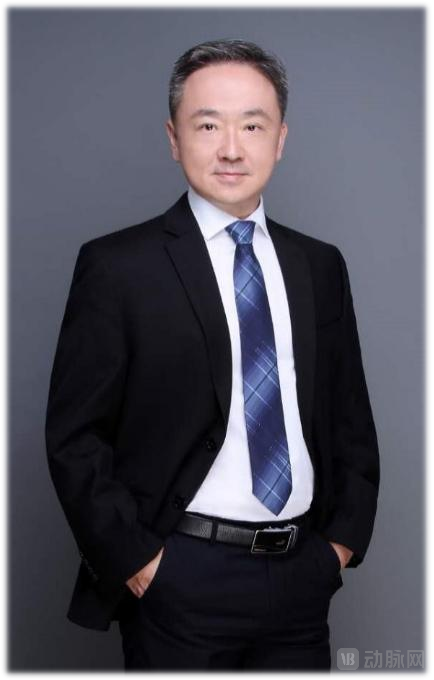
Qiyue HU, Founder of Beyang Therapeutics
In 2011, the萌芽of innovative thinking in China's pharmaceutical industry began, with the first batch of domestic pharmaceutical companies undergoing a strategic transformation from "imitation" to "innovation." Mr. Hu Qiyue was attracted by Hengrui Medicine's grand vision of leading the development of innovative drugs in China and chose to join Hengrui's R&D center in Shanghai, serving as the head of the molecular information department. As a core force, he participated in the innovative R&D of local pharmaceutical enterprises. During his tenure, he led his team to fully leverage the synergy between computational simulation and experimentation, further expanding the application of computational simulation from the small molecule field to various molecular formats including antibodies, recombinant proteins, ADCs, and RNA.
During his 9-year tenure at Hengrui, he made significant contributions to the development of multiple drugs using computational simulation technology. Among them, seven are at different stages of clinical trials: four large molecules—PD-L1 antibody Adebrelimab (NDA application), PCSK9 antibody (Phase III clinical trial), IL-15 Fc fusion protein (Phase I clinical trial), and Abeta antibody (Phase I clinical trial); and three small molecules—URAT1 inhibitor (Phase III clinical trial), BTK inhibitor (Phase II clinical trial), and TLR7 agonist (Phase I clinical trial). Based on his cutting-edge work in large-scale virtual screening, he was awarded the Shanghai 2013 Pujiang Talent title along with full funding. The molecular informatics department he led received the Hengrui R&D Outstanding Team Award in 2018.
Finding faster and smarter ways to discover new and better drugs is the driving force behind Beyang Therapeutics. Modern innovative drug research and development is precision engineering at the molecular level, where computational simulation technology plays a crucial role. To fully and accurately leverage the power of computational simulation, it is essential for the founder to possess expertise in both simulation computing and innovative drug development. Only an experienced early-stage drug discovery team can utilize computational simulation to achieve "synergistic enhancement." Additionally, modern experimental methods must be integrated to meet complex design objectives. With a clear strategic goal in mind, Beyang Therapeutics quickly assembled a core technical team of over ten members specializing in molecular design, drug-likeness evaluation, and biological assessment, successfully establishing its platform.ExCEED(Experiment + Computation w/ Enhanced Evaluation & DMPK) Technology Platform.
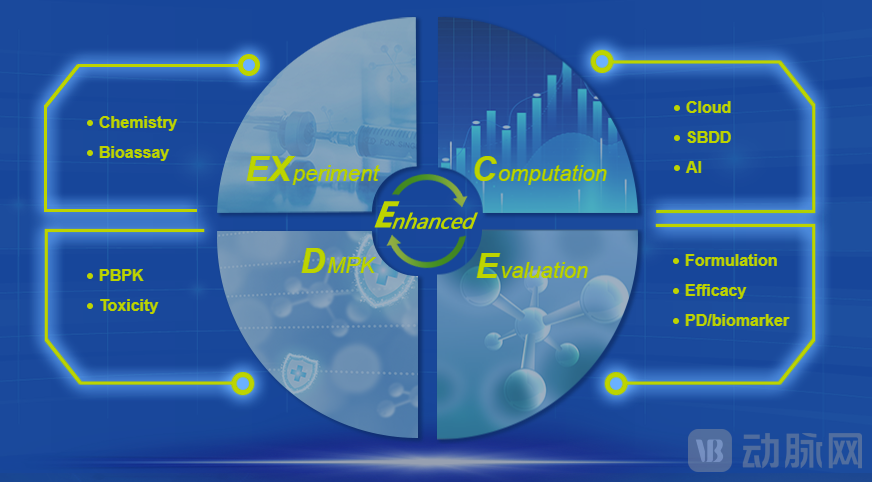
ExCEEDThe technology platform includes Molecular Design Center, Drug-likeness Evaluation Center, and Biological Evaluation Center.
The Molecular Design Center is led by Hu Qi Yue, with Dr. Chen Shuo Ling as the core technical member. Dr. Chen has worked for many years at Tripos and CCG and is one of the main contributors to the backend core algorithms of the two professional CADD software programs, Sybyl and MOE. He also has extensive experience in small molecule (Structural Bioinformatics Inc) and large molecule (Zymeworks) project development. Through their joint efforts, the Molecular Design Center has developed ultra-large-scale virtual screening (ULVS), Molecular Generation and Optimization Design (MMPT) and ADME prediction (iADME) technology. It can design active molecules from scratch based on the three-dimensional structure of the target protein, or optimize fragments based on lead molecules. Additionally, it innovatively introduces in silico ADME prediction and multi-parameter optimization (MPO) during the drug design phase. Before synthesizing molecules, key druggability parameters are predicted through structural analysis to further increase the success rate of designed molecules. Furthermore, a proprietary MMPT algorithm has been used to build a library of approximately 60 million molecular fragments, providing robust support for molecular generation and optimization design.
The Drug-likeness Evaluation Center is led by Dr. Genevieve Paderes (Gigi), who worked at Pfizer for 17 years. Gigi specializes in in silico ADME prediction and Multi-Parameter Optimization (MPO), which she closely integrates with molecular design. She has made significant contributions to three clinical candidate molecules, including the predecessor of Pfizer's COVID-19 small molecule drug Paxlovid, the SARS protease inhibitor PF-00835231. In addition, Beyang Therapeutics' drug-likeness team has extensive experience in managing compound screening and optimization projects, along with numerous successful cases of applying MIDD modeling to real-world projects. The team has cumulatively completed drug-likeness screening for tens of thousands of compounds and over a hundred preclinical declaration studies.
The Biological Evaluation Center is led by Dr. Suxing LIU. With over 25 years of R&D experience in oncology, immunology, and cancer metabolism, she has held positions at international pharmaceutical companies such as Schering-Plough/Merck, AstraZeneca, GenScript, and Eternity Bioscience. She has led multiple R&D teams to advance six candidate drugs into clinical research. Dr. Liu has also contributed to the successful establishment of various biological experimental platforms, including bioinformatics, structural biology, CRISPR gene editing, deubiquitinating enzymes, tumor biomarkers, and cancer genomics. Currently, the Biological Evaluation Center is focusing on Target Knowledge Universe (TKU), structural biology, and pharmacological efficacy models to support target discovery and project initiation, molecular activity screening, and pharmacological efficacy studies.
Founded in 2021, Beyang Therapeutics has successfully builtExCEEDBeyang Therapeutics is a technology platform that focuses on the deep integration of computational simulation techniques and drug discovery experimental technologies. It enhances early-stage drug development capabilities through three core aspects: molecular design, drug-likeness evaluation, and biological evaluation. Additionally, the founder has extensive experience in simulation computing and innovative drug development. Together, these factors enable Beyang Therapeutics to significantly accelerate the preclinical drug discovery phase, thereby providing new treatment options for patients worldwide. In this regard, Beyang Therapeutics is similar to several NASDAQ-listed companies, such as Relay Therapeutics and Exscientia.
Beyang Therapeutics completed an angel round of financing worth tens of millions of yuan in September 2021, gaining recognition from numerous leading biopharmaceutical and TMT institutions. The round was led by Oriza Ventures, with participation from Vivo Capital, Freeland Ventures, and BV Baidu Ventures.ExCEEDTechnical Platform: Beyang Therapeutics has independently built several preclinical project pipelines with First-in-Class or Best-in-Class potential and is actively expanding external collaborations. The company is about to launch a new round of financing plans, and the raised funds will be mainly used to advance the project pipeline and improve...ExCEEDTechnical platforms and strengthening team building.