

Ruijian Medicine's Parkinson’s Pipeline NouvNeu001 Receives IND Acceptance, Powered by Globally Innovative Chemically Induced Cell Therapy Platform

iRegene Therapeutics
Cell Therapy Product Developer
On April 11, 2022, the world celebrated the 25th "World Parkinson's Disease Day." More than 200 years have passed since the first discovery of Parkinson's disease, a common neurological disorder.
Currently, the number of Parkinson's disease patients in China has exceeded three million, among which the prevalence rate in people aged 65 and above is 1.7%. It is estimated that by 2030, the number of patients will reach five million, accounting for nearly half of the global patient population.
Facing the vast patient population with Parkinson's disease, new drug development companies are also continuously exploring relevant solutions for this condition.
On the "World Parkinson's Day" in 2022, Wuhan iRegene Pharmaceutical Technology Co., Ltd. ("iRegene") officially submitted the IND application for its Parkinson's disease pipeline NouvNeu001 to the Center for Drug Evaluation. On April 27, the Center formally accepted this application.
Preclinical data shows that NouvNeu001, after transplantation into the body through iRegene's self-developed highly efficient chemical small molecule-induced functional cell regeneration technology, can efficiently transform into mature dopaminergic neurons, secrete dopamine neurotransmitters, form neural connections with the original neurons in the body, and generate comprehensive therapeutic effects to improve Parkinson's symptoms. This provides a new clinical treatment pathway for Parkinson's disease using cellular drugs.
It is worth mentioning that the acceptance of NouvNeu001's IND application has officially made iRegene the first biopharmaceutical company in China and the second globally, after BlueRock under Bayer, to receive clinical approval for a pluripotent stem cell-derived drug in the Parkinson's disease field.
"Besides hand tremors, symptoms such as paralysis, dizziness, body stiffness, and loss of speech control have emerged. He has tried every means to conceal his condition but has had to face the fact that he has entered the kingdom of disease."
Hello, Parkinson's: Helmut Dubiel, former professor of sociology at the University of Giessen, vividly depicted his real-life condition after being diagnosed with Parkinson's disease in this book.
All of this is due to the massive death of dopaminergic neurons that secrete the neurotransmitter dopamine in the brain.
Unfortunately, even though the pathological features of Parkinson's disease are very clear, there are currently no effective clinical means to reverse the ongoing trend of dopamine-producing neuron death in the brain. With the deepening trend of an aging population, the incidence of neurodegenerative diseases such as Parkinson's is also rapidly increasing, severely affecting patients' quality of life and placing a significant burden on families and the national health insurance system.
The approval of NouvNeu001 for clinical trials this time undoubtedly brings new hope for the clinical treatment of Parkinson's disease.
As the world's earliest high-tech pharmaceutical company focused on researching highly efficient chemical small molecules for inducing functional cell regeneration, iRegene has established an induced pluripotent stem cell (iPSC) product development platform based on regenerative medicine. NouvNeu001 utilizes this platform, using induced pluripotent stem cells as "seeds" to culture healthy dopaminergic neural precursor cells, which are then transplanted into the lesion area to compensate for the deficiency of dopaminergic neurons.
These precursor cells can not only secrete neurotransmitters such as dopamine, but also further release a variety of proteins and small RNAs to improve the Parkinson's disease lesion, providing a favorable "soil" environment for the transplanted cells to function in the brain.
Based on the above strategies, NouvNeu001 efficiently promotes the recovery of patients' motor and other functions.
"Traditional drug and surgical therapies have significant limitations for many diseases, while cell therapy, with its unique treatment approach, is a valuable complement to conventional therapies," commented Dr. Yan Xuan, partner of Yangtze River Securities Innovative Investment, who participated in the A+ round financing of iRegene.
Based on the results of completed pharmacological efficacy trials and safety tests, the behavioral functions of various experimental animals treated with NouvNeu001 were significantly restored after four weeks of drug administration. Additionally, multiple physiological and biochemical indicators showed marked improvement. In contrast, globally, similar drugs for Parkinson's disease require a minimum of twelve weeks to take effect. The pharmacological efficacy of iRegene's NouvNeu001 demonstrates a significant advantage.
"The smooth approval of NouvNeu001 for clinical trials reflects the highly efficient execution of the iRegene team. Throughout the R&D process, we fully considered unmet clinical needs, always prioritized the benefits of patients, and conducted thorough scientific and rigorous safety assessments of the product," said Dr. Wei Jun, co-founder and CEO of iRegene.
Behind the clinical approval of Parkinson's disease R&D pipeline lies iRegene's composite R&D system centered on chemical induction, which has established several internationally pioneering technology platforms.
Currently, by utilizing a multi-platform modular flexible integration approach, iRegene is building an innovative R&D model centered around a core data platform, which encompasses multiple drug formats, multiple pipelines, and multiple drivers. This has rapidly completed the layout of several R&D pipelines, including the recently successful IND submission of NouvNeu001, showcasing significant scalability.
According to the company's official website, in just over four years since its establishment, iRegene has rapidly completed the layout of multiple R&D pipelines. In addition to cell-based drugs targeting Parkinson's disease, spinal cord injury, stroke, and other neurodegenerative diseases, the company is also exploring the potential of cell-based drug treatments in optic neuropathy, diabetic retinopathy, amyotrophic lateral sclerosis (ALS), and liver metabolism.
The value of the related technology platforms goes beyond this. According to Wei Jun, the company’s established technical platform also includes a multi-dimensional integrated database covering "compounds-protein targets-tissue development-disease treatment," and utilizes tools such as network visualization, knowledge-based Q&A, and machine learning models to construct a metadata integration platform (iReMeta). This is of great significance for revealing key molecules and targets in the human developmental atlas and clarifying disease treatment mechanisms.
In addition, in response to the complex drug development in the future, iRegene has also established a high-throughput gene editing platform called iReDita, which includes various gene editing tools such as CRISPR and TALEN. Besides the increasingly sophisticated chemically-induced cell drug platform, iRegene has also built a complex drug development platform based on chemical induction (iReCena), aiming to explore the therapeutic potential of cell derivatives in multiple indications.
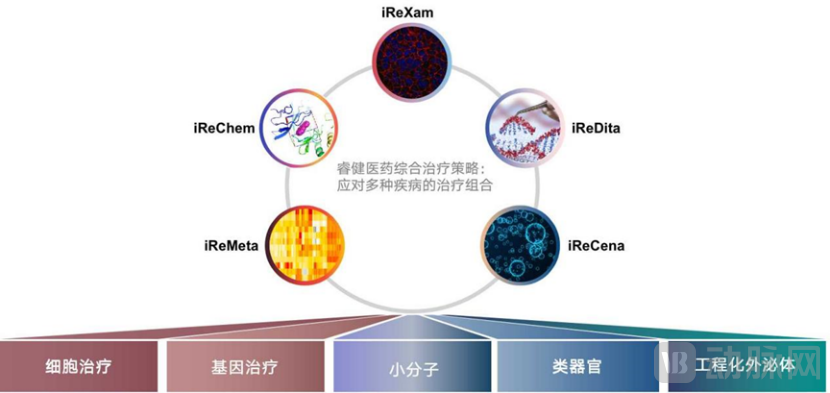
iRegene Pharmaceutical System
Relying on several internationally pioneering technology platforms independently developed by the company, iRegene has become a platform-based company, and the advantages of its self-developed technology platforms are gradually being transformed into competitive advantages for the company's development.
Public information shows that iRegene secured two rounds of financing, totaling nearly 100 million yuan, in less than half a year from August 2021 to January 2022. Prior to the closing of its A+ round, iRegene signed a strategic cooperation agreement with Danaher Life Sciences China to engage in close collaboration in the field of globally groundbreaking cell drug research and production.
According to the agreement, the two parties will jointly build the "iRegene-Danaher China Life Science Joint Laboratory" to jointly promote the research and clinical application of globally innovative AI platform-based chemical induction cell therapy.
In addition, while continuously receiving multiple rounds of financing support, iRegene officially relocated to a new R&D and production site in August last year, which spans a total area of 4,000 square meters. This move completed the company's facility and hardware upgrades, accelerating the speed of pipeline development.
The company will also continue to improve the full-process innovation R&D and production system, and create a benchmark for industrial-grade cell drug R&D and production integration design and configuration through cooperation in the upstream and downstream industrial chain and the establishment of a demonstration laboratory with Danaher.
"In fact, during this IND process, iRegene has simultaneously completed the full set of clinical-ready technical reserves, fully considering product design for storage and logistics stability, while also meeting international supply and logistics requirements," said Wei Jun.
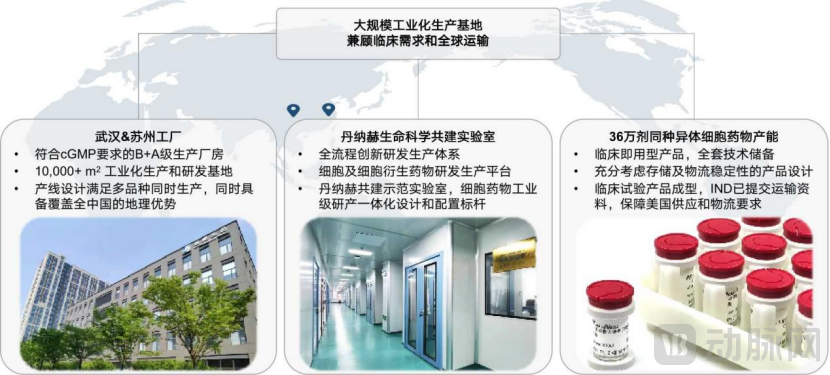
iRegene's Industrial Production Layout