

Five Key Trends Shaping FDA-Approved Innovative Medical Devices

iNEURO
Provider of Comprehensive Brain Science Medical Solutions
FDA Uses De Novo Classification for Truly Innovative Medical Devices
In the whole year of 2021, a total of 30 products were approved through the De Novo pathway, while by the end of March 2022, only four products had been approved.
From the products approved by the FDA, it can be seen that innovation in medical devices relies not only on the organic combination of clinical research and scientific exploration but also on the application of digital technologies, including artificial intelligence, big data, virtual technology, new sensors, and brain-computer interfaces. VCBeat attempts to sort out the context and identify trends in medical device innovation.
The number of De Novo approvals over the past decade reflects that, apart from 44 in 2018, it was difficult for other years to exceed 30. On average, there were about 25 per year over the 10 years, which shows how challenging innovation can be.
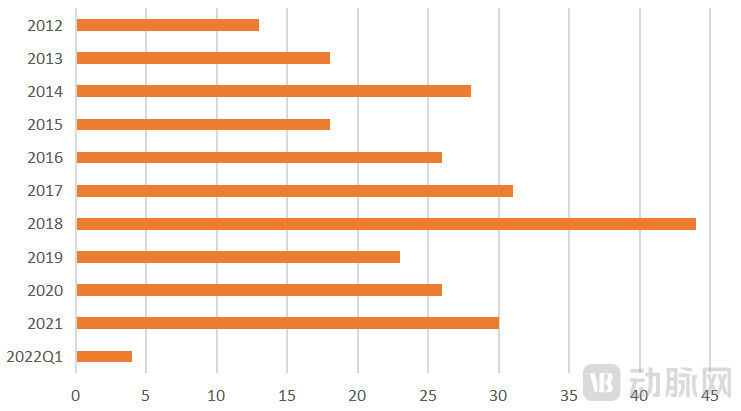
Number of Approvals for De Novo Classification in the Past Decade
In 2021, 30 innovative devices were approved by the FDA, coming from 30 different companies. In terms of national distribution, the United States accounted for 16 companies, occupying more than half of the share. Israel followed closely with 17%; then came Canada with 10% and five European countries together accounting for 19%. Among them, Israel ranking second may seem unexpected, but it is actually reasonable.
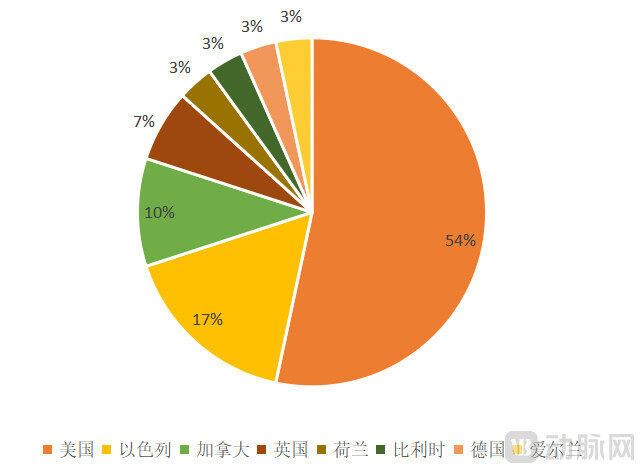
Country where the approved company is located in 2021
After all, between 2010 and 2018, Israel launched nearly 600 innovative medical device products, including products like the ReWalk exoskeleton robot and the PillCam capsule endoscope. These groundbreaking innovative devices not only addressed practical clinical issues but also, to a certain extent, advanced the development of global medical device technology.
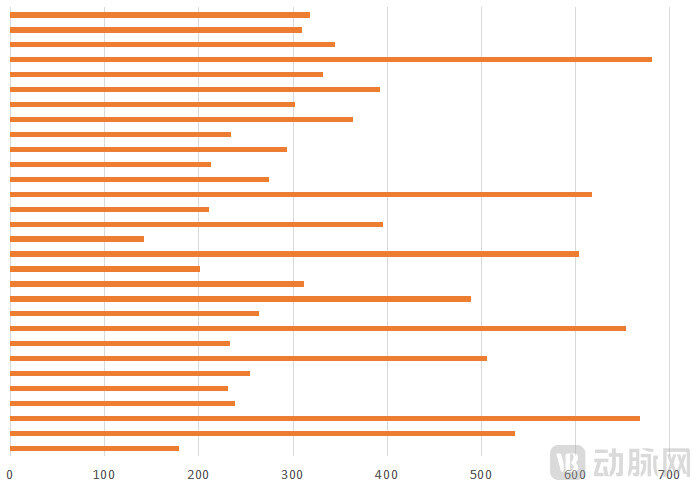
Review Time for Projects Approved in 2021 (Unit: Days)
From the FDA's review time, the average time used for 30 projects was 359.6 days, close to one year. The longest took nearly 700 days, while the shortest only took 142 days. Among them, the two surgical robot projects and the wound care project took the longest review time, exceeding 650 days each. This shows that the FDA is quite cautious in its risk assessment of innovative devices.
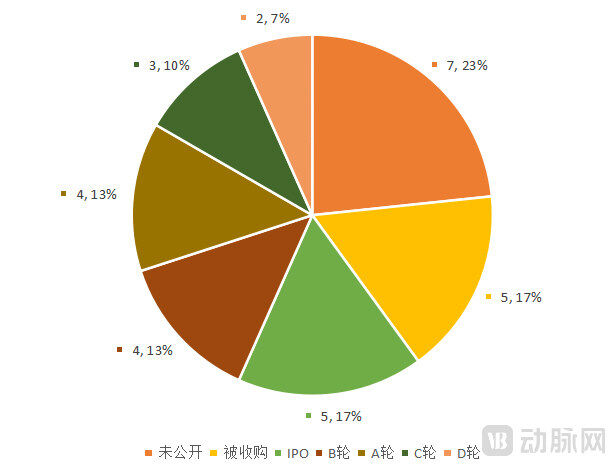
Stage of 30 Companies in 2021, Data from Crunchbase
From the perspective of enterprises, although there are century-old establishments like Siemens, the median year of establishment is 2012, meaning that more than half of the companies have been established for less than 10 years. According to data retrieved from Crunchbase, out of the 30 companies, excluding the seven whose information was undisclosed, five were acquired and five went public through IPOs, with the rest in early to mid-stage funding rounds.
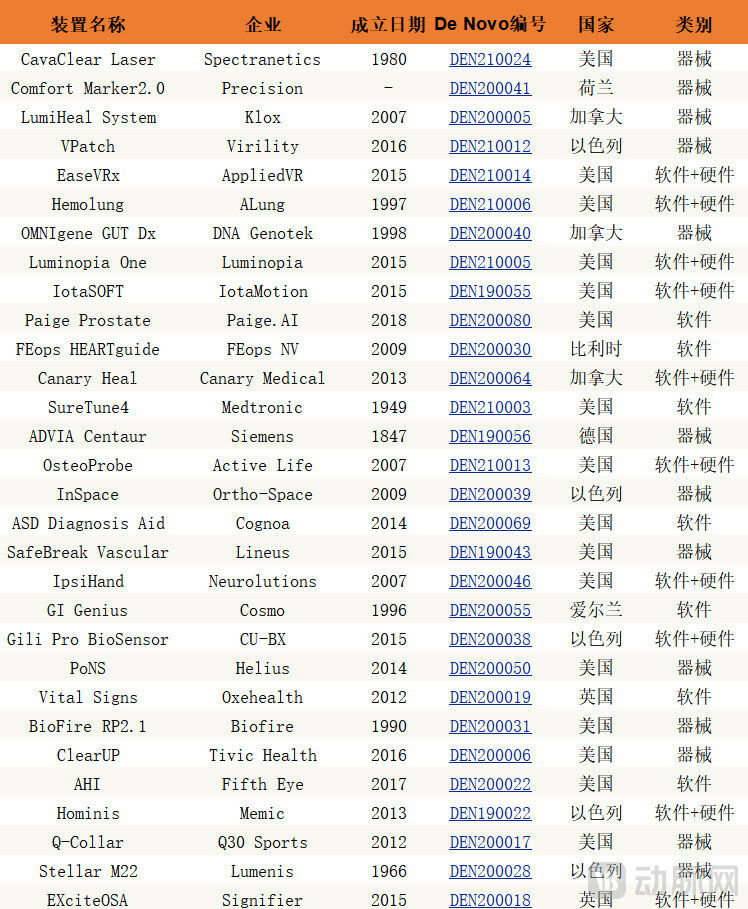
List of Products Approved by De Novo in 2021
Among the 30 products approved in 2021, 13 were traditional devices, seven were software-based, and 13 combined software with hardware. It is evident that with the increasing integration of digital technologies, the role of software in medical devices has become increasingly crucial. Today, software constitutes the core of medical device products more commonly than ever before.
This trend can also be observed in the small sample size from the United States. Among the 16 approved products in total, six are pure devices, four are software-based, and six combine both hardware and software. Of the 16 products from companies established no more than 10 years ago, 11 are based on either software or a combination of hardware and software, accounting for 75%.
For 7 pure software products and 10 software-hardware integrated products, digital technology plays a crucial role. We attempt to identify some trends from them.
The integration of artificial intelligence (AI) technology with the healthcare field continues to deepen, with increasingly rich application scenarios, including voice-recorded medical histories, AI-assisted medical imaging diagnostics, drug research and development, medical robots, and intelligent analysis of personal health big data—all of which are currently popular applications of AI.
The application and innovation of digital technologies represented by AI in medical scenarios are improving the efficiency of the entire ecosystem across the medical upstream and downstream. This time, among the products that received FDA De Novo approval, quite a few are AI-based.
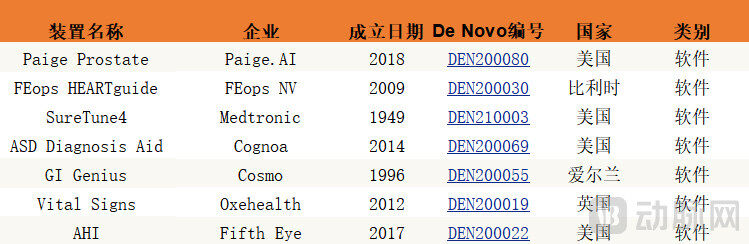
AI-Based Innovative Device Software Approved
Paige Prostate is the first AI pathology product to receive FDA De Novo approval, assisting pathologists in detecting small cancer lesions and thereby enhancing work efficiency during the diagnostic process.
David Klimstra, MD, of Paige.AI, stated: "The FDA approval is a milestone, marking the beginning of a new era in AI-assisted diagnostic pathology. It also allows pathology labs to integrate diagnostic tools into clinical workflows, enabling pathologists to diagnose cancer more accurately and efficiently."
As the first clinical-grade AI pathology diagnostic technology, Paige Prostate paves the way for the future introduction of numerous diagnostic tools to standardize pathology diagnostics.
Pathological diagnosis is a complex task that heavily relies on experiential knowledge and is regarded as the gold standard in medicine. It often requires doctors to possess extensive professional knowledge and experience. Moreover, even experienced doctors can easily overlook subtle details, leading to diagnostic deviations.
AI Technology Empowers Pathological Research: By learning the characteristics of cytopathology, histopathology, immunohistochemistry, or molecular pathology, the continuous improvement of the intelligent system for pathological diagnosis is an effective solution to enhance reading efficiency and diagnostic accuracy. It is also a practical technological means to address the severe shortage of pathologists.
In addition, for certain special diseases, such as Autism Spectrum Disorder (ASD), diagnostic tools can also play a role at home.
The American Academy of Pediatrics recommends that parents take their children for early screening of multiple developmental disorders between the 9th and 36th months after birth, with autism being the most important item.
The "gold standard" for autism screening commonly used internationally consists of the Autism Diagnostic Interview-Revised (ADI-R) for parents and the Autism Diagnostic Observation Schedule (ADOS) for children. Completing a single scale requires approximately 2 hours of a professional doctor’s time.
FDA-Approved ASD Diagnosis Aid Launches, Offering Convenience to Parents by Utilizing Three Modules: Parent Surveys, Home Videos, and Clinician Questionnaires to Gather Diagnostic Evidence, Assisting in the Diagnosis of Children Aged 18 Months to 5 Years with Potential Symptoms.
AI-based diagnostic tools are not a new phenomenon. With the accumulation of technology, new diagnostic tools have been approved every year in recent years, and their indications are gradually expanding. The momentum of development has already taken off, and more products will emerge in the future. For China, such tools can not only improve the efficiency and accuracy of doctors but also effectively alleviate the imbalance of local medical resources.
The greatest charm of digital technology in healthcare lies in addressing the pain points of previous governance processes and creating new medical scenarios.
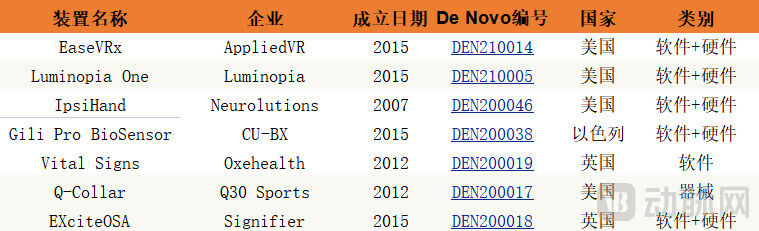
Digital Technology Empowers New Medical Scenarios
Take amblyopia in children as an example. Currently, the mainstream treatment is still occlusion therapy. However, it is not easy to get children to adhere to this treatment plan, especially for those who have started school.
But if children only need to sit on the sofa and watch specially-made programs and movies with a head-mounted VR device, perhaps the vast majority of children would not refuse.
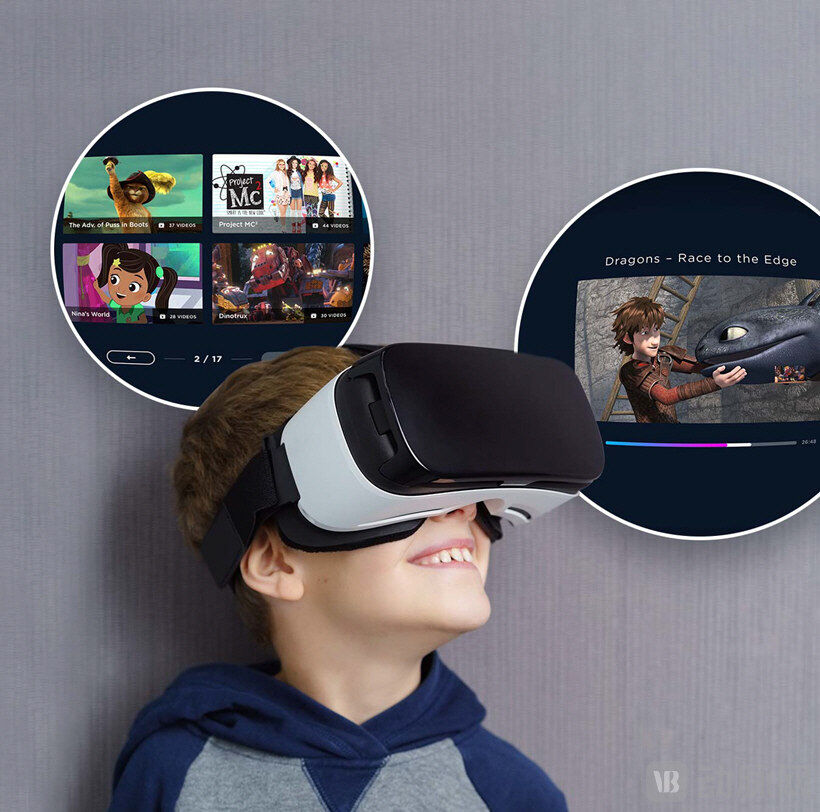
Luminopia One System
Luminopia has collaborated with children's content producers to develop a video content library exceeding 500 hours. Children undergoing treatment can freely choose from a variety of media content based on their preferences. The software processes video images in real time, reducing the contrast of the images received by the better eye by 15%, thereby decreasing the strength of the central signal input from the better eye. This forces the brain's visual center to rely more on the poorer eye for a clear visual experience, thereby achieving the goal of exercising the weaker eye and establishing a connection between the weaker eye and the brain's central processing area.
The approval of Luminopia One was made possible by a trial report published in the American Academy of Ophthalmology's journal *Ophthalmology*, which demonstrated the safety and efficacy of this therapy for children aged 4 to 7 with amblyopia. This study marked the first successful randomized controlled trial for amblyopia treatment in nearly a decade and was also the first to showcase the effectiveness of the dichoptic approach.
Besides efficacy, there is another noteworthy conclusion from clinical research. The proportion of children who achieved full compliance with the VR regimen was 88.2%, whereas the compliance rate for glasses and patching treatment is typically only around 50%. This also indirectly demonstrates the value of this new medical application.
In addition, there are new medical scenarios for obstructive sleep apnea (OSA).
The conventional treatment for OSA mainly involves home-use ventilators, which mustWorn during sleep, the comfort is not guaranteed, and it may even further disrupt already poor sleep quality; regular cleaning and maintenance are required, and long-term use must be adhered to, all of which directly affect the patient's willingness to continue using it.
Previously, the approved products for OSA treatment were still based on home-use ventilators. Although optimizations were made to address the aforementioned pain points, they could not completely solve the problems and only improved in terms of intelligence.
The eXciteOSA therapy approved by the FDA this time adoptsDaytime TreatmentIn this way, patients reduce snoring and sleep apnea symptoms at night by stimulating the muscles in the tongue area during the day.
According to the app's guidance, patients are required to use the device for 20 minutes daily during the initial six weeks, then adjust to once a week. This treatment is suitable for non-severe OSA adult patients without contraindications or serious dental issues.
For the medical scenario of OSA, restricted by the treatment method of ventilators, the scenario has always been the patient's nighttime sleep. Previous improvements have also failed to break away from this scenario. Thanks to the development of digital technology, new treatment methods have emerged, and in the new medical scenario, the pain points in the old scenario naturally no longer exist.
Last year, 7 of the projects approved by the FDA were developed based on new scenarios.
The continuous development of smart devices and sensors has led to a constant reduction in their cost and size, while the stability of connections has also gradually improved. In view of this, various fields within the healthcare industry have become targets for IoMT applications, ranging from industry-level data exchange to improving the quality of life for individual patients at home.
Previously, the Apple Watch and Fitbit smartwatches were simple examples of such technology applications. Wearable devices can collect medical data from patients, distribute the data to relevant caregivers, and also monitor patient activity.
The "Smart Knee" Persona IQ for total knee replacement, jointly developed by Zimmer Biomet and Canary Medical and recently approved by the FDA, marks a shift in IoMT technology from previous wearable methods to an integrated approach with consumables, expanding into the postoperative rehabilitation field.
Before Persona IQ, doctors could only obtain first-hand patient data through regular follow-ups. However, this data was temporary and fragmented, failing to truly reflect the patient's postoperative movement. This led to an inability for doctors to make accurate judgments, with rehabilitation plans being impractical and mismatched to the patient’s actual condition, resulting in suboptimal recovery or even deterioration for some patients.
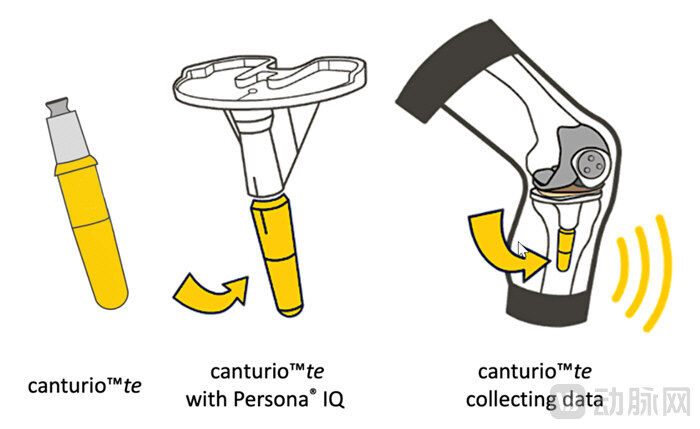
Persona IQ Smart Joint
Persona IQ combines Zimmer Biomet's knee implant with Canary Medical's implantable tibial extension sensor. Therefore, Persona IQ not only has the function of a traditional knee implant but can also measure and determine the patient’s range of motion, step count, walking speed, and other gait metrics in real time. At the same time, Persona IQ can work collaboratively with Zimmer Biomet's remote care management platform.
Technically speaking, Persona IQ is not complicated. The real complexity lies in how to integrate Persona IQ into existing medical processes. This requires the developing enterprise to have a strong foundation in digital technology.
Sensor developer Canary Medical has been committed to introducing IoT technology into the medical device field and has successfully built a complete ecosystem consisting of implants, base stations, apps, and cloud services. In addition, Canary's technology will also be applied in the fields of cardiovascular, spine, trauma, and medical aesthetics.
Zimmer Biomet places great emphasis on the construction of digital platforms. Its launched ZBEdge Connected Intelligence Suite includes the ROSA robotic platform, visualization and navigation systems, the Mymobility remote healthcare and patient management system, and the OrthoIntel orthopedic data analysis platform, among others.
Therefore, Zimmer Biomet can integrate Persona IQ into its own platform. The data collected by Persona IQ is transmitted to the cloud via the network, organized and analyzed by OrthoIntel, and then provided to doctors for decision-making. Doctors give corresponding rehabilitation advice based on the data, which is communicated to patients through Mymobility.
It is not difficult to see that, for the scenario of postoperative rehabilitation, the value brought by IoMT is to shorten the time interval between measurement, analysis, and treatment. With the development of technology, IoMT will gradually be empowered into smaller and more complex devices, further opening up more medical application scenarios.
Among the companies approved this time, Ortho-Space has also developed a data collection system based on IoMT-enabled implantable sensors. By providing real-time data on the load and pressure borne by joints during surgery, it allows surgeons to make more informed decisions in balancing knee soft tissues and adjusting implant positions. Due to its outstanding technical capabilities, this Israeli company caught the attention of Stryker, one of the global orthopedic giants, which acquired it for $220 million.
Although the mention of surgical robots often brings to mind Intuitive Surgical's Da Vinci laparoscopic surgical robot, beyond laparoscopy, natural orifice procedures are also a popular field.
According to data from Frost & Sullivan, in terms of accessible surgical volumes, endoscopic and natural orifice surgeries reached 9.29 million and 10.2 million cases respectively in 2020. Natural orifice surgical robots refer collectively to a series of surgical robots. With technological advancements, there is potential for the development of specialized surgical robots applicable to natural orifices such as the respiratory and digestive tracts.
Memic's Transvaginal Gynecological Surgical Robotic Platform Hominis Approved by FDA After 681 Days of Review. It is the first FDA-authorized robotic platform dedicated to gynecological surgery. Currently, Hominis is only approved for treating benign gynecological conditions: used in single-site, natural orifice laparoscopic-assisted transvaginal benign surgeries, such as hysterectomy, salpingectomy, oophorectomy, and ovarian cyst removal.
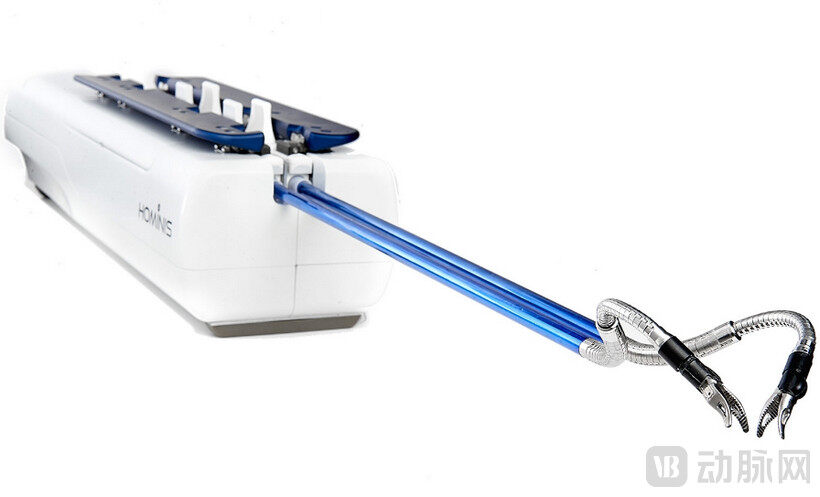
Hominis Surgical Robot
Although the American College of Obstetricians and Gynecologists recommends that vaginal hysterectomy is the safest, least invasive, most cost-effective, and quickest recovery method, in practice, less than 20% of hysterectomies are performed this way. This is because the complex cavity space makes it difficult for the current surgical robot arms to reach all surgical areas through the vagina, but the emergence of Hominis may change this situation.
Hominis is an endoscopic system that can be introduced into the body through a single entry point. Its 360-degree flexible articulation provides the ability to bend and navigate around anatomical obstacles, allowing access to the entire surgical area and enabling optimal angulation for visualization-driven surgery. Memic plans to continue focusing on the gynecological field while expanding its technology to other applications, including general surgery, gastroenterology, thoracic surgery, and urology procedures.
In addition, the FDA has also approved the listing of a cochlear implant robot named iotaSOFT, which was developed by medical device company iotaMotion Inc. and is used for cochlear implant surgeries in patients aged 12 years and above to treat hearing loss.
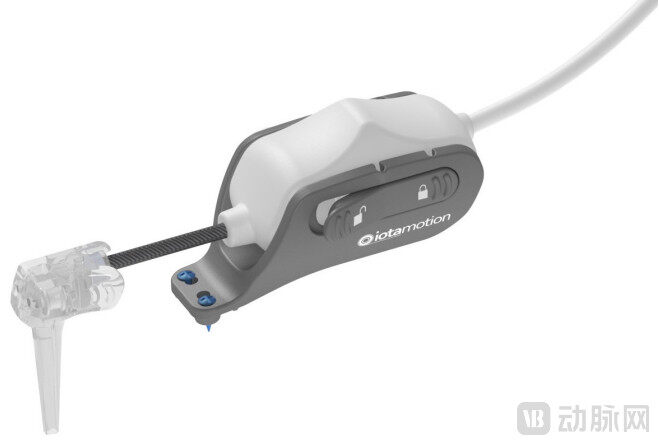
iotaSOFT Cochlear Implant Robot
The iotaSOFT system is the world's first robotic-assisted cochlear implant robot, only thumb-sized, designed to help surgeons place cochlear electrode arrays by controlling the speed of implant insertion.
Cochlear implant surgery is a type of otological operation that involves installing a cochlear implant device into the inner ear of deaf patients. If the surgeon's control of force is not precise enough, there is a 15% to 50% chance that the patient may suffer additional natural hearing loss after the surgery. The stability of the surgical operation and the accuracy of positioning are crucial.
The advantage of the iotaSOFT robot lies in its ability to advance cochlear implant electrodes with high precision, controlling the force and speed during the cochlear implantation process while reducing insertion resistance. This minimizes the occurrence of pressure spikes during insertion, thereby preserving residual hearing and function—a particularly important factor for patients relying on hybrid hearing (remaining natural hearing combined with assisted hearing).
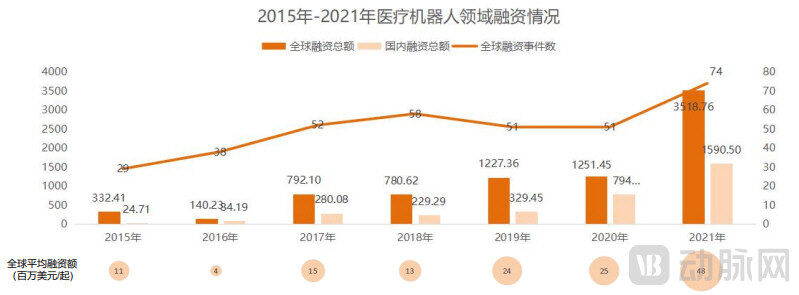
Medical Robot Financing from 2015 to 2021, Data Source: VCBeat
Globally, the growth momentum of surgical robots is rapid, with the number of large-scale financing events increasing year by year. From 2015 to the end of 2021, there were a total of 22 financing events exceeding 100 million US dollars in the medical robotics field, 10 of which occurred in 2021. In 2021 alone, there were 55 financing events in China's medical robotics sector. Currently, multiple surgical robot products made in China have been successively approved and are beginning to enter the market.
In the future, with the advancement of technology, surgical robots will develop in a more intelligent direction, simplifying complex surgeries and standardizing simple ones. Surgical robots will expand into more specialized fields.
The world's major countries have named the next 10 to 20 years as the "Era of Brain Science," incorporating brain science research into their national development strategies. As an application area of brain science, Brain-Computer Interface (BCI) has gained significant attention in recent years. Among its applications, healthcare is a key focus, and research outcomes from BCI+healthcare have become important reference points for industry participants.
Neurolutions' IpsiHand Upper Limb Rehabilitation System, used in stroke treatment plans for patients aged 18 and above, has become the first non-invasive device in the BCI field to receive FDA approval.
"Cerebral Stroke," also known as "stroke," is an acute cerebrovascular disease. After a stroke occurs, approximately 75% of survivors will be left with varying degrees of physical disability. To restore motor function, patients require prolonged rehabilitation training to retrain the brain to control and direct limbs. However, the effort invested often yields unsatisfactory results.
"This is because the wrong part of the brain was chosen," explained Professor Eric Leuthardt of Washington University in St. Louis, the inventor of the IpsiHand system. "A small region in the ipsilateral brain plays a crucial role in action planning. When we move our left hand, specific electrical signals first appear in the left hemisphere of the brain, and within a few milliseconds, the motor area of the right hemisphere becomes active, transforming the intention to move into actual muscle contractions in the hand. What we need to do is to create new connections in the brain and train the uninjured parts of the brain to take over the functions of the injured areas."
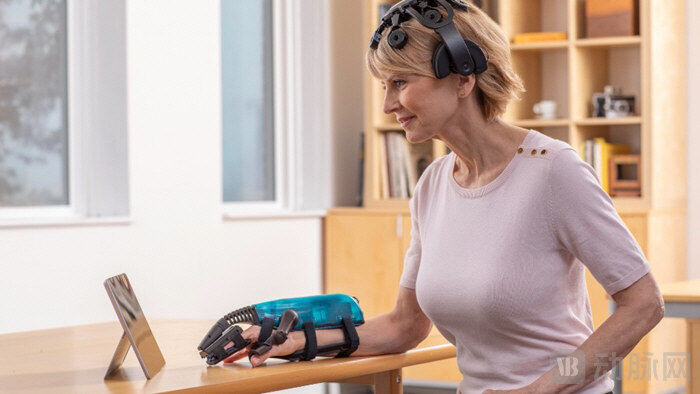
IpsiHand System
The IpsiHand system is divided into three parts: an electroencephalogram (EEG) cap, a mechanical exoskeleton device, and a tablet computer serving as the information hub. The EEG cap is equipped with numerous electrodes that can read and identify the user's brain waves, including when they attempt to move or control their arm. The EEG cap then translates these signals and sends them to the mechanical exoskeleton device. Upon receiving the commands, the exoskeleton assists the limbs in performing actions according to the brain’s intentions, enabling functions such as extension, gripping, grasping, and movement.
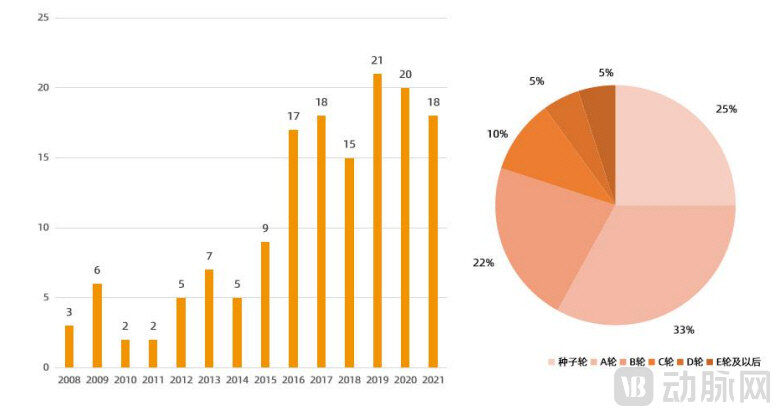
Global BCI Enterprise Financing and Round Distribution, Data Source: VCBeat
According to the statistics of global BCI enterprise investment and financing events from 2008 to 2021, the BCI industry has seen a total of 148 investment and financing events. The distribution by year shows that 2016 became a breakthrough year for the global BCI industry development, with investment and financing events increasing by 89% year-on-year in 2016. This indicates that investment institutions have been accelerating their investment layout in BCI projects in recent years.
According to data from the China Electronics Association, in the past five years, the total number of publicly published papers in the field of brain science globally has exceeded 450,000, with a total of nearly 20,000 patent applications. The United States ranks first globally with 150,000 scientific research papers and more than 8,000 patent applications. The number of patent applications in China's BCI field has also shown a year-on-year increase, growing from less than 10 in 2012 to 137 applications in 2020.
In the future, with continuous investment in funding and research and development, BCI technology will narrow the gap between experimental research and practical application. The commercial prospect of BCI technology depends on whether it can break through the technical bottleneck of its practical application as soon as possible. The approval of the IpsiHand system means that BCI technology has taken a solid first step towards commercial implementation.
On December 1, 2018, the NMPA officially released and implemented the updated "Special Review Procedure for Innovative Medical Devices." The issuance of the new regulations, along with resource support, has led to a surge in China's innovative medical devices.
As of April 2022, 155 medical devices in China have passed the innovative review process. From this, we can observe some similarities and differences in the development of innovative medical devices between China and the United States.
First, there are diagnostic tools based on AI technology. In China, nine products have passed the innovative review process, with indications ranging from diabetic retinopathy to CT imaging-assisted triage for intracranial hemorrhage. In the future, the application boundaries can be further expanded to cover a wider range of indications. Secondly, in the field of surgical robots, multiple robots have passed the innovative review process, covering areas such as orthopedics, endoscopy, and neurosurgery. However, in the broader category of natural orifice procedures, there are currently fewer products available. Finally, regarding the Internet of Medical Things (IoMT), most approved products are still focused on continuous glucose monitoring systems, with relatively limited application scenarios.
In terms of the application of digital technology, domestic companies are quite actively involved. Even in cutting-edge fields like BCI, there are Chinese companies such as iNEURO, Boyi Kang, Huiniao Cloud, and Qiangnao Technology participating.
Modern medicine is accelerating towards the directions of early detection, precise quantitative diagnosis, minimally invasive treatment, personalized medical treatment, and intelligent services, continuously presenting new demands for innovation and development in the medical device field. In the future, the correlation between China's medical device industry and the global medical device market will become increasingly close. Domestic medical device enterprises must continuously invest in manufacturing processes, new technology applications, and research and development levels to maintain innovation momentum and seize the opportunities for rapid growth.