Sanofi Reports Strong Q1 2022 Results: China Sales Up 13.4%, Dupixent Surges 45.7%
Sanofi
Pharmaceutical R&D Developer
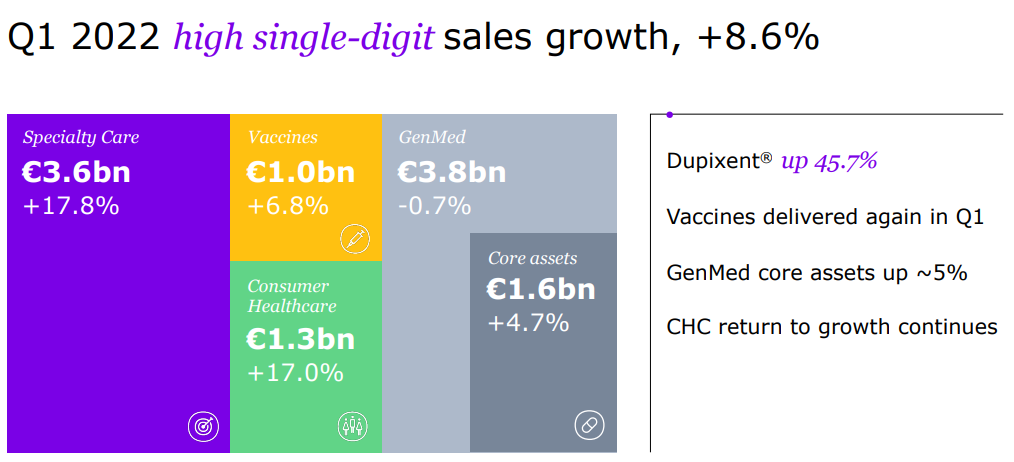
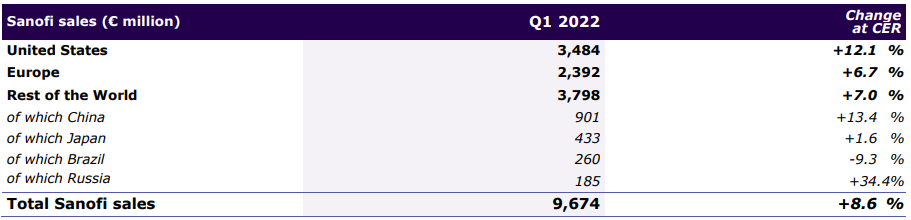
On April 28, Sanofi announced its Q1 2022 performance, achieving revenue of €9.674 billion, representing an 8.6% year-over-year increase. Pharmaceutical business revenue totaled €7.326 billion (+11.6%), vaccine business revenue reached €1.02 billion (+6.8%), and consumer healthcare business revenue amounted to €1.328 billion (+17%).
In terms of revenue by region, Russia provided the strongest growth momentum for Sanofi (+34.4%), followed by the Chinese market, which saw a year-on-year increase of 13.4% (901 million euros), mainly driven by the growth of Dupixent (dupilumab) and vaccines. However, the insulin bulk procurement is expected to be implemented in May 2022, and Sanofi expects the sales of its two winning products, Toujeo/Lantus, in China to decrease by about 30% in 2022.
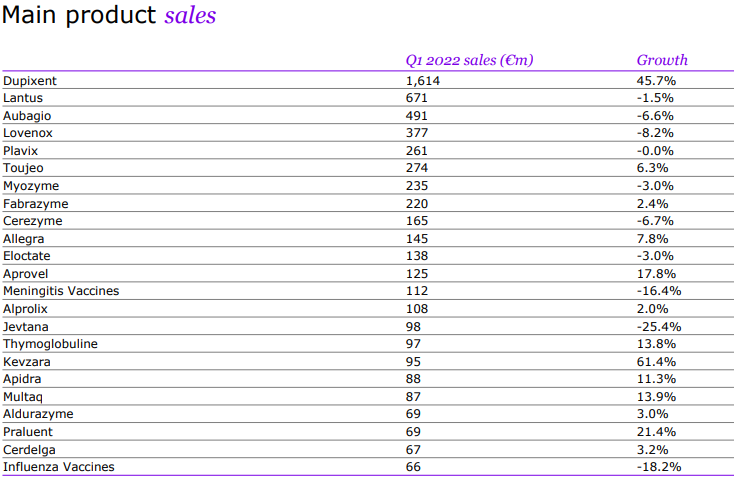
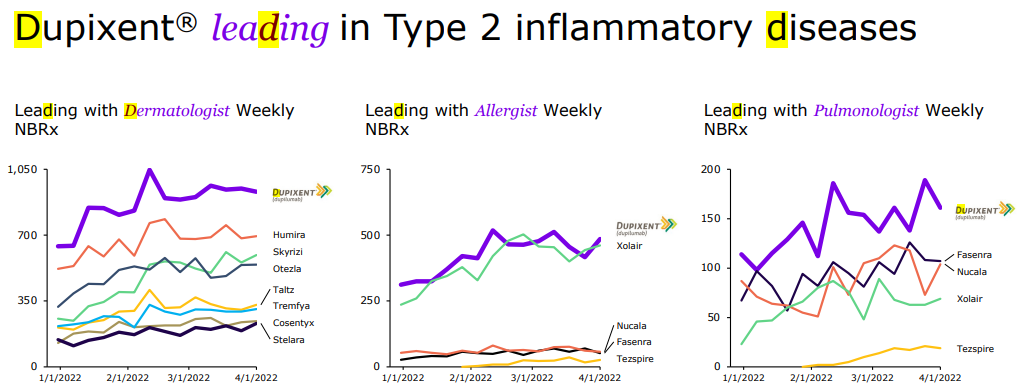
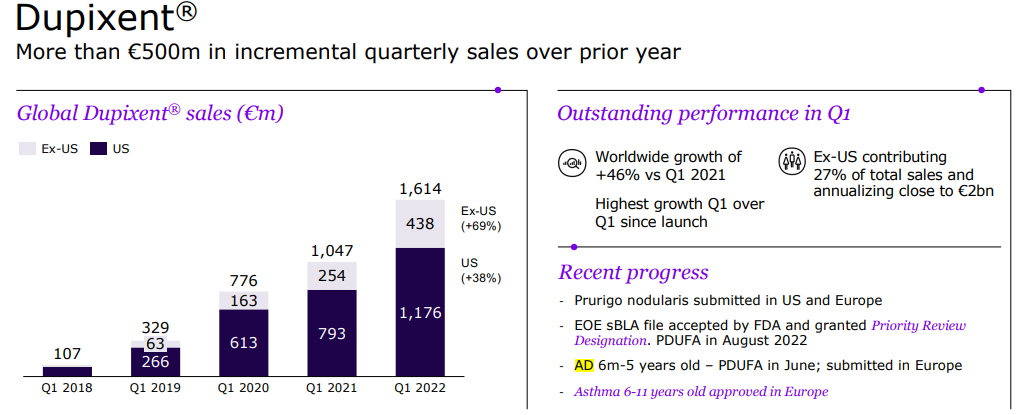
In terms of specific products, Dupixent remains the most important product for Sanofi in the short term. This quarter, its revenue increased by 45.7% year-on-year, reaching 1.614 billion euros. Currently, in type 2 inflammatory diseases such as dermatology, allergic reactions, and respiratory departments, this product is far ahead in terms of new brand prescriptions (NBRx).
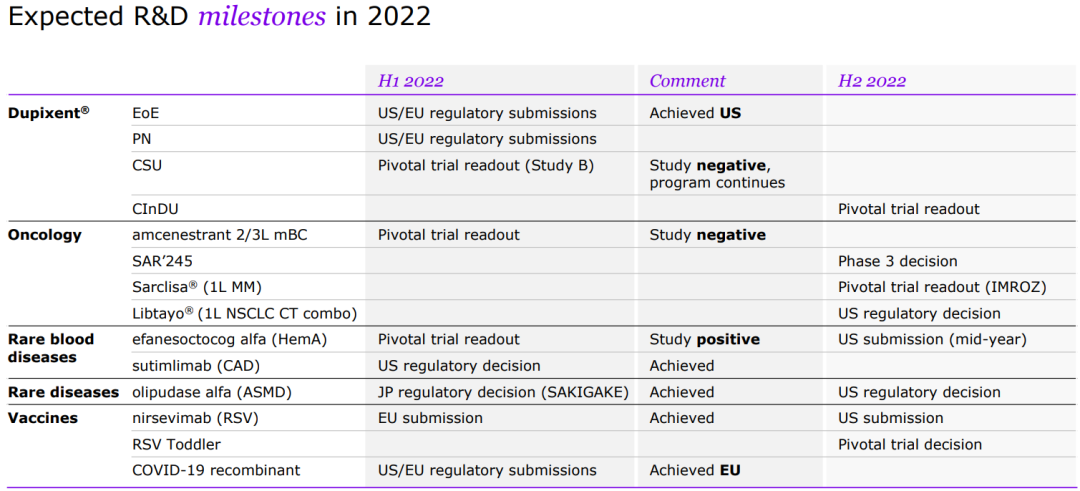
Although Sanofi announced the failure of Dupixent in the Phase III trial for chronic spontaneous urticaria on February 19 this year, the product has still achieved several significant advances this quarter, including: 1) submission of marketing applications for the treatment of prurigo nodularis (PN) in the United States and Europe; 2) FDA and EMA acceptance of the sBLA for the treatment of eosinophilic esophagitis (EoE) with priority review granted; 3) approval of a new indication for the treatment of asthma in children aged 6-11 years in Europe; 4) submission of a marketing application in the United States for the treatment of atopic dermatitis in children aged 6 months to 5 years.
Sales of Kevzara (sarilumab), the IL-6 receptor inhibitor developed in collaboration with Regeneron, increased by 61.4% to €95 million due to the impact of the COVID-19 pandemic, which drove global demand for IL-6 receptor blockers and caused a temporary shortage of tocilizumab.

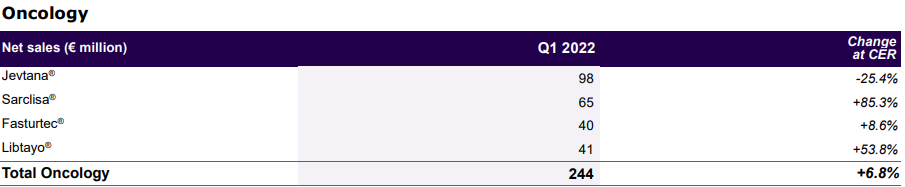
In the oncology field, PD-1 antibody Libtayo (cemiplimab) and CD38 antibody Sarclisa (isatuximab) are still in the explosive growth stage, but their base is still small. Due to the impact of generic drugs, Jevtana's sales in the first quarter dropped by 25.4% to 98 million euros. However, Jevtana currently has four patents (US 7,241,907, US 8,927,592, US 10,583,110, and US 10,716,777) protected by the Orange Book. Sanofi has filed patent infringement lawsuits against generic drug applicants for the '110 patent, '777 patent, and '592 patent in the U.S. District Court. Settlement agreements have been reached with some defendants, and litigation against the remaining defendants is still ongoing.
In addition to the aforementioned progress regarding Dupixent, Sanofi has achieved multiple advancements in rare diseases, COVID-19 vaccines, and oncology:
- On February 4, the FDA approved the first complement C1s antibody sutimlimab (Enjaymo) for the treatment of cold agglutinin disease (CAD), aimed at reducing red blood cell transfusion requirements due to hemolysis in CAD patients.
- On February 24, a marketing application for the SARS-CoV-2 adjuvanted recombinant protein vaccine was jointly submitted to the European Medicines Agency (EMA) and the FDA with GSK.
- Sanofi and Regeneron Announce Voluntary Withdrawal of sBLA for Libtayo (cemiplimab) as Second-Line Treatment for Advanced Cervical Cancer.
- The Phase II AMEERA-3 study of oral selective estrogen receptor degrader (SERD) amcenestran in patients with locally advanced or metastatic ER+/HER2- breast cancer who progressed before and after hormone therapy failed to meet the primary endpoint of improving progression-free survival (PFS).
- Facing the patent cliff crisis, Sanofi is also striving to replenish its product pipeline through collaborations, deals, and mergers and acquisitions. This quarter, Sanofi has reached several collaboration, deal, and merger and acquisition agreements:
- On February 8, the acquisition of Amunix was completed to expand the T-cell engager (TCE) and cytokine therapy pipeline.
- On March 2, a cooperation agreement was reached with Adagene. Adagene will use its SAFEbody technology to help Sanofi develop precision-masked safe antibodies for the next generation of mono- and bispecific antibodies.
- On March 15, a strategic cooperation was reached with BlackstoneLife, which will pay up to 300 million euros to advance the development of the Sarclisa subcutaneous formulation.
- On March 16, an exclusive cooperation agreement was reached with Seagen, the leader in the ADC field, aiming to design, develop, and commercialize antibody-drug conjugates (ADCs) for up to three cancer targets.
- In addition, Sanofi also updated and released the company's new logo on February 3, conveying the company’s new visual identity and new business focus to the public, representing a new starting point for the company. For the full-year performance of 2022, Sanofi is expected to achieve low double-digit growth.
Attachment: Sales Data of Major Products in Q1 2022 and Major Events in 2022