

Pfizer's Third-Generation ALK Inhibitor Lorlatinib Approved in China for NSCLC Treatment

Pfizer
Pharmaceutical R&D Developer
On April 29, Pfizer's Lorlatinib was approved by the National Medical Products Administration (NMPA) for patients with ALK-positive locally advanced or metastatic non-small cell lung cancer (NSCLC) who have previously received one or more anaplastic lymphoma kinase (ALK) tyrosine kinase inhibitors (TKIs). The drug’s marketing application received priority review status from the Center for Drug Evaluation (CDE).


Brain metastases are a common site of disease progression in ALK-positive NSCLC. Up to 40% of patients with ALK-positive metastatic NSCLC have brain metastases at initial diagnosis. While many of these patients respond to initial tyrosine kinase inhibitor (TKI) therapy, tumors often progress again. Moreover, patients who have received second-generation ALK TKI treatment but continue to experience disease progression have very limited treatment options.
Lorlatinib is a third-generation ALK TKI specifically designed to inhibit the most common tumor mutations that lead to resistance against current drugs, as well as address brain metastases. It is capable of crossing the blood-brain barrier to exert its effects.
Lorlatinib was first approved for marketing in Japan in September 2018, and then received accelerated FDA approval in the United States in November 2018 (brand name: Lorbrena) for second-line treatment of ALK-positive metastatic NSCLC patients who had previously been treated with crizotinib and at least one other ALK inhibitor. It was subsequently approved on March 3, 2021, for first-line treatment of ALK-positive NSCLC.
The approval of the first-line indication was supported by positive results from the pivotal Phase III CROWN study, which showed that, in patients who had not previously received treatment, lorlatinib reduced the risk of disease progression or death by 72% compared to Xalkori (crizotinib) (HR 0.28, P≤0.0001). Results from a pre-specified exploratory analysis showed an intracranial objective response rate (IC-ORR) of 82% in the lorlatinib group versus 23% in the crizotinib group. The proportion of patients with an intracranial duration of response (IC-DOR) lasting at least one year was 79% (n=11) in the lorlatinib group, compared to 0% (0) in the crizotinib group. Based on these results, the second-line indication for lorlatinib, which received accelerated approval in 2018, has also been granted full approval.
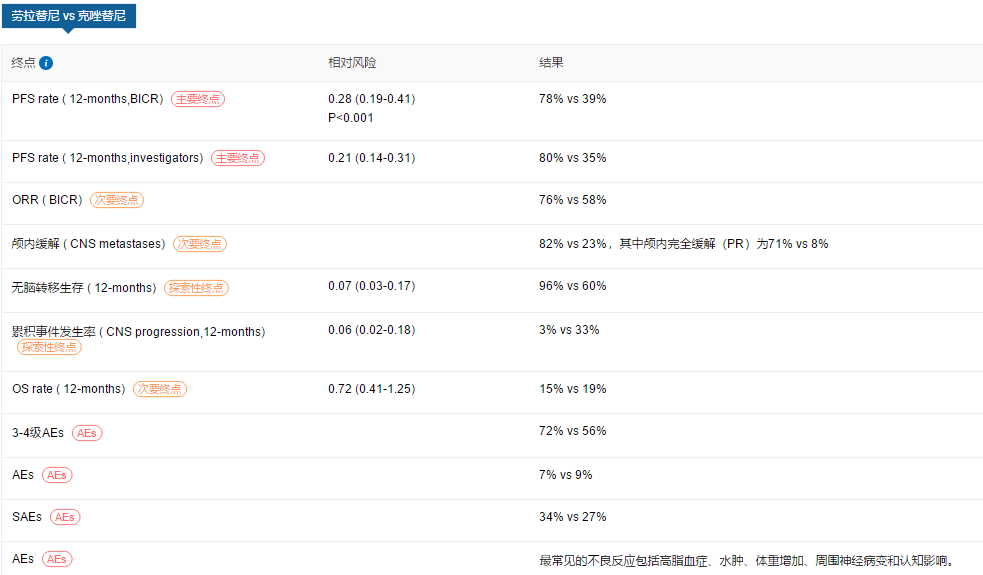
Source: NextMed Database by PharmaCube
Lorlatinib for Pfizer is what osimertinib is for AstraZeneca. Both were initially introduced as second-line therapies to address drug resistance developed from first-generation treatments, and later advanced to become first-line therapies, covering a broader patient population. According to the Nextpharma database by PharmaCube, the global sales of lorlatinib in 2021 reached $266 million.
Notably, on June 15 last year, CStone Pharmaceuticals and Pfizer initiated a collaborative study to jointly develop lorlatinib for the treatment of ROS1-positive advanced non-small cell lung cancer (NSCLC) in the Greater China region. The clinical study of ROS1-positive lung cancer conducted in China is the world's first pivotal study of lorlatinib targeting this specific mutation.