

Unlearn.AI Files for IPO: Pioneering AI-Driven Clinical Trials with FDA & EMA Dual Certification

Insight Partners
Venture Capital and Private Equity Firms

Radical Ventures
Venture Capital Firms

Unlearn.AI
AI Drug Trial Instrument Developer

8VC
Venture Capital Firm

Mubadala Capital Ventures
Venture Capital Firms

DCVC Bio
Venture Capital Firm
Data from the Tufts Center for the Study of Drug Development shows that the average cost of developing a new drug has increased from about $180 million in the 1970s to $2.6 billion in the early 21st century. The success rate of new drugs progressing from Phase I clinical trials to market approval has also decreased from 23% in the 1980s to the current 12%. In this context, Contract Research Organizations (CROs) have emerged. CROs break down the R&D process, which can both reduce costs and improve efficiency. According to market statistics from VCBeat, pharmaceutical companies can shorten R&D time by approximately 25% and cut R&D costs by about 40% by outsourcing clinical trials to CROs.
Although the introduction of the CRO model has already been a positive innovation in drug clinical trials, the cost of clinical trials for developing new drugs continues to increase relatively, and the challenge of recruiting large numbers of patients for all phases of clinical trials has never diminished.
According to research from Johns Hopkins University, the median cost of clinical trials supporting U.S. Food and Drug Administration approval for new drugs is $19 million. These clinical trials, which are conducted in multiple phases, may last several months or even years and could encounter difficulties such as a lack of qualified participants or protocols being forced to change. The recent COVID-19 pandemic has further complicated the work of clinical coordinators. UNLEARN.AI, an innovative Contract Research Organization (CRO) from the U.S., proposed:The use of artificial intelligence technology in clinical trials can reduce the number of trial participants required, and ideally, even eliminate the need to recruit patients for the control group.
On April 19, 2022, UNLEARN.AI announced the completion of a $50 million Series B financing round, bringing the company's total financing to $77.85 million. UNLEARN.AI is headquartered in San Francisco, California, USA, and has developed the clinical trial method TwinRCTs.TMClinical trials that rely on fewer patients can be achieved through machine learning and biostatistics.
This round of financing was led by Insight Partners, a global venture capital and private equity firm, with participation from new investor Radical Ventures and all existing investors of the company, including 8VC, DCVC, DCVC Bio, and Mubadala Capital Ventures. Through this investment, Dylan Morris, Managing Director of the lead company Insight Partners, has joined the board of directors of Unlearn.AI.
Theories and Practices of Mathematicians and Physicists
UNLEARN.AI, Inc. was founded in 2017, bringing together a world-class team of experts from the pharmaceutical, medical technology, machine learning, and business fields who share the vision of leveraging artificial intelligence to improve clinical trials for the benefit of patients and clinical coordinators.

Founder and CEO Charles K. Fisher, Ph.D., graduated from Harvard University and is a physicist with a strong interest in machine learning and biostatistics. Before founding his company, Charles was a theoretical physics researcher at École Normale Supérieure in Paris, France, served as a biostatistician at Pfizer, Inc., and completed his postdoctoral program in biophysics at Boston University.
Dr. Aaron Smith, Co-founder and Head of Machine Learning, is a mathematician graduated from the University of Pennsylvania with a strong interest in computer vision, machine learning, physics, and geometry. Dr. Jon Walsh, another co-founder and Head of Data Science, graduated from the Department of Physics at the University of Washington. During his time as a postdoctoral researcher in theoretical particle physics at the University of California, Berkeley, he was primarily responsible for analyzing, simulating, and computing data properties by building computational tools.
These three individuals met while working at Leap Motion, a company that manufactures human-computer interaction sensing devices. At the time, Charles was serving as a machine learning engineer, Aaron as an algorithm engineer and manager of the hand sensor team, and Jon as a data scientist.
Three scientists aimed to improve drug clinical trials with artificial intelligence by founding Unlearn.AI. They sought to use machine learning to conduct smaller, more efficient clinical trials, ultimately reducing the time needed to develop new drugs and limiting the number of patients in control groups.
It is not difficult to see that the founding team is a "powerful combination" in terms of knowledge background, scientific research experience, and work capability.
Randomized Trials Involving Both Patients and Simulated Data
As a CRO that breaks traditional randomized trial methods,UNLEARN.AI is the world's first company to propose applying "Digital Twin" to control groups in clinical trials, and has created the corresponding randomized trial method TwinRCTs.TMAnd Digital Twin Generator DiGenesisTM。
Digital Twin is a technology that utilizes a patient's basic clinical data and relies on the corresponding Digital Twin data model, DiGenesis.TM, a computed-generated longitudinal and comprehensive clinical record, which is considered as an experimental result of a control group in clinical trials.
In simple terms, this completely new randomized trial method TwinRCTsTMMainly divided into two steps:Establish digital twin models and conduct digital twin experiments。
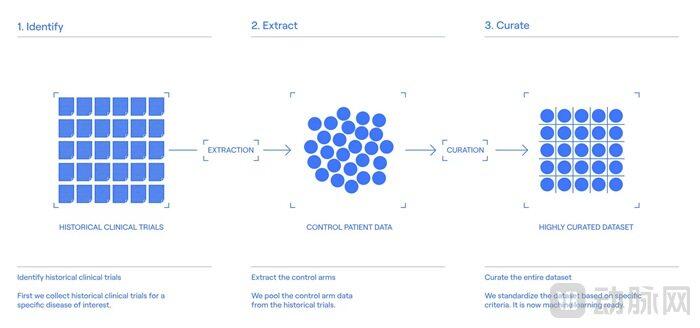
Extracting and organizing clinical trial data from hospitals
First, UNLEARN.AI extracts and organizes historical data obtained from clinical trials for a specific disease in hospitals, and standardizes the data according to specific requirements. The standardized data is then transcribed into a computer to complete the machine learning component.
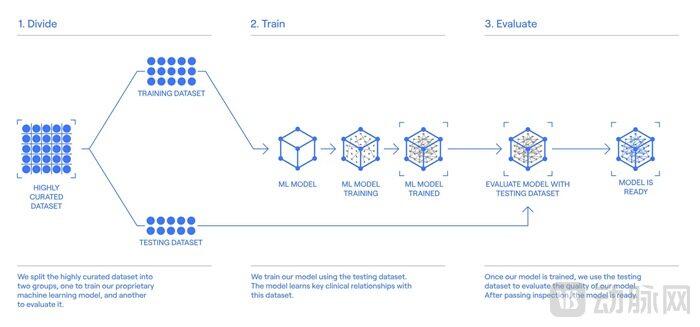
DiGenesisTMMachine Learning Process
Next, the data entered into the computer is divided into a training set and a test set. The training set data is used by the computer to learn key clinical relationships, thereby training to generate a digital model; the test set data is then used to evaluate the performance of the digital model. After passing the evaluation, the clinical trial model DiGenesis for the disease can be obtained.TM, This model will be used to generate digital twins.
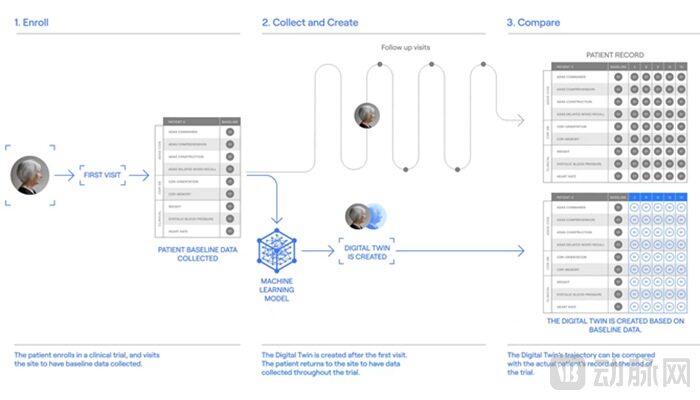
Patient Participation in TwinRCTsTMThe Process of the Trial
In obtaining the data model DiGenesisTMThereafter, the recruitment of corresponding patients can be carried out. Patients registering for clinical trials need to provide their basic clinical data, which will be processed through the digital model DiGenesis.TMExperimental data manufactured into digital twins. The patient's trial data is followed up and collected by clinical coordinators. At the end of the trial, the clinical trajectory of the digital twin can be compared with the actual patient records.
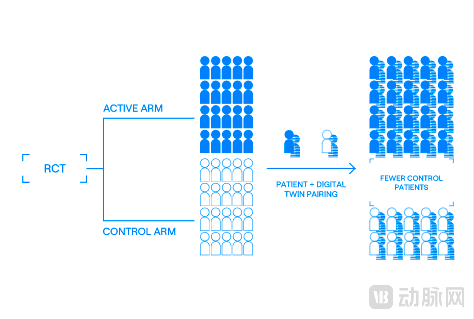
Randomized Trial Process Using Digital Twin
When this process is applied to complete clinical trials, it is referred to as TwinRCTs, or Randomized Controlled Trials of Digital Twins.TMBy creating an artificial intelligence model trained on historical clinical data, it is possible to generate predictive clinical records at the time of a patient's initial registration of physiological indicators.
In the most ideal scenario,When applying data twins to placebo-controlled trials, it is possible to reduce the number of recruited patients by half. In other words, computer simulations can provide the control group while every enrolled patient receives the experimental treatment. With half the number of patients, the experiment can be completed at least twice as fast.
Such randomized trials not only avoid introducing bias but also significantly reduce the required number of patients, shorten the duration of clinical trials, cut down on clinical trial costs, lower the challenges of patient recruitment, and ease the workload of clinical trial staff. This can not only boost their motivation and confidence but also positively impact the quality of the trial.
Five years, FDA&EMA dual certification, dozens of disease models
In the five years since its establishment,UNLEARN.AI always maintains active dialogue with the FDA (U.S. Food and Drug Administration) and EMA (European Medicines Agency), successfully enabling TwinRCTs.TMObtained application approval for the preliminary analysis phase in clinical Phase II and III trials.
The company has now achieved DiGenesis in some central nervous system diseases and congenital immune diseases.TM, such as Alzheimer's disease, Parkinson's syndrome, systemic lupus erythematosus, rheumatoid arthritis, psoriasis, etc.
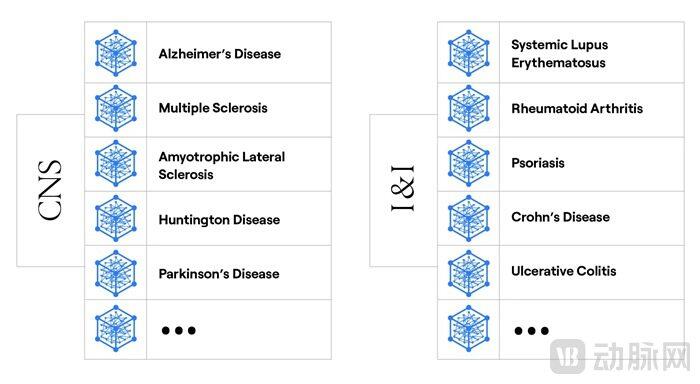
TwinRCTs can be used.TMSome diseases
More Than TwinRCTsTMWith DiGenesisTMUNLEARN.AI has also created the Python database Paysage based on PyTorch, and the Targeted Trial Statistics Handbook: PROCOVATM, among others. These technologies have been published in Scientific Reports-Nature and The International Journal of Biostatistics.
Regarding corporate partnerships, in order to protect the business interests of the partner companies, Founder and CEO Charles only disclosed that Merck KGaA, a global leading technology company with a 354-year history based in Germany, is their long-term collaborator. Merck KGaA hopes to reduce the size of control groups through digital twin technology while obtaining regulatory decisions suitable for supporting its immunology pathway.
Achieved nearly $80 million in financing, with a promising future ahead
Since its establishment, UNLEARN.AI has completed five rounds of financing, with a total of 9 investors participating, and the total financing amount has reached 77.85 million US dollars.
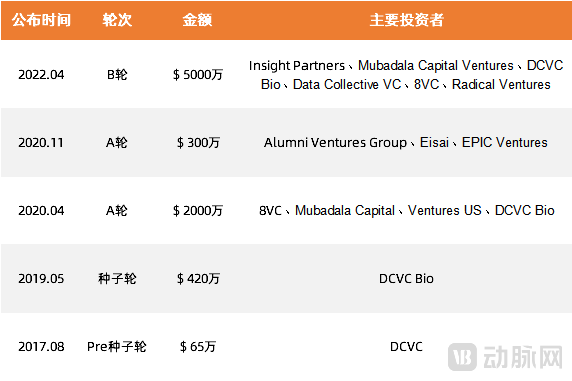
Review of UNLEARN.AI's Previous Financing Rounds
UNLEARN.AI hopes that this round of financing will enable the company to expand its cooperation with global biopharmaceutical companies and engage in effective dialogue with more global regulatory agencies that support clinical trial innovation. The pandemic of COVID-19 is seen by UNLEARN.AI as a good opportunity for digital twin technology to be integrated into clinical trials.
According to the company's statistics, the Covid-19 pandemic has led to the halt of hundreds of trials. Although some clinical trials have continued, their enrollment rates have significantly decreased. Patients, especially those more susceptible to the coronavirus such as children or the elderly, have started opting out of clinical trials. In an effort to create clinical trials with fewer demands on patients, UNLEARN.AI is actively communicating with these trial groups to explore how they can help increase the completion rate of trials to their initially planned range.
Ambitious UNLEARN.AI hopes to expand cooperation, extract and manage richer databases, and create more DiGenesis for diseases.TMModel. When data accumulates to a certain volume, a nearly perfect data system can be obtained. All data in the system is inferred from the basic clinical data of each patient, for the purpose of aggregating, cleaning, and reusing the data.This helps pharmaceutical companies make higher-quality decisions and allows for flexible responses to the development of orphan drugs or epidemic vaccines.
CRO Development Accelerates in China, the Future Remains Starry and Boundless
According to statistics from Sullivan University, the current global CRO market's compound annual growth rate (CAGR) is approximately 10%, while China's CAGR can reach nearly 30%. This largest pharmaceutical investment hub in the world is experiencing a golden era of biopharmaceutical development.
With the normalization of the pandemic, clinical CRO businesses are also experiencing a recovery. According to a report by Zhongtai Securities, in the first half of 2021, the revenue from core clinical CRO businesses reached 2.71 billion yuan, with a gross profit of 950 million yuan. The steady progress of the COVID-19 vaccination program has significantly increased the growth rate of commercial projects for core CRO businesses in the first half of 2021 (+50.8%) compared to the first half of 2020. In 2022, the industry is expected to see an accelerated recovery in the clinical CRO sector, entering a period of rapid commercial project growth.
The development of China's CRO market to date has been inseparable from the "steering" of relevant national departments. 2015 marked the first year of standardization for drug clinical trials in China, since when regular inspections of drug registrations based on risk have become the norm. Two years later, China joined the International Council for Harmonisation of Technical Requirements for Pharmaceuticals for Human Use, aligning industry standards with international practices. In the past two years, standards for trial quality and regulatory oversight of clinical trials have also been successively implemented, indicating a positive overall development trend in the industry.
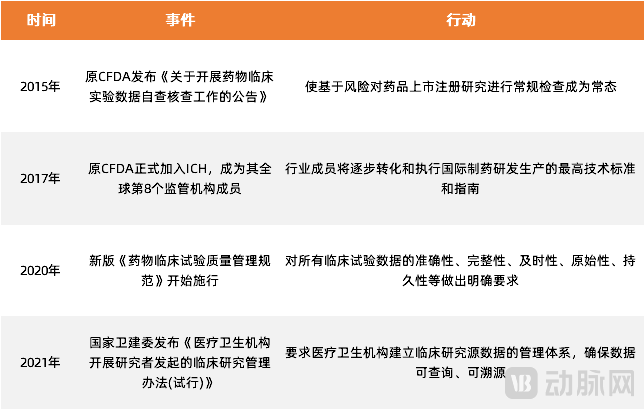
Some Recent National Initiatives Related to Drug Development
Note: CFDA: China Food and Drug Administration; ICH: International Council for Harmonisation of Technical Requirements for Pharmaceuticals for Human Use
A rapidly developing industry inevitably leads to intense competition and various issues. As clinical research expands across centers, platforms, countries, and clinical stages, the trial cycle, costs, risks, and complexity are all increasing. Chen Xiao, co-CEO of Yaocheng Health Technology, has foreseen the industry’s need for new technological advancements: “In China, there are already pioneers developing clinical management systems, but the thriving demand across the entire industry is multifaceted. It’s not just about data collection and entry anymore; what’s now needed is the implementation of unified information technology and intelligent solutions throughout the entire trial process.”This means that clinical trials not only require the advancement of technical talents within the industry but also need breakthroughs in data management and intelligent information technology within the sector.
Compared with the international market, there are not many companies in China currently dedicated to applying AI and Internet technologies to clinical trials.These companies mainly focus on developing applications and data management systems for various stages of clinical trials to assist in trial execution and data quality verification.
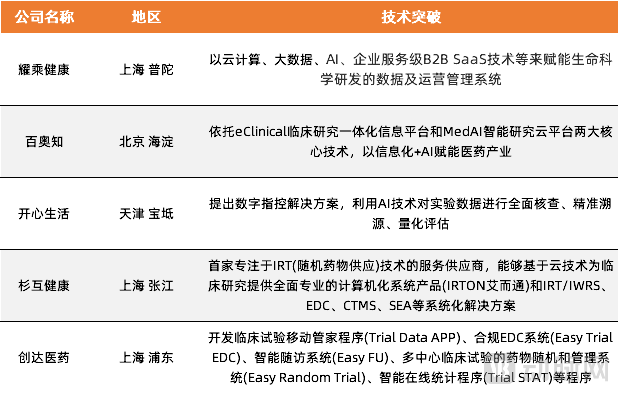
Basic Information of Some Relevant Enterprises in China
It is not difficult to see that domestic companies have not applied artificial intelligence technology in the actual implementation of clinical trials. In fact, globally, only UNLEARN.AI has mastered this technology. However, high-quality artificial intelligence drug discovery platforms such as Valo Health, Alphanosos, and METiS Therapeutics continue to be active in the international market. Chinese companies can first learn from these mature large enterprises and attempt to develop and optimize their own products and technologies.
This will help improve the digitization level of China's clinical trial industry and is more conducive to establishing the large-scale clinical data system proposed by UNLEARN.AI. When we have a clinical trial data system that belongs to our own ethnic groups, fits China's regional characteristics, and adapts to China's medical environment, we can also develop TwinRCTs for Chinese residents.TMExperimental methods. Not only can they gradually remove obstacles such as high clinical trial costs, difficult recruitment, and long durations in China, but they can also enable China's pharmaceutical R&D to advance by leveraging these advantages, build momentum, and rise with the tide!