

Vesber Biotech Submits IPO Prospectus for Its Breakthrough Foldable Capsular Vitreous Body (FCVB) to Address Silicone Oil Dependency and Severe Ocular Trauma

Vesber
Ophthalmic Innovation Product Developer
Ruptured eyeball is a disease that has a serious impact on the refractive medium, retina and other tissues.
Symptoms include lens dislocation, pupil deformation, ciliary body detachment, retinal defects, extrusion of intraocular contents, decreased intraocular pressure, and vitreous hemorrhage, among other forms of ocular structural displacement. Typically, the disease is associated with additional symptoms such as retinal injury, optic nerve damage, and skull base fractures. If not treated promptly, it can further lead to severe vision loss, blindness, or even enucleation.
Vitrectomy with silicone oil endotamponade is commonly used as the primary treatment for such conditions. It can significantly improve the reattachment rate of complex retinal detachments and the cure rate of globe rupture injuries.
"Silicone Oil as an Intravitreal Tamponade in the Treatment of Complex Retinal Detachment" mentions that silicone oil has unique advantages as a substitute after vitrectomy:
First, it has good biocompatibility and can remain in the eye for a longer period of time;
Secondly, it is not absorbed and has a long-lasting top-pressure effect, which is beneficial for the healing of the fissure.
Thirdly, it has a certain viscosity and surface tension, which can seal the retinal hole and prevent liquefied vitreous from entering the subretinal space through the hole.
Fourth, silicone oil is insoluble in water, which can restrict the movement of proliferative cells and biochemical mediators within the vitreous cavity, and has a mechanical inhibitory effect on the traction of proliferative membranes.
Fifth, for severe eye trauma and eyes on the verge of atrophy, the application of silicone oil filling can prevent eyeball atrophy, not only maintaining appearance but also rescuing partial visual function.
However, this surgical method also has certain defects. Long-term retention of silicone oil in the eye and its contact with intraocular tissues can lead to intraocular toxicity and silicone oil emulsification.Postoperatively, patients typically require long-term intraocular silicone oil filling and regular replacement; otherwise, serious complications such as secondary cataracts, secondary glaucoma, corneal degeneration, and silicone oil emulsification may occur, potentially leading to blindness again. Meanwhile, due to the fact that the majority of fillers cannot effectively produce a tamponade for retinal breaks located inferiorly, this treatment method shows poor efficacy in complex cases of retinal detachment, such as traumatic retinal detachment, retinal detachment in silicone oil-filled eyes after multiple retinal reattachment surgeries, and silicone oil-dependent eyes.
Is there a better way to combine the advantages of both?
Foldable Capsular Vitreous Body (FCVB) is a new surgical method for treating severe eyeball rupture injuries., which is also the world's first innovative product independently developed in China. It can combine the advantages of both to effectively overcome silicone oil complications.
Pioneering a New Path in the Ophthalmic Market: Innovative Technology Approved for Listing
The foldable artificial vitreous balloon is a new type of vitreous substitute developed by Guangzhou Vesber Biotechnology Co., Ltd. ("Vesber" for short).This product consists of three parts: a balloon, a drainage tube, and a drainage valve. It is used for treating retinal detachment and severe ocular trauma, offering excellent mechanical properties, optical performance, and biocompatibility.It has currently obtained the NMPA, EU CE certificate, and Australian TGA registration, and has been clinically applied in Asia, Europe, and Australia.
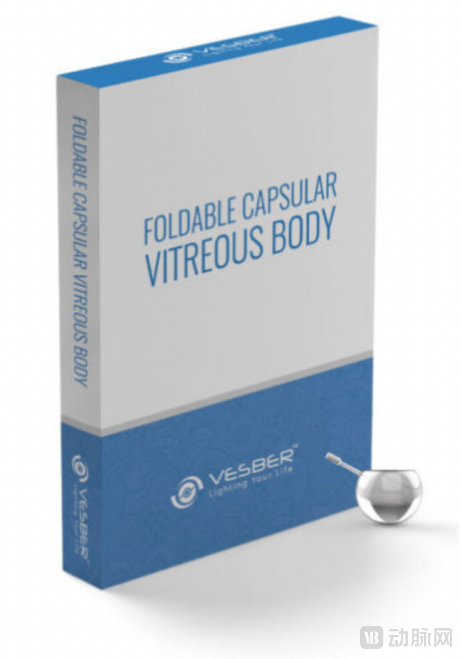
Foldable Capsular Vitreous Body (FCVB)
This product, through a design that simulates the natural shape of the human vitreous cavity, maintains the shape of the eyeball and intraocular pressure, provides long-term retinal support, and avoids the risks associated with repeated silicone oil replacement and enucleation, as well as the occurrence of silicone oil-related complications. The physician can implant it into the vitreous cavity through a 4 mm scleral incision and restore the vitreous support of the retina and eyeball by injecting silicone oil through the drainage valve. This maintains the posterior chamber space and gradually restores ciliary body function to treat severe ocular trauma and silicone oil-dependent eyes.
By avoiding direct contact between the filler and the intraocular tissue, silicone oil can be prevented from emulsification and does not require repeated replacement, effectively reducing complications caused by the presence of silicone oil. In cases of severe globe rupture and silicone oil-dependent eyes, it can maintain the normal shape and appearance of the eyeball. Additionally, silicone oil can be injected or extracted through a drainage valve to dynamically stabilize intraocular pressure.
Vesber founder Gao Qianying told VCBeat"For issues such as silicone oil-dependent eyes and silicone oil emulsification, using hydrogel as a substitute for silicone oil has been a relatively mainstream solution. However, research findings over the past 40 years show that no product has been able to replace silicone oil. This is because hydrogel's resistance to emulsification and its degradation capability are inferior to those of silicone oil, making it incapable of addressing the core problem and becoming a new solution. It took us about 20 years to identify this issue and discover the solution: the foldable artificial vitreous body capsule."
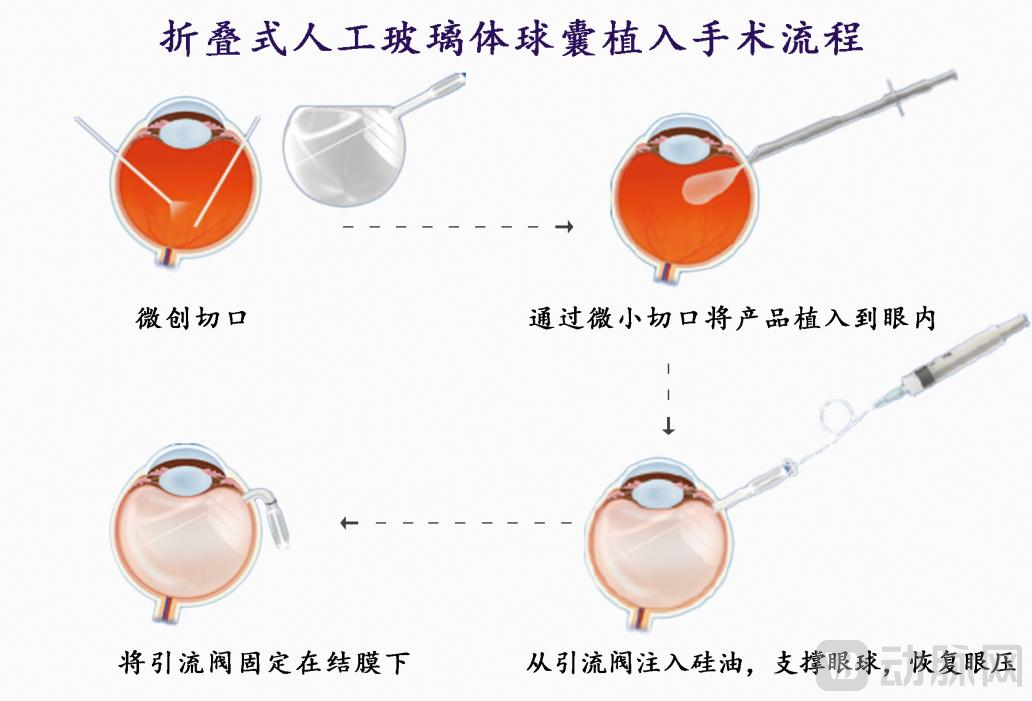
Surgical Procedure for Foldable Artificial Vitreous Balloon Implantation
It is reported that the foldable artificial vitreous balloon is an internationally pioneering artificial organ designed to save the eyeball, capable of precisely simulating the structure and function of the human vitreous body. In 2013, the foldable artificial vitreous balloon was rated as one of the four advancements in retinal detachment surgery worldwide. In 2015, it was selected by the Chinese Medical Association as one of "China's Top Ten Ophthalmological Achievements in 2015." In 2019, it was awarded the title of "Guangdong Province High-tech Product of 2019." In 2020, it was included in the list of Level 4 surgeries for the performance evaluation of tertiary public hospitals.
Since its launch in 2017, the foldable artificial vitreous balloon implant surgery has been performed by over 100 ophthalmologists across 24 provinces in China, covering more than 100 hospitals, serving approximately 2,500 patients. This product was included in the 2018 National Medical Device Innovation Products Catalog by the Ministry of Science and Technology, and was highlighted by the National Medical Products Administration as a typical example of "Made in China" evolving into "Created in China" during the 40th anniversary review of reform and opening-up.
Based on the core technology platform, accelerate the layout of innovative ophthalmic products
Relying on the R&D platform of Zhongshan Ophthalmic Center and the accumulation of past research, the company continues to promote the development of innovative ophthalmic products. The main products of Vesber include Foldable Capsular Vitreous Body (FCVB), Foldable Compression Balloon (FCB), and High Myopia Scleral Reinforcement System (HM), etc.
FCB is an innovative product for the minimally invasive treatment of rhegmatogenous retinal detachment. Clinical research was initiated in July 2019, with a total of 21 ophthalmic hospitals participating in the clinical study of this project. The launch of this product will bring new hope to a large number of patients with rhegmatogenous retinal detachment.
HM, independently developed by Vesber, is used to delay the progression of myopia and treat conditions such as posterior scleral staphyloma and retinoschisis caused by high myopia. It has currently received ethical review approval from Beijing Tongren Hospital and is undergoing clinical trials in multiple hospitals.
At the end of the conversation, Gao Qianying said:"Looking back at the history of ophthalmology in China, you will find that many original products in the past were created by overseas scientists, and it is almost impossible to find a Chinese name among them. In my view, it is an incredible achievement for a product to be continuously passed down to future generations. I hope that we can also develop a product, or even a series of products, that doctors around the world can use. Of course, when I was young, I spent a long time on the sidelines, pouring a great deal of effort into the series of products from Vesber. But now, I want to thank my younger self for its impulsiveness and persistence, which led me to do something truly valuable."
It is reported that the core members of the company's R&D team are mainly ophthalmology PhDs from well-known ophthalmic centers in China, as well as experts in various fields such as ophthalmology, biopharmaceuticals, and polymer materials engineering. They have rich experience in scientific research transformation, clinical work, and research. Since its establishment in 2007, the company has successively received funding from a series of government funds, including the National 863 Project, the Twelfth Five-Year Plan Support Program, the SME Innovation Fund, the Guangdong Province Industry-University-Research Collaboration, and the Guangzhou Science and Technology Plan, owning 22 patents in the United States, Australia, and China.
Guangzhou Vesber will further develop key technologies and platforms for polymer biomaterials processing and forming through an integrated cooperation model of industry, academia, research, and testing. It aims to research, develop, and produce high-end ophthalmic medical innovations, establish a product pipeline and industrial ecosystem in the retinal field, and create an international surgical training center to provide new treatment methods and products for patients with eye diseases.
Reference Article:
1. "Application of Foldable Artificial Vitreous Balloon in Severe Ocular Trauma and Silicone Oil-dependent Eyes"
2. "New Progress in the Research and Application of Foldable Artificial Vitreous Body Balloons"
3. "Clinical Study on the Use of Foldable Artificial Vitreous Body in Treating Severe Proliferative Vitreoretinopathy with Early Phthisis Bulbi"