

Restor3d Files for IPO Following $23M Funding Round and FDA-Cleared 3D-Printed Implant Portfolio

Restor3d
3D Printing Implant Supplier
Technology is the primary productive force. In 2013, Germany proposed the concept of Industry 4.0 (the Fourth Industrial Revolution), suggesting that the future industrial manufacturing model for humanity would be highly personalized and digitalized. It also identified 3D printing technology as one of the key pathways to drive Industry 4.0.
3D printing, also known as additive manufacturing, contrasts with traditional manufacturing methods referred to as subtractive manufacturing. The first 3D industrial printer historically appeared in 1988, and after more than 30 years of development, 3D printing has formed a relatively mature upstream and downstream industrial chain.
According to data from the 3D printing research firm Wohlers Associates, the market value of additive manufacturing services reached $6.235 billion in 2021, increasing by 18.3% compared to 2020. The proportion of the medical industry has risen from 11% in 2017 to 15.6%, second only to the aerospace sector at 16.8%.
Orthopedics and dentistry are the earliest medical fields where 3D printing technology has been industrialized, with 3D printing in orthopedics covering almost all anatomical regions of the human body.
Born out of Duke University and located in the Research Triangle Park, Restor3d focuses on the field of 3D printing.
Restor3d is a medical device company that provides 3D-printed implants, primarily using biomaterials and biocompatible polymers such as titanium and cobalt-chromium alloys. Founded in 2017, the company is headquartered in the Research Triangle Park, a region on the U.S. East Coast often compared to "Silicon Valley." The park is home to 45% biotechnology and life sciences companies, including medical enterprises like Bayer and BD.
The Research Triangle gets its name from its location at the junction of Duke University, the University of North Carolina, and North Carolina State University. Restor3d is a subsidiary of Duke University, and its co-founder and Chief Technology Officer, Ken Gall, is a professor of engineering at Duke University. Restor3d's early technologies and products were related to his research in metal 3D printing at Duke University.
Bone is a unique high-density connective tissue, and generally, a bone has two structures: cancellous bone and cortical bone. Cancellous bone is located inside the bone, sponge-like, with a porosity of 50% to 90%. Cortical bone is the dense bone that wraps around the outer surface, with a porosity of less than 10%.
Bones have a strong regenerative capacity; minor fractures in young people can even heal on their own. However, when there is a large bone defect, an implant needs to be placed.
Traditional metal implants are typically manufactured using subtractive methods, which can only produce fully dense or fully porous structures and struggle to mimic the combination of cortical and cancellous bone found in natural bone tissue. Additionally, subtractive manufacturing generally produces standardized implants designed for the majority of patients at the center of a normal distribution, leaving patients at the extremes of the distribution with limited options for suitable standardized implants.
Metal 3D printing technology is a manufacturing method that goes from point to line, and from surface to volume. It can well mimic the complex structure of bones and allows for relatively low-cost, small-batch production to meet patients' personalized needs.
The new problem is that the elastic modulus of metal and bone differs greatly; metal is harder than bone, which can lead to the phenomenon of "stress shielding," causing relative displacement between the implant and the bone.
Researchers have also found that a porous structure can reduce the elastic modulus of metal implants, minimizing "stress shielding" while promoting osseointegration, which is the ingrowth of bone into the implant. However, for an implant to provide load-bearing support, it must possess a certain level of strength, hardness, and elasticity. Therefore, the porosity-to-compressive strength ratio should not be excessively high but instead needs to be at a delicate balance.
Restor3d Uses TPMS Structure to Design 3D-Printed Implants
Restor3d has developed a method for designing 3D-printed orthopedic implants using TPMS (Triply Periodic Minimal Surface) structures, which Restor3d calls TIDAL™ technology and has patented. The patent also mentions new porosity and compressive strength ratios.
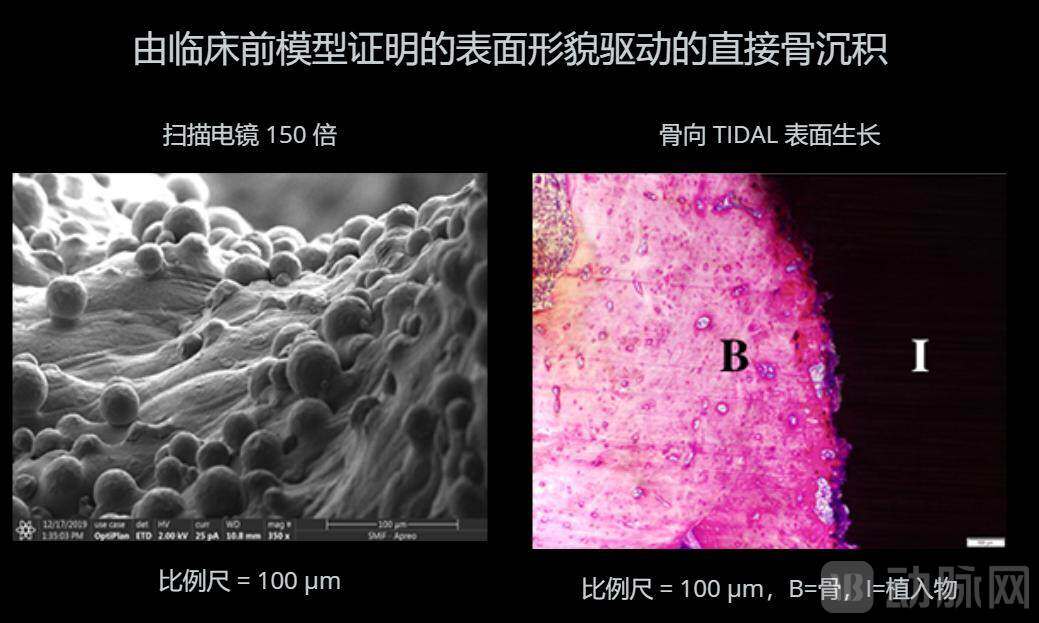
TIDAL™ Technology Implant Surface Microstructure Image Source: Restor3d Official Website
The stiffness of the TPMS structure is similar to that of cortical bone, with a high surface area-to-volume ratio, which can reduce the weight-to-size ratio of the implant. There are several different types of TPMS structures, and the surface part of the implant designed by Restor3d adopts a representative TPMS structure — the gyroid structure, which is beneficial for osteoblast adhesion and proliferation on the implant surface.
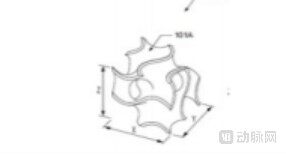
Schematic Diagram of Helical Gyroid TPMS Structure
The micro surface of the implant adopts a TPMS structure, while the macro overall design utilizes a new porosity-to-compressive strength ratio proposed by Restor3d, allowing the implant to simultaneously achieve excellent osseointegration performance and compressive strength. An article published in the 2019 Journal of Biomaterials mentioned that the porosity of the TIDAL™ technology reaches 80%.
Traditional 3D-printed porous structure implants have intersections that can cause "stress concentration," where cracks are prone to develop, affecting their service life. According to Restor3d, their implants exhibit lower stress concentration and higher strength and fatigue resistance compared to strut structures with the same porosity.
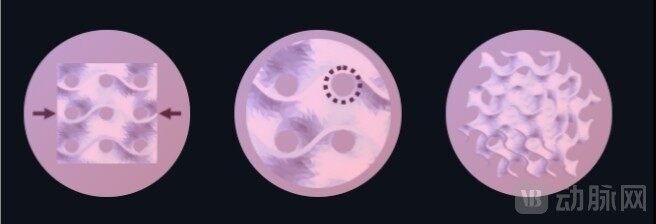 TIDAL™ Technology Schematic Diagram Source: Restor3d Official Website
Six patents, multiple FDA-approved products, providing personalized 3D-printed implants
Currently, Restor3d has applied for six patent technologies, including various standardized implants, customized surgical equipment, and methods, among others.
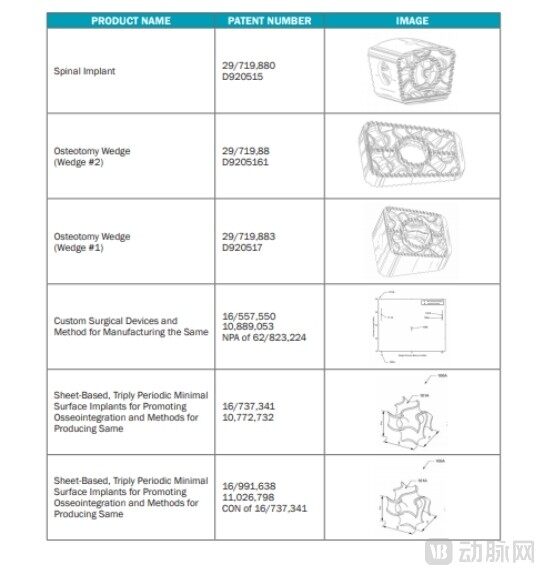 Restor3d Patent Overview Source: Restor3d Official Website
Corresponding to these patents, Restor3d has developed five products based on the TIDAL™ technology: KinosAxiom™ Total Ankle System, Subtalar Wedge System, Osteotomy Wedge, Hollow Polyaxial Screw, and Cervical Cage, all of which have received multiple FDA approvals.
The following is an introduction one by one.
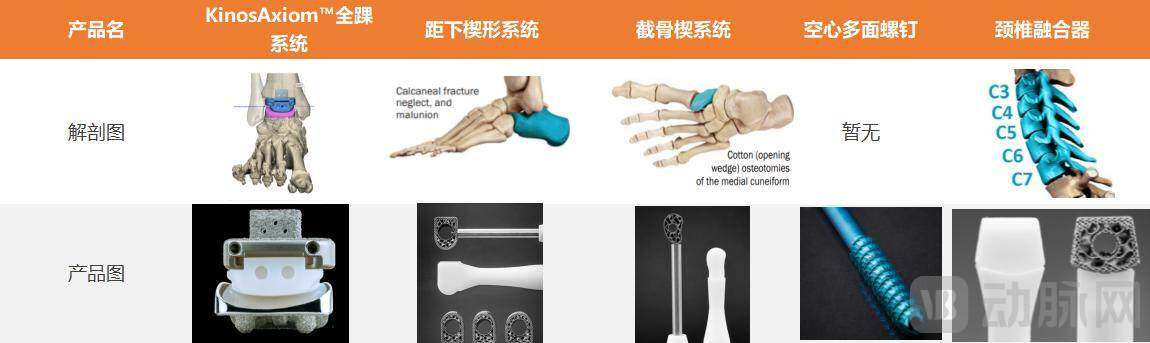
Restor3d Product Overview Data Source: Restor3d Official Website
KinosAxiom™ Total Ankle System is used to replace severely damaged ankle joints caused by "severe rheumatoid arthritis, post-traumatic or degenerative arthritis, or failed joint surgery." Restor3d stated that the KinosAxiom™ Total Ankle System incorporates Restor3d's unique Kinos™ technology in its design. This technology combines biomechanics and utilizes a saddle-shaped design at the joint to provide motion in three planes, simulating the range of motion of a healthy gait.
This technology originates from Kinos Medical, which merged with Restor3d in May 2021.
The subtalar wedge system can be used to treat calcaneal fractures combined with subtalar joint dislocation and is made of medical-grade titanium alloy (Ti-6Al-4V).
Osteotomy wedges can be used for COTTON and EVANS osteotomies, which are foot orthopedic surgeries that require osteotomy followed by bone grafting.
Multi-faceted bone screws reduce friction by creating "peaks" and "valleys" on the threads, Restor3d claims that this technology effectively reduces insertion torque. Due to the presence of these "peaks" and "valleys," the contact area between the screw and the bone is larger than that of traditional helical screws after insertion, maintaining good pull-out strength within two weeks post-operation.
Cervical fusion cages are used in anterior cervical discectomy and fusion surgeries, which is also a common application area for 3D-printed orthopedic implants.
Except for bone nails, all the above products provided by Restor3d come in large, medium, and small sizes, but still are not sufficient to cover all patients. Restor3d leverages the advantages of 3D printing to offer personalized customization.
An Example to Illustrate How Restor3d Customizes 3D-Printed Implants
In 2020, Restor3d created a cobalt-chromium talus implant for a patient named Sylla, whose talus had necrosed due to sickle cell disease. At the time, her doctor gave her two surgical options: fusion of the ankle and hindfoot or replacement with a 3D-printed talus implant. Sylla chose the 3D-printed implant.
Restor3d first uses X-rays and CT scans of the talus in the other foot to create a CAD model of the talus that needs to be replaced.
Then Restor3d and the doctor discussed for weeks. After the doctor confirmed the model, they started printing. In this case, Restor3d used SLM (Selective Laser Melting) technology.
Finally, the implant was sterilized and post-processed by Restor3d.
This process takes up to 14 months, and Restor3d typically submits three models of implants at once when delivering them, in case the surrounding bone quality is found to be worse than expected during surgery.
Currently, Restor3d has collaborated with doctors multiple times to customize 3D-printed implants for patients, primarily for those with orthopedic trauma and tumors. In 2019, Restor3d partnered with SeaSpine®, a publicly traded medical company specializing in spinal disease treatment, to develop 3D-printed implants.
Recently, Restor3d announced a new round of financing worth $23 million, without disclosing the investors. To date, Restor3d has raised a total of $42 million. The company plans to use the funds to launch new products, expand the range of 3D-printed custom implants such as upper and lower limb joints, develop AI software for implant design, and expand its commercial team.
Downstream Applications Drive Industry Development, Orthopedic Implants Become the Focal Point of Competition in the Medical 3D Printing Market
3D printing, as a representative technology in the advanced manufacturing field, has the potential to drive industrial transformation and is currently widely applied in various industries such as aerospace, medical, and automotive manufacturing.
From a policy perspective, China's 3D printing industry has received significant support from national policies, including the release of several industrial policies such as the "Additive Manufacturing Standards Leadership Action Plan (2020-2022)."
According to data from the China Business Industry Research Institute, the machinery industry accounts for the largest share of 17.5% in the downstream application fields of 3D printing in China, while the medical sector accounts for 13.1%.
From the perspective of the application fields of medical 3D printing, the product range can cover preoperative planning, dental restoration, surgical guides, prosthetics, internal implants, and organ tissues. 3D printing was initially used for creating medical models and customizing rehabilitation medical devices. In the current market, dental and orthopedic implants hold a dominant position.
3D-Printed Orthopedic Implants Currently in Clinical Research Data Accumulation Phase
From the perspective of the industrial chain, the upstream of the medical 3D printing industry chain consists of basic software designers, the midstream comprises 3D printing equipment manufacturers and printing material providers, and the downstream involves medical 3D printing product application service providers.
The brands of medical 3D printers are still dominated by foreign brands, such as Stratasys and 3D SYSTEMS. In China, companies have entered the 3D printer market through technology introduction and cooperation. For example, Xi'an Bright Laser Technologies was one of the earliest companies in China to focus on metal 3D printed implants.
Medical 3D printing materials mainly include plastics, resins, metals, and biomaterials.