

Infinites Therapeutics Leverages AI Drug Discovery Platform to Establish Eight First-in-Class and Best-in-Class Pipelines Within Three Years

Inflygent Pharmaceutical AI
AI+ New Drug R&D Company
The success rate of innovative drug development is generally low. Among them, the success rate of developing first-in-class (FIC) original innovative drugs is even lower. To avoid risks, large pharmaceutical companies usually license FIC projects from start-up pharmaceutical companies or academia.
How to reduce the uncertainty in the research and development of original innovative drugs and increase the "rational" component? Artificial intelligence and theoretical computational simulations may provide the answer.
As an observer in the medical industry, VCBeat is also exploring ways to "rationally" accelerate the development of innovative original drugs. To this end, we interviewed Dr. Jianfeng Pei, founder and chief scientist of Inflygent Pharmaceutical AI Technology Co., Ltd. (referred to as Inflygent Pharmaceutical AI), to hear the answers provided by Inflygent Pharmaceutical AI. This team, with over 25 years of technical accumulation in CADD (Computer-Aided Drug Design) + AIDD (AI Drug Discovery & Design), and one of the earliest academic teams in China to engage in AI + drug design crossover, presents its own solutions.
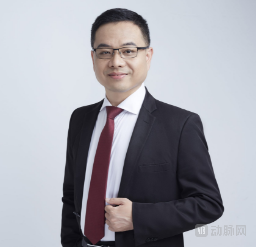
Dr. Jianfeng Pei, Founder and Chief Scientist of Inflygent Pharmaceutical AI
The following is a transcript of the interview between Dr. Jianfeng Pei and VCBeat New Medicine. To facilitate readers' understanding, VCBeat New Medicine has made editorial adjustments without altering the original meaning:
Entrepreneurship is about making profitable innovations.
It's a good time to enter the industry when technology is just beginning to emerge.
VCBeat: What do you think are the differences between academic research and industrial transformation?
Dr. Jianfeng Pei:I believe that academic pursuits should strive for the "latest," and only innovations at the forefront are meaningful. Moreover, academic research is relatively pure and does not need to consider the economic benefits of technology transfer. With years of national support and the accumulation of fundamental research by Chinese scholars, China's academic research standards have reached the global frontier.But from an industrial perspective, many sectors in China are in urgent need of a large number of highly educated talents in cutting-edge technology to enhance the level of China's high-tech industry. China's high-tech industry also requires frontier innovation, but it is profit-driven innovation. Creating a product that is not only technologically advanced but also generates application value is much more challenging than pure basic scientific research.
VCBeat: Starting a business itself carries high risks, yet you have chosen the field of innovative drug research and development with extremely high risk factors. Why did you decide to pursue these highly "uncertain" endeavors?
Dr. Jianfeng Pei:China's biopharmaceutical industry has rapidly risen in recent years, with innovative drugs flourishing across the board. However, most of the current innovative drugs are still follow-on innovations or micro-innovations. Of course, follow-on innovation is also very challenging.There are three reasons why I chose this difficult and uncertain field.
First, we pursue original innovation in academia, so we have developed the habit of creating source innovative drugs. Then, although CADD and AIDD have been developed for many years, the technologies are still rapidly advancing and continuously improving.Therefore, our team believes that now is a relatively appropriate time to enter the industry: the technology still needs improvement, but its impact has started to show.
Finally, because we believe that someone in China should take on this task, Inflygent Pharmaceutical AI is willing to do this difficult yet correct thing. Although using AI to assist in new drug development still involves some uncertainties, compared with traditional methods, it can indeed improve the efficiency and success rate of innovative drug research and development.And we have seen some "promising signs" — based on the company's Intelligent Medicine Brain technology platform, we have successfully laid out eight self-developed and collaborative innovative drug pipelines, achieving innovations in targets, mechanisms, compound structures, and more.
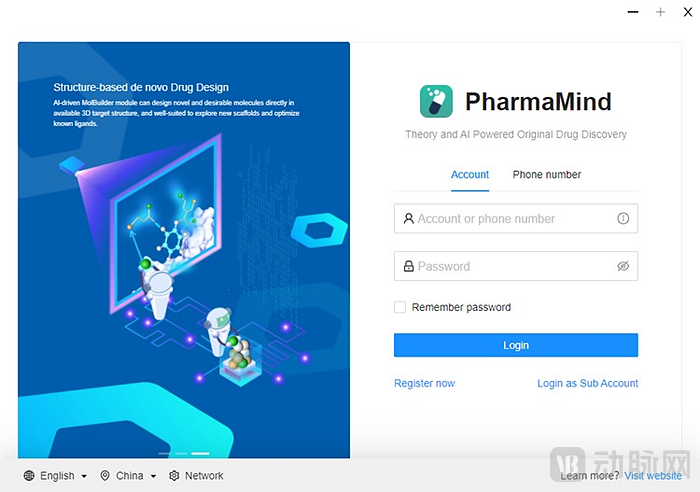
Inflygent Pharmaceutical AI Core Drug Research and Development Platform: PharmaBrain User Interface
AI Drug Discovery Platform "PharmaBrain":
Covering the entire process from target discovery to preclinical candidate compounds
VCBeat: Please explain the underlying logic and technical value of the company's independently owned intellectual property, the "AI+ New Drug R&D Platform - PharmaMind."
Dr. Jianfeng Pei:Inflygent Pharmaceutical AI encompasses multiple modules, including AI-based drug target screening and validation, AI-powered drug information processing systems, and AI-driven drug design, providing in-depth coverage of the entire process from target discovery to preclinical candidate compounds.There are three underlying logics for applying the technical value of Inflygent Pharmaceutical AI to innovative drug development:
First is the "rational" design.For example, when we generate molecules, we use relevant information such as molecular target structures for rational design. If unavailable, we predict and simulate the structure of the target to proceed with drug design. Most current AI-based drug design methods require collecting existing active molecules of the target for learning before performing molecular design. Such ligand-based methods, in principle, cannot achieve original drug innovation. The industry currently lacks reliable AI-driven drug design methods based on target structures. However, we have the usage rights to the industry's first AI-based three-dimensional drug molecule generation method rooted in structural information, which is suitable for targeting previously undruggable or data-limited targets. This is one of the key foundations enabling us to develop FIC (First-in-Class) and BIC (Best-in-Class) drugs.
This R&D platform can also pursue support from multiple lines of evidence.Currently, all theoretical calculation methods and AI methods are still not accurate enough. This is because the theoretical issues in computational chemistry and computational biology have not been fully resolved (scientific problems related to drug development are far from being solved). Additionally, from a data-driven perspective, the current amount of data is insufficient, so it is necessary to improve accuracy through multi-evidence chain support. Within this process, we will also enhance the performance of some currently imperfect technologies. Many AI drug design models tend to overfit. On this basis, we expect to launch 1 to 2 cutting-edge AI drug design software products this year, including the previously mentioned AI generation of three-dimensional drug molecules based on target structure, as well as advanced and precise new AI molecular docking software.
Finally, a hardcore AI drug design system is also needed.Currently, Inflygent Pharmaceutical AI's new drug pipeline is designed through our proven and reliable computational processes, generally requiring expert intervention only at the final step. This is true AI-driven drug discovery, not merely using AI as a conceptual embellishment. Such a robust system, if kept running, will generate multiple high-quality, original innovative drugs, which forms the basis of our confidence in Inflygent’s long-term growth potential.
VCBeat: Most AI models rely on large amounts of data. Acquiring multi-dimensional and extensive data poses a certain level of difficulty for enterprises. How does Inflygent Pharmaceutical AI address this issue?
Dr. Jianfeng Pei:Some AI models do rely on data, such as many models that compute molecular properties.But in many cases, especially for FIC new drug development, we can still perform AI design without a large amount of data.Because in the drug R&D process, the possibility driven purely by data is very low, and the role of AI for Science is more crucial.The importance of data is also reflected in the acquisition and accumulation of negative sample data.Previously, the first round of molecular design in one of our projects did not yield ideal results. However, after incorporating these suboptimal failure data into the model for adjustment, we achieved excellent outcomes in the second round.
Three-Year Layout: 8 Self-Developed FIC and BIC New Drug R&D Pipelines
Listed Companies Are Its "Repeat Customers"
VCBeat: Based on the accumulation of data and the optimization of the technology platform, what product pipelines has Inflygent Pharmaceutical AI currently laid out? What are the considerations behind this layout? What achievements have been made, and are there any anticipated breakthroughs in the near future?
Dr. Pei Jianfeng:Inflygent Pharmaceutical AI currently has 8 First-in-Class and Best-in-Class new drug R&D pipelines, which are mainly in the fields of oncology and anti-infection. Some of these have achieved in vivo biological activity data comparable to marketed drugs. The main considerations for Inflygent Pharmaceutical AI's pipeline layout are original innovation and the critical role of AI.Currently, several of our pipelines are on the verge of breakthrough.。
VCBeat: What are the current business areas of Inflygent Pharmaceutical AI?
Dr. Jianfeng Pei:Inflygent Pharmaceutical AI currently focuses on its self-developed pipeline while collaborating with excellent partners on co-development. We have also started to release technical software for pharmaceutical companies and researchers to use. We hope to support pharmaceutical companies in China and abroad in accelerating new drug development in this way. Currently, Inflygent Pharmaceutical AI has launched its first software product for external services, MolMiner (which can be downloaded and used for free on the company’s official website). Its main purpose is to assist in the construction of databases related to chemistry and pharmacy, an area where China still lacks sufficient resources.
VCBeat: Operating for less than three years, the company has already established partnerships with several listed companies, startups, and research institutions. Additionally, the company has secured two rounds of financing totaling tens of millions of yuan, gaining recognition from CAS Star, WI Harper Group, Topview Capital, and Livzon Pharmaceutical. What do you think are the key reasons for Inflygent Pharmaceutical AI's rapid development and recognition?
Dr. Jianfeng Pei:I think the most core reason lies in Inflygent Pharmaceutical AI's "hardcore technology". We pursue "quality over quantity" in cooperation. For example, a listed pharmaceutical company became our "repeat customer" and signed another cooperation project with us after completing the first project. This is because we treat all cooperation projects as self-developed projects, and we value long-term cooperation and benefits more.
VCBeat: What are the main needs of the company in the current entrepreneurial stage? What are the future goals and plans?
Dr. Jianfeng Pei:Although Inflygent Pharmaceutical AI has leading technology and technological innovation capabilities, as well as years of accumulation in AI-driven new drug research and development, in the early stages of the company, we have urgent needs in talent resources, financial resources, and industry connection resources. Inflygent Pharmaceutical AI’s clear short-term goal is to achieve a PCC for an FIC drug this year, while also launching 1 to 2 structure-based AI drug design software products. In the long term, Inflygent Pharmaceutical AI will continue to develop its PharmaMind platform, leveraging the platform to continuously advance multiple innovative drugs from their origins to clinical trials and market launch.