

Gene-Edited Cell and Organ Therapies to Heal Patients: A Scientist’s Honor and Dream

Qihan Biotech
Gene Editing Technology Developer
Yang Luhan, one of the leading figures in China's gene-editing field, was the first to use CRISPR-Cas9 technology to modify cellular genomes. If given the chance to speak with her, you'd find her to be a pure and focused individual with a strong sense of mission as both a scientist and entrepreneur. Having already achieved remarkable success in scientific research, her next goal is to advance the transformation of technological studies into safe and effective new therapies that can help patients. "Make an impact, make a change" – this belief has made her a sincere and tenacious person and has given Hangzhou Qihan Biotech Co., Ltd. its vitality.
In April 2022, VCBeat had the honor to interview Dr. Luhan Yang, founder and CEO of Hangzhou Qihan Biotech Co., Ltd. Through the conversation with her, we learned the story from how she got acquainted with gene editing to the founding of Qihan. VCBeat has organized and edited the interview transcript to share with everyone the original intention, dream, growth of this young Chinese scientist turned entrepreneur. Enjoy:
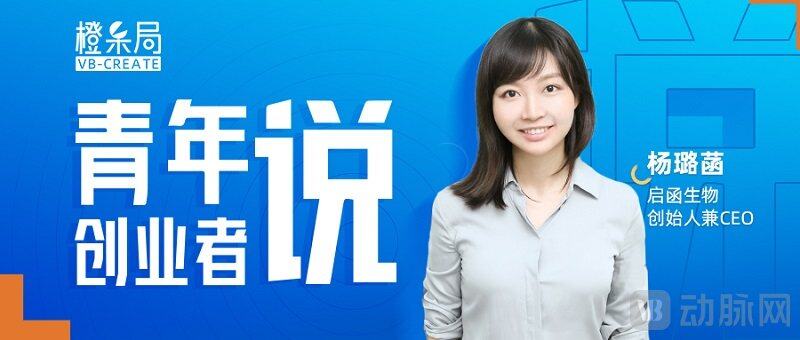
Dr. Luhan Yang, Founder and CEO of Hangzhou Qihan Biotech Co., Ltd.
In 2009, *Science* selected gene therapy as one of the top 10 breakthroughs of the year. Researchers from France, Germany, and the United States discovered a strategy that combines gene therapy with blood stem cell therapy, which is expected to become a useful tool for treating a fatal brain disease. At the same time, the "reading" and "writing" of genes once again became a research hotspot in both academia and industry. In the same year, Yang Lühan graduated from Peking University and went to Harvard University to study, joining Professor George Church's laboratory.
Although gene editing technology had advanced to the second generation at that time, people did not yet possess the ability to rewrite genes. Out of 35,000 genes, only five had been successfully rewritten. Professor Church, her mentor, encouraged her by saying that as a graduate student, she should recognize long-standing bottlenecks and problems within the industry and focus her research on addressing them. It was from that point on that Yang Luhua began developing gene editing tools.
Counting from the first CRISPR-related article published in Science as the first author, Yang Luhahn has been working in this field for nearly 10 years. In 2013, she published her first CRISPR-related article in Science: RNA-Guided Human Genome Engineering via Cas9, and successfully applied CRISPR gene editing to mammals and human cells for the first time. In her view, the emergence of CRISPR is a 0-1 breakthrough in the field of gene editing, just as Sanger sequencing is to gene sequencing. Over the past decade, she and her team have expanded the throughput of gene editing from one gene to dozens, or even hundreds, and developed from gene knockout to gene insertion.
These research achievements and developed tools provide solutions for the application of gene editing in industries such as life sciences, agriculture, and ecological conservation, and also lay the groundwork for the future establishment of Hangzhou Qihan Biotech Co., Ltd.
The founding of Hangzhou Qihan Biotech Co., Ltd. is inseparable from the training Yang Luhan received at Harvard University. It was here that she became connected with gene-editing technology, influenced by the atmosphere of translational innovation, and the diverse research environment and culture of her lab also changed her perspective on issues in the future.
Harvard University is located in Boston, Massachusetts, a global hub for scientific research and translational innovation. This area is home to world-renowned institutions such as Harvard University, the Massachusetts Institute of Technology (MIT), and Tufts University, and has also attracted prominent venture capital firms and multinational pharmaceutical companies like Flagship Ventures, Johnson & Johnson, and Pfizer. The integration of research culture and industry has established an ecosystem that supports innovative technologies, laying a solid foundation for the transformation of scientific research achievements.
"Ecology is very important." When talking about the experience of innovation in the transformation of scientific research achievements in the United States, Yang Lohan said. She believes that the operation of the transformation system of scientific research achievements is not due to the effect of a single link, but requires the establishment of a positive cycle for the entire ecosystem. At the same time, a large number of early successful experiences have also promoted the sustainable development of this ecosystem.
On the other hand, the research and translational atmosphere in the lab naturally blends. In a laboratory with over 100 members, there are no technicians—whether they are mentors or graduate students, everyone is an equal researcher. The scope of research ideas spans from molecules to bacteria, yeast, animals, and even medical devices; those with shared research interests spontaneously form various project teams. Although the lab produces only a few high-impact articles each year, these young scientists generate a large number of highly innovative achievements in applied research.
"Many of these studies have been a decade in the making, with the innovative atmosphere and environment providing them with the support and space to pursue valuable long-term research," said Yang Luhan.
Driven by both the research atmosphere and the transformation ecosystem, innovation and transformation seem to have become a natural process. Yang Luhan revealed that the OTD office of the university will also offer mini MBAs to these young scientists, teaching them how to commercialize and transform their scientific research results. "The teachers in the technology transfer department enthusiastically expressed their hope that professors and students at Harvard University could all get rich. We were quite disdainful at the time," she laughed. "The students are a group of idealistic young people who are more interested in changing the world and making it a better place." She told VCBeat that in such an environment, you see a lot of successful cases, which inspires you to want to do something that can benefit society.
In conversations with Yang Luhan, you will find her to be a pure and focused individual, driven by a scientist's sense of mission: Make an impact, make a change. This belief influences her and also Hangzhou Qihan Biotech Co., Ltd. CRISPR is a foundational technology, and based on this technology, many companies have emerged globally. Regarding the establishment of Qihan Biotech, Yang Luhan hopes to leverage research in gene technology to overcome some existing bottlenecks in disease treatment.
"The publication of the CRISPR article is just the beginning. How to expand the throughput and increase the diversity of applications afterward is what Hangzhou Qihan Biotech Co., Ltd. has been doing," said Yang Luhua regarding the establishment of the company. CRISPR is the core platform of the company and the source of its continuous flow, enabling them to have more extensions in product layout and the capability to develop more products.
Xenotransplantation is an ideal solution to alleviate the global shortage of transplant organs and one of the main battlefields of Hangzhou Qihan Biotech Co., Ltd. In 2017, Yang Luhan, as the corresponding author, published a cover article in Science: "Inactivation of porcine endogenous retrovirus in pigs using CRISPR-Cas9", successfully addressing the most critical safety issue in the clinical application of xenotransplantation.
After the establishment of Hangzhou Qihan Biotech Co., Ltd., the team combined CRISPR-Cas9 and transposon technology to breed gene-edited pigs 3.0, modifying the incompatibilities between pigs and humans in terms of immunity and coagulation, which marked an important step forward in the safety and effectiveness of xenotransplantation.
During 2019, the team traveled across China hoping to find suitable biological resources to clone more pig breeds for xenotransplantation. However, the African swine fever that had persisted for a year severely impacted China's entire pig farming industry, presenting unprecedented challenges to Hangzhou Qihan Biotech Co., Ltd.'s xenotransplantation research. Coupled with the outbreak of the COVID-19 pandemic in 2020, the xenotransplantation product line faced a dual force majeure crisis, leaving it in a difficult position.
Despite continuous breakthroughs in research and development, Yang Luhang knew that the company had to find new breakthroughs: "The company has the technology, talent, and R&D funding. We can apply these core capabilities to other scenarios." It should be noted that CRISPR is a tool-based technology, which, in addition to being used for xenotransplantation, has applications in multiple fields such as cell therapy and synthetic biology. Pig 3.0 demonstrated the ability of Hangzhou Qihan Biotech Co., Ltd.'s high-throughput gene-editing technology platform to endow cells with new functions, also indicating its great potential in cell modification and cell compatibility.
At that time, in the field of cell therapy, the safety and efficacy of autologous CAR-T cell therapy had been clinically validated. These achievements also greatly inspired Yang Luhang. However, in terms of product form, autologous cell therapy requires obtaining the patient's own blood, followed by modification and reinfusion — it is more akin to a medical service.
How to become a drug?
"An important step in the industrialization of cell therapy is to solve the problem of rejection," Yang Luhang told VCBeat. This is also the biggest bottleneck faced by the cell therapy field. Only by solving the issue of rejection can large-scale production be possible, leading to universal therapeutic drugs. Multi-gene editing happens to be an effective means to address rejection and compatibility functionality, and it is also a part that Hangzhou Qihan Biotech Co., Ltd. has been exploring in xenotransplantation research.
Generally speaking, Pig 3.0 has achieved compatibility between pig organs and the human body, let alone the compatibility between human cells and the human body.
"It is less difficult for us, and this field is highly valuable." In 2020, Hangzhou Qihan Biotech Co., Ltd. officially launched its cell therapy product line, using gene-edited induced pluripotent stem cells (iPSCs) to differentiate into natural killer cells (NK), providing patients with uniform, stable, and cost-controllable cell therapy products. "In retrospect, it was the right decision," said Yang Luhua. As technology matures and research deepens, she firmly believes that cell therapy will become a mainstream drug in the future.
As gene-editing technology enhances the functionality and safety of cell therapy, clinical institutions and regulatory agencies are increasingly trusting the industry. Yang Luhahn describes this development trend as a "spiral rise." However, she also emphasized that it is still difficult to determine which indications cell therapy is most effective for, as the field is currently in a stage of continuous exploration and breakthrough.
Whether as a scientist or an entrepreneur, Yang Luhang has achieved remarkable success. When asked about the secret to her success, she smiled and sincerely said, "Neither I nor Qihan can be considered successful, but we are always growing." In her value system, growth is a continuous process. This process includes the research, development, and exploration of gene-editing work, application studies based on gene editing, her own growth in management, leading the team’s growth, the company's growth, and every step they take towards 'Make an impact, make a change.'
In the long run, the factor that will have a tremendous driving force and impact on society will undoubtedly be technology. "As a scientist, whether the inventions are transformed by others or one starts a company to push them forward, the ultimate positive impact on society is something to be proud of," revealed Yang Luhan. For her, such belief and optimism about the future have supported her through many difficult times.
As the founder of Hangzhou Qihan Biotech Co., Ltd., her focus and belief are also influencing every member of the team. Here, members from all over the country are growing with the goal of making cell therapy and xenotransplantation benefit patients, and are continuing to attract like-minded partners to join.
In this process, Yang Luhang has developed a scientist-led enterprise management model that suits her. During the entrepreneurial journey, one encounters various kinds of people and situations. In her view, it is important to approach these with the same curiosity and open-mindedness as in scientific research, which can lead to unexpected rewards. Moreover, entrepreneurship itself is a long and arduous process, similar to scientific work, where one must endure solitude and be able to rise from failure. She expressed: "The birth of every great company must go through trials." In the development of a company, there may be numerous uncertain factors. Regarding this, she stated: "One should not drift with the tide but instead proceed with the end in mind, taking each step carefully."
In terms of team management, Yang Luhan believes that the company and the team should maintain a win-win relationship. "I need to ensure that every colleague who joins Qihan can achieve a win-win situation with the company, and when we work together, we maximize the win-win outcome," she said. Currently, the company has over 120 employees, all of whom hold shares. In her view, a team that shares weal and woe, trust, and support is more important than the technology itself.
In terms of market layout, although the company is located in Hangzhou, Qihan Biotech has never limited itself to the Chinese market. Whether in terms of corporate operations, talent, or market, the company aims for globalization. "How to leverage the advantages of both China and the United States to create products more efficiently and quickly to serve patients," said Yang Luhua. Similarly, only a global layout can support such research and development investment. She hopes that in the future, Qihan will become a Chinese enterprise recognized in the international market, with iconic products and technologies.
Yang Luhan revealed that cell therapy is currently the main business, while xenotransplantation is the company's long-term vision. In the product line of cell therapy, Qihan Biotech adopts a step-by-step strategy, starting with breakthroughs in blood tumors and gradually advancing into lymphoma, solid tumors, infectious diseases, and autoimmune diseases. On April 9, 2022, at the AACR conference, the company announced preclinical data for its NK cell project. The self-developed natural killer cells (NK) are derived from gene-edited induced pluripotent stem cells (iPSCs) and demonstrate significant killing ability against both blood and solid tumors. Additionally, the company successfully differentiated monkey iPSCs into functional monkey NK cells, indicating immense potential for its immune-compatible cell therapy platform in NK pharmacokinetics (PK) and pharmacodynamics (PD) studies.