

Where Did the R&D Investments of the Global Top 10 Pharma Companies Go? (Part II): TIGIT Setbacks and Rising Interest in Neurological Disorders
Roche
Oncology Drug Research, Development, and Manufacturing
The association between androgen receptor (AR) and the pathogenesis of COVID-19 has led Kintor Pharmaceutical (09939.HK) and Haichuang Pharmaceutical (688302.SH) to fiercely compete for the title of producing China's first "orally administered COVID-19特效药"; meanwhile, across the ocean, top global pharmaceutical companies such as Roche and Pfizer are heavily investing in the development of small-molecule drugs targeting estrogen receptor (ER).
Not limited to AR and ER targets, cancer research has always been a key focus of medical research for all humankind. The R&D funding of the top 10 pharmaceutical companies globally also reflects this trend without exception, with the advancement of oncology pipelines becoming a top priority for pharmaceutical companies. In the article above "What Are the Top 10 Global Pharmaceutical Companies Doing (Part 1)?In the article, we analyzed the allocation of 106.2 billion in R&D funds from the top 10 pharmaceutical companies globally in terms of R&D investment in 2021, with a particular focus on their investments in COVID-19 vaccines and treatments.Today, we will summarize the areas outside of COVID-19 where the world's TOP 10 pharmaceutical companies have invested their R&D funds. What projects are they actively promoting?
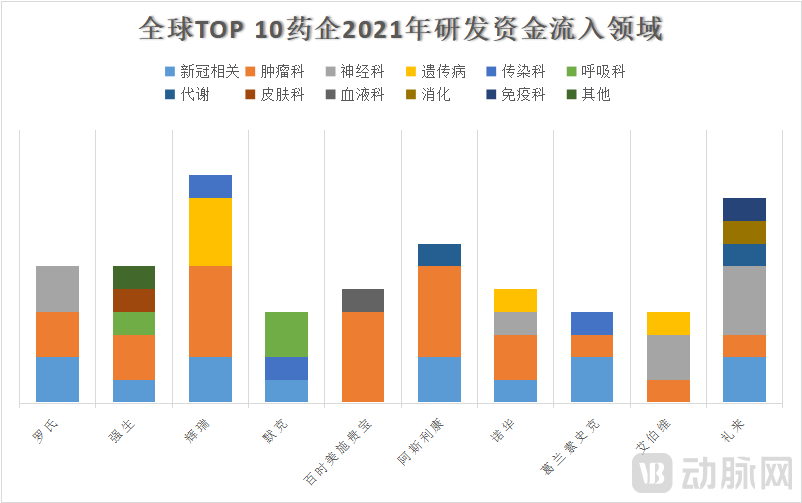
We have systematically organized the pipelines of projects that the world's top 10 pharmaceutical companies, in terms of R&D investment, were actively advancing from 2021 to 2022, categorizing them by indications such as oncology, neurology, infectious diseases, and more. Through the collection of publicly available data, we attempt to discern the potential directions of human medical research by examining the financial flows of these leading global pharmaceutical enterprises.
The Largest Investment in Medicine is in the Cancer Track, with TIGIT Therapy and ER Degraders Becoming Hotspots
In 2021, Roche's annual revenue was approximately US$71.4 billion, of which US$16 billion was allocated for R&D investment in the same year, accounting for about 23% of its total revenue in 2021. Compared with the previous year, Roche's R&D expenditure increased by 14%. The increased R&D funds were mainly used to enhance investment in the fields of oncology and neuroscience.
As a large multinational pharmaceutical company, Roche's pharmaceutical business covers not only oncology and neuroscience but also includes ten major fields: metabolism, hematology, inflammatory bowel disease, infectious diseases, ophthalmology, respiratory diseases, women's health, and rare diseases. The company is currently focusing on advancing its Phase III clinical new drug pipeline, which includes six drug pipelines in the field of oncology, four drug pipelines for neurological diseases, and one pipeline related to inflammation/immunology.
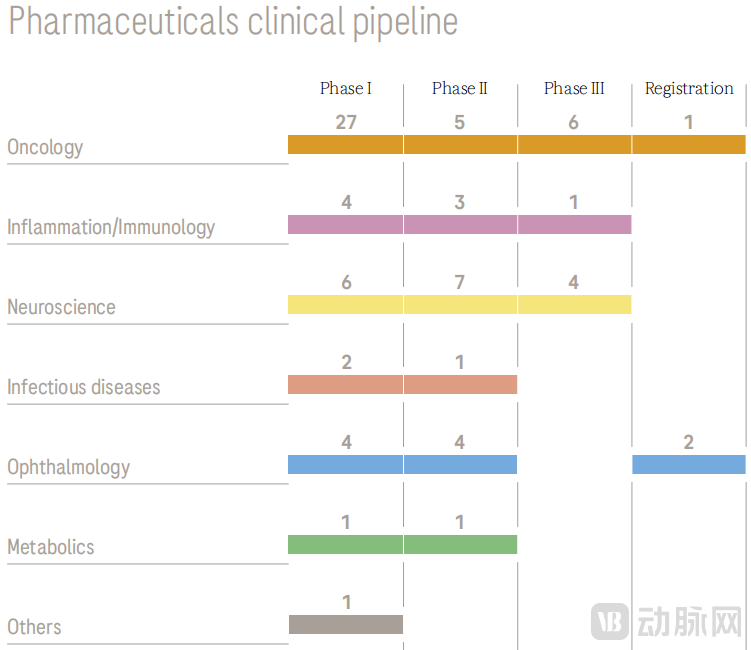
Roche Pipeline Progress (Screenshot from Roche Annual Report)
We can see that among the 11 key pipelines Roche is advancing, nearly half are in the field of oncology, involving diffuse large B-cell lymphoma (RG6026), small cell lung cancer (RG6058), breast cancer (RG6114), castration-resistant prostate cancer (RG7440), follicular lymphoma (RG7828), and non-small cell lung cancer (RG7853). Among them, the RG6058 pipeline product, "tiragolumab," will see increased research and development efforts by Roche as an anti-TIGIT therapy.
TIGIT, short for T cell immunoreceptor with Ig and ITIM domains, plays a role in tumor immune suppression similar to PD-1/L1. It is primarily expressed on the surface of lymphocytes such as T cells and natural killer cells and represents an emerging hot target in cancer immunotherapy.
Research has found that TIGIT downregulates the activity of immune cells by binding to specific proteins on the surface of antigen-presenting cells or tumor cells. Therefore, blocking the TIGIT signaling pathway with antibodies may enhance the body's immune response to cancer cells and increase anti-tumor activity. TIGIT, as an emerging oncology target, has increasingly attracted the attention of major pharmaceutical companies both in China and overseas in recent years.
Roche's "tiragolumab" is the first anti-TIGIT therapy granted Breakthrough Therapy Designation by the U.S. FDA.However, on March 30 this year, Genentech, the co-developer of Roche's TIGIT therapy, announced on its official website that Tiragolumab did not meet the primary endpoint of progression-free survival (PFS) in a Phase III clinical trial for the first-line treatment of extensive-stage small cell lung cancer (ES-SCLC) in combination with PD-L1 antibody Tecentriq and chemotherapy. However, Tiragolumab will continue to be tested in non-small cell lung cancer and other cancer types.
Unfortunately, on May 11, Roche announced that the interim data from its Phase III clinical trial of "PD-L1+TIGIT" combination first-line treatment for non-small cell lung cancer (NSCLC) also failed to meet the primary endpoint of PFS. This was a significant blow to the confidence of many oncology companies.
In addition to the aforementioned novel anticancer drugs in Phase III clinical trials, Roche will also focus on advancing a pivotal study of "giredestrant." Giredestrant is an oral selective estrogen receptor (ER) degrader (SERD). Estrogen promotes the growth of HR-positive breast cancer cells by binding to ER, so giredestrant degrades ER and blocks this function to inhibit the effects of estrogen, serving as an adjuvant treatment for postmenopausal women with ER-positive, HER2-negative early breast cancer (eBC).

Like Roche, Novartis is also developing anti-TIGIT therapies.
At the end of 2021, Novartis reached a collaboration with BeiGene to obtain the major overseas rights to its TIGIT antibody therapy, Ociperlimab.The collaboration is worth up to $2.9 billion, including a $300 million upfront payment, $600-$700 million in additional payments, and nearly $2 billion in milestone payments, as well as a 20-25% share of sales.Currently, two Phase III clinical trials of Ociperlimab for lung cancer are underway.
Earlier, in early 2021, Novartis and BeiGene announced a collaboration on the anti-PD-1 therapy tislelizumab, with the total value of the partnership exceeding $2.2 billion. At the same time, Novartis also submitted an application to the FDA for tislelizumab for the treatment of esophageal squamous cell carcinoma.
Similarly, AstraZeneca is also developing an ER degrader drug—camizestrant, an oral selective ER degrader (ngSERD) currently in Phase II clinical trials.
Overall, in terms of cancer treatment, AstraZeneca advanced a total of 13 anti-cancer projects into Phase III clinical trials between 2021 and 2022, bringing the number of oncology treatment pipelines at the Phase III clinical research stage to 18.
In addition to ER degraders, AstraZeneca is also increasing its investment in the development of immune checkpoint inhibitor Imfinzi, antibody-drug conjugate Enhertu, and datopotamab deruxtecan.
Among them, Imfinzi (durvalumab), a PD-1/PD-L1 immune therapy used in combination with SoC platinum-based chemotherapy, has successively received marketing approval from the U.S., the EU, and China's National Medical Products Administration (NMPA) for the treatment of adult patients with extensive-stage small cell lung cancer (ES-SCLC).
Enhertu and datopotamab deruxtecan are next-generation ADC drugs co-developed by AstraZeneca and Daiichi Sankyo. Enhertu is designed to target HER2 for the treatment of patients with HER2-positive metastatic breast cancer and has been launched in the United States; datopotamab deruxtecan is designed to target the TROP2 site for the treatment of non-small cell lung cancer (NSCLC) and triple-negative breast cancer (TNBC) and is currently in Phase I clinical trials.
Breast cancer seems to be a key therapeutic area that Pfizer has been advancing in recent years, aside from its COVID-19 projects. The company has four pipelines targeting different stages of breast cancer: the combination therapy of Ibrance (CDK 4/6 inhibitor) with ARV-471, a CDK 2/4/6 inhibitor, a KAT6A epigenetic modifier, and a B7H4/CD3 bispecific antibody.
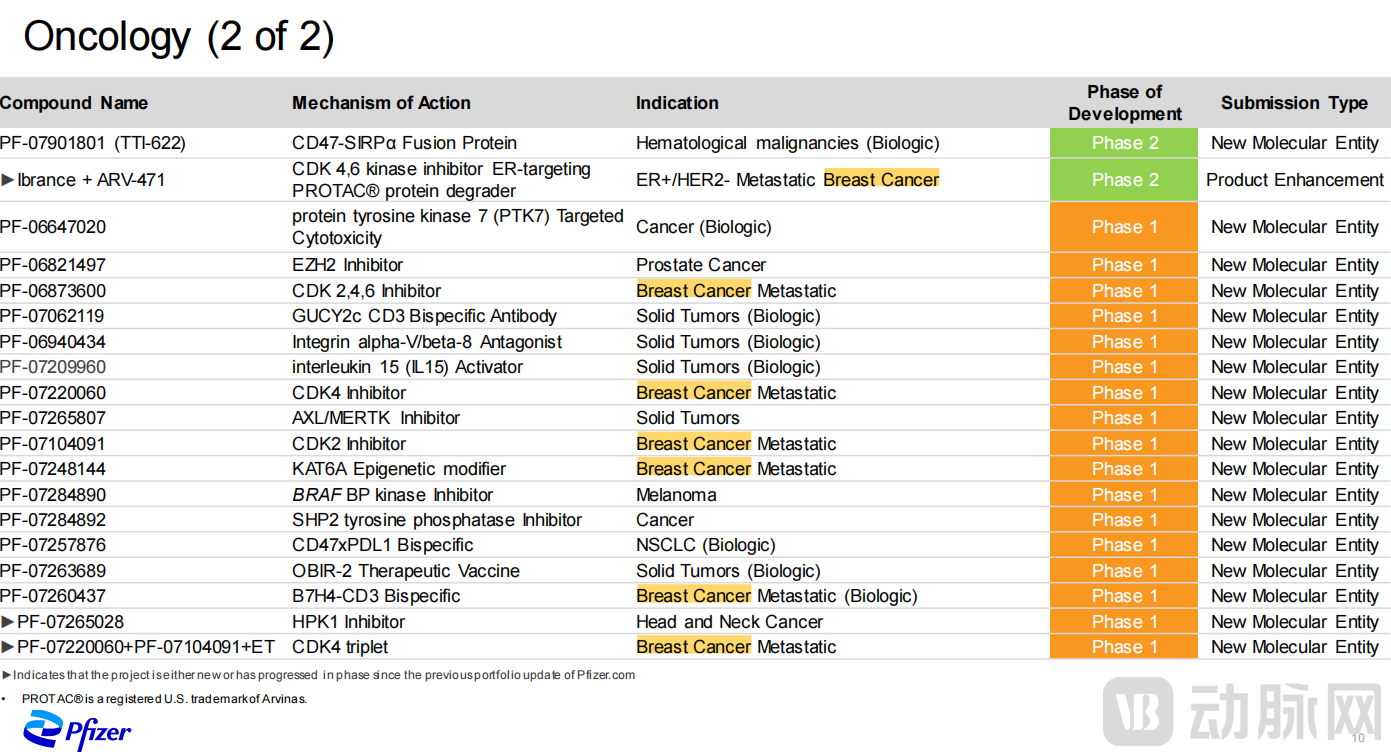 Progress of Pfizer's Drug Pipeline (Screenshot from Pfizer Official)
Among them,ARV-471 is the ER degrader jointly developed by Pfizer and Arvinas, a leading company in small molecule degraders. Pfizer has made an upfront payment of over $650 million and invested $350 million in Arvinas.ARV-471 in combination with the CDK 4/6 inhibitor Ibrance has now entered Phase II clinical trials, which will test the efficacy of ARV-471 and Ibrance across different treatment lines for metastatic breast cancer.
At the same time, Pfizer's newly developed next-generation CDK inhibitors aim to overcome drug resistance issues in first-generation breast cancer treatments. Epigenetic modifiers targeting KAT6A for breast cancer and B7H4/CD3 bispecific antibodies are currently in Phase I clinical trials.

For Johnson & Johnson, it's been a series of good news in cancer treatment. Carvykti, the CAR-T therapy targeting B-cell maturation antigen (BCMA) jointly developed by the company and Legend Biotech, received FDA approval in the United States on March 1, 2022. It will be used to treat patients who have previously received four or more lines of therapy.Relapsed or Refractory Multiple Myeloma (R/R MM)Patient.
The successful cooperation with the Chinese company Legend Biotech has potentially prompted Johnson & Johnson to increase its willingness to collaborate with Chinese pharmaceutical companies. It is already in talks to negotiate cooperation agreements with two Chinese companies, whose names have not been disclosed yet.
On the other hand, for R/R MM, Johnson & Johnson has also developed an off-the-shelf T-cell therapy called Teclistamab. This is an IgG4 bispecific antibody that can simultaneously target CD3 on T cells and BCMA on MM cells, redirecting CD3+ T cells to bone marrow cells expressing BCMA to induce cytotoxic effects against target cells.
Previously, Teclistamab was granted Breakthrough Therapy designation by the FDA. On December 29, 2021, Johnson & Johnson submitted a Biologics License Application (BLA) for the drug to the FDA.

Similar to Johnson & Johnson, Bristol-Myers Squibb (BMS) also received marketing approval in 2021 for its new drug targeting R/R MM. Oncology treatment is a key focus of BMS's research and development, with the majority of the company’s pipeline dedicated to projects addressing solid tumors, hematological disorders, and immunological diseases.
In February 2021, the U.S. FDA granted priority review status to Bristol-Myers Squibb's (BMS) supplemental Biologics License Application (sBLA) for Breyanzi, its CD19-targeted autologous CAR-T cell therapy, to expand its current indication for the treatment of adult patients with relapsed/refractory large B-cell lymphoma (LBCL) after failure of first-line treatment.
One month later, Abecma, the anti-B cell maturation antigen (anti-BCMA) directed CAR-T cell therapy developed by Bristol-Myers Squibb (BMS) in collaboration with Bluebird Bio, received conditional approval from the European Commission for marketing. It is indicated for the treatment of adult patients with relapsed and refractory multiple myeloma (R/R MM).
Notably, Abecma generated sales of $150 million in 2021. Its high commercial value led Bristol-Myers Squibb (BMS) to decide to discontinue another clinical Phase I pipeline targeting R/R MM, "bb21217." This project was jointly developed by 2seventy bio, a company spun off from Bristol-Myers Squibb (BMS) and Bluebird Bio in 2017.
Finally, this year, Bristol-Myers Squibb (BMS) also reached a collaboration with Century to co-develop iPSC-derived allogeneic cell therapies, involving up to four programs targeting hematologic malignancies and solid tumors. Century will initially receive $150 million in cash and is eligible for over $3 billion in potential development, regulatory, and commercial milestone payments in the future.

AbbVie entered the multiple myeloma drug development field in 2021 by acquiring TeneoOne.
In 2019, AbbVie entered into a global strategic agreement with Teneobio and its subsidiary TeneoOne to jointly develop and promote TNB-383B. This is a fully human BCMA/CD3 bispecific antibody, with the same dual-targeting as Johnson & Johnson's T-cell therapy Teclistamab.
The agreement stipulated that TeneoOne could receive a $90 million upfront payment and would be responsible for the Phase I clinical study of TNB-383B. Meanwhile, AbbVie could obtain an exclusive option to acquire TeneoOne as well as the rights to lead the subsequent development and commercialization of TNB-383B. In less than two years, AbbVie spent $400 million to secure exclusive rights to the drug.
Preliminary data from Phase I clinical trials of TNB-383B show that nearly 80% of patients responded to the drug, with more than a quarter of patients experiencing complete remission of all symptoms.
GSK had two new drugs approved in 2021, one being the PD-1 monoclonal antibody Jemperli and the other being the HIV treatment Cabenuva. Notably, Jemperli is the first approved PD-1 therapy for the treatment of endometrial cancer and is a humanized anti-PD-1 monoclonal antibody.
As a monotherapy, Jemperli can be used to treat patients with mismatch repair-deficient (dMMR) recurrent or advanced endometrial cancer whose disease has progressed during or after platinum-based chemotherapy. Previously, the drug was also granted Breakthrough Therapy Designation (BTD) and Priority Review by the FDA.

On December 15, 2021, Eli Lilly announced that it had submitted a rolling New Drug Application (NDA) to the FDA for the next-generation BTK inhibitor pirtobrutinib (LOXO-305) for the treatment of mantle cell lymphoma.
LOXO-305 is an investigational, oral, highly selective non-covalent tyrosine kinase (BTK) inhibitor. The drug maintains activity under acquired resistance C481 mutations by reversibly binding to BTK, providing sustained high target coverage and avoiding complications caused by off-target effects of other non-covalent BTK inhibitors.
Neurological Treatment Gains Momentum, 7 Leading Pharma Companies Focus on AD/PD
The two hottest research directions in the field of neurotherapy are Alzheimer's disease (AD) and Parkinson's disease (PD).
InAlzheimer's Disease (AD)According to the "World Alzheimer's Report 2018," globally, there is approximately one dementia patient every three seconds. Currently, there are at least 50 million dementia patients worldwide, and this number is expected to reach 150 million by 2050; among them, about 60%-70% are AD patients.
Parkinson's Disease (PD)It is the second-largest neurodegenerative disease globally, second only to Alzheimer's disease. According to 2018 data statistics, there are approximately more than 10 million people worldwide suffering from PD.
Eli Lilly is one of the companies that has invested the most in Alzheimer's disease (AD). In 2021, Eli Lilly's main R&D expenditures were related to two research projects: one was the Alzheimer's treatment drug donanemab, and the other was the type 2 diabetes treatment drug tirzepatide.
Donanemab is a monoclonal antibody targeting N3pG, used for the treatment of early Alzheimer's disease, and has received Breakthrough Therapy Designation (BTD) from the U.S. FDA.The company has currently rolled out a Biologics License Application (BLA) to the FDA, seeking accelerated approval for the drug.。
Eli Lilly's most anticipated is precisely donanemab andBiogen's Aduhelm (aducanumab)The comparison. Aduhelm was approved by the FDA in 2021 through an accelerated pathway for the treatment of AD, becoming the first new therapy approved for AD since 2003. However, the FDA's external expert panel voted overwhelmingly against recommending the drug.
From the data of the donanemab Phase II clinical trial, donanemab appears to be more effective than Aduhelm in clearing amyloid plaques. The company is also planning to initiate a head-to-head Phase III clinical trial (TRAILBLAZER-ALZ 4) in patients with early symptomatic Alzheimer's disease (AD) to compare the superiority of donanemab over Biogen's AD drug aducanumab in clearing amyloid plaques in the brain.
In the AD field, Eli Lilly has more than one product, such as solanezumab and zagotenemab, both of which are antibody drugs targeting the tau protein. However, based on the company's current clinical progress, both drugs have been abandoned by Eli Lilly. The phase 3 clinical trial of solanezumab in patients with mild and early Alzheimer's disease has progressed slowly, and the mid-term trial of zagotenemab failed.
Roche increased its R&D investment in neuroscience projects in 2021, mainly including the RG1450 project for Alzheimer's disease (AD) and the RG7845 project for multiple sclerosis (MS).
RG1450 is "Gantenerumab"This is a subcutaneously injectable, fully humanized IgG1 monoclonal antibody that can bind to and neutralize β-amyloid protein aggregates associated with AD. When β-amyloid proteins accumulate in the brain in the form of plaques, they disrupt the normal function of brain cells. Currently, Roche (Roche) is conducting Phase III clinical trials of Gantenerumab."
RG7845 is "Fenebrutinib", an oral BTK inhibitor that binds to the BTK target in a new way. BTK is a key molecule linking B-cell receptor (BCR) signaling, chemokine receptor signaling, and Toll-like receptor (TLR) signaling, regulating the proliferation, differentiation, and apoptosis of normal B cells. Abnormalities in BTK can lead to severe immunodeficiency, such as MS, where the immune system begins to attack the protective sheath (myelin) surrounding nerve fibers, preventing communication between the brain and the rest of the body, resulting in permanent damage and degeneration. Roche is also currently conducting Phase III clinical trials.
In 2021, Novartis invested $1.5 billion to collaborate with the Belgian pharmaceutical company UCB, jointly developing two anti-Parkinson's disease (PD) drugs, UCB0599 and UCB7853. Among them, UCB0599 is a small molecule α-synuclein misfolding inhibitor currently in Phase II clinical trials.
According to the agreement, after UCB completes the Phase I clinical trial of UCB0599, Novartis will decide whether to participate in the development of UCB7853. If Novartis exercises its option and the drug is eventually approved, UCB will be responsible for marketing in the European and Japanese markets, while Novartis will handle the U.S. market and the rest of the world.

In 2021, AbbVie expanded its collaboration with Calico, a U.S.-based biopharmaceutical company. Both parties will each contribute $500 million to further extend the partnership aimed at developing therapies for neurodegenerative diseases and cancer.
AbbVie's collaboration with Calico began in 2014. Calico will be responsible for research and early development until 2025 and will advance the collaborative projects to Phase 2a until 2030. AbbVie will continue to support Calico’s early R&D efforts and, after the completion of Phase 2a studies, will have the option to lead late-stage development and commercial activities.
Infectious Diseases and Other Fields: Merck and GSK Re-Promote HIV Drugs, BMS Anticoagulant Drug to Hit the Market Soon
1Merck
Merck's research and development focus was on AIDS, but it suffered a major setback in 2021.
In November 2021, Merck halted the development of its new HIV treatment drug MK-8507 after clinical trial data showed that patients receiving a combination therapy of MK-8507 and islatravir (MK-8591) experienced side effects of leukopenia.
A few weeks later, the FDA imposed six full and seven partial clinical holds on Merck's HIV program, impacting the clinical progress of various drug pipelines under Merck for treating HIV with different dosage forms and combination regimens. Meanwhile, Merck also paused the trial of islatravir in combination with lenacapavir from Gilead.
In 2022, Merck's R&D plans were also unstable. In January, the FDA rejected Merck's chronic cough drug gefapixant, which had already been approved by Japan's health regulatory authority.
Therefore, Merck can only hope that the FDA will approve its self-developed pneumococcal disease vaccine Vaxneuvance for use in children aged 6 weeks to 17 years, to prevent invasive pneumococcal disease (IPD) caused by 15 serotypes of Streptococcus pneumoniae. Previously, the vaccine had already received FDA approval for market launch in July 2021 for the prevention of IPD in adults aged 18 years and above. However, regarding its application for children aged 6 weeks to 17 years, the FDA has extended the regulatory decision deadline to July 1, 2022.
2GSK
Unlike Merck's setbacks, in 2021, GSK's HIV treatment drug Cabenuva received FDA approval for treating HIV infections in patients aged 12 years and older, weighing 35 kilograms or more, with no treatment history, having either no resistance or experiencing virologic failure with rilpivirine, and who have achieved virologic suppression (HIV-1 RNA less than 50 copies/mL).
Cabenuva Changes Daily Medication for HIV Patients to Once-a-Month Treatment, a Win-Win for Both the Company and Patients.
3Novartis
In 2021, Novartis acquired Gyroscope Therapeutics, gaining access to the gene therapy GT005, indicated for the treatment of geographic atrophy, an advanced form of AMD. Under the agreement, Novartis will pay an upfront fee of $800 million and potential additional milestone payments of up to $700 million.
It is reported that GT005 has currently undergone three clinical trials, including two Phase II clinical trials, one of which is expected to yield results in October this year.
4AbbVie
In the treatment of ophthalmic diseases, AbbVie is also developing a one-time gene therapy, RGX-314, for chronic retinal conditions. This therapy uses an AAV8 vector to deliver a transgene to cells, producing antibody fragments that inhibit vascular endothelial growth factor (VEGF). If trials proceed successfully, AbbVie plans to submit a biologics license application in 2024.
5BMS
Bristol-Myers Squibb (BMS) has developed an anticoagulant drug called milvexian, which is an oral Factor XIa inhibitor. It can prevent blood clots in patients undergoing total knee replacement surgery without increasing the risk of bleeding.
At the same time, BMS is testing the potential of milvexian in preventing stroke, minor stroke, and secondary stroke.
6Pfizer
In 2021, Pfizer and Beam Therapeutics launched a three-target research project focusing on rare genetic diseases in the liver, muscles, and central nervous system. Pfizer is also collaborating with Valneva to develop a vaccine for Lyme disease, an infectious disease caused by bacteria.
In addition, Pfizer is advancing a one-time gene therapy to treat Duchenne Muscular Dystrophy. Other promising drugs in Pfizer's pipeline include Ponegromab, a GDF15 monoclonal antibody self-developed by Pfizer, which is currently in Phase I clinical trials for cachexia-related muscle atrophy. The company plans to expand its indications to other cachexia-related conditions, including heart failure and chronic obstructive pulmonary disease (COPD).
7AstraZeneca
In 2012, AstraZeneca acquired Ardea for $1 billion, obtaining the URAT1 inhibitor verinurad. In the past, AstraZeneca conducted more than 20 clinical trials on verinurad for indications such as gout, chronic kidney disease, and heart failure, but the project was announced a failure at the end of last year.
8Eli Lilly
In the field of immunology, Eli Lilly submitted an application to the FDA for mirikizumab for the treatment of ulcerative colitis (UC) and announced the results of its first Phase III clinical trial in February this year. The clinical results showed that mirikizumab can significantly improve the quality of life for many patients with moderate to severe UC and is expected to become Eli Lilly's next blockbuster drug.
At the same time, lebrikizumab, a novel monoclonal antibody (mAb) drug developed by Eli Lilly, has also succeeded in late-stage studies for atopic dermatitis. The company plans to submit marketing applications worldwide by the end of 2022.
There was also unfortunate news. Due to unsatisfactory results from the Phase III trial, Eli Lilly halted the research on baricitinib for the treatment of lupus in 2021. However, its clinical research for severe alopecia areata (AA) in adults is still ongoing, with promising preliminary clinical outcomes.
9Johnson & Johnson
In 2021, Johnson & Johnson announced the Phase II clinical trial data of its respiratory syncytial virus (RSV) vaccine, which showed an 80% efficacy in preventing RSV-related lower respiratory tract diseases in adults aged 65 and above. It has been granted Breakthrough Therapy Designation by the FDA.
On the other hand, Johnson & Johnson halted the research on bermekimab for atopic dermatitis, resulting in a loss of over $600 million. The drug was acquired by Johnson & Johnson from XBiotech in 2019.