

Zhongke Borui CEO Zhang Xin: Focusing on Clinical Cerebral Function Protection and Building a Tripartite Portfolio of Innovative Cerebral Diagnostics and Therapeutics
Casibrain Technology
Brain Diagnostic and Therapeutic Equipment Developer
Between visible light and mid-infrared, there exists a specific band of light—near-infrared light. Within the 700-900nm range, near-infrared light can not only penetrate tissues to a certain depth but also exhibits differences in absorption coefficients for deoxygenated hemoglobin and oxygenated hemoglobin. Thus, near-infrared light technology appears to have a natural compatibility with non-invasive monitoring of cerebral hemodynamics and oxygen metabolism.
However, for a long time, this technology was like a buried treasure in the soil, mainly applied in the research of material composition detection. Its value in the non-invasive monitoring of oxygen metabolism in brain tissue was not discovered until around the turn of the millennium.
Casibrain (Beijing) Technology Co., Ltd. (hereinafter referred to as "Casibrain") was incubated at the Institute of Automation, Chinese Academy of Sciences.In terms of cerebral oxygen detection, the main technical approach is to achieve cerebral oxygen information detection through near-infrared spectroscopy technology.
Under the leadership of researcher Jiang Tianzi, the Brain Network Group Research Center, where the team is located, has over 20 years of history in brain science research. It has proposed significant achievements in brain science, such as a new human brain network atlas and an optoelectronic synchronous brain activity detector. Through in-depth analysis of thousands of head imaging data, the research center has established an accurate structural and optical property model of multi-layered head tissues. Based on this cutting-edge brain science research, Casibrain Technology utilizes near-infrared spectroscopy technology to collect blood gas information from multiple sites of brain tissue for cerebral oxygen monitoring data collection, significantly improving data accuracy.
Since his undergraduate years, the company's founder Zhang Xin has developed an inseparable connection with biomedical engineering.
Zhang Xin is studying in the five-year program of Biomedical Engineering at Capital Medical University, where he has taken multidisciplinary courses including clinical medicine, science, and engineering. He subsequently completed his master's and doctoral degrees at Tsinghua University and the University of Hong Kong, respectively. Particularly during his time at the University of Hong Kong, Zhang Xin conducted systematic research on optical holographic microscopic reconstruction. This experience laid the foundation for his later research on brain signal detection and imaging using optical methods. After graduation, he was employed by the Institute of Automation, Chinese Academy of Sciences, where he works in the Beijing Key Laboratory of Brain Network Group, specializing in the detection and imaging of brain functional signals.
In his scientific research work, Zhang Xin has successively received titles such as "Key Technology Talent of the Chinese Academy of Sciences" and "Young Backbone of the Center for Excellence in Brain Science and Intelligence Technology of the Chinese Academy of Sciences." He also undertook the 13th Five-Year National Key R&D Special Project of the Ministry of Science and Technology, serving as the Young Chief Scientist.
It seemed like a natural progression to continue down this path. However, in 2017, amid the introduction of the latest policies for the transformation of scientific and technological achievements, and with the strong support of Researcher Jiang Tianzi, the director of the Brainnetome Center, Zhang Xin decided to establish Casibrain Technology. He aimed to transform the team’s cutting-edge brain science research into high-quality brain diagnosis and treatment devices through the commercialization of scientific research.
With the breakthrough in research methods and means, brain science has now become a popular field in scientific research. Since "brain science and brain-like research" was identified as one of the major scientific and technological innovation projects and engineering initiatives in China’s 13th Five-Year Plan Outline in 2016, the "brain science" sector has seen over 200 financing events with more than tens of billions of funds pouring in, leading to the establishment of over 100 domestic companies and more than 90 domestic brain science research institutions. Not only have policies continued to support this field, but it has also consistently drawn attention from capital institutions.
However, there are few projects that apply "near-infrared spectroscopy technology" to precise cerebral oxygen monitoring. Abroad, Medtronic, the world's largest medical device company, already has a product that has passed FDA certification and has just entered China. However, both the equipment price and the cost of consumables far exceed the affordability of ordinary patients in China.
Based on this situation, Zhang Xin set the goal of "truly transforming advanced brain science technologies into clinically usable brain medical devices," and first invested the preliminarily validated non-invasive cerebral oxygen detection technology into related product development. He is determined to lead Casibrain Technology in innovatively developing brain oxygen monitoring products that better meet China's medical needs.
"A large amount of clinical data shows that the incidence of cerebral ischemia and hypoxia during surgery remains high, and the occurrence of perioperative stroke is closely related to high mortality and poor prognosis. Therefore, continuous monitoring of cerebral tissue oxygen saturation (also known as cerebral oxygen saturation) is very important and has drawn the attention of anesthesiologists and surgeons. However, there are two major challenges in non-invasive real-time monitoring: one is overcoming the influence of the skull, and the other is selecting optical signals related to cerebral oxygenation signals while also considering the impact of skin color on these optical signals."When it comes to cerebral oxygen detection, Zhang Xin becomes more talkative.
According to Zhang Xin, the portable non-invasive cerebral oxygen monitor developed by Casibrain Technology is characterized by its non-invasive nature and multi-channel capabilities. It can assist clinicians in achieving non-invasive continuous monitoring of blood oxygen saturation in the brain, body tissues, and extremities, allowing for the early detection of hypoxia and ischemia in the brain and limbs. Additionally, the product is compact, easy to operate, and offers significant advantages in intensive care units and during patient transport. It has successfully completed clinical trials at Xuanwu Hospital of Capital Medical University and Beijing Tiantan Hospital, which is affiliated with Capital Medical University.
Casibrain Technology's BRS-1 Non-Invasive Cerebral Oximeter, developed through the transformation of scientific and technological achievements, was approved for marketing in November 2020. Through its clinical application and promotion, Casibrain Technology also promptly addressed the relevant applications of cerebral oxygen monitoring as noted by clinical experts, and in 2021, timely developed the BRS-100 Non-Invasive Cerebral Oximeter. Recently, this model of non-invasive cerebral oximeter has also obtained a medical device registration certificate in China.
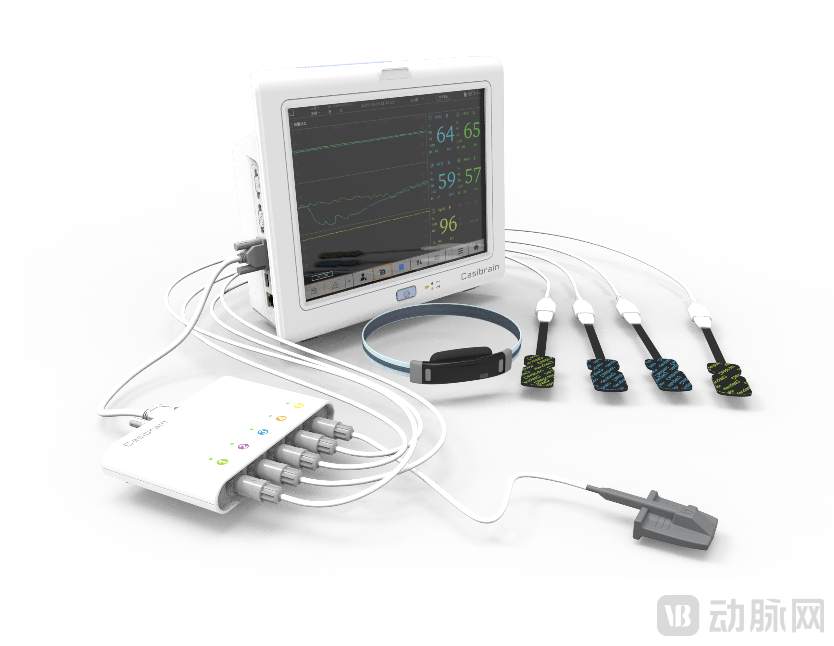
BRS-100
In addition, the product is supported by dedicated software for big data analysis, which can assist clinical experts in data review and big data analysis; it provides real-time display of multidimensional parameters. The design includes a total of 11 parameters such as signal quality, cerebral oxygen saturation, and cerebral tissue hemoglobin concentration, covering comprehensive cerebrovascular hemodynamic information including signal quality assessment, cerebral oxygen saturation, and cerebral blood gas information. Moreover, this model is compatible with multiple probe types, meeting monitoring needs across different skull diameters from neonates, children to adults.
Casibrain Technology not only utilizes cutting-edge brain science technology to achieve multi-site, multi-mode collection of blood oxygen saturation information in stroke patients through near-infrared spectroscopy, ensuring the accuracy of cerebral oxygen monitoring data across various medical scenarios. It also incorporates big data analysis and multi-parameter display functions. It is reported that the product obtained a Class II Medical Device Registration Certificate earlier this year and can be used in multiple departments such as anesthesiology, intensive care medicine, cardiac surgery, and extracorporeal circulation. Additionally, the product has received CE certification, laying a solid foundation for exporting China's advanced brain science technology to overseas markets.
In its recent work, Casibrain Technology has focused on "brain function" and gradually completed the layout of three product dimensions: "brain function monitoring," "brain function evaluation," and "brain function imaging," as well as the transformation of related scientific research results, forming different products that meet the needs of different clinical scenarios. Among them, especially "brain function imaging," with the help of a new round of financing, Casibrain Technology has completed the transformation of related intellectual property rights, opening a door for the company to advance into brain imaging.
This technology is a significant scientific achievement developed by the Institute of Automation, Chinese Academy of Sciences (CAS), after undertaking the Ministry of Science and Technology's "National Key Scientific Instrument Development Project — Optoelectronic Synchronous Brain Activity Detector." The optoelectronic synchronous brain activity detector developed under this project is the world’s first integrated brain imaging system capable of simultaneously collecting electroencephalographic (EEG) and cerebral oxygenation activities across all brain regions. Meanwhile, Casibrain Technology is fully leveraging the strengths of the Institute of Automation, CAS, in artificial intelligence to deeply integrate brain science technology with AI, supporting precise diagnosis and treatment of brain functions through advanced brain function devices.
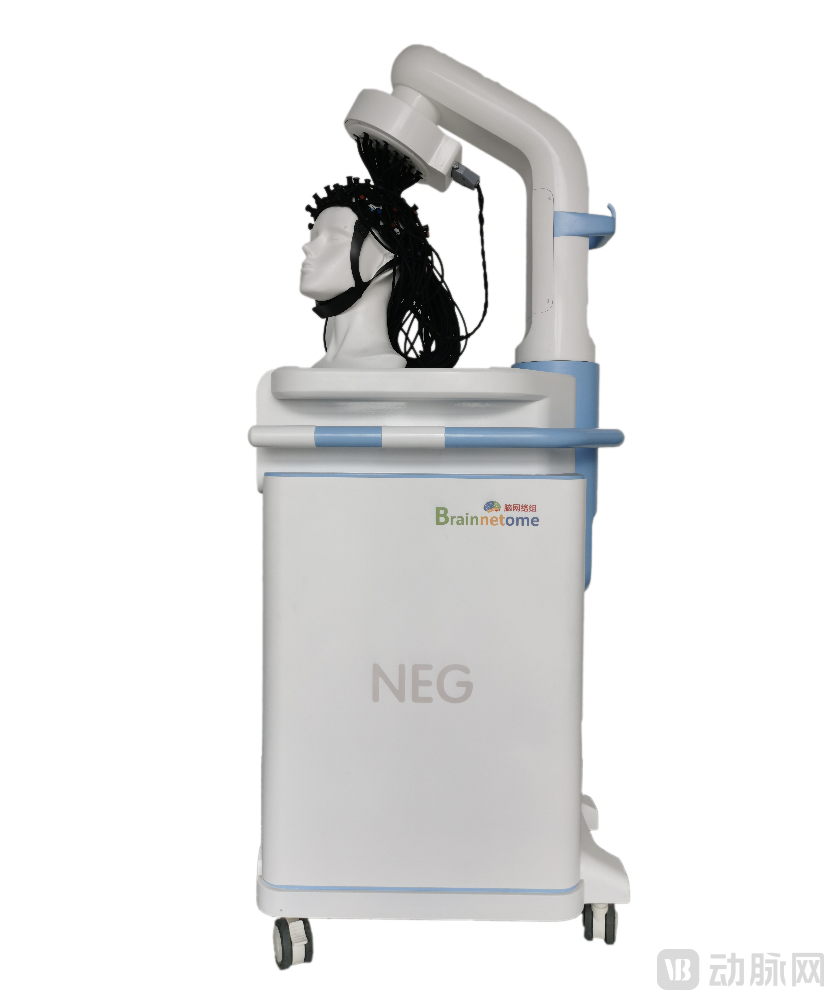
Optoelectronic Synchronous Brain Activity Imaging Device
From a technical perspective, Casibrain Technology seems to have had a very smooth journey from product design to project implementation. Additionally, the company benefits from the artificial intelligence and brain science advantages of the Chinese Academy of Sciences' Institute of Automation, with key research achievements such as the brain network组图谱 and the photoelectric synchronous brain activity detector. Backed by a critical technology platform for brain science research, and combining the natural strengths of brain function acquisition methods and AI-based analysis of large-scale brain function data, developing innovative products in the field of brain science while promoting product transformation appears not to be difficult.
But nevertheless, through Zhang Xin's recollections, it is still possible to see the common issues encountered by Casibrain Technology in the process of transforming scientific research achievements.
"In 2016, we developed many testing technologies, accumulated numerous patented technologies, and published articles in some top journals. If we were in the academic circle, it would be considered quite an achievement. But once we enter the serious and strict scenario of hospitals, we have to answer questions about safety, reliability, commercialization again."Zhang Xin recalled.
To verify the safety of the product, Zhang Xin, along with the Casibrain Technology team, conducted a "thousand-person oxygen reduction experiment." They mixed nitrogen and oxygen to create a gas supply device with a low oxygen concentration. By inhaling the low-concentration oxygen, they gradually reduced blood oxygen levels, simulating the state of cerebral ischemia and hypoxia in clinical patients, while monitoring cerebral oxygen status—effectively turning themselves into "patients." This process closely simulated an ascent from sea level to an altitude of 5,000 meters within an hour, enabling comprehensive and accurate observation of blood oxygen changes across various tissues, including brain tissue, muscle tissue, and peripheral tissues.
Zhang Xin's memory of the thousand-person oxygen reduction experiment at that time was, "Our lips turned purple, and some even felt panicky. I myself have been a test subject multiple times, experiencing severe short-term symptoms of oxygen deficiency such as rapid heartbeat and finger tremors. But in order to verify the effectiveness of our technology and products, we believed it was necessary to conduct such an experiment."
After the hypoxia experiment involving a thousand participants was initiated, every member of the Casibrain Technology team conducted such hypoxia experiments three to five times. For this purpose, Casibrain Technology also specially established a hypoxia laboratory at Capital Medical University. "We need to go through very rigorous verification to have confidence in the accuracy of the product."Zhang Xin told VCBeat.
Nowadays, the error between Casibrain Technology's non-invasive cerebral oxygen detection and invasive detection is less than 1.34%. It has obtained five medical device registration certificates, including non-invasive cerebral oxygen monitors, wireless cerebral oxygen monitoring headbands, cerebral oxygen probes, and tissue oxygen probes. Not only that, but Casibrain Technology has also signed contracts with nearly 20 provincial distributors and entered the anesthesiology and intensive care departments of more than 50 hospitals. Recently, it has been expanding brain function monitoring to areas such as neurointerventional diagnosis and treatment, outpatient services in grassroots medical institutions, and essential public health services (stroke prevention, screening, management, and treatment).
From university lecture halls, to research institutes, and now back to the industry. From having only core technology, to developing products, and now implementing them in clinical settings. Along this journey, Zhang Xin's mindset has shifted, and he has begun to recognize the significant value of returning to clinical applications.
According to Zhang Xin's sharing, in the past, Casibrain Technology only had an extremely persistent pursuit of technology. However, as its interaction with clinical practice has become increasingly close, it no longer focuses on whether the technology is cutting-edge but has gradually shifted towards solving clinical problems. It pays attention to clinical scenarios, ensures that the developed products match clinical scenarios well, and finds a balance between the two. At the same time, through in-depth communication with clinicians, it broadens its technical iteration, updates, and R&D ideas, aiming to develop or expand its brain function product line in a dimension that truly meets clinical needs.
At the end of the conversation, Zhang Xin also summarized the key insights into the transformation of scientific research results. He shared with VCBeat:
First, in terms of product development thinking, it must be clear that good medical devices should meet clinical needs and bring revolutionary changes to the diagnosis and treatment for medical workers and patients. The transformation from brain science technology to brain diagnosis and treatment devices is no exception; it should focus on the clinical need for brain function protection.
Secondly, in terms of mindset, it is crucial to understand that the purpose of developing brain function products is to genuinely address clinical issues and benefit patients. The evaluation standards and expected goals differ significantly between scientific research technology and medical devices. The technology itself can only serve as a supporting component of the product, not the entirety of it. As a translational effort in brain science technology, it must possess core technology while also being user-friendly, reliable, safe, and accurate in clinical settings, and must align with the needs of clinical scenarios.
Finally, in the process of translating brain science products, it is necessary to fully consider whether the product can truly be used by patients, how the product can be integrated with existing clinical work, and how the product can be charged in hospitals. In this process, it is essential to deeply understand China's existing medical security standards, the latest medical diagnosis and treatment service policies, and long-term goals such as "Healthy China 2030." Based on this understanding, cost control of the product should be gradually achieved, plans should be adjusted, and suitable products should be further launched.
Among the key processes above, the third one is indispensable but also the most easily overlooked by researchers.
In the future, Casibrain Technology will continue to promote innovation in brain function monitoring, brain function evaluation, and brain function imaging products. Guided by the clinical needs for brain function protection, the company will comprehensively layout around brain function diagnosis and treatment, developing more valuable and high-quality innovative brain function diagnosis and treatment devices.