

Exclusive Interview with Dr. Sheng Wang, New CEO of Zhiyu BioTech: Expanding the Frontiers of Synthetic Biology through AI

Zelixir
Protein Structure Prediction and Design Service Platform Provider

Recently, Zelixir announced a new personnel appointment: announcing the world's leading expert in protein structure predictionDr. Wang ShengOfficially joined the company as the CEO of Zelixir,Responsible for protein computing business and the company's overall strategic planning.Dr. Wang Sheng has深耕蛋白质结构预测及计算十多年,曾在全球最富盛名的CASP及CAMEO比赛中名列前茅,是该领域的顶级专家。
The Zelixir team stated, "The addition of Dr. Wang Sheng will become an important milestone in the company's development. While continuously refining the company's protein structure prediction and design business, the inclusion of Dr. Wang Sheng will open up a path for Zelixir to expand the boundaries of synthetic biology based on existing technologies, thereby 'bringing a visible revolution to the field of protein structures.'"
Zelixir, founded in April 2021, has independently built a complete protein structure prediction, design, and production system, offering two main categories of services: drug-assisted R&D and synthetic biology. Within less than a year of its establishment, the company consecutively secured angel round funding led by CDH Investments and Langyu Investment, as well as Pre-A round funding led by Hillhouse Ventures, with a total financing amount exceeding 100 million yuan.
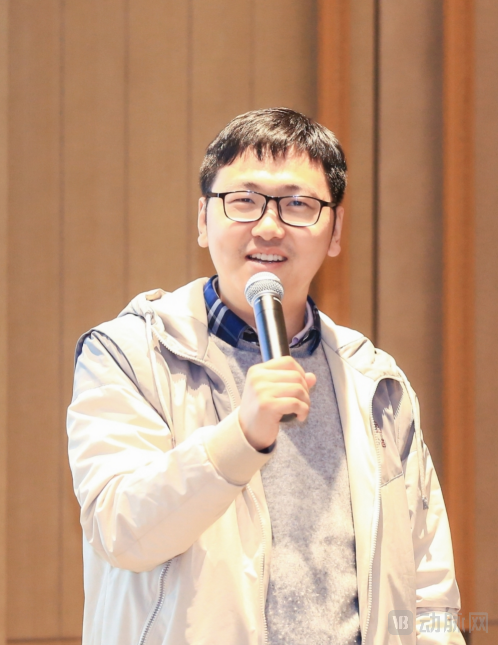
Dr. Wang Sheng, CEO of Zelixir
As a top scholar in the field of artificial intelligence combined with protein research globally, and former senior research expert at Tencent AI Lab, what existing advantages will the addition of Dr. Wang Sheng reinforce for Zelixir, and what new developmental genes will he introduce? What kind of "revolution in the biotech field" is the Zelixir team currently envisioning? VCBeat conducted an exclusive interview with Zelixir's CEO, Dr. Wang Sheng, hoping to uncover answers to these questions.
The following is a partial transcript of the dialogue between VCBeat and Dr. Wang Sheng:
(To facilitate smooth reading for the audience, VCBeat has made editorial adjustments to the text without altering the original meaning.)
VCBeat: Zelixir could be said to have been born amidst last year's fervent wave of protein structure prediction and design. What pain points in the domestic industry did Zelixir initially target when it was founded?
Dr. Wang Sheng:Zelixir primarily targeted two market pain points at the time of its establishment:Protein structure prediction and protein structure design.Following the breakthrough of Alphafold2 in high-precision prediction of protein structures, the founding members of the team unanimously agreed that this advancement would significantly impact the field of protein structure design. Compared to protein structure prediction, protein structure design is expected to have a broader and more profound influence on the biopharmaceutical industry, particularly in the field of synthetic biology.
Protein structure prediction has paved the way from one-dimensional to three-dimensional structures. We believe that, theoretically, the reverse path of protein structure design—from three-dimensional to one-dimensional—can also be achieved.Protein prediction and protein design, the two sides of this inverse problem coin, are key to the next explosion in biotechnology and will bring revolutionary breakthroughs to the field of synthetic biology.
VCBeat: Can you elaborate on the specific aspects of this revolutionary breakthrough? What impacts does it have on the new drug development field and the synthetic biology field respectively?
Dr. Wang Sheng:In terms of protein prediction,The breakthrough of Alphafold2 has solved the high-precision prediction problem of protein structures from one-dimensional to three-dimensional, shifting the scientific community's focus to determining three-dimensional structures based on functional requirements and designing corresponding protein sequences. The impact of Alphafold2's breakthrough on the new drug development field lies inThe reduction in the difficulty of obtaining complex protein structures.Directly obtaining protein structures from protein sequences was unimaginable in the past. The protein structures predicted by Alphafold2 can facilitate structure-based drug design, especially for new targets that lack sufficient protein structure information.
For the field of synthetic biology, the breakthrough of Alphafold2 holds even greater significance. In July last year, DeepMind published an article in *Nature*, describing AlphaFold's structural predictions for the human proteome, covering 98.5% of the entire human proteome. Moreover, AlphaFold is able to predict the structural positions of 35.7% of amino acids in the human proteome… This represents a very important breakthrough for the field of synthetic biology. As is well known, enzymes are crucial catalytic elements in biosynthetic reactions and are a type of protein. Previously, we could obtain gene sequence information of enzymes, but it was difficult to predict the structures of most enzymes through experimental methods. Now,By utilizing high-precision, high-throughput protein structure prediction technology, we can quickly and accurately obtain three-dimensional structural information about enzymes, thereby uncovering those with significant potential industrial value.
The impact of protein structure design on the field of synthetic biology is broader and more profound.Protein design means we canDesign and synthesize enzymes that meet functional requirements, even if such enzymes have never existed in nature.At present, there are many high-value small molecules in the industry. Using traditional chemical synthesis methods to synthesize them may lead to issues such as high pollution, high energy consumption, and even low efficiency. However, a suitable biosynthesis pathway to produce them might not be available, possibly due to the lack of a key enzyme.
If we integrate the two concepts of protein prediction and protein design, does it mean that we can directly create such an enzyme to drive reactions that have never existed in nature? Or, from another perspective: based on existing biosynthetic reactions, we can use AI technology to further enhance the efficiency of catalytic enzymes and make them more stable. What originally might have required three steps to obtain the final product could now be simplified to two or even one step by creating a new enzyme.
Zelixir can be said to beOne of the earliest batches in China and abroad to simultaneously integrate the two concepts of protein prediction and protein design.The enterprise, at the same time weA series of related algorithms for protein structure research have been expanded based on protein structure prediction.We hope to leverage our own technology to build upon the existing synthetic biology industry.Upgrade and Surpass.
VCBeat: The development of AI pharmaceuticals is currently very hot, and the competition is also extremely fierce. What competitive advantages does Zelixir have in the field of AI pharmaceuticals?
Dr. Wang Sheng:Zelixir's protein computing and design services are currently mainly applied in the AI pharmaceuticals field.Provide online cloud platform services.From the moment we identify a target protein, to designing a small molecule based on that target to interact with it, and finally to developing it into a drug, we divide this process into four essential steps: First, understanding the structure of the target protein; Second, identifying the potential binding region between the small molecule and the protein. Third, having a diverse library of small molecules to screen for those capable of binding to the protein. Fourth, further optimizing the various properties of the screened small molecules that bind to the protein, including affinity, water solubility, toxicology effects, molecular activity, and more.
The development of AI-driven large molecule drugs follows a similar logic: confirming the structure of the target protein; identifying the interaction surface between large molecules and the protein; screening a rich library of large molecules to find those capable of binding to the target protein; further optimizing the numerous large molecules that pass the screening by locally altering certain amino acids, enhancing the affinity between the large molecule and the target protein, improving the molecular activity of the large molecule, reducing the immunogenicity of the antibody, and so on.
Each of the above specific steps corresponds to different AI technical methods. Zelixir has top-tier research achievements in each of these steps. We have transformed our research results into products, developing corresponding cloud platform tools for the work involved in each of these steps.
As we all know, the research and development of new drugs is a high-investment, high-risk, and long-cycle process. The application of AI technology in the field of new drug R&D currently mostly focuses on the drug discovery stage, and it is still in a relatively early stage of development. Based on the resource endowments of its team, Zelixir's current focus is primarily on providing AI-assisted drug R&D services by leveraging its algorithmic advantages.
VCBeat: In other words, in the field of AI-driven drug discovery, is Zelixir competing with leading international software platform companies?
Dr. Wang Sheng:Currently, yes. ZelixirProvide platform services with different functional modules to pharmaceutical companies, allowing them to easily complete protein-related research work before new drug development.Achieve the goal of reducing costs and accelerating the process of new drug research and development by utilizing AI, without spending too much money and time to specially configure a team for AI algorithms. For some customers who are concerned about the data security of cloud platforms, wePackage the entire set of cloud-based software into a localized private cloud.In addition, it also provides a one-stop engineering solution for protein structure calculation like the ZPod system.The Zhishan system can be regarded as a "mobile server room." In this way, customers don't need to spend time and cost building a supercomputing server room; they can directly purchase the Zhishan system. All the various software and programs that require supercomputing we just mentioned can be completed on the Zhishan system.
VCBeat: In the field of drug-assisted R&D, what are the main customer groups currently served by the company? Can you share Zelixir's achievements in the form of data?
Dr. Wang Sheng:Zelixir focuses on building and perfecting its self-developed ZCloud intelligent drug discovery platform. Through collaborations with large CROs, emerging biopharmaceutical companies, and research institutions worldwide, the advantages and enormous potential of the ZCloud platform in terms of cost, speed, and success rate have been continuously validated, achieving several milestone advancements. To date, Zelixir has provided over 300,000 protein structure predictions and R&D support services to nearly 30 clients.
VCBeat New Medicine: In the field of synthetic biology, most domestic companies focus on the tool layer and some application layers. However, Zelixir has chosen to concentrate on the software/hardware layer with higher industrial barriers, aiming to build a full industry chain from protein computation to design and then to production. How will this industry chain operate?
Dr. Wang Sheng:Zelixir has chosen to enter the field of synthetic biology software/hardware, which has high industrial barriers, for two reasons: first, to address market pain points and solve problems; second, it truly aligns with our capabilities and strengths. Before I officially joined Zelixir, the team already possessed strong capabilities in protein structure prediction and design. However, at that time, the company was mainly focused on developing upstream software and algorithm tools.
At the end of last year and the beginning of this year, the company absorbed a synthetic biology team with considerable experience in the synthetic biology industry. This team has rich practical experience in metabolic fermentation engineering and has previously produced various synthetic biology products at the kilogram and ton levels.At this stage, Zelixir hopes to打通 the entire process from the upstream computing and design end to at least the pilot stage downstream, embodying protein design capabilities into specific products. After completing the pilot-scale production of the product, we will choose whether to produce and sell it ourselves or collaborate with partners through technology transfer based on the product's future commercial prospects and the difficulty of scaled production.
VCBeat: In the field of synthetic biology, what are the characteristics that set Zelixir apart from other synthetic biology platform companies? How will it further expand its layout in the synthetic biology sector by leveraging its own platform technology advantages in the future?
Dr. Wang Sheng:The difference is that weNot only the automation of laboratories, but also the intelligence of laboratories,Thereby greatly improving experimental efficiency. Let me give a simple example to illustrate. Short peptide synthesis is a very important part in the field of synthetic biology. However, so far, the efficiency of short peptide synthesis is not high. The efficiency of using an automated lab to synthesize short peptides is far lower than simply hiring a group of people to do it. The reason is that each position of the short peptide has a different amino acid, and the conditions for synthesizing each amino acid are also very demanding — the reaction conditions, catalysts, reaction temperatures, pH values, and other aspects required by different amino acids vary significantly. Humans can adjust based on their experience and different conditions, but automated platforms cannot. All procedures followed by the platform are hard-coded, allowing it to only perform highly repetitive tasks.
Currently, Zelixir is building a set ofAutomated Intelligent Experiment Platform——ZBot. This platform aims to achieve the automation of protein design – starting from the design of protein sequences, to the automation of DNA synthesis, the expression of amino acid sequences, and the synthesis, purification, and final functional validation of proteins. We have deeply integrated this automated laboratory platform with the company's Zelixir system.During operation, the experimental data continuously generated by this set of automated platforms will be fed back into the company's Zhishan system. The Zhishan system will then conduct ongoing deep learning based on this data, continuously optimizing and iterating to achieve intelligence on the basis of laboratory automation.Form a perfect closed loop.
Moreover, as Zelixir continues to improve its synthetic biology platform, we can also leverage this intelligent automation platform system to expand into other fields such as AI-driven drug discovery. The current AI-driven drug discovery field faces several challenges, one of which is how to achieve efficient production after small molecule drugs are designed. As I mentioned earlier, using protein design could potentially create the enzymes required for various biosynthetic reactions. In this way, we can directly utilize efficient biosynthesis methods to produce the desired products.
VCBeat: Why did you choose to join Zelixir? What qualities of this team particularly attracted you?
Dr. Wang Sheng:Although I am now officially joining the Zelixir team, the founders of the company have collaborated with me to varying degrees in the past and are also friends I’ve known for many years. Throughout the company’s development, they have consistently sought my opinions, and I have been more than happy to share my thoughts on the company's future growth. I have always deeply resonated with Zelixir's mission and vision:Understanding life through computation, improving life through synthesis, reconstructing life through design.Now, for me personally, the time, place, and people are all in alignment, making my official joining of Zelixir a natural progression.
VCBeat: What existing strengths will your joining reinforce for this team, and what new growth genes will it inject?
Dr. Wang Sheng:On the one hand, Zelixir will continue to refine its protein computing and design platform, and expand industry collaborations through computing services while strengthening its technological foundation in synthetic biology.
I consider myself a versatile talent: I graduated with a bachelor's degree from the School of Life Sciences at Shanghai Jiao Tong University, where I studied traditional biology. During my master's and Ph.D., I received training in theoretical physics at the Institute of Theoretical Physics, Chinese Academy of Sciences. As a postdoctoral researcher, I worked at the Toyota Technological Institute at Chicago (TTIC), conducting research on AI protein prediction under the guidance of Professor Jinbo Xu. After returning to China in 2019, I served as a senior research expert at Tencent AI Lab.
All in all, my personal experiences and accumulation in both the scientific research and industrial circles are highly aligned with the future development of Zelixir—requiring support in AI algorithms and computing power while being closely related to wet-lab experiments. After joining Zelixir, in addition to bringing the team numerous connections and resources I’ve accumulated in the industry, as well as further refining the company’s protein structure prediction and design services, my role will also focus on our expanded efforts in combining artificial intelligence with synthetic biology. I hope to lead Zelixir in "looking up at the stars" while keeping our "feet on the ground"—extending our AI technological advantages into the industry and launching competitive products into the market.