

Boston Scientific Successfully Completes First-in-China "Pilot" Procedure Using TheraSphere Y-90 Glass Microspheres at Boao Super Hospital

Boston Scientific
Medical Device Manufacturer
ShanghaiMay 25, 2022PR Newswire -- Today, Boston Scientific Corporation (NYSE: BSX), in collaboration with Boao Super Hospital, successfully completed the first "pilot" surgery in China using Yttrium-90 glass microspheres at the Boao Lecheng International Medical Tourism Pilot Zone (referred to as "Lecheng Pilot Zone") in Hainan. This marks another significant milestone in the cooperation between Boston Scientific and the Lecheng Pilot Zone. The successful implementation of this surgery will accelerate the process of making this product accessible to the public in China, filling another cutting-edge technological gap in the field of liver cancer treatment in the country.
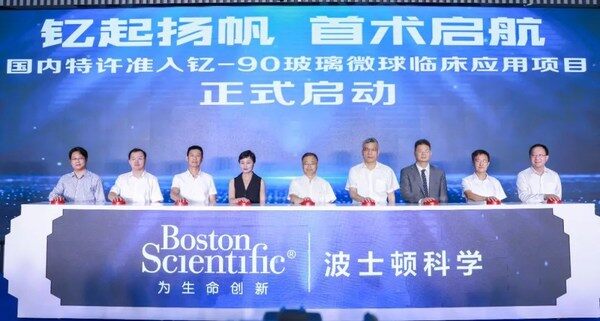
TheraSphere Yttrium-90 Glass Microspheres System Clinical Application Project Launch Ceremony
Boston Scientific's TheraSphere Yttrium-90 Glass Microspheres System (hereinafter referred to as "Y90 Glass Microspheres") is used for Selective Internal Radiation Therapy (SIRT) for liver cancer. It is currently the only Y90 microsphere product approved by the U.S. FDA for treating hepatocellular carcinoma and has been widely used abroad for over 20 years. The treatment principle involves implanting high-radioactive Y90 glass microspheres within the tumor to continuously radiate and destroy tumor tissue. Due to the limited radiation distance, it minimizes damage to normal liver tissue and adjacent organs. Additionally, the product can be tailored to provide customized Y90 glass microsphere dosages for different patients, enabling personalized precision treatment.
Regarding the implementation of this surgery, Teng Gaojun, academician of the Chinese Academy of Sciences and president of Zhongda Hospital affiliated with Southeast University, stated: "Y90 glass microspheres have been used abroad for over 20 years, but they are still a blank slate in China. The successful collaboration between Boston Scientific and Lecheng Pilot Zone holds great significance for the development of liver cancer treatment technology in China, providing new options for precise liver cancer treatment and multidisciplinary diagnosis and treatment. This is also my team's and my first collaboration in the Lecheng Pilot Zone, which I consider a new starting point. I believe that with the joint efforts of all parties, our path of integrated innovation will become broader, and our cooperation will never end."

Teng Gaojun, Academician of the Chinese Academy of Sciences and President of Zhongda Hospital Affiliated to Southeast University
Seize the Opportunities of Lecheng Policy, Explore the Accessibility of Cutting-edge Medical Technologies
"As the only 'medical special zone' in China currently, Lecheng Pilot Zone has basically achieved the goal of 'three synchronizations'—medical technology, equipment, and drugs reaching international advanced levels—through the continuous implementation of higher-level opening-up policies, accelerated institutional integration innovation, and industrial integration development in recent years. It has become the main channel for international innovative medical devices to enter China more quickly and an important platform for Chinese people to receive treatment for serious illnesses without going abroad," said Jia Ning, Director of the Lecheng Pilot Zone Administration. He added that the Lecheng Pilot Zone will continue to optimize the business environment and work with global pharmaceutical and medical device companies to develop the high-quality "Lecheng Model" for the medical industry.
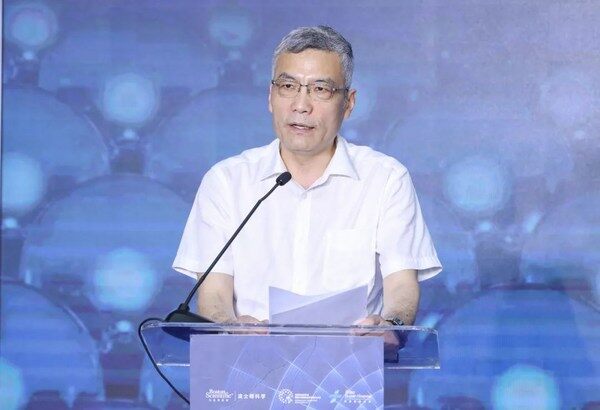
Jia Ning, Director of the Administration Bureau of Boao Lecheng International Medical Tourism Pilot Zone, Hainan
Seeing the policy opportunities in Lecheng, Boston Scientific established a strategic partnership with the Lecheng Pilot Zone as early as November 2019. In January of the following year, as the first medical device company partner in the real-world research field, it actively explored "pilot trials" and real-world research, successively introducing several innovative products. It became the medical device company with the most products selected for the second batch of "real-world research" pilot programs. Its thermal vapor therapy device and disposable prostate steam therapy device Rezūm, which were approved for marketing this March, are precisely the third innovative medical device in the Lecheng Pilot Zone to be approved by the National Medical Products Administration with the assistance of real-world research data.
Zhang Jun, President of Boston Scientific Greater China, stated: "Over the past two years, Boston Scientific has witnessed the rapid transformation of Lecheng Pilot Zone from a 'policy highland' to a 'platform highland.' If our previous cooperation was in the 1.0 era, then the successful launch of the Y90 glass microsphere 'Pilot First' project will usher in a 2.0 era of collaboration between us. Moving forward, through multi-party synergy and integration of 'industry, academia, research, medicine, and policy,' we will implement more 'first cases,' explore more effective innovations, and help Lecheng Pilot Zone become a world-class window for opening up in the medical field."

Boston Scientific Greater China President Zhang Jun delivers an online speech
Accelerate the Introduction of Blockbusters"Nuclear Technology" Fills the Gap in Liver Cancer Treatment in China
China is a country with a high incidence of liver cancer, and the morbidity and mortality rates of liver cancer remain high. According to statistics, in 2020, there were 410,000 new cases of liver cancer in China, including 390,000 deaths, accounting for 50% of the global total.[1]. Although surgical treatment (including surgical resection and liver transplantation) is currently the only means that can lead to a cure or long-term survival for patients with liver cancer.[2], but due to the characteristics of liver cancer being insidious in onset and rapid in progression, with a high incidence of postoperative recurrence and metastasis, 70% to 80% of patients in China are not candidates for surgical resection at the time of their initial treatment.[3]The five-year overall survival rate for liver cancer patients in China is only 14.1%.[4]。
For inoperable liver cancer, the clinical approach mainly involves interventional therapy as well as systemic treatments such as immunotherapy and targeted therapy, aiming to extend patients' survival as much as possible. Y90 glass microspheres, a treatment method that combines the dual advantages of precise minimally invasive intervention and accurate nuclear medicine diagnosis and therapy, have been proven by extensive clinical treatments to provide significant survival benefits for liver cancer patients at various stages. This includes offering some patients who are not initially eligible for surgical resection the opportunity to undergo radical surgery after downstaging treatment.[5][6][7][8]。
The expert who performed the first surgery of this "pilot program"—Dr. Niu Huimin, Director of the Interventional Department at Hainan Province Tumor Hospital, stated: "In implementing...MainlandDuring the first case of Y90 glass microsphere treatment, our hospital actively leveraged the advantages of expert teams and advanced diagnostic equipment, with multidisciplinary collaboration, to provide comprehensive medical services covering preliminary screening, evaluation, surgery, postoperative monitoring, and follow-up for patients undergoing Y90 glass microsphere clinical treatment. Moving forward, we will continue to collaborate with Boao Super Hospital, alongside multiple hospital branches and disciplines, to jointly establish a 'Chinese model' for Y90 microsphere therapy, benefiting more liver cancer patients in China.
Liu Tongting, Executive Vice President of Boao Super Hospital, stated: "Since its official opening in March 2018, Boao Super Hospital has introduced 90 advanced technologies involving specially permitted drugs and medical devices for the first time in China, benefiting nearly 10,000 patients with special needs. It has completed or is conducting nearly 30 real-world data studies. We hope that in the future, we can continue to establish comprehensive, full-process, and all-round cooperation with top domestic hospitals such as Zhongda Hospital Affiliated to Southeast University and international giants like Boston Scientific Corporation. Under the strong leadership of the Pilot Zone Administration, we will further advance the trial implementation of specially permitted drugs and medical devices."
About Boston Scientific
Boston Scientific Corporation is committed to innovation for life. We are dedicated to innovative medical solutions that improve the lives of patients around the world. For more than four decades, Boston Scientific has been at the forefront of the global medical technology industry, providing a wide range of high-performance medical solutions to meet the urgent needs of patients, while reducing healthcare costs. For more information, please visit the company’s website:www.bostonscientific.cn
About Boston Scientific Greater China
Boston Scientific established its China headquarters in Shanghai in 1997 and currently has branch offices in Beijing, Shanghai, Guangzhou, Chengdu, Hong Kong, and Taiwan. The company's core business areas include interventional cardiology, structural heart disease, cardiac rhythm management and electrophysiology, endoscopic intervention, peripheral and tumor intervention, urology and pelvic health, respiratory products, and more. Upholding its tradition as an innovation leader, Boston Scientific is committed to becoming a respected medical technology company that meets the needs of doctors and patients, demonstrates innovative vitality, and provides high-quality medical products and services for prevention, diagnosis, and treatment. For more detailed information, please visit the company’s website:www.bostonscientific.cn
[1] https://www.iarc.fr/faq/latest-global-cancer-data-2020-qa/
[2] Chinese Society of Clinical Oncology. "Guidelines for the Diagnosis and Treatment of Primary Liver Cancer". People's Medical Publishing House, 2020
[3] Liu Ming, et al. Expert Consensus on Imaging-Guided Cryoablation Therapy for Liver Cancer (2020 Edition). Chinese Medical Journal [J]. 2020, 55(5): 489-492.
[4] Office of the National Health Commission. Guidelines for the Diagnosis and Treatment of Primary Liver Cancer (2022 Edition) [J]. Chinese Journal of Surgery, 2022, 60(04): 273-309.
[5] Salem, Riad, et al. "Yttrium–90 radioembolization for the treatment of solitary, unresectable HCC: the LEGACY study." Hepatology 74.5 (2021): 2342-2352.
[6] Gabr, Ahmed, et al. "Liver transplantation following Yttrium–90 radioembolization: 15–year experience in 207–patient cohort." Hepatology 73.3 (2021): 998-1010.
[7] Lewandowski, Robert J., et al. "Radiation segmentectomy: potential curative therapy for early hepatocellular carcinoma." Radiology 287.3 (2018): 1050-1058.
[8] Gabr Ahmed, et al.Modified Radiation Lobectomy: An Evolving Paradigm to Convert Patients to Liver Resection Candidacy. Semin Intervent Radiol. 2019 Oct;36(4):343-348.