

Boston Scientific Launches Tria Ureteral Stent in China with Innovative Percushield Technology

Boston Scientific
Medical Device Manufacturer
Shanghai, May 26, 2022 /PRNewswire/ -- Today, Boston Scientific (NYSE:BSX), a global leading medical technology company, announced the official launch of its Tria ureteral stent in China, used for stone expulsion and drainage in patients after minimally invasive surgery for urinary system stones. Relying on the patented Percushield technology, Tria is the world's first ureteral stent to include anti-calcium-magnesium salt deposition in its instructions. While reducing the probability of urine crystallization and stent encrustation, and further improving the prognosis of urinary stone surgery treatment, it provides patients with a more comfortable experience of ureteral stent placement, helping to improve the quality of life for many patients. This also enabled Tria to win the Bronze Award at the 2022 Edison Awards.
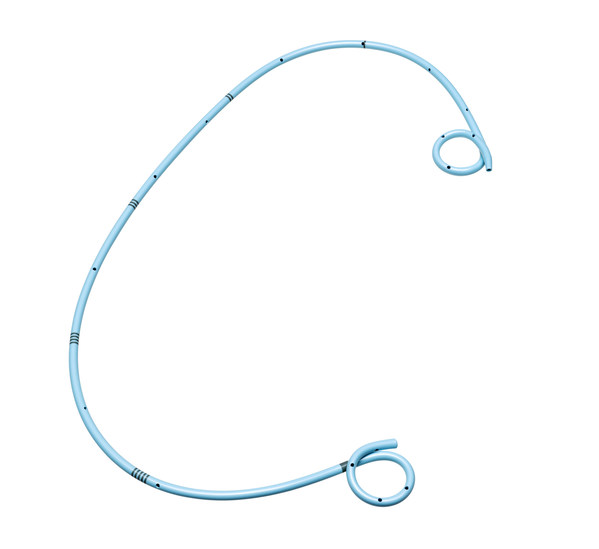
Boston Scientific Tria Ureteral Stent*
Urinary system stones are a common condition in urological surgery, with an overall incidence rate of 1% to 5% in China, and up to 5% to 10% in southern regions. Among these patients, 25% require hospitalization, which ranks first among hospitalized patients in urological surgery.[1]Currently, minimally invasive surgeries such as ureteroscopic lithotripsy, flexible ureteroscopic lithotripsy, and percutaneous nephrolithotomy are the main methods for treating urinary system stones. After the surgery, a stent is usually placed in the patient's ureter to support it, promoting the drainage of urine and stone fragments while preventing issues like ureteral obstruction.
Traditionally, while the application of ureteral stents has improved the prognosis of stone treatment surgeries, it has also faced a series of challenges. The Boston Scientific Tria ureteral stent, through the adoption of patented material technology and multi-dimensional innovative upgrades in product design, offers a more comfortable and convenient solution for a wide range of patients.
Innovative Patent Material Technology to Address the Challenge of Stent Crusting
Stent encrustation is a major challenge commonly faced by existing ureteral stents on the market. After the ureteral stent is placed in the body, residual stone fragments, bacteria, calcium salts, magnesium salts, and other substances in the patient's postoperative urine can easily adhere to the stent wall and gradually deposit to form stent encrustation. Severe stent encrustation can affect the drainage of urine after surgery, and may even lead to urothelial mucosal injury, hematuria, urinary tract obstruction, and difficulty in stent removal.[2]。
Boston Scientific's Tria Ureteral Stent Features Patented Percushield Technology for Inner and Outer Walls – This Unique Low Surface Energy Hydrophobic Material Prevents Components in Urine, Such as Bacteria and Calcium/Magnesium Salts, from Adhering to the Stent Surface, Reducing the Probability of Urinary Crystallization and Stent Encrustation, Thereby Improving the Success Rate of Single-Attempt Stent Removal.
Thanks to this technology, the indwelling period of the Tria ureteral stent in the human body has also been significantly extended. Currently, the indwelling period of most ureteral stents on the market is only 90 days to half a year, while the indwelling period of the Tria ureteral stent can last up to one year, meeting the long-term indwelling needs of special patients. These include special conditions such as specific lesions, permanent ureteral damage, inability to remove the stent in time due to transportation difficulties, and other special circumstances, fulfilling diverse patient needs.
Enhance the operator's experience and improve patients' quality of life
The appropriate softness and hardness of a stent are crucial for ensuring the smooth placement of ureteral stents and maintaining long-term effective drainage. Some existing stents, due to their harder material, cause patients to experience significant foreign body sensation after wearing, and even frequent occurrences of ureteral colic, affecting the patients' quality of life; whereas some other stents, while improving product softness and comfort, are prone to kinking and telescoping due to insufficient hardness, increasing the difficulty for doctors during intraoperative catheter advancement.
In response to these challenges, Boston Scientific's Tria ureteral stents come in two shore hardness options: Firm and Soft, providing personalized choices for clinical use — Tria Firm is made of a relatively harder material, offering doctors a better feel when advancing the catheter and ensuring effective drainage within the patient’s body; Tria Soft is firmer outside the body, facilitating ease of catheter advancement by the doctor, and after being placed inside the body, its hardness decreases by 40% at body temperature, enhancing patient comfort and maintaining their quality of daily life.
"Based on the evolving personalized treatment needs of patients and the practical challenges doctors face during surgery, Boston Scientific continuously innovates in product design and material development, leading innovation and transformation in niche categories," said Ms. Zhang Jun, President of Boston Scientific Greater China. "As one of the earliest medical technology companies to enter the urology field globally, Boston Scientific offers high-quality minimally invasive interventional solutions in stone management, benign prostatic hyperplasia, and stress urinary incontinence, striving to help patients reduce the burden of disease and embrace a healthy life."
*Registration Certificate No.: China Medical Device Registration Approval 20223140234
[1] "Chinese Urology and Andrology Diseases Diagnosis and Treatment Guidelines (2019 Edition)"
[2] Ni Yongliang, Wei Wei, Wang Xiangtao, et al. Distribution Characteristics of Urinary Microbiota in Patients with Ureteral Stent Crusting[J]. Chinese Journal of Urology, 2020, 41(4): 262-266.
About Boston Scientific
Boston Scientific Corporation is committed to innovation for life. We are dedicated to innovative medical solutions that improve the lives of patients around the world. For more than four decades, Boston Scientific has consistently led the development of the global medical technology industry by delivering a wide range of high-performance medical solutions that meet the urgent healing needs of a broad patient population while reducing healthcare costs. For more detailed information, please visit the company’s website:www.bostonscientific.cn
About Boston Scientific Greater China
Boston Scientific established its China headquarters in Shanghai in 1997 and currently has branch offices in Beijing, Shanghai, Guangzhou, Chengdu, Hong Kong, and Taiwan. The company's core business areas include cardiac intervention, structural heart disease, cardiac rhythm management and electrophysiology, endoscopic intervention, peripheral and tumor intervention, urology and pelvic floor health, respiratory products, and more. Upholding its tradition as an innovation leader, Boston Scientific is committed to becoming a respected medical technology company that meets the needs of doctors and patients and demonstrates innovative vitality by providing high-quality medical products and services for prevention, diagnosis, and treatment. For more detailed information, please visit the company’s website:www.bostonscientific.cn