

Merck Receives Positive CHMP Opinion for KEYTRUDA® as Adjuvant Therapy in Stage IIB/IIC/III Melanoma Following Complete Resection

MSD
Pharmaceutical R&D and Manufacturer

Committee for Medicinal Products for Human Use
Committee for Medicinal Products for Human Use (CHMP)The Committee for Medicinal Products for Human Use (CHMP) is the committee within the European Medicines Agency (EMA) responsible for human medicines. The CHMP replaced the former Committee for Proprietary Medicinal Products (CPMP) in May 2004.The CHMP plays a vital role in the authorization of medicines in the European Union (EU). In the centralized procedure, the CHMP is responsible for: 1) conducting initial assessments of marketing authorization applications across the EU; assessing modifications or extensions to existing marketing authorizations (“variations”); considering recommendations from the Agency’s Pharmacovigilance Risk Assessment Committee regarding the safety of medicines on the market, and, where necessary, advising the European Commission to amend the marketing authorization of a medicinal product, or to suspend or withdraw it from the market.The CHMP also evaluates medicines authorized at the national level that are referred to the EMA, with the aim of maintaining a harmonized position throughout the EU.Furthermore, the CHMP and its working groups promote the development of medicines and pharmaceutical regulation by: providing scientific advice to companies researching and developing new medicines; developing scientific and regulatory guidelines to assist pharmaceutical companies in preparing marketing authorization applications for human medicines; and collaborating with international partners to harmonize regulatory requirements.
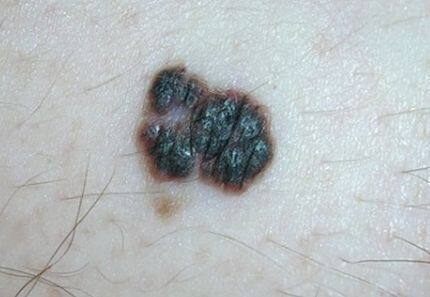
Melanoma (Image source: healthjade.com)
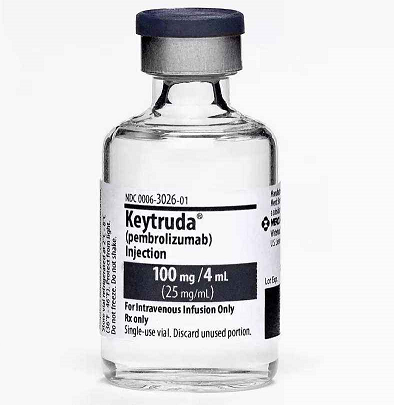
MSD (Merck Sharp & Dohme AG) recently announced that the European MedicinesManagementThe Committee for Medicinal Products for Human Use (CHMP) of the European Medicines Agency (EMA) has issued a positive opinion, recommending approval of the anti-PD-1 therapy Keytruda (generic name: pembrolizumab) as a monotherapy for the adjuvant treatment of adult and adolescent (≥12 years) patients with stage IIB or IIC melanoma who have undergone complete surgical resection. Additionally, the CHMP recommends expanding the indication for Keytruda in the treatment of advanced (unresectable or metastatic) melanoma and stage III melanoma (as adjuvant treatment following complete resection) to include adolescent patients aged 12 years and older.
Now, the CHMP opinion will be submitted to the European Commission (EC) for review, which is expected to make a final review decision in the second or third quarter of 2022. If approved,Keytruda to Become the First Anti-PD-1 Therapy in the EU for Patients 12 Years and Older Following Complete Resection of IIB, IIC, and III Stage MelanomaImmunityTreatment options will help reduce the risk of cancer recurrence.
December 2021, United StatesFDAApproval of Keytruda for adjuvant treatment of adult and pediatric (≥12 years) patients with stage IIB or IIC melanoma who have undergone complete surgical resection. Meanwhile, the FDA also expanded the indication for Keytruda as an adjuvant treatment for stage III melanoma patients who have undergone surgical resection to include pediatric (≥12 years) patients.
The positive review opinion of the CHMP is based on the results of the Phase 3 KEYNOTE-716 trial (NCT03553836). The trial demonstrated that, in patients with stage IIB and IIC melanoma (aged ≥12 years) who had undergone complete surgical resection,Compared with placebo, Keytruda adjuvant (post-surgery) treatment achieved recurrence-free survival (RFS).StatisticsStatistically significant improvement. Compared with the placebo group, the risk of disease recurrence or death in the Keytruda treatment group was reduced by 35% (HR=0.65; 95% CI: 0.46-0.92; p=0.00658).
New analysis data published this March shows,The trial met the key secondary endpoint of distant metastasis-free survival (DMFS): compared with the placebo group, the Keytruda treatment group showed a statistically significant improvement in DMFS.No new safety signals were observed in the trial.
Many patients with Stage II melanoma have a high risk of recurrence after surgery. The results of the KEYNOTE-716 trial represent an important milestone, as it is the first Phase 3 study specifically designed to evaluate adjuvant therapy for Stage IIB and IIC melanoma, an area with significant unmet medical need. By advancing Keytruda immunotherapy to earlier stages of melanoma, adjuvant treatment with Keytruda after complete surgical resection effectively reduces the risk of recurrence in high-risk Stage II patients compared to observation alone.
Melanoma is the most serious type of skin cancer, characterized by uncontrolled growth of pigment-producing cells. In the past few decades, the incidence of melanoma has been on the rise, and in 2020, there were new cases worldwide.DiagnosisApproximately 325,000 cases. Melanoma is the leading cause of skin cancer deaths, with more than 5,700 people worldwide dying from the disease in 2020. It is estimated that in Europe, over 150,000 new cases of melanoma were diagnosed in 2020, and more than 26,000 people died from the disease.
It is estimated thatThe recurrence rate after surgery for patients with stage IIB and IIC melanoma is 32-46%, and for stage III patients, it is 39-74%. The estimated 5-year survival rates (AJCC 8th Edition) are 87% for stage IIB, 82% for stage IIC, 93% for stage IIIA, 83% for stage IIIB, 69% for stage IIIC, and 32% for stage IIID.
Keytruda belongs to anti-PD-(L)1Tumor ImmunologyTherapy, this type of therapy helps detect and combat tumor cells by enhancing the ability of the human immune system. Keytruda is an anti-PD-1 therapy that activates T lymphocytes, which may affect both tumor cells and healthy cells, by blocking the interaction between PD-1 and its ligands PD-L1 and PD-L2. Currently, Keytruda has become a foundational therapy for various types of cancer.
In the treatment of melanoma, based on the results of the EORTC132/KEYNOTE-054 trial, Keytruda has been approved in more than 90 countries worldwide and is recognized as a crucial adjuvant treatment for patients with resected high-risk stage III melanoma. Additionally, Keytruda is also approved for treating patients with unresectable or metastatic melanoma. (Bioon.com)
Source of Original Text:Merck Receives Positive EU CHMP Opinion for KEYTRUDA® (pembrolizumab) as Adjuvant Treatment for Adult and Adolescent (≥12 Years of Age) Patients With Stage IIB or IIC Melanoma Following Complete Resection