

BMS's Oral TYK2 Inhibitor Deucravacitinib Shows Significant Efficacy in Phase 2 Trial for Systemic Lupus Erythematosus

Bristol-Myers Squibb
Biopharmaceutical and Nutritional Product R&D and Sales
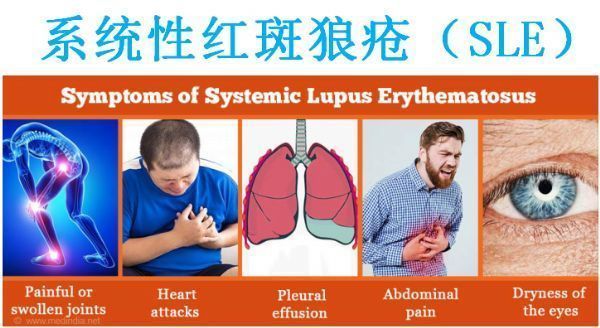
News on June 2, 2022 /BioValleyBIOON/ -- Bristol-Myers Squibb (BMS) recently announced at the European Alliance of Associations for Rheumatology (EULAR) 2022 conferenceNovel Oral TYK2 Inhibitor Deucravacitinib for the Treatment of Moderate to Severe Systemic Lupus Erythematosus (SLE)Positive results from the Phase 2 PAISLEY study (NCT03252587). The data shows,At Week 32 of treatment, the study met the primary endpoint of SRI-4 (SLE Responder Index 4) response. SRI-4 is a composite endpoint used in SLE clinical trials to assess disease activity.
PAISLEY is a one-year randomized, double-blind, placebo-controlled, global Phase 2 trial, with patient enrollment criteria as follows:ScreeningAt least 24 weeks prior toDiagnosisFor SLE, meeting the Systemic Lupus International Collaborating Clinics (SLICC) classification criteria, serologically positive, with a Systemic Lupus Erythematosus Disease Activity Index 2000 (SLEDAI-2K) score ≥6, and a British Isles Lupus Assessment Group (BILAG) index score showing ≥1 organ system at Grade A or ≥2 at Grade B, of which at least one must be from the musculoskeletal or mucocutaneous area.
In the study, patients receiving standard background drug therapy were randomly assigned in a 1:1:1:1 ratio to receive deucravacitinib 3mg twice daily (BID), 6mg BID, 12mg once daily (12mg QD), or placebo BID. Of the 363 randomized patients, 275 (76.0%) completed 48 weeks of treatment (deucravacitinib 3mg BID, 71/91 [78%]; 6mg BID, 76/93 [82%]; 12mg QD, 62/89 [70%]; placebo, 66/90 [73%]). The primary endpoint was the proportion of patients achieving SLE-4 at week 32 using non-responder imputation (NRI).
The results showed,At Week 32 of treatment, the proportion of patients achieving SRI-4 response was significantly higher in the deucravacitinib 3mg BID group and 6mg BID group compared to the placebo group (deucravacitinib 3mg BID group: 58.2%, p=0.0006; deucravacitinib 6mg BID group: 49.5%, p=0.0210; placebo group: 34.4%).. Although the SRI-4 response rate in the deucravacitinib 12mg QD group was numerically higher than that in the placebo group at week 32, the result did not achieve statistical significance after multiplicity adjustment.StatisticsStatistical significance.SRI-4 responses were sustained through Week 48 in all deucravacitinib groups.
In addition,At Week 48, secondary endpoints showed clinically meaningful improvements, including SRI-4, the British Isles Lupus Assessment Group-based Composite Lupus Assessment (BICLA), Lupus Low Disease Activity State (LLDAS), a ≥50% reduction from baseline in the Cutaneous Lupus Erythematosus Disease Area and Severity Index (CLASI-50), and changes in active joint counts.
In the study, deucravacitinib was well-tolerated, and its safety profile was consistent with earlier trials in psoriasis and psoriatic arthritis. Despite significant concomitant use of antimalarials, corticosteroids, andImmunityInhibitors, without evidence of laboratory abnormalities characteristic of Janus kinase (JAK) 1/2/3 inhibitors.
Eric F. Morand, Dean of the School of Clinical Sciences at Monash University in Australia, commented: "There is an urgent need for new systemic lupus erythematosus treatments because up to half of patients may not respond adequately to current treatment options, and no new oral therapies have been approved in recent decades. These clinically significant results represent a potential major advancement in the development of new lupus treatments to help address the significant unmet needs of patients."
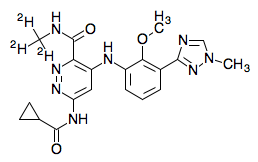
Deucravacitinib Chemical Structure (Source: genome.jp)
Deucravacitinib is a first-in-class, oral, selective, allosteric, tyrosine kinase 2 (TYK2) inhibitor with a unique mechanism of action distinct from other kinase inhibitors, representing a new class of small molecule drugs. This drug is the first and only TYK2 inhibitor currently under clinical investigation for the treatment of various immune-mediated diseases.
Currently, the marketing application for deucravacitinib in treating adult patients with moderate to severe plaque psoriasis is under regulatory review in multiple regions, including the United States, Europe, and Japan. If approved, deucravacitinib will become the first approved selective allosteric tyrosine kinase 2 (TYK2) inhibitor. This medication will offer a new oral treatment option for patients with moderate to severe plaque psoriasis, addressing current gaps in care.
Deucravacitinib, designed by Bristol-Myers Squibb scientists, selectively targets TYK2. TYK2 is an intracellular signaling kinase that mediates the signaling of IL-23, IL-12, and type I IFN, which are key cytokines involved in the pathogenesis of various immune-mediated diseases. Deucravacitinib achieves high selectivity by binding to the regulatory domain of TYK2, resulting in the allosteric inhibition of TYK2 and its downstream functions.Deucravacitinib selectively inhibits TYK2 at physiologically relevant concentrations. At therapeutic doses, deucravacitinib does not inhibit JAK1, JAK2, or JAK3.
Currently, Bristol-Myers Squibb is evaluating deucravacitinib in multiple global clinical trials for the treatment of immune-mediated diseases, including psoriasis, psoriatic arthritis, lupus, and inflammatory bowel disease. Previously, EvaluatePharma, a pharmaceutical market research firm, released a report predicting,Deucravacitinib is projected to reach $2.21 billion in sales by 2026 after its market launch..(Bioon.com)
Source of Original Text:Late-Breaking Data at EULAR 2022 Demonstrate Deucravacitinib Significantly Improved Disease Activity in Phase 2 PAISLEY Study in Systemic Lupus Erythematosus