Beyond the Crowd: Emerging CAR-T Therapies with Novel Targets Showcased at ASCO 2022

ICT
Oncology Drug Developer
In recent years, with the rapid development of pharmaceutical innovation in China, the field of innovative drugs in China has yielded frequent successes, and an increasing number of companies have begun to showcase their innovative achievements at international academic conferences.
June 3-7, 2022, the American Society of Clinical Oncology (ASCO) Annual Meeting will be held in Chicago in a hybrid format. The ASCO Annual Meeting is the most authoritative and influential exchange event in the global field of cancer research and treatment.
In the abstract of this year's meeting report disclosed on the ASCO official website, Chinese companies have broken through the previous pattern mainly focused on CD19 and BMCA targets, reporting many emerging CAR-T target products, including Origincell Therapeutics' GPRC5D CAR-T, ICT's GCC CAR-T, CARsgen Therapeutics' Claudin18.2 CAR-T, and Gracell Biotechnologies' BCMA×CD19 dual-target CAR-T.
Table 1 ASCO 2022 Annual Meeting CAR-T Products in China
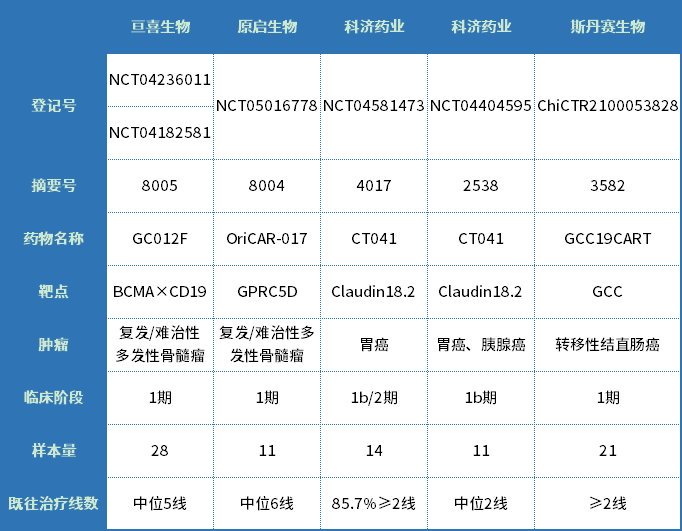
Source: Essence Securities
Gracell Bio
GC012F is a BCMA/CD19 dual-target CAR-T product, and the latest data shows that the therapy has a complete response rate of nearly 100%.
GC012F is a dual-target autologous CAR-T therapy that treats by simultaneously targeting BCMA and CD19. The candidate product is based on Gracell Biotechnologies' proprietary FasTCAR platform technology, which has the advantage of "production completed in one day." In November 2021, GC012F was granted Orphan Drug Designation by the U.S. Food and Drug Administration (FDA) for the treatment of multiple myeloma. Several IIT studies are currently being conducted in China to evaluate its efficacy in treating multiple myeloma and B-cell Hodgkin lymphoma.
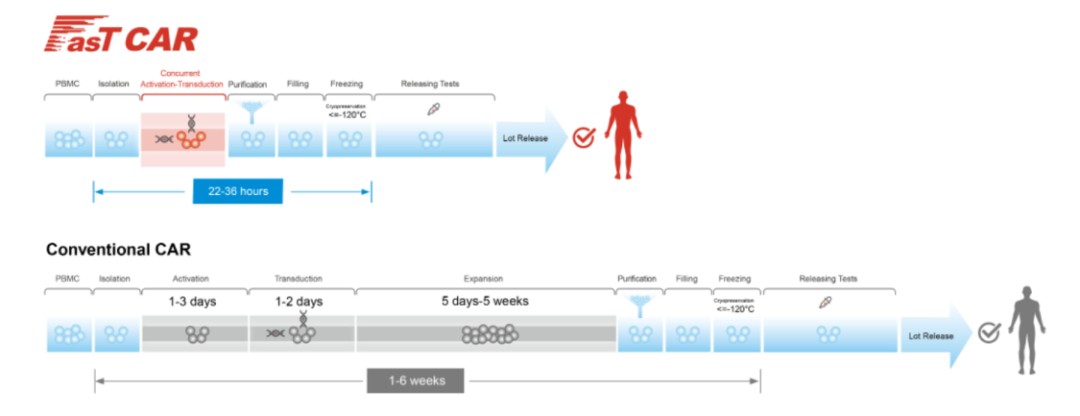
Figure 1 Comparison of FasTCAR and Traditional CAR-T Production Processes
Source: Gracell Biotechnologies Official Website
As of January 26, 2022, 28 patients with relapsed/refractory multiple myeloma who had received extensive prior treatment were administered a single infusion of GC012F at three dose levels: 1x10^5 cells/kg (DL1), 2x10^5 cells/kg (DL2), and 3x10^5 cells/kg (DL3). The median follow-up time was 6.3 months (range 1.8 - 29.9 months).
The objective response rates (ORR) at different dose levels were DL1: 100% (2/2), DL2: 80% (8/10), and DL3: 93.8% (15/16). Among all patients evaluable for minimal residual disease (MRD) efficacy, 100% (27/27) achieved MRD negativity, and 75% (21/28) achieved MRD-negative stringent complete response (MRD- sCR). In terms of safety, the majority experienced low-grade cytokine release syndrome (CRS, grade 0-2 in 93%), with no occurrence of grade 4 or 5 CRS. No immune effector cell-associated neurotoxicity syndrome (ICANS) of any grade was observed.
Original Biotech
OriCAR-017 Second-Generation GPRC5D CAR-T Therapy: Phase I Study Results Demonstrate Potential for Treating RRMM.
GPRC5D is a transmembrane receptor protein primarily expressed on malignant plasma cells in patients with multiple myeloma. The autologous GPRC5D-targeted OriCAR-017, featuring additional proprietary Ori elements, is a second-generation CAR-T cell therapy with enhanced expandability and durability.
From June 9, 2021, to January 31, 2022, a total of 11 patients were enrolled. Nine patients completed the infusion, and eight were evaluable for efficacy and safety. The ninth patient completed the infusion on January 23, 2022, with a median age of 65 years. Two patients discontinued the infusion due to rapid disease progression. The median follow-up time for the eight patients was 109.5 days (range 32-195 days), with an observed 100.0% ORR. Among the three patients previously treated with BCMA CAR-T, one achieved sCR, one VGPR, and one PR. On day 28 post-infusion, all eight patients tested negative for bone marrow MRD by flow cytometry. In terms of safety, the most common treatment-emergent adverse events (TEAEs) were neutropenia (G3/4: 100%), lymphopenia (G3/4: 100%), and anemia (G3/4: 87.5%). All patients experienced CRS, which was rapidly resolved in all cases after routine interventions (tocilizumab and steroids), with a median onset time of 3 days (range 0-8) and a median duration of 6 days (range 5-8).
CARsgen Therapeutics
CT041 is the world's first CAR-T to enter Phase II solid tumors, with the potential to be the first to break through in gastric cancer.
CLDN18.2 is widely expressed in the cancer tissues of 70%-80% of gastric cancer patients and approximately 60% of pancreatic cancer patients. In terms of expression levels, CLDN18.2 is much higher than HER2 (10-20% in gastric cancer), PD-1/PD-L1, and others in gastric cancer patients. This may imply that CLDN18.2 could become a better therapeutic target for gastric and pancreatic cancer patients. On March 3, 2022, CT041 received NMPA approval to enter Phase II clinical trials in China, becoming the world's first CAR-T therapy for solid tumors to be approved for Phase II clinical trials and is expected to become the world’s first commercially available CAR-T product for solid tumors.
CT041 was granted FDA Orphan Drug Designation for the treatment of gastric cancer/esophagogastric junction adenocarcinoma (GC/GEJ) in 2020. In 2021, it received Orphan Drug Designation from the EMA and Priority Medicines (PRIME) eligibility for advanced gastric cancer, becoming the world's first solid tumor CAR-T drug to obtain PRIME status. In January 2022, CT041 was granted Regenerative Medicine Advanced Therapy (RMAT) designation by the FDA for the treatment of CLDN18.2-positive advanced gastric cancer/esophagogastric junction.
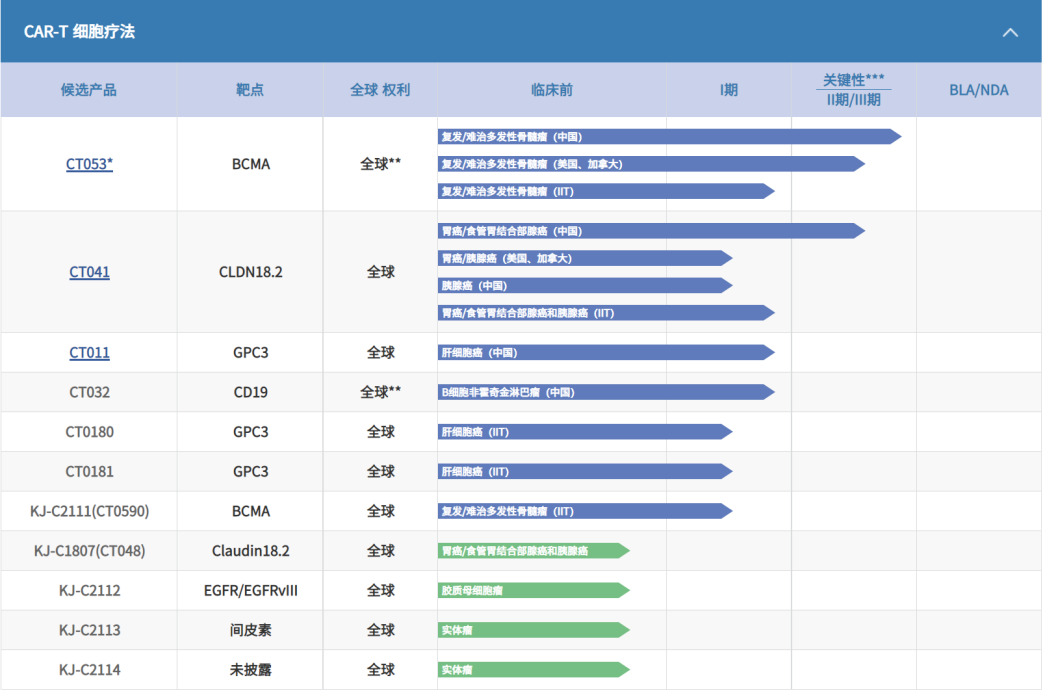
Figure 2 CAR-T Cell Pipeline of CoStAR Biopharma
Preliminary clinical data of CT041 in third-line and beyond treatment for GC/GEJ showed: Among 18 patients with GC/GEJ who had failed at least two prior lines of therapy and received the Phase II recommended dose (RP2D) of 2.5×10^8 CAR-T cells, the ORR was 61.1%, mPFS was 5.6 months, and mOS was 9.5 months (median follow-up time of 7.6 months, calculated from the start of patient dosing). The data indicates that the therapeutic effect is better than existing treatments, including PD-1/PD-L1 drugs and RC48-ADC in HER2-positive third-line gastric cancer treatment. Compared to other drugs for end-stage gastric cancer patients, CT041 has demonstrated a significant improvement in ORR. Carsgen Therapeutics has entered the pivotal Phase II clinical trial in China and is expected to initiate the pivotal Phase II clinical trial in North America in the second half of 2022.
Table 2: Data Comparison of Third-line and Above Gastric Cancer Treatment Drugs
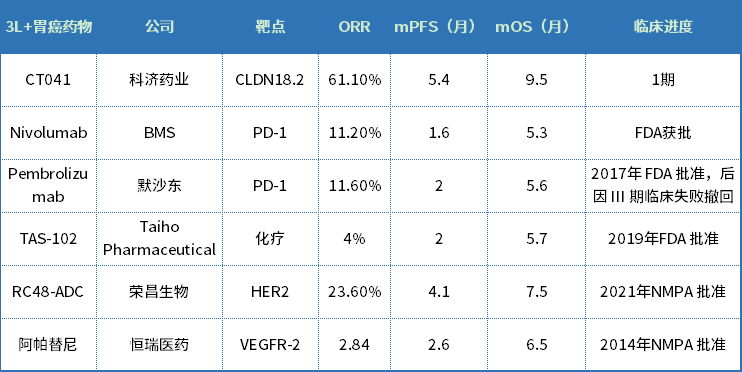
Source: Zheshang Securities
ICT Bio
GCC19 CAR-T is a leading CAR-T therapy for solid tumors, demonstrating clinical efficacy in the treatment of metastatic colorectal cancer.
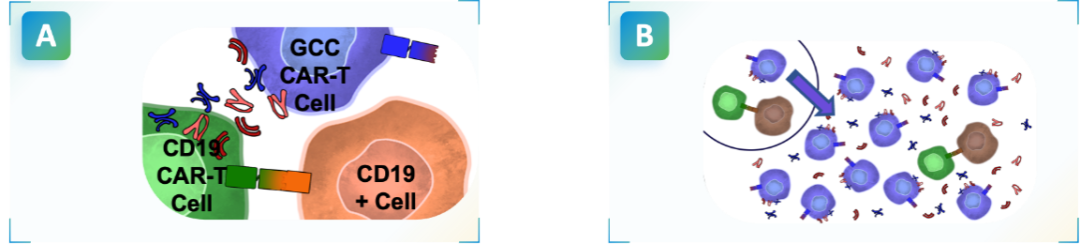
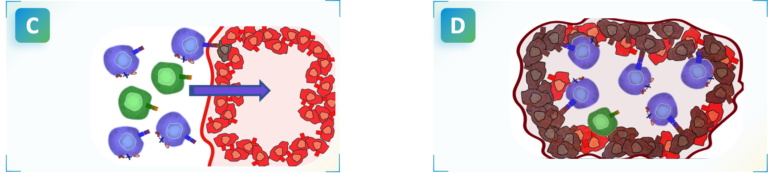
ICT's GCC19 CAR-T product is the first clinical candidate based on its CoupledCAR solid tumor platform. The origin of CoupledCAR lies in the observation that CD19 CAR-T cell activity triggers the immune system and leads to the proliferation of all T cells, including any non-transduced T cells, suggesting that CD19 CAR-T cell activity induces solid tumor CAR-T cell proliferation without the need for solid tumor CAR-T cells to bind to target antigens. CoupledCAR-T cells are engineered to release cytokines that promote the proliferation, tumor infiltration, and target cell killing of solid tumor CAR-T cells.
CoupledCAR Mechanism of Action:
(1) When CD19 CAR-T cells kill B cells, they produce signaling molecules (A), which leads to the activation and proliferation of solid tumor-targeting CAR-T cells without the need for solid tumor antigens (B).
Source: ICT Official Website
(2) CoupledCAR-T cells release cytokines, promoting the infiltration of solid tumor CAR-T cells into tumors (C) and killing target cells (D).
Source: ICT Official Website
As of May 3, 2022, among the 21 enrolled subjects, 13 were included in dose level 1 (1×10^6 cells/kg), and 8 were included in dose level 2 (2×10^6 cells/kg). The combined ORR for the two dose levels was 28.6% (6/21). For dose level 1, the ORR was 15.4% (2/13). For dose level 2, the ORR was 50% (4/8), with the remaining 4 subjects achieving the best overall response of stable disease (SD) with a disease control rate (DCR) of 100% within 3 months. The most common adverse events were CRS in 20/21 subjects (Grade 1 in 19/21 (90.4%) or Grade 3 in 1/21 (4.8%)) and diarrhea in 20/21 subjects (Grade 1 in 6/21 (28.6%), Grade 2 in 5/21 (23.8%), Grade 3 in 9/21 (42.9%)). ICANS was observed in 2/21 (9.5%) subjects, including one Grade 3 and one Grade 4 case, with symptoms relieved using corticosteroids.
In addition, Carvykti, the BCMA-targeted CAR-T therapy jointly developed by Janssen and Legend Biotech, has been approved by the U.S. FDA and the EU. According to the ASCO abstract, as of January 2022, among the 19 treated patients with a median follow-up time of 13.4 months, the ORR was 100%, 90% of patients achieved complete response or better, and 95% of patients reached very good partial response. The mPFS at 12 months was 90%, and the median duration of response has not yet been reached.
In summary, under the stimulation of a series of policy guidelines encouraging innovation, China's innovative drug industry has entered a period of significant opportunity. In recent years, innovative drugs in China have rapidly emerged and are successively entering the harvest phase.
At the 2022 ASCO Annual Meeting, nearly 240 research abstracts from over 50 pharmaceutical companies in China were accepted, demonstrating that China's innovative clinical research has gained widespread recognition in the international academic community. In terms of CAR-T therapy, Chinese companies have broken through the previous model mainly focused on CD19 and BMCA targets, reporting many emerging CAR-T target products. This reflects that in the post-PD-1 era, the competition in China’s innovative drug sector is gradually shifting from "generalized innovation" to an era of "selective high-quality innovation."

Editor: Liuli
Disclaimer: The views expressed in this article are solely those of the author and do not represent the position of PharmEasy. We welcome exchanges and additional insights in the comment section; for reprints, please be sure to credit the author and source of the article.