

Boston Scientific: From $800K Startup to $50B+ MedTech Giant Through Four Decades of Strategic Acquisitions

Boston Scientific
Medical Device Manufacturer
Starting with $800,000 and using 40 years to build a medical device company with revenue of $10 billion and a market value exceeding $50 billion, how was it achieved?
It seems impossible, but this is the story of Boston Scientific. Two weeks ago, Pete Nicholas, co-founder of Boston Scientific, passed away. Multiple media outlets reported that the medical community had lost a giant.
In the medical device industry, where rapid technological turnover and limited ceilings in niche markets prevail, acquisitions have been the key to Boston Scientific's growth from a company valued at 800,000 USD to one worth tens of billions.
Pete Nicholas once said, "The medical device industry is not very large, so founders generally take matters into their own hands and are highly committed and knowledgeable about their competitors. Only in this way can they be the first to see opportunities to acquire them."
But acquisitions are a double-edged sword, capable of turning against oneself.
At the time of the passing of its co-founder, Boston Scientific was also rumored to potentially be acquired by Johnson & Johnson. 2022 was a year when Johnson & Johnson showed strong interest in acquisitions. Johnson & Johnson CEO Joaquin Duato mentioned during the Q1 earnings call that the medical device business would adopt an aggressive acquisition strategy, focusing on products that could secure a leading position in high-growth markets. At the same time, Johnson & Johnson was planning to spin off its consumer health business in 2023 to acquire a medical device company.
Some analysts believe that if Johnson & Johnson wants to acquire a large medical technology company, Boston Scientific is considered a good choice. Although later, a spokesperson for Boston Scientific said that they would not comment on rumors, and Johnson & Johnson also said that they would not comment on this. However, this news still attracted high attention in the industry.
Compared with century-old enterprises like Johnson & Johnson and Abbott, Boston Scientific is a young giant, with only over forty years of establishment. Previously, Johnson & Johnson and Boston Scientific had clashed over the acquisition of Guidant and had been entangled for many years. Now, Boston Scientific encounters Johnson & Johnson again. In a market surrounded by strong competitors, why is it always Boston Scientific that gets caught in the crossfire? What charm does Boston Scientific possess that makes analysts consider it the best choice for giant mergers and acquisitions? VCBeat (WeChat ID: vcbeat) conducted an analysis.
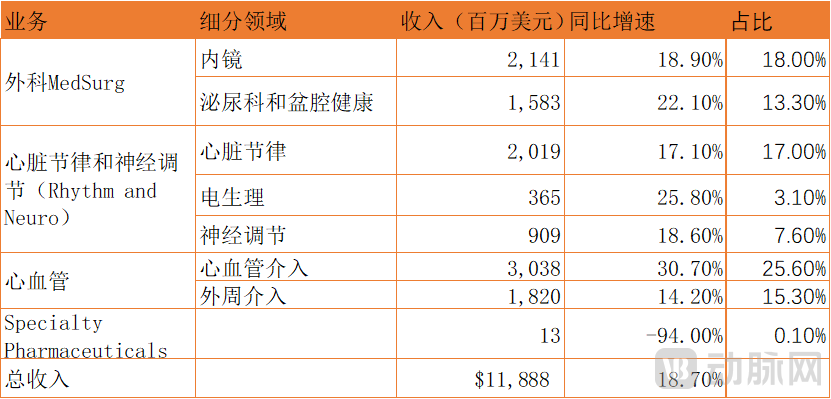
Boston Scientific 2021 Fiscal Year Revenue
Boston Scientific is one of the giants in the global cardiovascular intervention field, with a market share second only to Medtronic and Abbott. Boston Scientific's initial product was the interventional balloon, and now its business covers multiple fields such as endoscopy, electrophysiology, cardiac rhythm, neuromodulation, urology, and tumor intervention.。
Boston Scientific was founded in 1978 by two founders, John Abele and Pete Nicholas, who established Boston Scientific through the acquisition of a minimally invasive interventional company, Medi-Tech. Pete graduated from Duke University with a degree in economics, and John is a fellow of the Society of Interventional Radiology and the American Institute for Medical and Biological Engineering.
Before founding Boston Scientific, Pete Nicholas worked at Eli Lilly for ten years, and his wife is the great-granddaughter of the founder of Eli Lilly.
John Abele and Pete Nicholas, the two founders, met at a Christmas party and later started a business together. When Boston Scientific was founded, it had fewer than 50 employees and only $800,000 in funding. Today, Boston Scientific Corporation is valued at $57 billion and has more than 27,000 employees.
The two founders were able to establish a company that grew more than tenfold, primarily due to the complementary knowledge and skills of the two founders, whose technology and background perfectly aligned. A business + technology background enabled Boston Scientific to recognize acquisition growth opportunities earlier.
"In the early days, the financial markets didn't realize that the medical device industry had a lot of value," Abele said. "So financing was a bit tricky, and many companies were founded and led by inventors who weren't very good at running markets."
Through the efforts of Abele and Nicholas, Boston Scientific was one of the first device companies to actively push into the market, which was pioneering at the time.
"The industry's philosophy is, 'Tell us what you want, and we'll build it for you,'" Abele said, with the device industry relying on doctors to provide all the standards. Boston Scientific has a slightly different idea. "We see an opportunity to be more involved."
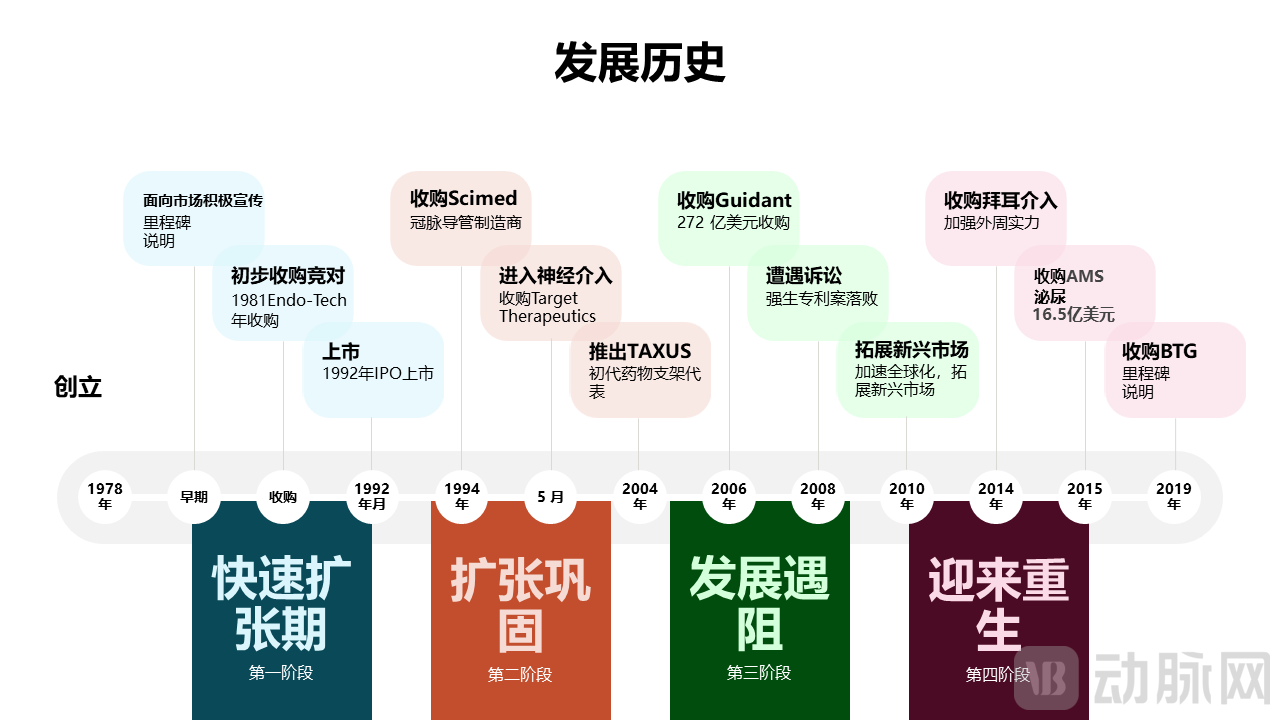
In 1981, Boston Scientific acquired Endo-Tech, its largest competitor in gastrointestinal and pulmonary endoscopic accessories. In 1988, Boston Scientific Corporation acquired Van-Tech, a company that advanced its urology business with products such as the tail fiber ureteral stent.
Boston Scientific Corporation went public through an IPO on May 19, 1992. By 1997, Boston Scientific had acquired nine companies, and by that time, its annual revenue had reached $1.8 billion. Boston Scientific had begun to establish itself as a global leader in the coronary intervention field.
In 2003, with the global coronary intervention treatment field entering the drug-eluting stent era, Boston Scientific reached its peak of development.In 2004, Boston Scientific Corporation introduced the TAXUS® Express2 Paclitaxel-Eluting Coronary Stent System to the U.S. market, with which Boston Scientific successfully defeated Johnson & Johnson.
At that time, the cardiovascular stent market was the most competitive market in China, with Johnson & Johnson, Medtronic, and Abbott all launching products to capture this market. In the era of drug-eluting stents (DES), Boston Scientific was once the dominant leader of the first generation. The first-generation DES was represented by Johnson & Johnson's Cypher stent and Boston Scientific's Taxus stent. Johnson & Johnson’s Cypher was launched a year earlier and became a blockbuster product. In 2004, Boston Scientific introduced the Taxus stent and quickly surpassed Johnson & Johnson to become the industry leader.
But soon, in the rapidly changing drug-eluting stent market, Boston Scientific's market position was challenged. In 2008, Medtronic and Abbott successively launched the Endeavor stent and the Xience V stent, capturing market share from Boston Scientific.
In terms of data, in 2010, Boston Scientific Corporation reported revenue of $1.5 billion for the year 2010, holding a 33.4% market share in the DES market. Boston Scientific Corporation reported an 11% decline in sales. In terms of market landscape, Boston Scientific is no longer the sole dominant player in the market, as Abbott and Medtronic have subsequently surpassed it.
Since then, in the major market of cardiovascular, Boston Scientific has consistently ranked below Medtronic and Abbott. In the subsequent industry hotspot, the TAVR products for structural heart disease, Boston Scientific similarly failed to keep up with the trend, as Edwards Lifesciences and Medtronic became the dominant players in the TAVR market.
Around 2010, Boston Scientific not only lost business to competitors but also faced thousands of lawsuits. Many of the issues stemmed from the company's $27.3 billion acquisition of rival Guidant Corp. in 2006, a deal that was widely ridiculed by Wall Street at the time.
In the acquisition of Guidant, Johnson & Johnson was Boston Scientific's main competitor. Boston Scientific ultimately disrupted Johnson & Johnson's plan to acquire Guidant by offering $27.2 billion, which was $3 billion more than Johnson & Johnson's bid. Abbott provided partial funding for Boston Scientific's acquisition.
Boston Scientific's Acquisition Targeted Guidant's Leading Market Share in Pacemakers. This massive acquisition imposed a significant burden on Boston Scientific instead of generating the expected substantial revenue. This included compensation due to product issues from Guidant and a $296 million fine for concealing capacitor problems from the FDA. Until 2015, the repercussions of this acquisition had not subsided, with Boston Scientific paying Johnson & Johnson $600 million. This acquisition also became a turning point in Boston Scientific's development.
Although it won against Johnson & Johnson, the acquisition of Guidant did not lead to sustained growth in performance but instead resulted in continued sluggish performance for more companies.
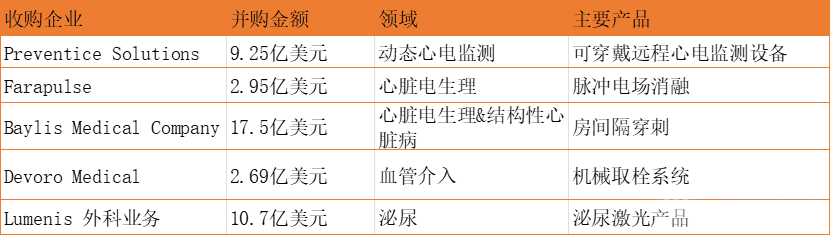
In the past few years, Boston Scientific has performed strongly, with net sales of $11.8 billion in 2021. In 2021, the company conducted 145 clinical trials, introduced 90 innovative products, and acquired five companies (Preventice Solutions, Farapulse, Baylis Medical Company, Devoro Medical, Lumenis LTD's surgical business) to complement its existing product portfolio.
In terms of heavy-weight products, Boston Scientific's TheraSphere™ Y-90 Glass Microspheres have received FDA approval for the treatment of liver cancer and have begun clinical trial operations in China. Additionally, this product is expanding its indications to include glioblastoma and colorectal cancer.
How Boston Scientific Achieved a Turnaround and Reached Billion-Dollar Revenue. Under the leadership of current CEO Mike Mahoney, Boston Scientific has undergone a rebirth.
Mahoney revitalized the company through corporate acquisitions and the launch of new products.
In 2014, Boston Scientific acquired Bayer's interventional business, strengthening the company’s peripheral intervention portfolio and accelerating growth in the areas of peripheral atherectomy and thrombectomy. It also acquired AMS's urology product portfolio, expanding its urology business and solidifying its global leadership in this field. Other acquisitions included NeoVasc, a valve company; Symetis, a heart valve manufacturer; Apama, specializing in radiofrequency ablation balloon for electrophysiology; and Cosman Medical, offering a range of spinal cord stimulation systems to treat chronic pain patients. In 2018, Boston Scientific continued its acquisition spree by purchasing BTG's interventional oncology business, NxThera’s prostate treatment business, EMcision’s endoscopic radiofrequency ablation business, Millipede’s transcatheter mitral valve replacement business, Cryterion’s electrophysiology cryoablation balloon business, Veiniti’s venous treatment products within the peripheral intervention device category, and interventional medicine BTG, among others. In 2018 alone, Boston Scientific acquired 10 companies.
Strategically, Boston Scientific's acquisitions have focused on peripheral interventions, cardiac electrophysiology, and heart valve fields. By acquiring to supplement its product lines, Boston Scientific has established three major business segments: Surgical MedSurg, Rhythm and Neuro (cardiac rhythm and neuromodulation), and Cardiovascular.
Cardiovascular intervention still accounts for 25% of Boston Scientific's revenue, with drug-eluting stents such as the SYNERGY series and Promus series in the coronary intervention field. In the PCI guidance field, there are imaging catheters, pressure catheters, and intravascular ultrasound products. In the structural heart disease field, there are left atrial appendage closure devices and the Acurate neo aortic valve.
The peripheral intervention market is growing rapidly, contributing 15% of revenue. In the peripheral intervention market, Boston Scientific's main products are the Eluvia drug-eluting stent and the Ranger drug-coated balloon, in addition to the mechanical thrombectomy devices AngioJet and Varithena.
Cardiac rhythm business revenue accounts for 17%. Boston Scientific has implantable cardioverter defibrillators (ICD), pacemakers, cardiac resynchronization therapy defibrillators (CRT-D), patient remote monitoring management systems, and implantable cardiac monitors.
In surgical operations, endoscopy and urology account for 30%, and Boston Scientific's main products include hydrogels, disposable ureteroscopes, and ureteral stents.
The electrophysiology market is not Boston Scientific's stronghold, accounting for only 3% of its revenue. Johnson & Johnson dominates the global electrophysiology market. In this field, Boston Scientific offers 3D electrophysiology mapping and navigation solutions, cryoablation systems, and pulsed field ablation systems. Boston Scientific's key technology is the next-generation pulsed field ablation (PFA). In the third quarter of 2021, Boston Scientific acquired Farapulse, whose pulsed field ablation system provides an alternative solution to radiofrequency ablation and cryoablation and has already received CE certification.
In the neuromodulation market, Boston Scientific primarily focuses on two major areas: spinal cord stimulation (SCS) and deep brain stimulation, with product offerings mainly used for treating movement disorders and managing pain. Its flagship product, the Spectra WaveWriter Spinal Cord Stimulator (SCS) System, provides multiple spinal cord stimulation therapies in a single device, offering personalized and long-lasting pain relief. In the neuromodulation market, Boston Scientific's main competitors are Medtronic and Abbott.
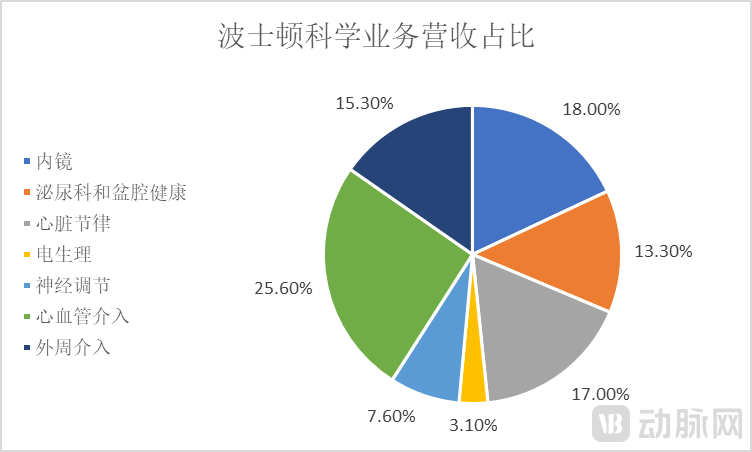
The benefits of a diversified strategy are evident, successfully helping Boston Scientific rebound. In 2012, drug-eluting stents and rhythm management accounted for half of Boston Scientific's revenue, whereas today they account for less than 20%.
From the perspective of business areas, Boston Scientific and Johnson & Johnson's medical device businesses have extremely strong complementarity. At the same time, Boston Scientific has established leadership in multiple niche fields, which is why analysts consider it a good target for Johnson & Johnson’s acquisition.
How will Boston Scientific grow in the future? Cecilia Furlong, a medical technology analyst at Morgan Stanley, is confident in the company's ability to achieve both short-term and long-term growth goals. She emphasized its innovation, increased acquisitions, global expansion into China and emerging markets, as well as product diversification.
In terms of market strategy, Boston Scientific is optimistic about the growth of emerging markets. Emerging markets include countries such as China, Brazil, Chile, India, Thailand, and South Korea. In 2021, emerging markets accounted for approximately 12% of sales.
Another major reason why the news of Johnson & Johnson acquiring Boston Scientific has drawn attention is that the medical device industry is entering an era of large-scale mergers and acquisitions. There have been rumors of acquisitions among several giants.
This year's mergers and acquisitions started with Stryker's acquisition of Vocera Communications for nearly $3 billion. Recently, there have been multiple M&A announcements, including CGM company Dexcom acquiring insulin pump company Insulet. Due to more conservative spending habits throughout the pandemic, medical device companies have accumulated large amounts of cash to carry out M&A deals.
At the same time, Silicon Valley Bank predicted in a report that M&A transactions would remain active in 2022, as a variety of acquirers compete for top companies, while the number of IPOs would slow down.
Taking Johnson & Johnson as an example, the company is still planning to spin off its consumer health business in 2023, which has sparked speculation that it may want to acquire a medical device company to bring its medtech business revenue in line with its pharmaceuticals division. During the Q1 earnings call in April, Johnson & Johnson executives acknowledged their desire to acquire companies with technologies that could enhance their medical technology portfolio.
From the development path of Boston Scientific, mergers and acquisitions are indeed a necessary route for companies to grow from small to large and strong. However, mergers and acquisitions do not necessarily lead to rapid development. Cross-sector layout, synergy with existing businesses, and track selection all require strong merger and acquisition capabilities.
For Chinese companies, simply replicating the M&A routes of industry giants is not feasible. However, there has been no in-depth analysis of the specific scenarios and problems that enterprises face. This can easily lead to the conclusion that for medical device companies expanding from China to the globe, from a single point to covering R&D, production, and sales, or from one product and field to a full product line and all fields, mergers and acquisitions seem to be an invincible strategy. However, significant differences exist between China’s medical device companies and international giants in terms of development environment, stage of development, scale, and M&A capabilities. Therefore, blindly copying the M&A development model of global medical device giants is not practical.
References:
Huaan Securities Coronary Stent Series Report
Carving on the Boat in High Risk, Seeking the Sword in a Scene —— Rethinking and Practical Lessons from the Acquisition Paths of Global Medical Device Giants —— Guangzheng Hengsheng
$11.2 Billion Acquisition | Five Moves in a Year, Is Boston Scientific Kicking Off Business Expansion Mode?
https://www.mddionline.com/news/boston-scientific-making-most-its-first-25-years