

Bristol Myers Squibb Withdraws U.S. sBLA for Reblozyl in Non-Transfusion Dependent Beta Thalassemia
Bristol-Myers Squibb
Biopharmaceutical and Nutritional Product R&D and Sales
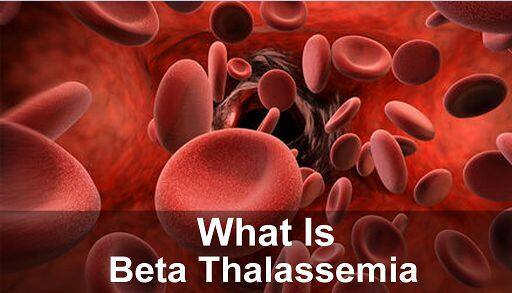
β-Thalassemia (Image Source: glowydowy.com)
News on June 8, 2022 /BioValleyBIOON/ -- Bristol-Myers Squibb (BMS) recently announced that it has withdrawn the supplemental Biologics License Application (sBLA) for Reblozyl (luspatercept-aamt) in the treatment of non-transfusion-dependent (NTD) β-thalassemia adult patients in the United States.Based on the current dataset from the Phase 2 BEYOND trial (NCT03342404), the company was unable to appropriately address the United StatesFDAQuestions about the benefit-risk profile of Reblozyl in this patient population.
Reblozyl is a first-in-class erythroid maturation agent (EMA) approved in the United States, the European Union, and Canada for the treatment of transfusion-dependent (TD) β-thalassemia and anemia related to very low/low/intermediate-risk myelodysplastic syndromes (MDS).
Currently, the Type II variation application for Reblozyl to treat anemia in adult patients with NTD β-thalassemia is under review by the European Medicines Agency.ManagementBureau (EMA) review.NTD β-thalassemia patients may not require lifelong blood transfusions to sustain life, but they do need effective treatment regimens because these patients face a series of clinical complications caused by chronic anemia and iron overload.
In terms of U.S. regulation, in December 2021, the FDA accepted the aforementioned sBLA and granted priority review, setting the Prescription Drug User Fee Act (PDUFA) target date for March 27, 2022. In March this year, BMS issued an announcement stating that the FDA had extended the target date for sBLA review by three months to June 27, 2022. In the announcement, BMS noted that the FDA determined that BMS's written response to a request for information constituted a major amendment, requiring additional time for a comprehensive review of the submitted documents.
"Noah Berkowitz, M.D., Ph.D., Senior Vice President of Hematology Development at Bristol-Myers Squibb, said: 'While we will not pursue this indication in the U.S., we will continue to evaluate Reblozyl across a broad clinical development program to bring this important treatment option to more patients with anemia.'"
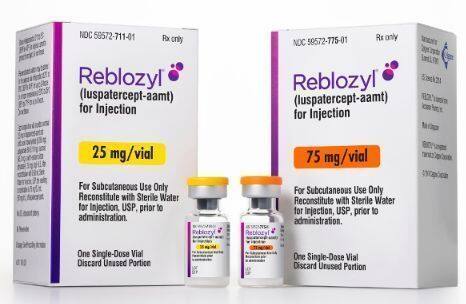
Reblozyl was originally co-developed by BMS and Acceleron Pharma. Following Merck's acquisition of Acceleron for $11.5 billion in November 2021, Reblozyl is now jointly developed and commercialized by BMS and Merck. Reblozyl is the first erythroid maturation agent (EMA) to receive regulatory approval for the treatment of anemia associated with β-thalassemia and very low/low/intermediate-risk myelodysplastic syndromes (MDS). Within the eligible patient population, Reblozyl represents an important therapeutic category. It should be noted that Reblozyl is not indicated as a substitute for red blood cell transfusions in patients requiring immediate correction of anemia.
The active pharmaceutical ingredient in Reblozyl is luspatercept, which is aFirst-in-class erythroid maturation agent (EMA), which modulates the maturation of late-stage red blood cells.Luspatercept is a soluble fusion protein consisting of the Fc domain of human IgG1 fused with the extracellular domain of activin IIB receptor (ActRIIB). It functions as a ligand trap by specifically binding to certain ligands of the transforming growth factor (TGF)-β superfamily that regulate late-stage red blood cell (RBC) maturation. This reduces the activation of the Smad2/3 signaling pathway, improves ineffective RBC production, promotes the maturation of late-stage RBCs, and increases hemoglobin levels.
Non-Transfusion Dependent (NTD) β-Thalassemia is a term used to describe patients who do not require lifelong regular red blood cell (RBC) transfusions to sustain life, although they may need occasional or more frequent transfusions, usually within a specified period. Patients with NTD β-thalassemia experience chronic anemia and iron overload, which can lead to a range of clinical complications, creating an urgent need for treatment options.Key Phase 2 BEYOND study data show that in adult patients with NTD β-thalassemia, regardless of baseline hemoglobin levels, Reblozyl can increase patient hemoglobin levels while improving patient outcomes.Quality of Life。
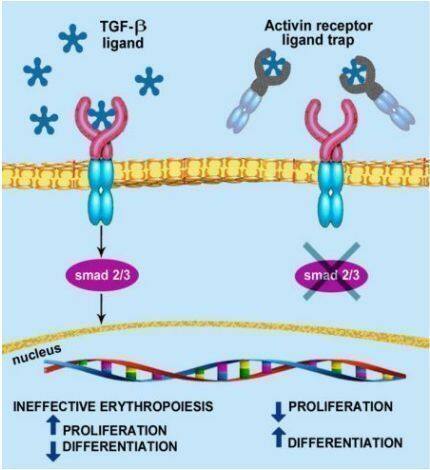
Mechanism of Action of Luspatercept
In the United States and the European Union, the sBLA and Type II variation applications for Reblozyl for the treatment of anemia in NTD β-thalassemia adult patients are based on the safety and efficacy results from the pivotal Phase 2 BEYOND study. BEYOND is a randomized, double-blind, placebo-controlled, multicenter Phase 2 study conducted in 145 non-transfusion-dependent (NTD) β-thalassemia adult patients, aiming to evaluate the efficacy and safety of Reblozyl compared to placebo. The study is divided intoScreeningPeriod, double-blind treatment period (0DBTP), post-treatment follow-up period (PTFP). Patients enrolled in the study were aged ≥18 years, had β-thalassemia or hemoglobin (Hb) E β-thalassemia, received ≤5 units of red blood cells (RBC) within 24 weeks prior to randomization, and had a mean baseline Hb ≤10.0 grams/deciliter (g/dL).
In the study, 145 patients were randomly assigned in a 2:1 ratio to receive either Reblozyl (1 mg/kg [titrated to 1.25 mg/kg]) or placebo via subcutaneous injection every 3 weeks for a treatment duration of ≥48 weeks. Patients in both groups continued to receive best supportive care (BSC), including RBC transfusions and iron chelation therapy. The primary endpoint was the mean increase in hemoglobin by ≥1.0 g/dL from baseline during a consecutive 12-week period from Weeks 13-24 without RBC transfusion. Secondary endpoints included: the proportion of patients remaining transfusion-free during Weeks 1-24, the proportion of patients with a mean increase in hemoglobin levels of ≥1.5 g/dL from baseline to Weeks 13-24, and the mean change in patient-reported fatigue and weakness scores on the NTDT-PRO T/W scale (higher scores reflect worse quality of life [QoL]).
The results published in June 2021 showed,Primary Endpoint: 77.1% (n=74/96) of patients in the Reblozyl treatment group reached the primary endpoint, compared to 0% (n=0/49) in the placebo group, with statistically significant data.StatisticsStatistically significant difference (p<0.0001). In patients with mean baseline Hb<8.5g/dL, 72.7% (n=40/55) of patients in the Reblozyl treatment group reached the primary endpoint, compared to 0% in the placebo group (p<0.0001); in patients with mean baseline Hb≥8.5g/dL, 82.9% (n=34/41) of patients in the Reblozyl treatment group reached the primary endpoint, compared to 0% in the placebo group (p<0.0001).。
For key secondary endpoints:(1) 52.1% (n=50/96) of patients in the Reblozyl treatment group achieved an average Hb increase ≥1.5g/dL from baseline during weeks 13-24, compared to 0% in the placebo group (p<0.0001). (2) During weeks 1-24, 89.6% of patients in the Reblozyl treatment group remained transfusion-free, compared to 67.3% in the placebo group (p=0.0013). (3) Improvements in patient-reported quality of life outcomes (fatigue and weakness) were also associated with increases in hemoglobin.
In terms of safety, the most common treatment-emergent adverse events (TEAEs) of any grade occurring in ≥5% of patients were bone pain (Reblozyl group vs placebo group: 36.5% vs 6.1%), headache (30.2% vs 20.4%), and arthralgia (29.2% vs 14.3%). Among patients receiving Reblozyl, no malignant tumors were reported.ThrombusEmbolic events. (Bioon.com)
Source of Original Text:Bristol Myers Squibb Withdraws Supplemental Biologics License Application (sBLA) for Reblozyl® (luspatercept-aamt) for Non-transfusion Dependent (NTD) Beta Thalassemia