

Medtronic Appoints Dr. Ashwini Sharan as Chief Medical Officer for Neuromodulation

Medtronic
Chronic Disease Medical Device and Therapy Developer
Source: Device Home, unauthorized reproduction is prohibited, and reproduction is allowed 24 hours later.
Medtronic announced this week that it has appointed Dr. Ashwini Sharan as the Chief Medical Officer of its Neuromodulation division.
Sharan will be responsible for setting the strategic direction of the department’s innovation and clinical programs, and helping to guide physician, social, and educational engagement. He will also serve as the medical advisor for the business, interacting with the medical community to identify current and future business opportunities and address unmet medical needs.

Before joining Medtronic, Ashwini Sharan served as the president of the Congress of Neurological Surgeons and the North American Neuromodulation Society (NANS).Sharan has over 25 years of medical experience and is a practicing neurosurgeon. He currently serves as the Co-Director of the Jefferson Comprehensive Epilepsy Center at Thomas Jefferson University and as a Professor of Neurosurgery and Neurology.
Medtronic, as the global leader in medical devices, also leads the development of the neuromodulation industry.Many neuromodulation devices resemble pacemakers in appearance, such as "brain pacemakers" and "pain pacemakers." As the inventor of the pacemaker, Medtronic was also one of the earliest companies to enter the neuromodulation device market. Currently, the company has products in areas like Deep Brain Stimulation (DBS), Vagus Nerve Stimulation (VNS), Spinal Cord Stimulation (SCS), and Sacral Nerve Modulation (SNM).
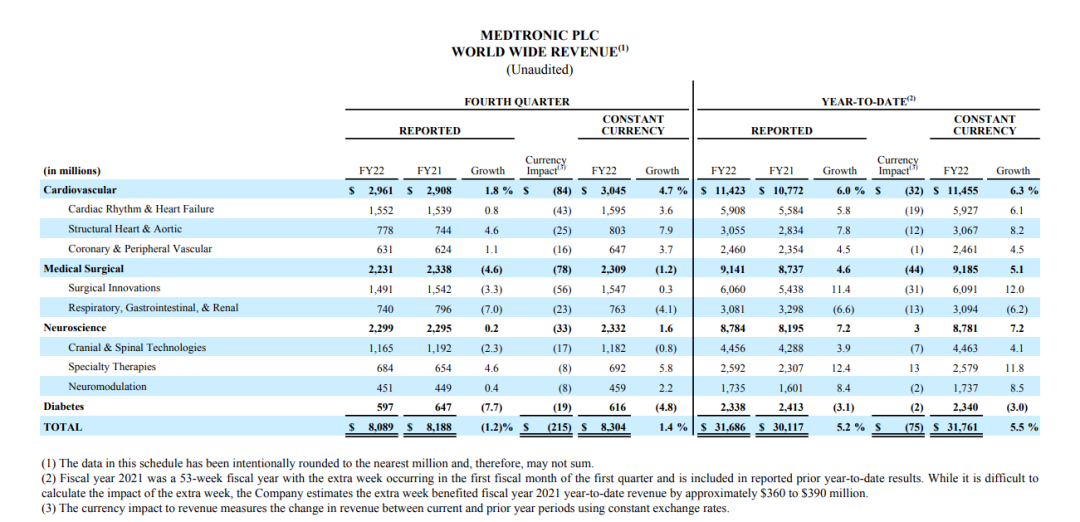
According to Medtronic's recently released financial report,Full-year revenue for FY2022 was $31.686 billion (RMB 212.25 billion), representing reported and organic growth of 5%.Among the four major business units:
Cardiovascular portfolio revenue was $11.423 billion, up 6%.
Medical Surgical Portfolio Revenue was $9.141 billion, up 5%
Neuroscience Portfolio Revenue Reached $8.784 Billion, Up 7%
Diabetes revenue was $2.338 billion, down 3%;
It can be seen that the neuroscience division, which includes the neuromodulation business, was the fastest-growing segment in Medtronic's 2022 fiscal year revenue. Due to its relatively widespread clinical applications, neuromodulation devices are developing most rapidly in the neuromodulation market, and it is believed to be one of Medtronic’s key areas of focus.
In 2020, there were reports that Medtronic intended to make a major acquisition of LivaNova, proposing to split LivaNova, retain its neuromodulation business, and sell off its cardiovascular business to further develop its neuromodulation business.
Although the acquisition rumors eventually came to nothing, it was enough to reveal Medtronic's ambition in the field of neuromodulation.
01
"Electricity Makes You Healthier"
Neuromodulation is a therapeutic approach that utilizes implantable or non-implantable technologies to influence neural signal transmission in the nervous system, thereby improving symptoms and enhancing the quality of life for patients. This is achieved through methods including electrical stimulation, magnetic stimulation, optical stimulation, acoustic stimulation, and ultrasonic stimulation via implanted or non-implanted devices.
Since neuromodulation technology does not use traditional medicine to mediate and treat diseases, it is often referred to as "Electroceutical or Bioelectronic Medicine" in the industry.
, Duration03:17
The biggest advantage of neuromodulation over surgery or medication is:Compared with drug therapy, neuromodulation has better compliance. Its application in predicting mental illness, pain treatment, and various diseases such as obesity and sleep apnea is becoming increasingly widespread, indicating an unlimited market potential in the future.
Medtronic's neuromodulation business encompasses a variety of innovative minimally invasive surgical therapies, including Spinal Cord Stimulation (SCS), Deep Brain Stimulation (DBS), and Sacral Neuromodulation (SNM), covering treatment areas such as Parkinson’s disease, dystonia, and other movement disorders, chronic intractable pain, cancer pain, and urinary and fecal dysfunction.
Among them, SCS undoubtedly has the greatest market potential. According to data from a relevant report by Grand View Research, the compound annual growth rate of the global neurostimulation market will reach 10%, and it is expected to reach a scale of 8.8 billion US dollars by 2025.Among them, SCS is the largest segment in terms of market size, accounting for approximately 55%.
Pain Is a Disease
Spinal Cord Stimulation (SCS) is a technology used to treat various types of chronic intractable pain. It involves implanting electrode leads into the epidural space of the spinal cord to transmit electrical currents generated by a neurostimulator to the spinal cord. This provides low-voltage electrical stimulation to the spinal nerves, blocking pain signals from reaching the brain's central processing centers, thereby alleviating pain.
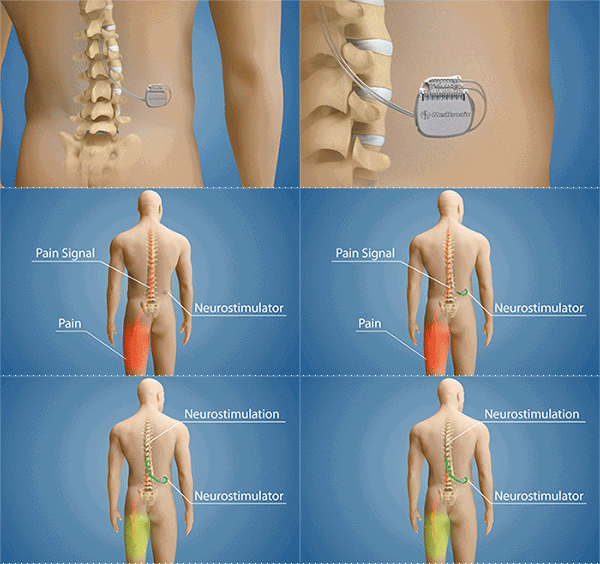
Studies show that pain is an independent risk factor for suicide, premature death, Alzheimer's disease, depression, anxiety, and other events. However, since pain does not directly threaten life like other diseases, it remains out of the public's sight, and patients' awareness of pain relief is backward. In addition, the complexity of the causes and pathogenesis of chronic pain leads to unsatisfactory outcomes for many treatment methods.
And age is an important factor affecting chronic pain. As age increases, the incidence of chronic pain shows an upward trend.According to the Report on the Development of Pain Medicine in China (2020), the number of chronic pain patients in China exceeds 300 million, and is rapidly increasing at a rate of 10 to 20 million people per year.
The World Health Organization revised the International Classification of Diseases (ICD-11) in 2018, marking the first time that pain was independently coded and systematically classified as a standalone disease.In the medical community, the view that "chronic pain is a disease in itself" has become a consensus.
The World's Smallest SCS
In 1969, research conducted by Medtronic in collaboration with Case Western Reserve University led to the introduction of implantable dorsal spinal cord stimulators and brain stimulators. In 1976, Medtronic officially established its neurology business division and launched the ESI (a device used for treating sacral spine conditions) and Pisces (the first spinal cord stimulator for treating chronic pain in the limbs).In 1980, Medtronic introduced the first programmable stimulation system in the United States, and in 1982, the first fully implantable neurostimulator was clinically applied.
Recently, Medtronic has also launched many new products in this field.
On January 24, 2022, Medtronic announced that its Intellis™ rechargeable neurostimulator and Vanta™ non-rechargeable neurostimulator had received FDA approval for the treatment of chronic pain associated with painful diabetic peripheral neuropathy (PDN).
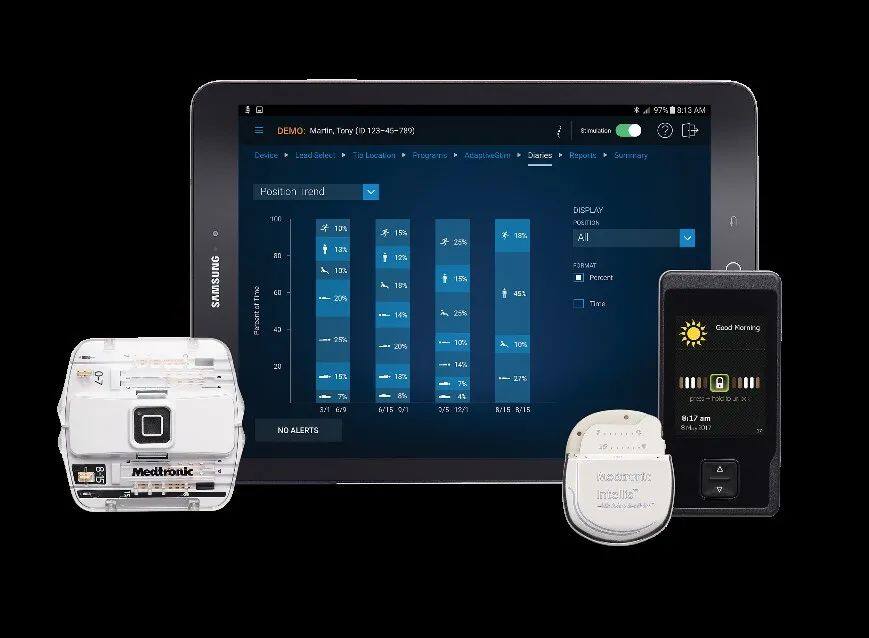
On May 15, 2022, the launch ceremony for Medtronic's new generation spinal cord stimulation system, Intellis, was held in Shanghai. Intellis is currently the smallest neurostimulator in global spinal cord stimulation systems, weighing only 29.1 grams, with an implantation depth increased to 3cm.
Intellis adopts Overdrive battery technology, with a battery capacity remaining over 95% after 9 years of use, and a charging efficiency three times faster than traditional lithium-ion batteries; AdaptiveStim technology can set different stimulation parameters based on seven patient postures, providing personalized treatment options for patients; the doctor's programmer uses a tablet for the first time, intuitively displaying objective data for more precise and visualized treatment; SureScan MRI technology also ensures the patient’s future right to undergo MRI examinations, compatible with 1.5T full-body, unlimited-position, safe MRI scans.
Medtronic states that to date, more than 320,000 patients with chronic pain worldwide have used Medtronic's Spinal Cord Stimulation (SCS) technology.
02
Brain Pacemaker Against Neurological/Psychiatric Disorders
Deep Brain Stimulation (DBS) therapy uses stereotactic technology to implant electrodes into certain deep regions of the brain. Controlled by an implantable pulse generator (IPG) placed subcutaneously below the clavicle, the electrodes emit electrical pulses to stimulate target areas and modulate neural function, ultimately achieving the goal of treating neurological/psychiatric disorders.
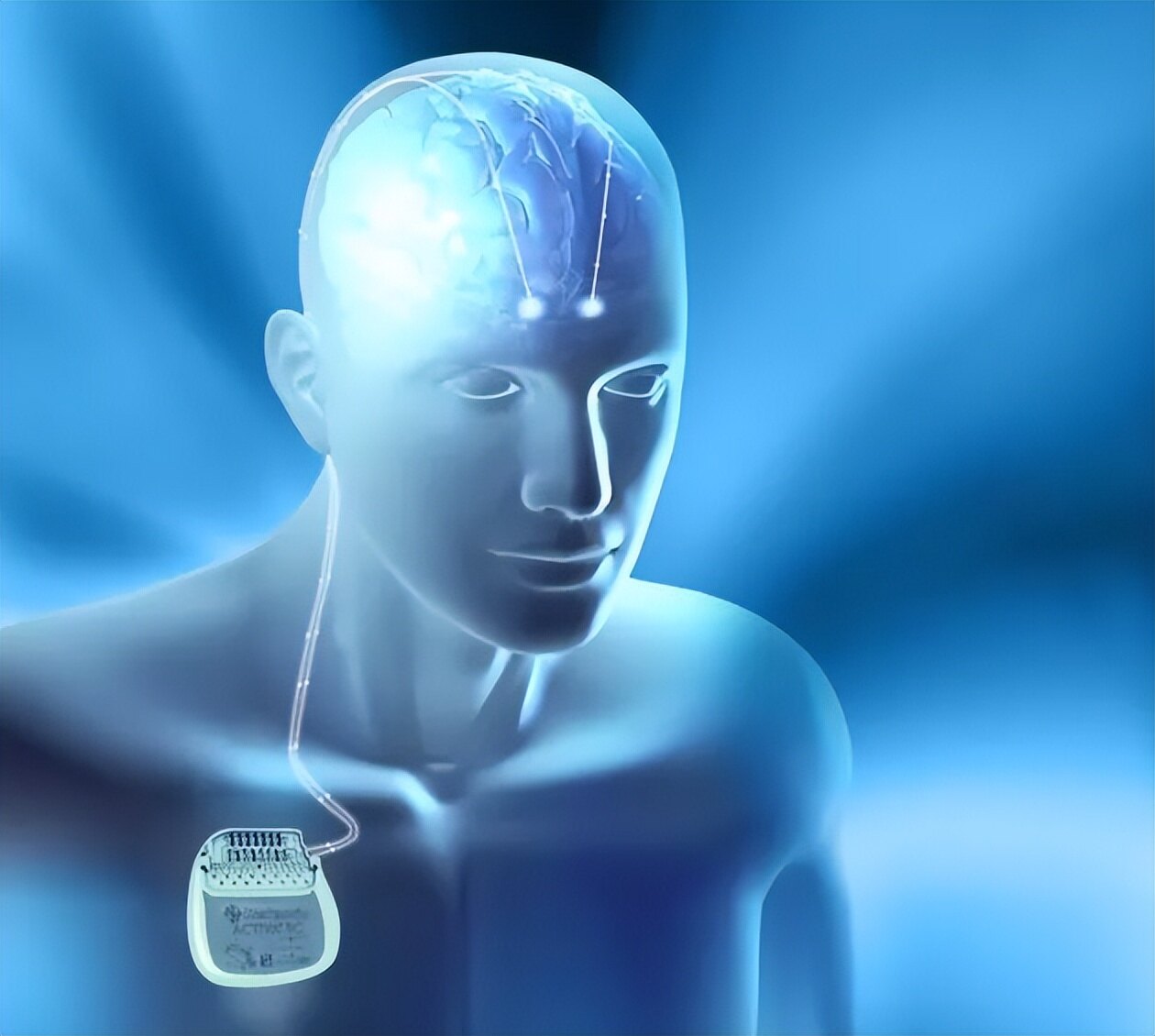
IPG contains a battery and electronic components that deliver electrical stimulation. It can be controlled by both patients and clinicians, who can regularly adjust stimulation parameters such as frequency, pulse width, and voltage to maximize the neuromodulatory effects of DBS.
In 1997, the U.S. FDA approved Medtronic's application to use DBS for treating essential tremor and Parkinson's disease.
Currently, more than 180,000 patients worldwide have undergone DBS implantation. Follow-up studies on implanted cases show that DBS is highly effective in controlling motor symptoms of Parkinson's disease and reducing medication intake.
Recent research results indicate that DBS is expected to be applied to various diseases, including chronic pain, obsessive-compulsive disorder (OCD), and depression, among others. In addition, scientists are experimentally exploring the efficacy and safety of DBS therapy for drug addiction, anorexia, obesity, and Alzheimer's disease. As research on DBS continues to advance, the future application scope of DBS therapy will be limitless.
First Perceptual Technology DBS
On June 25, 2020, Medtronic's new generation of deep brain neurostimulator Percept™PC was approved for marketing by the U.S. FDA.
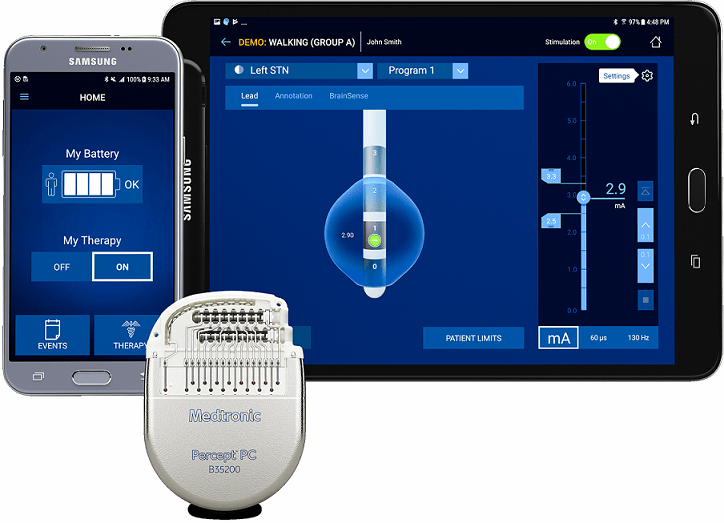
This is the world's first commercially available deep brain neurostimulator with sensing technology, and also the first in the world capable of capturing and recording local field potential signals. Additionally, it is compatible with 1.5T and 3.0T MRI scans while powered on.
The birth of the Percept™ PC with sensing capabilities marks the entry of DBS (Deep Brain Stimulation) into the digital age.
It is reported that Percept™PC can transmit the EEG signals it captures to the doctor's end through near-field communication. Especially, the beta-band signals it captures will significantly enhance the effectiveness of DBS treatment and open a new door for human research in brain science.
In addition, Medtronic has many highlights in the fields of Vagus Nerve Stimulator (VNS) and "Bladder Pacemaker" Sacral Nerve Modulation (SNM), which will not be elaborated here.
——
In the early 21st century, neuromodulation entered a phase of rapid development. According to research data,In 2018, the global production of neurostimulators was approximately 189,900 units, with sales reaching about 4 billion US dollars, while the market production of neurostimulators in China accounted for only about 1.63% of the global share.
The neuromodulation market is mainly monopolized by three companies: Medtronic, Abbott, and Boston Scientific. However, these three companies entered the Chinese market relatively late, and the market has not yet matured; the Chinese market is still in its infancy.
Currently, the neuromodulation products on the market are mainly implantable neurostimulators, including DBS, VNS, and SCS, which are relatively mature in development.Among them, SCS occupies more than 50% of the global neuromodulation market share.There are relatively fewer non-invasive neuromodulation products, and currently, the main technological approach is transcranial direct current stimulation. In the future, non-invasive products will become an important trend.
In recent years, a number of domestically produced enterprises have emerged in the field of neuromodulation devices, such as SceneRay Medical, PINS Medical, etc., with broad space for domestic substitution.
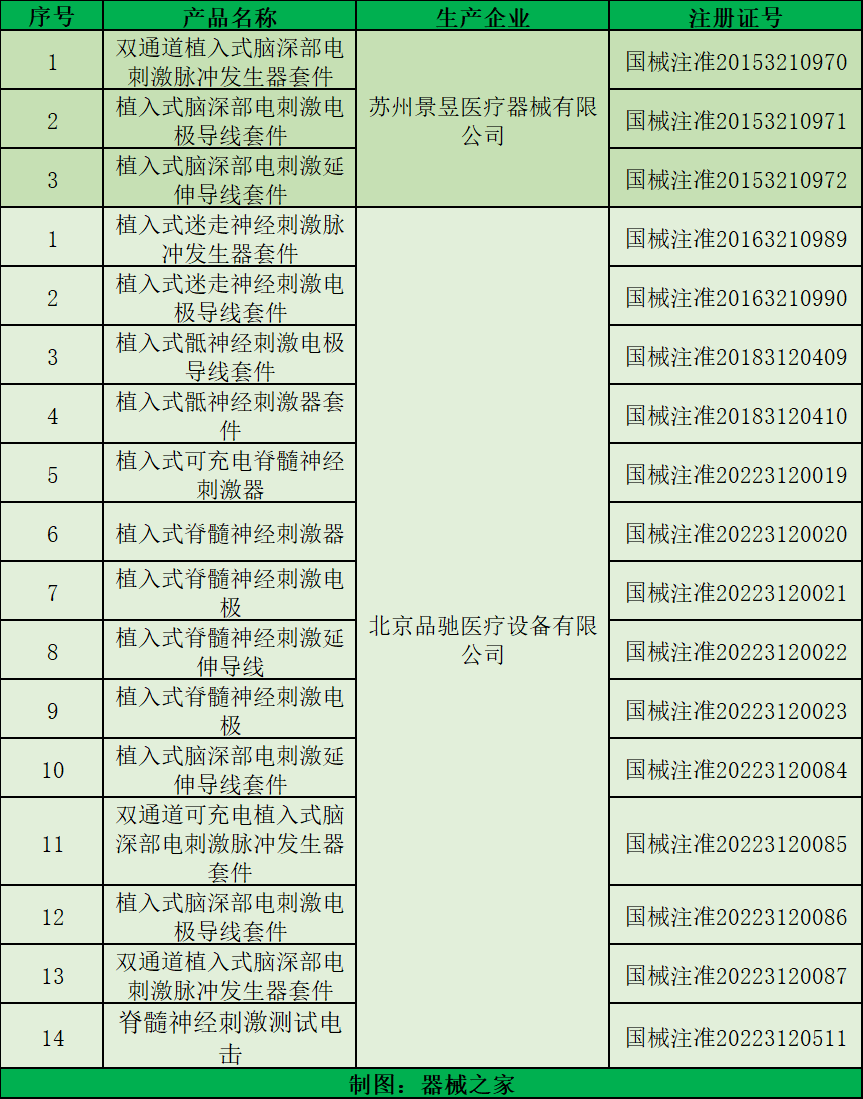
Device Jun reviewed the list of approved innovative medical devices published by the National Medical Products Administration on April 21.Out of the total 155 approved innovative medical devices, PINS Medical accounts for 14, and SceneRay Medical has 3 DBS products approved., which also reflects ChinaNeuromodulationThe field is developing rapidly.
Pins Medical, a representative enterprise in this field in ChinaIt is an innovative enterprise incubated based on the relevant neuromodulation technologies of Tsinghua University. Currently, it is a constituent unit of the "National Engineering Research Center for Neuromodulation," with Professor Lu Ming Li from Tsinghua University serving as the chief scientist.
Pinchi Medical obtained product registration certificates for a series of brain pacemakers and vagus nerve stimulators and launched them into the market, breaking the monopoly of American companies in the field of neuromodulation products.
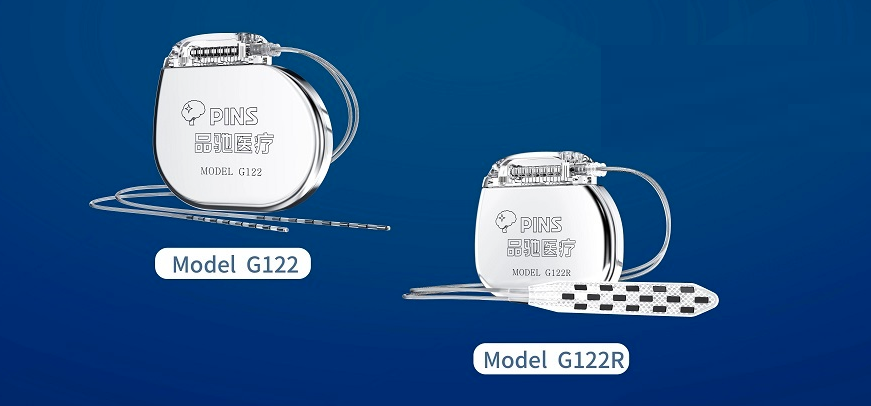
Recently, the National Medical Products Administration (NMPA) approved the registration application for an innovative implantable spinal cord stimulator developed by Pinchi Medical after review.Is the first approved implantable spinal cord neurostimulator system produced in China.
On the other hand, Jingyu Medical also brought good news. Recently, the dual-target deep brain stimulation (DBS) technology and products of Suzhou Jingyu Medical for treating drug addiction indications received the FDA Breakthrough Device Designation.
Instrument Family, 136 likes
Notably, this is the first time that a Chinese company has obtained a Breakthrough Device Designation in the field of neurological and psychiatric disorders.
Obtaining this qualification means that enterprises can frequently communicate with the FDA during the pre-listing review stage to receive timely feedback, and are expected to be given priority in the review process after submission, thereby accelerating the listing of related products in the United States.
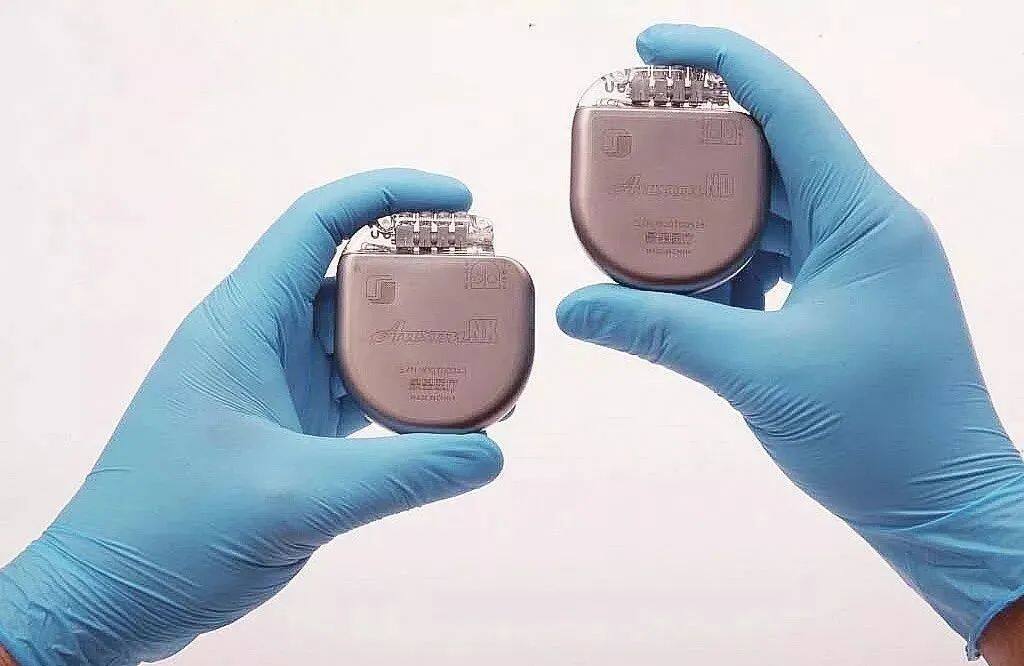
Facing the huge demand for chronic disease treatment, neuromodulation still has significant room for growth. With technological advancements, participants need to continuously develop new technologies and products, promote healthy competition, expand the range of indications for neuromodulation, and enhance therapeutic efficacy. Medical Device News will continue to follow the latest developments in this field and provide up-to-date reports.