

Novartis’ STAMP Inhibitor Scemblix Demonstrates Sustained Superior Efficacy and Safety Over Bosulif in 96-Week Follow-Up for Chronic Myeloid Leukemia

Novartis
Drug Development and Manufacturing
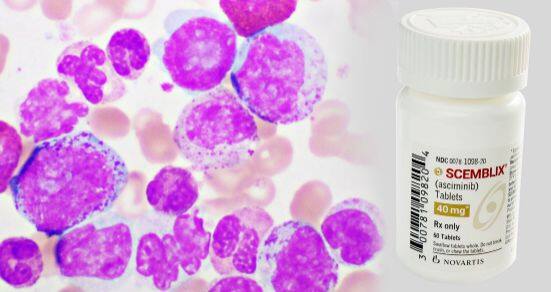
News on June 13, 2022 /BioValleyBIOON/ -- Novartis recently announced the long-term (96-week) follow-up data from the Phase 3 ASCEMBL trial of the novel targeted anticancer drug Scemblix (asciminib, ABL001). The results showed that in adult patients with Philadelphia chromosome-positive chronic myeloid leukemia in the chronic phase (Ph+ CML-CP) who had previously received at least two tyrosine kinase inhibitors (TKIs), Scemblix demonstrated superior efficacy and safety compared to Pfizer's targeted anticancer drug Bosulif (bosutinib) at the primary analysis (24 weeks), which continued to strengthen at the long-term follow-up (96 weeks). These results further support the use of Scemblix in Ph+ CML-CP patients who have previously received at least two TKIs and have the potential to change the standard of clinical care through a differentiated mechanism of action.
Scemblix is a kinase inhibitor that received U.S. approval in October 2021.FDAAccelerated approval for the treatment of adult patients with Ph+ CML-CP who have previously received at least 2 TKI treatments.Scemblix is a STAMP inhibitor, the first CML treatment drug to act by specifically targeting the BCR-ABL1 protein myristoyl pocket (STAMP).Currently marketed competitive drugs work by binding to the ATP-binding site of the BCR-ABL1 protein. Scemblix acts on another part of the kinase, the ABL myristoyl pocket (STAMP), locking BCR-ABL1 in an inactive conformation. As a result, Scemblix can help address TKI resistance in CML patients and overcome defective BCR-ABL1 gene mutations associated with the overproduction of leukemia cells.
The 96-week follow-up data disclosed this time show:At Week 96 of treatment, the major molecular response rate (MMR) in the Scemblix group (n=157) more than doubled compared to the Bosulif group (n=76) (37.6% vs 15.8%), showing a significant increase from previous analyses (Week 24 MMR: 25.5% vs 13.2%; p=0.029).MMR in the Scemblix treatment groupThe probability of maintaining at least 72 weeks is 96.7%.(95% CI: 87.4-99.2), reflecting the long-term durability of the efficacy. Although patients in the Scemblix group had a longer duration of treatment, with a median of 23.7 months compared to 7.0 months in the Bosulif group, the latest 96-week analysis showed,The discontinuation rate due to adverse events in the Scemblix treatment group was more than three times lower than that in the Bosulif group (7.7% vs 26.3%).. No new treatment-related deaths have been reported since the interim analysis at 24 weeks.
In addition to the durable responses consistent with the primary analysis,A higher proportion of patients in the Scemblix treatment group reached BCR::ABL1 ≤ 1% at Week 96 compared to the Bosulif group (45.1% vs 19.4%).The most common (>10% in any treatment group) grade ≥3 adverse events in the Scemblix combination versus the Bosulif group were thrombocytopenia (22.4%, 9.2%), neutropenia (18.6%, 14.5%), diarrhea (0%, 10.5%), and increased alanine aminotransferase (0.6%, 14.5%). These values for adverse events were similar to those reported at the 24-week and 48-week analyses.
Dr. Jorge E. Cortes of the Georgia Cancer Center at Augusta University stated: "Many CML patients develop resistance to existing therapies, and over time, treatment side effects can have an impact.Quality of LifeEncouragingly, 96-week follow-up data confirm that patients using Scemblix long-term demonstrate sustained and continuously improving efficacy along with good tolerability. These 96-week data highlight the potential of Scemblix and its unique mechanism of action, which has the potential to transform the treatment paradigm for CML."
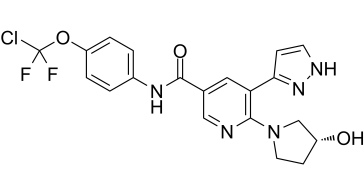
In recent years, progress has been made in the treatment of CML. Clinicians can choose from a few TKIs when treating patients with Ph+ CML, including Novartis' Gleevec (imatinib) and Tasigna (nilotinib). Most patients receiving drug therapy are still alive after 10 years, but there is still a risk of disease progression.
Although patients who develop resistance to initial treatment can switch to another TKI (i.e., sequential TKI therapy), many approved treatments target the same ATP-binding site on the ABL1 kinase. The similarity between these therapies means that a mutation in one region of the kinase can render many drugs ineffective. In other words, sequential TKI therapy may be associated with increased resistance and intolerance.
As a STAMP inhibitor, Scemblix can overcome mutations at the ATP-binding site of BCR-ABL1, which may help address TKI resistance in later-stage CML treatment and potentially resolve off-target activity, thereby improving patient outcomes.Previously, the U.S. FDA had granted asciminib Fast Track Designation (FTD). In February 2021, the FDA granted asciminib two Breakthrough Therapy Designations (BTD): (1) for the treatment of adults with Philadelphia chromosome-positive chronic myeloid leukemia in the chronic phase (Ph+ CML-CP) who have previously received at least two tyrosine kinase inhibitors (TKIs); (2) for the treatment of adult patients with Ph+ CML-CP carrying the T315I mutation.
Currently, Novartis is conducting multiple clinical trials to evaluate Scemblix in CML patients who have received various therapies, as well as in combination with other TKIs for the treatment of newDiagnosisCML patients. (Bioon.com)
Source of Original Text:Novartis Scemblix®, with novel mechanism of action, shows superior, long-term efficacy and consistent tolerability in 96-week follow-up of chronic myeloid leukemia trial