

Yescarta Demonstrates Consistent Superiority Over Standard of Care Across All Subgroups in Relapsed/Refractory LBCL, Reinforcing Its Role as a New First-Line Treatment Paradigm

Gilead Sciences
Antiviral Drug Developer

Kite Pharma
CAR-T Cell Immunotherapy R&D Provider
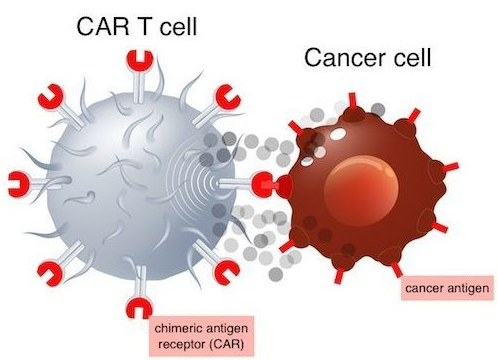
News on June 13, 2022 /BioValleyBIOON/ -- Gilead Sciences' T-cell therapy company, Kite, recently presented at the 2022 American Society of Clinical Oncology (ASCO) Annual Meeting Announced CD19CAR-TCell Therapy Yescarta (axicabtagene ciloleucel) Milestone ZUMA-7 Trial: Results of Two Pre-Planned Subgroup Analyses. In April this year, based on the results of this study, the United StatesFDAApproval of New Indication for Yescarta: ForFrontline ChemotherapyImmunityLarge B-cell lymphoma refractory to or relapsed within 12 months after first-line chemoimmunotherapyLymphoma(LBCL) Adult Patients。This approval makes Yescarta the first CAR-T cell therapy for the initial treatment of relapsed or refractory LBCL, marking the first therapy superior to standard care in nearly 30 years.
ZUMA-7 is the world's first, largest-scale, and longest-follow-up clinical trial comparing CAR-T with the current standard of care (SOC) used in the past few decades for second-line treatment. This is a randomized, open-label, global, multicenter Phase 3 study conducted in adult patients with relapsed or refractory LBCL within 12 months after first-line chemoimmunotherapy. The trial compares a single infusion of Yescarta with the current SOC for second-line treatment (a platinum-based salvage combination chemoimmunotherapy regimen followed by high-dose chemotherapy [HDT] and autologous hematopoietic stem cell transplantation for patients responding to salvage chemotherapy).Stem CellsTransplant [ASCT]) were compared.
Previously released results show,In terms of the primary endpoint of event-free survival (EFS), Yescarta demonstrated clinically meaningful improvement compared to the current standard-of-care (SOC) second-line treatment used over the past few decades.StatisticsStatistically significant improvement (HR=0.398; p<0.0001)EFS is defined as the time from randomization to the earliest date of disease progression, initiation of new lymphoma treatment, or death from any cause.The median EFS in the Yescarta treatment group was 4 times that of the SOC group (8.3 months vs 2.0 months).Moreover, the proportion of patients who survived and had no disease progression or required no additional cancer treatment after two years was 2.5 times higher in the Yescarta treatment group than in the SOC group (40.5% vs 16.3%).
Results presented at the ASCO Annual Meeting include analyses of clinical and patient-reported outcomes (PRO) for patients aged 65 and above, as well as exploratory analyses investigating the association between pre-treatment tumor characteristics and clinical outcomes in patients with low/high tumor burden and elevated/non-elevated lactate dehydrogenase (LDH).
InIn a subgroup analysis of patients aged 65 years and older, The primary endpoint of EFS showed that Yescarta (n=51) was superior to SOC (n=58; HR=0.276; descriptive p<0.0001),Median EFS increased more than 8-fold (21.5 months vs 2.5 months)、Estimated 24-month EFS rate more than triple (47.8% vs 15.1%). Yescarta groupObjective Response Rate (ORR) was higher than in the SOC group (88% vs 52%).; Odds Ratio [OR]=8.81; descriptive p<0.0001). Yescarta groupThe complete response rate (CR) was more than twice that of the SOC group (75% vs 33%).. As a pre-planned interim analysis, compared with the SOC group, the Yescarta group showed an extended overall survival (OS) (HR=0.517). In the SOC group, 57% of patients received subsequent cellular immunotherapy.
In addition,Yescarta also showed benefits compared to SOC in patients aged 65 or older.Quality of Life(QoL) significantly improved, returning to pre-treatment quality of life more quickly.Among the patients whose PRO sections could be evaluated in the study, through three pre-specified PRO domains (European Organisation for Research and Treatment of Cancer [EORTC] Quality of Life Questionnaire [QLQ]-C30 global health status/quality of life, EORTCQLQ-C30Physical function, EQ-5D-5L Visual Analog Scale [VAS]) evaluation showed that Yescarta (n=46) demonstrated a clinically meaningful difference in quality of life (QoL) compared to SOC (n=42) on Day 100. On Day 150, scores in all three domains continued to favor Yescarta over SOC (descriptive p<0.05).
The safety of Yescarta is consistent with previous studies and real-world data across all age groups. The incidence rates of cytokine release syndrome (CRS) and neurologic events (NE) in patients aged 65 years and older were slightly higher than those observed in the overall patient population. Notably, compared to SOC patients, a higher proportion of Yescarta patients had high-risk features at baseline, including second-line age-adjusted International Prognostic Index (IPI) scores of 2-3 (53% vs 31%), elevated LDH levels (61% vs 41%), and high-grade B-cell lymphoma (including Double/Triple-Hit Lymphoma [D/THL]: 33% vs 14%).
Jason Westin, Principal Investigator of ZUMA-7 and Director of Lymphoma Clinical Research at MD Anderson Cancer Center, stated: "Patients aged 65 years or older with large B-cell lymphoma are at higher risk of being ineligible for or unable to tolerate standard care, potentially leading to poorer clinical outcomes and health-related quality of life. These data suggest that elderly patients, who are often considered ineligible for transplantation due to age, can safely receive second-line CAR-T cell therapy and achieve treatment goals.。”
InIn a separate exploratory analysis of pre-treatment tumor characteristics, including tumor burden and LDH.For patients with high and low tumor burden before treatment (HRs were 0.29 and 0.49, respectively; descriptive p < 0.001 for both) and elevated and non-elevated LDH (HRs were 0.32 and 0.5, respectively; descriptive p < 0.001 for both),Yescarta’s EFS Outperforms SOCEFS in Yescarta-treated patients showed no significant difference between those with high or low tumor burden before treatment (HR=0.92; descriptive p=0.68) or elevated and non-elevated LDH levels (HR=1.11; descriptive p=0.61). However, EFS was worse in SOC-treated patients with high tumor burden before treatment (HR=1.51; descriptive p=0.02) or elevated LDH levels (HR=1.56; descriptive p=0.01).Yescarta treatment resulted in more durable responses in patients with significant B-cell characteristics, but it was superior to SOC regardless of these features.
Frank Neumann, Senior Vice President and Global Head of Clinical Development at Kite, stated: "The sustained advantage of Yescarta in the second-line treatment of high-risk patients, such as those over 65 years old, with a high tumor burden or elevated LDH, surpasses standard care, providing physicians with additional confidence that Yescarta should be considered the new standard of care for initial treatment of relapsed/refractory LBCL."
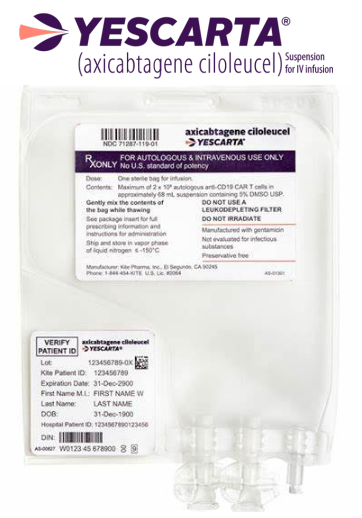
Yescarta (Axicabtagene Ciloleucel, Axi-Cel) is a CD19-directed autologous CAR-T cell therapy acquired by Gilead Sciences for $11.9 billion through the acquisition of Kite Pharma. To date, Yescarta has been approved for three indications.: (1) Treatment for adult patients with relapsed or refractory large B-cell lymphoma (R/R LBCL) within 12 months after first-line chemoimmunotherapy. (2) Adult patients with relapsed or refractory LBCL who have previously received at least two systemic treatment regimens, including unspecified diffuse large B-cell lymphoma (DLBCL), primary mediastinal large B-cell lymphoma, high-grade B-cell lymphoma, and DLBCL arising from follicular lymphoma (Yescarta is not indicated for the treatment of patients with primary central nervous system lymphoma). (3) Adult patients with relapsed or refractory follicular lymphoma (FL) who have previously received at least two systemic treatment regimens.
In China, in June 2021, the National Medical Products AdministrationManagementThe National Medical Products Administration (NMPA) approved FOSUN Kite Biotechnology Co., Ltd.'s application through the priority review and approval process.Axicabtagene Ciloleucel Injection (Trade Name: Yikaida) Launched. This drug is the first cell therapy product approved for marketing in China., for the treatment of adult patients with relapsed or refractory large B-cell lymphoma who have received two or more lines of systemic therapy (including diffuse large B-cell lymphoma not otherwise specified, primary mediastinal large B-cell lymphoma, high-grade B-cell lymphoma, and diffuse large B-cell lymphoma transformed from follicular lymphoma).
Axicabtagene Ciloleucel Injection (Yikaida) is technically transferred from Kite Pharma's Yescarta (Axicabtagene Ciloleucel, Axi-Cel) and is planned for localized production within China (excluding Hong Kong, Macao, and Taiwan).. This product was introduced by Fosun Kite from Kite Pharma and has obtained the technical and commercialization rights in mainland China, the Hong Kong Special Administrative Region, and the Macao Special Administrative Region.
This product is the first CAR-T cell therapy product that Fosun Kite has advanced to commercialization in China, and it is alsoThe first CAR-T cell therapy product officially approved for marketing by the National Medical Products Administration (NMPA)As a novel cancer treatment, Axicabtagene Ciloleucel Injection (Yikaida) brings new hope and opportunities to patients with relapsed or refractory large B-cell lymphoma in China who have received two or more lines of systemic therapy. (Bioon.com)
Source of Original Text:Sub-analyses of Landmark ZUMA-7 Trial Reinforce Yescarta® CAR T-cell Therapy Superiority Over Standard of Care (SOC) as Initial Treatment for Patients With Relapsed or Refractory Large B-cell Lymphoma (LBCL)