

Pfizer's Paxlovid Fails to Meet Primary Endpoint in EPIC-SR Phase II/III Trial for Symptom Relief in Standard-Risk COVID-19 Patients

Pfizer
Pharmaceutical R&D Developer
On June 15, Pfizer announced the results of the Phase II/III clinical trial (EPIC-SR) for its oral COVID-19 drug Paxlovid in unvaccinated adults and vaccinated adults with one or more risk factors for progressing to severe disease. The trial did not meet the primary endpoint of sustained alleviation of all symptoms for four consecutive days, and the secondary endpoints were not statistically significant.
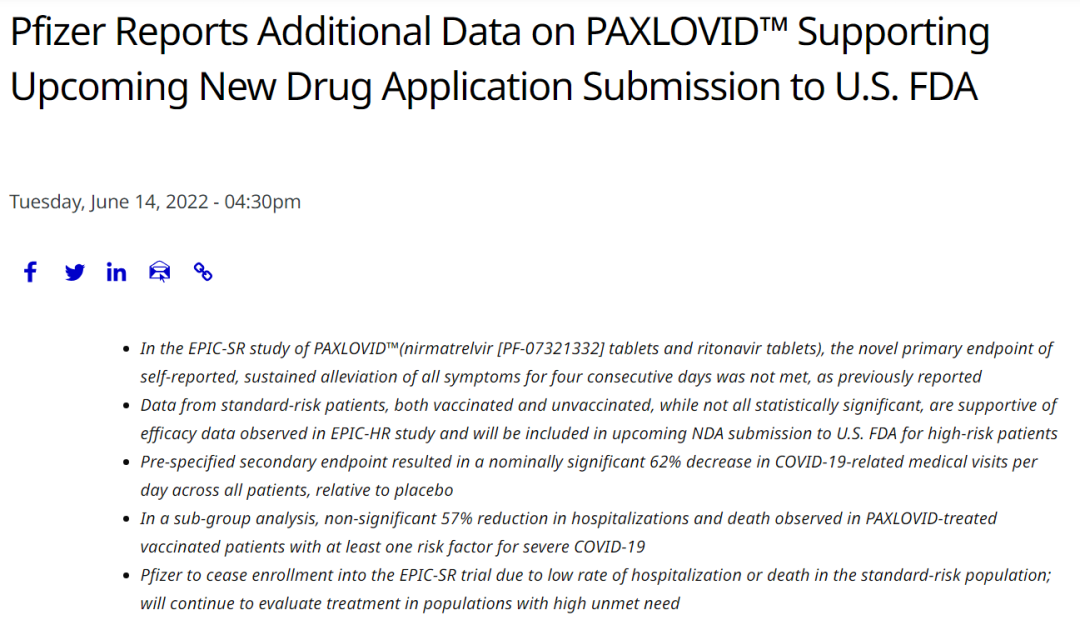
EPIC-SR is a randomized, double-blind, placebo-controlled Phase II/III clinical trial designed to evaluate the efficacy and safety of Paxlovid in unvaccinated adults and vaccinated adults with one or more risk factors for progressing to severe disease. The study enrolled 1,153 participants who were randomly assigned to receive either Paxlovid or placebo treatment (twice daily for 5 days).
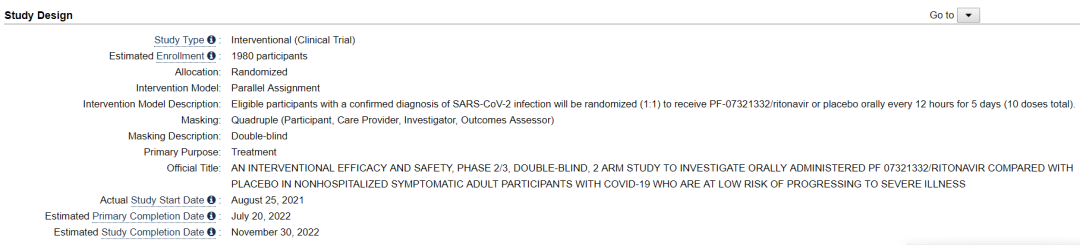
The interim analysis results reported in December 2021 showed that the primary endpoint of sustained relief of COVID-19 symptoms for 4 days was not met, and the relative risk of hospitalization or death, a key secondary endpoint, was reduced by 70% (treatment group: 3/428; placebo: 10/426), but it was not statistically significant.
The latest analysis results of 1,153 patients registered as of December 2021 show a 51% reduction in the relative risk of hospitalization or death (treatment group: 5/576; placebo: 10/569), which is not statistically significant. A subgroup analysis of 721 vaccinated adults with at least one risk factor for progression to severe COVID-19 showed a 57% reduction in the relative risk of hospitalization or death (treatment group: 3/361; placebo: 7/360).
In addition, compared with the placebo, Paxlovid significantly reduced daily COVID-related visits by 62% (p = 0.0228) for all patients, and the average length of hospital stay was reduced by 72%. Other findings without statistical significance included: no patients in the Paxlovid treatment group were admitted to the intensive care unit, while three patients in the placebo group were, and no patients died in the Paxlovid group, while one patient in the placebo group died.
In terms of safety, the incidence of adverse events in the Paxlovid group and the placebo group was 23.1% and 23.4%, respectively. The incidence of serious adverse events was 1.4% and 1.9%, respectively, and the proportion of discontinuation due to adverse events was 1.7% versus 1%.
Due to the very low hospitalization or mortality rate in the standard-risk patient population, Pfizer has decided to halt enrollment in the EPIC-SR trial and plans to submit available data to the FDA this month for a New Drug Application (NDA) to support the use of Paxlovid in patients at risk of progressing to severe disease. Although the data from EPIC-SR is not statistically significant, it supports the efficacy data observed in the EPIC-HR study.
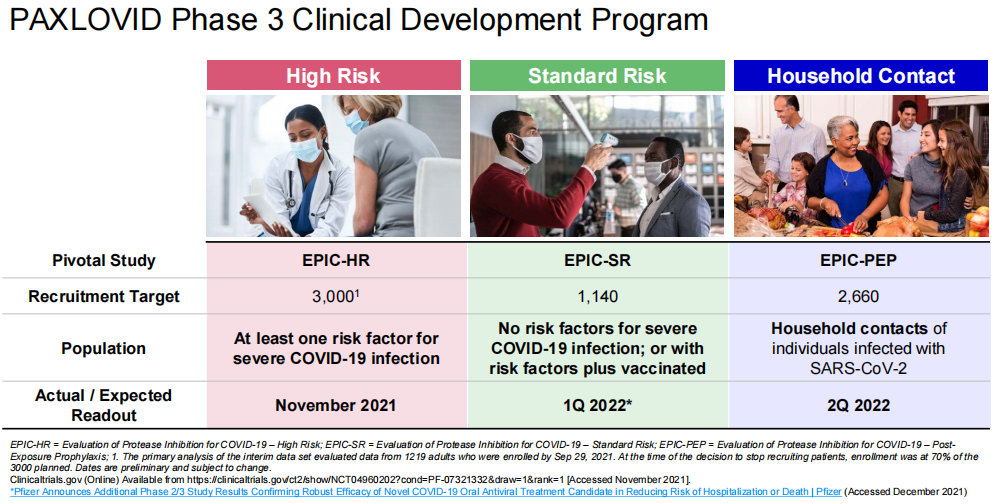
On December 15, 2021, Pfizer announced the final analysis results of a Phase II/III clinical trial (EPIC-HR) for non-hospitalized adult COVID-19 patients at high risk of progressing to severe disease. In patients treated within three days of symptom onset, Paxlovid reduced the risk of COVID-19-related hospitalization or death from any cause by 89% compared to placebo. For the secondary endpoint, in patients treated within five days of symptom onset, Paxlovid reduced the risk of hospitalization or death by 88% compared to placebo.
Notably, on April 29 this year, Pfizer announced the results of the Phase II/III clinical trial (EPIC-PEP) for Paxlovid's post-exposure prophylaxis, which did not meet the primary endpoint of reducing the risk of confirmed infection in adults exposed to the coronavirus through household contact.
Paxlovid is a combination drug of the 3CL protease inhibitor nirmatrelvir and low-dose ritonavir. It is administered orally to COVID-19 patients as a combination of 300mg (two 150mg tablets) of nirmatrelvir and one 100mg tablet of ritonavir, given twice daily for 5 days.
In December 2021, the drug received Emergency Use Authorization (EUA) from the FDA for the treatment of non-hospitalized patients aged 12 and above with mild to moderate COVID-19 infections who are at high risk of progressing to severe disease. On February 11 this year, Paxlovid was granted conditional approval for import by China's National Medical Products Administration for the treatment of adult patients with mild to moderate COVID-19 who have risk factors for progression to severe disease.