

Xarelto (Rivaroxaban) Approved in Japan for Post-Revascularization Treatment of Peripheral Artery Disease (PAD) Patients
Bayer
Pharmaceutical Product R&D Developer
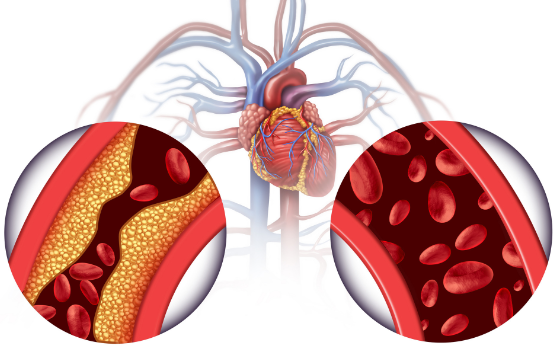
Image Source: Shutterstock
News on June 24, 2022 /BioValleyBIOON/ -- Bayer recently announced that the Japanese Ministry of Health, Labour and Welfare (MHLW) has approved Xarelto (rivaroxaban): Xarelto (2.5mg, twice daily) in combination with aspirin (81-100mg, once daily) for the treatment of patients with peripheral artery disease (PAD) following revascularization.
This approval is based on data from the Phase 3 VOYAGER PAD trial. Notably,This is the first one in high-risk majorThrombusSexBlood VesselClinical trial confirming the benefits of dual pathway inhibition (Xarelto anticoagulant combined with aspirin antiplatelet drug) in PAD patients with major adverse cardiovascular events (MACE) and major adverse limb events (MALE).
The results showed,In symptomatic PAD patients who have recently undergone lower extremity revascularization (LER), the combination therapy of Xarelto and aspirin demonstrates a favorable benefit-risk profile: compared with aspirin alone (100mg, once daily), the combination of Xarelto (2.5mg, twice daily) and aspirin (100mg, once daily) reduces the risk of major adverse limb events in PAD patients post-LER.Cardiovascular EventsThe risk was reduced by 15%. The trial also found that, compared with aspirin, the combination regimen of Xarelto and aspirin showed no significant difference in TIMI major bleeding.
Dr. Michael Devoy, Head of Medical Affairs and Pharmacovigilance at Bayer's Pharmaceuticals Division and Bayer's Chief Medical Officer, stated: "This approval represents a significant advancement for PAD patients in Japan."Xarelto Shows Significant Benefits for PAD Patients at High Risk of Major Thrombotic Events After Lower Limb Revascularization。”
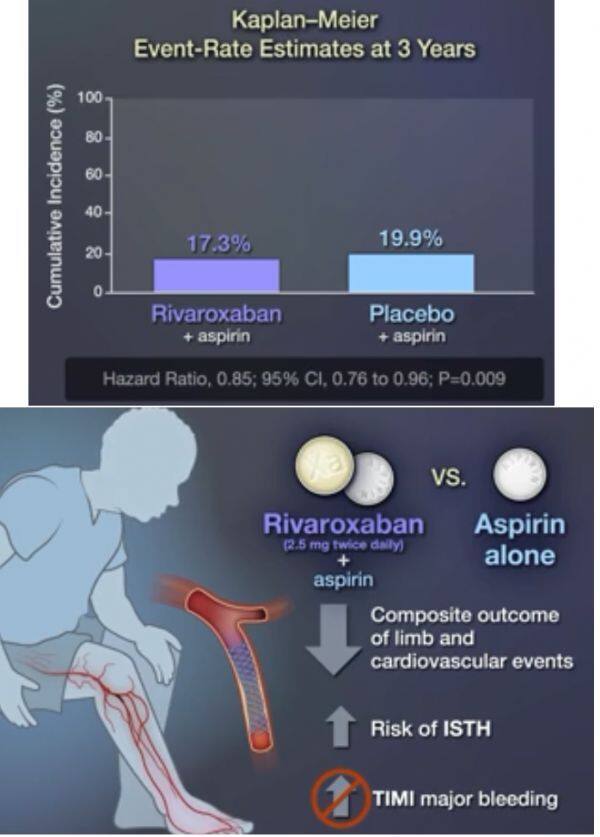
VOYAGER PAD Study Results (Image source: NEJM article PMID: 32222135)
Cardiovascular disease (CVD), including coronary artery disease (CAD) and peripheral artery disease (PAD), accounts for approximately one-third of global deaths. DespiteManagementProgress has been made, but CVD still imposes a significant burden on healthcare and social care.
PAD is a common circulatory condition where narrowed arteries reduce blood flow to the lower limbs, increasing the risk of major cardiovascular events. It is estimated that,PAD Affects More Than 200 Million People WorldwideAlthough it is usually asymptomatic at the beginning, PAD symptoms may progress to a severe degree, requiring vascular reconstruction to avoid amputation. PAD is the leading cause of amputation and leads to a high incidence of fatal and non-fatal cardiovascular events.Amputation is a devastating complication of PAD, although largely preventable.Prevention, but associated with a high mortality rate.
Xarelto is an oral Factor Xa inhibitor, and this drug is the most widely used non-vitamin K antagonist oral anticoagulant (NOAC) globally. It has been approved for multiple therapeutic indications, with some variations in indications across different countries. Compared to other NOACs, Xarelto can provide assistance to a broad patient population in preventing various venous thromboembolism (VTE) and arterial thromboembolism (VAT) conditions.
Xarelto, co-developed by Bayer and Johnson & Johnson, has been approved in more than 100 countries worldwide. Johnson & Johnson is responsible for sales in the U.S. market, while Bayer handles markets outside the U.S. According to financial reports disclosed by the two companies, Xarelto's global sales reached $7.5 billion in 2021. (Bioon.com)
Source of Original Text:Rivaroxaban (Xarelto) approved in Japan for patients with peripheral artery disease (PAD) after revascularisation