

European Commission Approves KEYTRUDA® (pembrolizumab) for Adjuvant Treatment of Resected Stage IIB/IIC/III Melanoma, Significantly Reducing Risk of Recurrence and Distant Metastasis

MSD
Pharmaceutical R&D and Manufacturer
European Commission
The European Commission, abbreviated as the EU Commission, is a supranational body under the European Union. Within the EU political system, the European Commission primarily undertakes executive tasks, thus being roughly equivalent to the government in a national system. However, the European Commission has other functions as well. In particular, except for the few circumstances specified in the treaties, the European Commission is the only institution with legislative power in the EU legislative process.
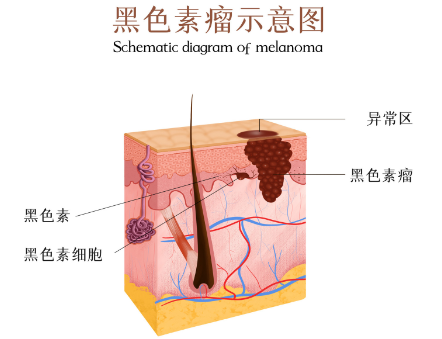
Image Source: Sheji Network
News on June 24, 2022 /BioValleyBIOON/ -- MSD (Merck & Co) recently announced that the European Commission (EC) has approved the anti-PD-1 therapy Keytruda (generic name: pembrolizumab):As a monotherapy, for the adjuvant treatment of adult and adolescent (≥12 years) patients with stage IIB or IIC melanoma who have undergone complete surgical resection.. In addition, EC also approvedExpanded the indication for Keytruda in the treatment of advanced (unresectable or metastatic) melanoma and stage III melanoma (as adjuvant therapy following complete resection) to include adolescent patients aged 12 years and older.
It is worth mentioning that,Keytruda is the first anti-PD-1 therapy approved in the EU for adjuvant treatment in patients 12 years and older with completely resected stage IIB, IIC, and III melanoma, as well as for the treatment of advanced melanoma.ImmunityTherapy.In the EU, Keytruda was previously approved for the treatment of adult patients with advanced (unresectable or metastatic) melanoma, as well as adjuvant treatment for adult patients with stage III melanoma who have undergone complete surgical resection and have lymph node involvement.
This EU approval of Keytruda for adjuvant treatment of resected stage IIB or IIC melanoma is based on the results of the Phase 3 KEYNOTE-716 trial (NCT03553836). The trial demonstrated that, in patients aged 12 years and older with completely resected stage IIB and IIC melanoma,With a median follow-up of 20.5 months, compared to placebo, Keytruda adjuvant (post-surgery) treatment significantly extended recurrence-free survival (RFS), reducing the risk of disease recurrence or death by 39% (HR=0.61; 95% CI: 0.45-0.82; p=0.00046).。With a median follow-up of 26.9 months, compared to placebo, Keytruda significantly extended distant metastasis-free survival (DMFS) and reduced the risk of distant metastasis by 36% (HR=0.64; 95% CI: 0.47-0.88; p=0.00292).。
Safety of Keytruda monotherapy was evaluated in 7,631 patients with various types of tumors. In adjuvant therapy, the incidence of all-grade immune-related adverse reactions with Keytruda monotherapy was 36.1%, and the incidence of grade 3-5 immune-related adverse reactions was 8.9% (n=1,480). No new immune-related adverse reactions were identified with Keytruda monotherapy in the adjuvant treatment setting.
Many patients with Stage II melanoma have a high risk of recurrence after surgery.The results of the KEYNOTE-716 trial represent an important milestone, as it is the first Phase 3 study specifically designed to evaluate adjuvant treatment for Stage IIB and IIC melanoma, an area with a high level of unmet medical need.By advancing Keytruda immunotherapy to the early stages of melanoma and administering it as an adjuvant treatment after complete surgical removal, compared to observation alone, Keytruda effectively reduces the risk of recurrence in high-risk Stage II patients.
Melanoma is the most serious type of skin cancer, characterized by uncontrolled growth of pigment-producing cells. In the past few decades, the incidence of melanoma has been on the rise, and in 2020, there were new cases worldwide.DiagnosisApproximately 325,000 cases. Melanoma is the leading cause of skin cancer deaths, with over 5,700 people worldwide dying from the disease in 2020. It is estimated that in Europe, more than 150,000 new cases of melanoma were diagnosed in 2020, and more than 26,000 people died from the disease.
It is estimated thatThe recurrence rate after surgery for stage IIB and IIC melanoma patients is 32-46%, and for stage III patients, it is 39-74%. The estimated 5-year survival rates (AJCC 8th Edition) are 87% for stage IIB, 82% for stage IIC, 93% for stage IIIA, 83% for stage IIIB, 69% for stage IIIC, and 32% for stage IIID.
Keytruda belongs to anti-PD-(L)1Tumor ImmunologyTherapy, this type of therapy helps detect and combat tumor cells by enhancing the ability of the human immune system. Keytruda is an anti-PD-1 therapy that activates T lymphocytes, which may affect both tumor cells and healthy cells, by blocking the interaction between PD-1 and its ligands PD-L1 and PD-L2. Currently, Keytruda has become a foundational therapy for various types of cancer.
In the treatment of melanoma, based on the results of the EORTC132/KEYNOTE-054 trial, Keytruda has been approved in more than 90 countries worldwide and is recognized as a crucial adjuvant treatment for patients with resected high-risk stage III melanoma. Additionally, Keytruda is also approved for the treatment of patients with unresectable or metastatic melanoma. (Bioon.com)
Source of Original Text:European Commission Approves KEYTRUDA? (pembrolizumab) as Adjuvant Treatment for Adult and Adolescent Patients (≥12 Years of Age) With Stage IIB or IIC Melanoma Following Complete Resection