

Takeda’s TAKHZYRO (Lanadelumab) Shows 94.8% Reduction in HAE Attack Rate in Pediatric Phase 3 SPRING Trial for Children Aged 2–12

Takeda
Biopharmaceutical Manufacturer
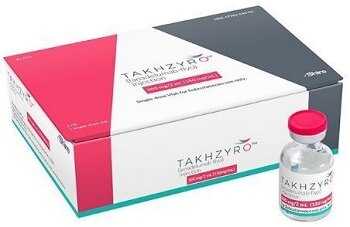
News on July 6, 2022 /BioValleyBIOON/ -- Takeda Pharmaceutical Company Limited (Takeda) recently at the 2022 European Academy of Allergy and ClinicalImmunityAnnounced at the EAACI CongressTakhzyro (lanadelumab, Lanadelumab Injection) in patients aged 2 to under 12 yearsPreventionHereditaryBlood VesselEdema (HAE) AttackPositive results from the Phase 3 SHP643-301 study (SPRING, NCT04070326).These results are consistent with earlier studies conducted in adult and adolescent HAE patients.Currently, no drugs have been approved for long-term prophylactic treatment (LTP) in HAE patients under 6 years of age.
SHP643-301 (SPRING) is a multicenter, open-label Phase 3 study conducted in pediatric patients with HAE aged 2 to under 12 years, aiming to evaluate the safety, pharmacokinetics (PK), pharmacodynamics, and clinical activity/outcomes of Takhzyro in preventing acute HAE attacks. During the 52-week treatment period of this study, patients aged 2 to under 6 years were included.ChildrenChildren aged 6 to under 12 receive 150mg of Takhzyro every 2 weeks (Q2W), while those receiving 150mg of Takhzyro every 4 weeks (Q4W).
The study has been completed and met its objectives. The data shows,Compared with baseline, preventive treatment with Takhzyro reduced the mean HAE attack rate by 94.8% in children, from 1.84 per month to 0.08 during the treatment period. Over the 52-week treatment period, the majority of patients (76.2%) were attack-free, and on average, they experienced no attacks on 99.5% of days.
No deaths or serious treatment-emergent adverse events (TEAEs) were reported during the study period, and no patients withdrew from the study due to TEAEs.The most common TEAE was injection site pain, and the severity of most TEAEs was mild or moderate. These results are consistent with the favorable efficacy and safety profile of Takhzyro observed in earlier studies conducted in adult and adolescent HAE patients.
Takeda Pharmaceutical Company Limited will discuss these data with regulatory agencies worldwide and plans to submit a regulatory application for Takhzyro to treat HAE children aged 2 to under 12 years based on the study data within this fiscal year.
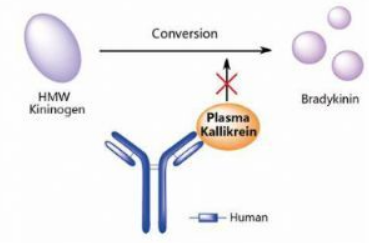
Takhzyro-lanadelumab Mechanism of Action (Image Source: pharmacodia.com)
Hereditary Angioedema (HAE) is a rare genetic disorder that can cause recurrent episodes of edema – swelling – in various parts of the body, including the abdomen, face, feet, genitals, hands, and throat. The swelling can be debilitating and painful. Attacks that obstruct the airway can lead to asphyxiation and may be life-threatening. It is estimated that 1 in 50,000 people worldwide suffer from HAE, and the condition is often under-recognized.DiagnosisInsufficiency and undertreatment.
Takhzyro is the first monoclonal antibody approved for the treatment of HAE, launched in August 2018. Indication: For routine prevention of HAE attacks in patients aged 12 years and older.Takhzyro is not indicated for the acute treatment of HAE attacks.Takhzyro is a fully human monoclonal antibody that specifically binds to and inhibits the activity of plasma kallikrein.This drug is produced in Chinese Hamster Ovary (CHO) cells using recombinant DNA technology.
Takhzyro is administered via subcutaneous injection, with a half-life of 14 days in HAE patients. After training by healthcare professionals, it can be self-administered by the patient or administered by a caregiver, with the injection completed in 1 minute or less. The recommended starting dose of Takhzyro is 300mg every 2 weeks. For patients who have achieved good disease control without attacks, a dose of 300mg every 4 weeks may be considered, especially in patients with lower body weight. Depending on regional approval, Takhzyro is available as a 300mg vial or pre-filled syringe. (Bioon.com)
Source of the original text:Takeda’s TAKHZYRO (lanadelumab) Demonstrated Positive Results in the Prevention of HAE Attacks in First and Only Open-Label Phase 3 Trial in Children Ages 2 to <12 Years