

Luminopia Inc. Files for IPO: Harvard Dropouts Revolutionize Amblyopia Treatment with FDA-Approved Digital Therapy

Luminopia
Developer of Amblyopia Therapy for Children
Do you remember the "little bespectacled kid" in your elementary school class?
It seems that everyone born in the 80s and 90s has a childhood companion like this in their memory—someone who, due to amblyopia, started wearing "bottle-bottom" thick glasses early on, with one eye often covered by a black patch. In回忆中, they were mostly given nicknames like "Pirate," "One-Eyed Dragon," or "Three-Eyed Toad."
Even the Harvard students, often considered the pride of heaven, are not immune to such concerns. After hearing a classmate’s tragic childhood story of struggling with traditional amblyopia eye patches, Scott Xiao was inspired: why not combine his knowledge to design a treatment that cures eye diseases without plunging young patients into "emotional distress"?
In 2015, Scott Xiao and his friend Dean Travers left Harvard University, the world's top ivory tower, with a golden idea and plunged into the business world without hesitation. In 2022, their first product, Luminopia One, received FDA approval.Becoming the world's first officially approved digital therapy product for amblyopia.
So, how did this magical journey unfold?
Grasp the Pain Points of Demand: Turn Class Assignments into Start-up Dark Horse Products
For scientists, grasping the pain points of demand is equivalent to seizing the valve of scientific and technological implementation.Whether he can identify the pipeline with the most market potential among numerous research projects is the first challenge for Scott Xiao to transform into a startup dark horse founder.
A computer science project at school introduced Scott Xiao to digital therapeutics, and the personal experiences of his classmates gave him a deeper understanding of the needs of amblyopia patients. After a series of market research and analysis of U.S. health data, Scott Xiao discovered that there are not just a few自卑 "little glasses" constrained by bulky eye patches—globally, the average incidence of amblyopia in children is as high as 3%.
Amblyopia, caused by the poor development of visual cells in the macular area, results in children being unable to see clearly regardless of whether they wear glasses or not, despite having no organic lesions in their visual organs. In severe cases, it can even lead to blindness. Generally speaking, it is because the brain favors one eye, leading to vision problems in the other eye.
The traditional treatment method is to use a patch eye mask or blurring eyedrops to block the stronger eye, forcing the brain to rely on the weaker eye, providing appropriate visual stimulation to the amblyopic eye, thereby establishing normal retinal correspondence in both eyes, improving vision, and promoting the recovery of visual function.
However, children also have social interactions. The unaesthetic and inconvenient occlusion therapy brings about inconvenience in daily life and social stigma. Needless to say, this inevitably leads to poor compliance among young patients who are active and playful.
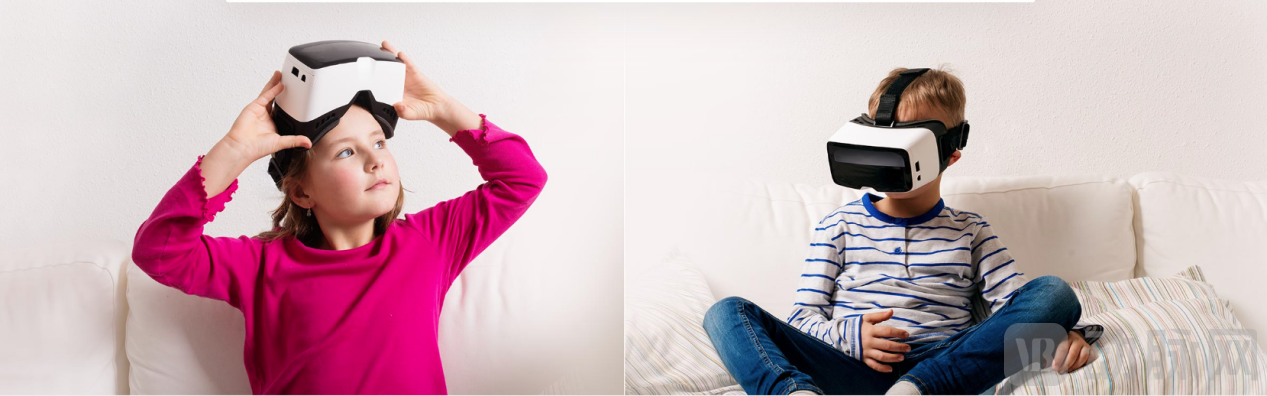
Targeting this pain point, Scott Xiao founded Luminopia in his second year of dropping out from Harvard and soon launched the digital therapeutic product, Luminopia One — a treatment that involves watching programs or movies through VR headsets, which display images separately to each eye. The image shown to the stronger eye has reduced contrast and includes an overlay, compelling the brain to engage both eyes differently to achieve binocular cooperation.
This means that the painful and lengthy treatment process will turn into an entertaining and enjoyable time.
Flexible Transformation: From Game-Induced Eye Strain to Game-Based Eye Treatment, from Harvard Dropout to CEO
When hearing mom's lesson again: "Stop watching cartoons, it strains your eyes!" Kids can confidently say, "Watching cartoons and playing games in VR can correct vision!"
 (Source of the imageLuminopia Official Website)
Children may not know that the big brother who created this VR amblyopia treatment device was also rebellious—replacing dreary traditional treatments with animations and games, and having the courage to drop out of Harvard to seize a brilliant idea. For Scott Xiao,These actions are less rebellious and more about quickly shedding the student mindset to find flexible approaches on the path to entrepreneurial dreams.
Essentially, Bill Gates, Zuckerberg, and Scott Xiao are the same kind of people.They are rebellious players in the secular sense, as well as flexible and unconventional entrepreneurs.
From Scott Xiao's experience, he actually deeply understands the principle that entrepreneurship should not be confined to frameworks: the foothold of amblyopia digital therapy is "fun," the focus is on "effectiveness," and without fun, it cannot be effective. Scott Xiao fully understands this. After thorough market research, this young man walked through the doors of Sesame Street Workshop, the largest children's animation studio in the U.S., with his project introduction.
This bold knock opened up Scott Xiao's entrepreneurial world, broadened the horizons of Sesame Street Ventures, and of course, removed the amblyopia eye patches covering the eyes of millions of children.
When Scott Xiao approached Sesame Workshop hoping to utilize its existing content and repurpose it in Luminopia One for the treatment of amblyopic children, not only did Sesame Street agree, but they also added it to the list of investment targets under Sesame Ventures.
With the joining of Sesame Street, other media companies have noticed this startup and successively signed contracts with Scott's team. Currently, Luminopia has established in-depth cooperation with children's brands under media giants such as Universal Pictures and NBC. Luminopia’s video library now contains over 700 hours of video therapy materials.
Key to Successful Transformation: Riding the东风, While Deepening Roots
Starting a business is like a race; the choice of track becomes a clear dividing line between the leaders and the laggards.There is no doubt that Scott Xiao has chosen an accelerated path for himself.
In the post-epidemic era, the digital therapeutics industry has gained widespread attention, and the first person to take the risk will be recorded in history.
In 2022, after several rounds of experimental validation, Luminopia One became the first FDA-approved digital therapeutic product for amblyopia.This is also the first VR amblyoscope actually put into clinical use for consumers in North America.In the second quarter of 2022, Luminopia One will be available in pharmacies across the United States, prescribed by ophthalmologists and entering patients' homes.
Scott Xiao said, "We are honored to be part of the FDA's groundbreaking decision to approve a first-of-its-kind digital therapy that allows patients to watch their favorite TV shows and movies to improve their vision. We are thrilled to bring Luminopia One to children with amblyopia worldwide. This significant milestone also opens doors for us to continuously optimize our product and develop engaging digital therapies for other neurovisual disorders."
Telling a good entrepreneurial story about saving "little glasses" and saving childhood innocence cannot be separated from the sincere original intention of entrepreneurship, nor can it be separated from the innovative point that catches people's attention, which is digital therapeutics.
As Scott Xiao breaks through with his product, more and more startups are seizing the hot label of digital therapeutics. As early as 2017, when the FDA launched the Digital Health Innovation Action Plan, it officially released the "Final Guidance for Mobile Medical Applications." After several years of initial preparation, the increasingly mature digital therapeutics industry has captured investors' attention.
Woebot Health, which focuses on the development of digital therapies and tools for mental health, has recently completed a $90 million Series B financing round, bringing the company's total investment to $114 million; Mahana Therapeutics, a company developing prescription digital therapies for irritable bowel syndrome using cognitive behavioral therapy, recently raised $61 million in its Series B financing round.
Not only in North America, but Europe's Dopavision has recently completed a 12 million euro Series A financing round to fund digital therapies for childhood myopia, with the aim of demonstrating their safety and efficacy in clinical research.
It is evident that Wall Street investors are highly favorable toward the digital therapeutics industry under the current market context.
For Scott, entering an entirely new and highly popular track is nothing short of riding the fast train of favorable opportunities.But as to whether it can take the lead, it depends not only on innovation as a selling point but also on solid clinical validation as the foundation.After all, dumplings with saccharin filling are fresh enough, but whether they are tasty or not is another matter.
Teaming up with the academic community was Scott's first step in obtaining authoritative endorsement. Regarding Luminopia One, a Phase 3 pivotal trial published in *Ophthalmology*, the journal of the American Academy of Ophthalmology, drew significant attention. The trial demonstrated the safety and efficacy of digital therapeutics in 4-7-year-old patients with amblyopia. This study marked the first successful randomized controlled trial for a new amblyopia treatment in over a decade and was also the first to show the efficacy of a novel binocular approach.
Next, it will be implemented in the hands of clinical users. Scott Xiao still remembers the reaction when he first showed it to Dr. David Hunter, Chief of Ophthalmology at Boston Children's Hospital: "We were really amazed by his response."
David Hunter told Scott Xiao that as a clinician, the biggest issue he deals with daily is trying to get patients and their parents to adhere to the prescribed treatment. When traditional eye patches and atropine drops compete with the highly cyber-tech VR headsets, it's easy to imagine which comes out on top.
Luminopia has been tested in practice by clinical users across 21 academic and community sites in the United States, including the Cleveland Clinic, Jules Stein Eye Institute at UCLA, and Duke Eye Center.
Reflection: Can Another "Bill Gates" Serve as a Lesson from Afar?
The rise of the start-up dark horse Luminopia has undoubtedly added fuel to the raging fire of digital therapeutics in 2022.
China, on the other side of the globe, has not been left out of this trend. In October 2021, VCBeat, in collaboration with the Digital Therapeutics System Engineering Professional Committee (in preparation) of the China Rehabilitation Technology Transformation and Development Promotion Association and Yuan Yi Capital, released the "China Digital Therapeutics White Paper 2.0." The data shows that, in terms of establishment time, the companies entering the digital therapeutics field in China were mainly established around 2014, with the earliest dating back to 2000.

(Source: VCBeat)
The demand in the post-epidemic era, along with the technological empowerment of digital therapeutics, makes digital therapeutics a promising complement to traditional treatments. After years of development, when will China's digital therapeutics have its heyday?How to Ride the Wave of Digital Therapeutics While Deepening Clinical Trial Roots?
Perhaps entrepreneurs can draw inspiration from the story of Scott Xiao, a Harvard dropout.