

YunQueYi and BrainCo Announce Strategic Partnership to Bring Advanced Brain-Computer Interface Solutions to Grassroots Healthcare
HangzhouJuly 30, 2022PR Newswire -- Cutting-edge technology reaches grassroots, a bright future for all to share. On July 30, 2022, PICA and BrainCo officially signed a strategic cooperation agreement. The two parties will promote ADHD products based on brain-computer interface and artificial intelligence technology - the non-invasive brain-computer interface attention regulation intelligent system "Yi Bo Bo" and the meditation product "FocusZen Mindfulness Relaxation System" – into grassroots communities. Through PICA, China's leading grassroots medical digital service platform, these two technological products will enter community service centers, community rehabilitation hospitals, township health centers, village clinics, and other grassroots medical institutions, allowing cutting-edge brain science technology and research results to be applied and popularized in vast grassroots areas across China.

BrainCo Founder and CEO Han Bicheng (left) and PICA Executive Director and CEO Liu Na (right) shake hands for a photo
Attention Deficit and Hyperactivity Disorder (ADHD), commonly known as hyperactivity, refers to a group of syndromes occurring in childhood, characterized by significant difficulties in attention concentration, short duration of attention, excessive activity, or impulsivity compared with peers. This condition, often mistakenly considered by parents as a "minor issue," may affect a child's entire life. Approximately 70% of patients exhibit symptoms that persist into adolescence, and about 30%-50% continue into adulthood. It is often accompanied by problems such as learning disabilities, oppositional defiant disorder, emotional disorders, and adjustment disorders, severely impacting the patient’s academic, occupational, and social life aspects, and imposing a heavy burden on both families and society.
BrainCo's BrainWave Non-Invasive Brain-Computer Interface Attention Regulation Intelligent System utilizes cutting-edge non-invasive brain-computer interface technology. This technology connects the brain directly to external devices via machines, enabling two-way interaction. It allows external devices to be controlled by brain commands and also enables external influences (such as sound, light, magnetism, etc.) to intervene in brain activity, serving functions such as monitoring, substitution, improvement/restoration, enhancement, and supplementation. The BrainWave Non-Invasive Brain-Computer Interface Attention Regulation Intelligent System uses high-precision wearable EEG devices and artificial intelligence deep learning algorithms, combined with a supporting training system, to help children achieve scientific brain control and improve symptoms of ADHD.
The causes of ADHD are complex, with diverse symptoms that often vary depending on age, environment, and the attitudes of those around the individual. Research has found that the prevalence of ADHD is higher among children in rural areas compared to urban areas—children from lower socioeconomic backgrounds are more likely to develop ADHD than those from higher socioeconomic groups. On the other hand, in some grassroots hospitals, due to a lack of professional medical teams, specialized diagnostic tools, or advanced treatment technologies, many children may not receive timely, professional, and standardized diagnosis and treatment.
PICA Introduces BrainCo's Non-Invasive Brain-Computer Interface Attention Regulation Intelligent System to Help Children in More Rural Areas Discover and Improve ADHD at an Earlier Stage. Due to the weak awareness of ADHD among grassroots people, even among grassroots doctors, PICA places great emphasis on improving the professional training of grassroots doctors while extending health services. By inviting experts to give lectures, hosting live broadcasts, creating patient education articles, comics, and more, PICA comprehensively enhances the health awareness of both grassroots doctors and the public. Each extension of health services brings a conceptual revolution to the grassroots level.

PICA Vice President He Ke (left) and BrainCo Vice President Yang Chengjun (right) exchange signing documents
As a leading grassroots healthcare digital service platform in China, PICA has been actively leveraging its platform to empower 2.6 million grassroots doctors through education and training, as well as the dissemination of diagnostic tools. It delivers much-needed, grassroots-appropriate, and cutting-edge diagnostic products and services to numerous grassroots medical institutions across the country. From decoction machines to training in appropriate Traditional Chinese Medicine (TCM) techniques, from Helicobacter pylori test kits to early screening products for common and highly prevalent cancers such as stomach, colorectal, liver, bladder, and cervical cancer, and from food intolerance tests to gastrointestinal digestive medications and cardiovascular improvement products for middle-aged and elderly patients, PICA truly facilitates the delivery of high-quality medical resources to grassroots communities, enabling local populations to access better healthcare services and enjoy an improved quality of life.
Another brain-computer interface technology product of this cooperation - FocusZen Mindfulness Stress-Relief System, aims to help people release stress and negative emotions through scientific methods, and improve problems such as sleep and anxiety.
BrainCo Founder and CEO Han Bicheng stated, "Brain-computer interfaces belong to the contact-based category and represent one of the important future directions of the Internet of Bodies. In the future, brain-computer interfaces are expected to address most neurodegenerative diseases, including Alzheimer's disease, blindness, paralysis, depression, insomnia, severe pain, stroke, brain damage, and a series of other issues. BrainCo will continue to focus on breakthroughs in the underlying technology of brain-computer interfaces and the transformation of product applications, bringing cutting-edge technology out of the laboratory. By collaborating with platforms like PICA, we aim to help more people in need around the world unlock greater possibilities for life."
PICA's Executive Director and CEO, Liu Na, stated, "For PICA, extending healthcare services to lower-tier markets is not a one-way output; it is also a process of collecting user feedback to help upstream enterprises refine their products and services. By driving changes in medical services from the bottom up, we aim to evolve our offerings into high-quality services accessible to everyone, thereby enhancing the overall level of healthcare services in China."
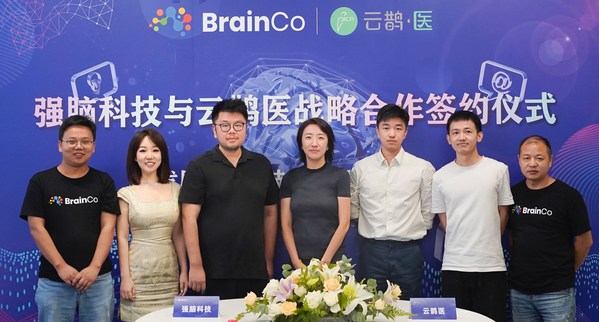
PICA and BrainCo Representatives Pose for a Group Photo
It was revealed that the two parties will continue to cooperate on products related to autism, sleep, and more in the future.
About PICA
PICA, incubated from WuXi AppTec in 2016, is a leading primary healthcare digital service platform in China. With the mission of "empowering grassroots healthcare and safeguarding people's health," PICA has pioneered a primary healthcare service model that integrates "education and training, doctor-to-doctor consultation, and preventive testing." Through five key aspects of health management—"early prevention and screening, doctor-to-doctor consultation, primary testing, primary medication, and follow-up rehabilitation"—PICA provides localized medical and health services throughout the entire life cycle of grassroots residents. As of June 2022, the PICA platform has covered over 410,000 grassroots healthcare institutions, with 2.6 million registered grassroots medical personnel, serving more than 800 million residents across China.
AboutBrainCo
BrainCo, founded in 2015, is the first Chinese team to be selected for the Harvard Innovation Lab. It aims to become a global leader in non-invasive brain-computer interface technology solutions and holds leading advantages in areas such as rehabilitation and human-computer interaction. BrainCo places technology at its core and research as its guide. It has a top-tier team of scientists in North America, with over 70% of its core R&D team comprised of outstanding alumni from prestigious institutions like Harvard and MIT. The company owns hundreds of core patents in the brain-computer interface field, around 60% of which are invention patents. Currently, BrainCo has launched joint brain-computer interface research projects with the National Center for Autism Rehabilitation Research under the China Rehabilitation Research Center and the Shanghai Children's Medical Center affiliated with the School of Medicine at Shanghai Jiao Tong University, which is part of the National Children’s Medical Center, to support research on children's brain development.