

RuiXin-FFR Prescribed for the First Time Across Multiple Regions, Marking a New Era of Large-Scale Clinical Adoption of Non-Invasive CT-FFR in Precision Cardiovascular Care

RaysightMed
Medical Imaging Product Developer
Recently, VCBeat learned that Beijing Hospital has achieved the first CT-FFR non-invasive coronary blood flow reserve fraction measurement using "RuiXin-FFR" (RaysightMed-FFR), further validating the value of its solution.
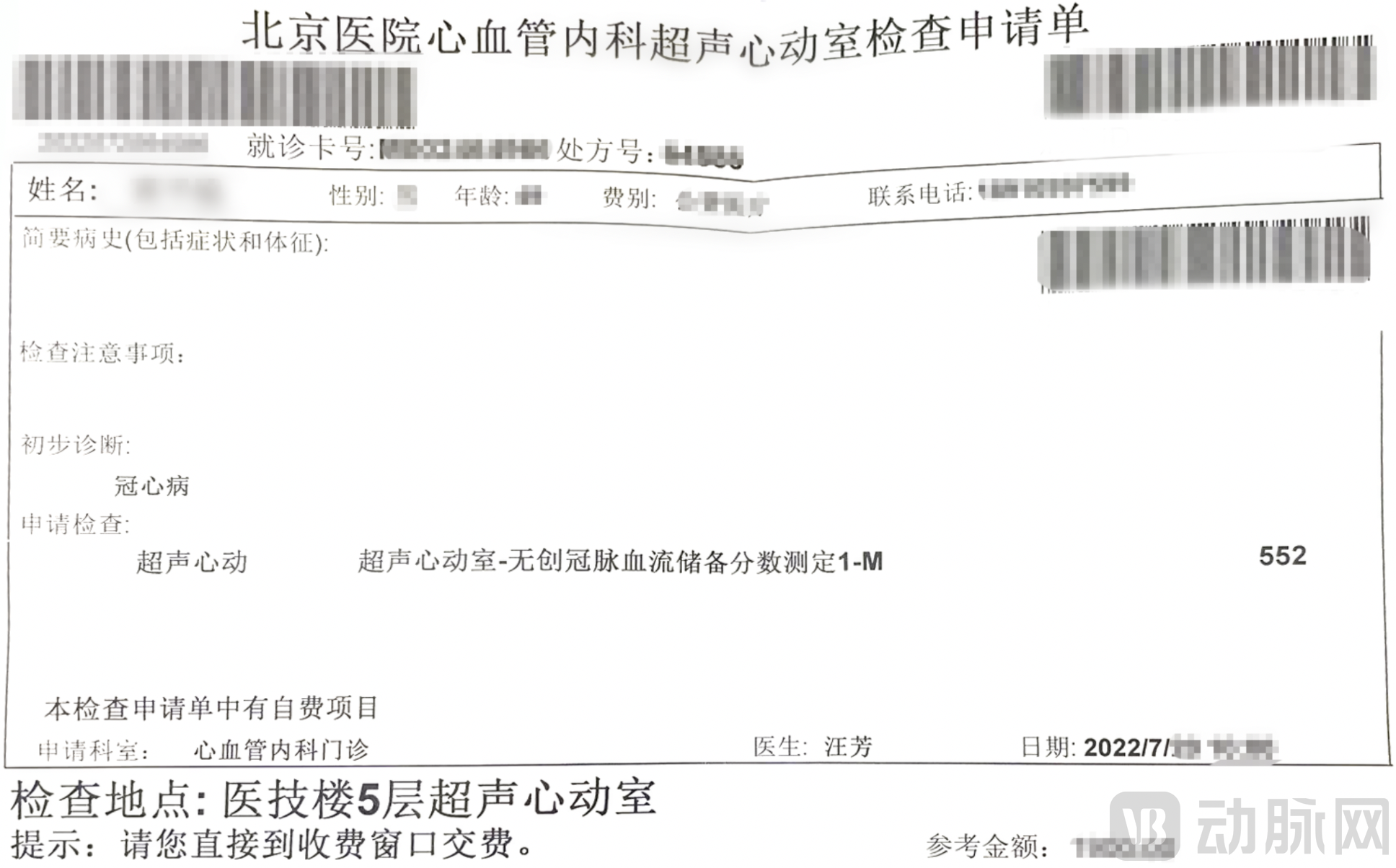
Photo shows Dr. Wang Fang, Director of the Department of Cardiology at Beijing Hospital, issuing the first "RuiXin-FFR" prescription in Beijing.
It is reported that, in addition to Beijing Hospital, "RuiXin-FFR" – a non-invasive coronary artery blood supply function assessment platform – has been applied in more than 600 hospitals and institutions.
CT-FFR determines the hemodynamic characteristics of coronary artery stenosis by reprocessing standard coronary CT angiography. Because it does not require obtaining additional imaging data or using medication to create a stress state, it is favored by clinicians. Since the development and application of CT-FFR technology, multiple studies on its clinical accuracy have validated its value.
In order to clarify the actual development of CT-FFR, VCBeat will analyze the future large-scale clinical application of medical AI from two perspectives: the clinical value of CT-FFR products and their commercialization path.
"There are many causes of myocardial ischemia. It may be triggered by the narrowing of large arterial vessels or caused by microcirculatory disorders. In addition, functional abnormalities related to arteries, such as spasms in large or small vessels, can also lead to myocardial ischemia. In short, there are numerous causes of myocardial ischemia, and it is not easy to accurately find corresponding evidence of myocardial ischemia." At the beginning of our conversation, Professor Wang Fang, Director of the Cardiovascular Medicine Department at Beijing Hospital, pointed out a major pain point in the diagnosis and treatment of coronary heart disease.
In the past, to find more sufficient and accurate evidence of myocardial ischemia and determine which treatment method was better for the patient, doctors typically needed to measure FFR using a pressure wire in addition to imaging methods in order to functionally assess the vascular condition.
The measurement process not only requires the use of vasodilator drugs such as adenosine triphosphate to induce maximum hyperemia in blood vessels, but also involves the insertion of a pressure wire. The detection time is relatively long, the operation process is complex, and the cost of consumables for each pressure wire is around 10,000 yuan, imposing significant physiological and economic burdens on patients.
The birth of CT-FFR has, to a certain extent, solved this pain point.
CT-FFR Assisted by Artificial Intelligence Technology Will Play a Synergistic Role in Morphological and Functional Coronary Diagnosis, Improving Diagnostic Accuracy While Reducing the Post-processing Reconstruction Time from Several Hours to Minutes, Without Causing Trauma to Patients.
Professor Wang Fang stated"CT-FFR not only compensates for the limitations of traditional imaging examinations, allowing doctors to make more accurate diagnoses, but also calculates the ratio of maximum blood flow in a stenotic epicardial coronary artery to the maximum blood flow supplied by the same normal coronary artery to the myocardium using specific imaging equipment in a non-invasive manner. This identifies the causes of myocardial ischemia from a functional perspective. Clinically, CT-FFR improves diagnostic accuracy, reduces diagnostic time, and avoids causing trauma to patients, effectively preventing over-treatment. It holds significant clinical value."
The demand and value exist, but what is the economic value for hospitals? Do hospital administrators have the motivation to meet the needs caused by resource shortages?
After communicating with Professor Wang Fang, VCBeat learned that among patients undergoing coronary angiography, about 50% actually do not need interventional surgery. This fact further results in millions of unnecessary coronary angiography procedures each year, imposing a severe burden on doctors, patients, and healthcare expenditure. Preoperative examinations for coronary heart disease patients using methods such as CT-FFR can effectively address this issue.
In the past, not performing angiography might have caused economic losses for hospitals. However, with the implementation of policies like DRG and medical services,CT-FFR services not only meet current and potential clinical needs but also enhance the overall health economics performance of hospitals, reducing the total cumulative healthcare cost per patient.If the patient's test is negative, the angiography step can be omitted. This way, the patient can spend less money and receive more precise diagnosis and treatment services.
Whether it is healthcare reform policies or technological advancements, both are driving the transformation and upgrading of traditional medical paradigms toward the goals of "minimizing iatrogenic harm" and "maximizing health benefits" to a certain extent.The emergence of CT-FFR will significantly enhance the accuracy and controllability of cardiovascular disease in prevention, diagnosis, and treatment processes.
In April 2021, "RuiXin-FFR," a non-invasive coronary artery blood supply function evaluation platform independently developed by RaysightMed, obtained the Class III medical device registration certificate approved by NMPA, gaining market access qualification.
Based on morphological information, this product provides functional information such as vascular blood supply assessment, and the evaluation of vascular plaque development and rupture risk, reducing clinical misdiagnosis and missed diagnosis rates, and decreasing unnecessary coronary angiography.
After validation through a prospective clinical trial involving 330 cases, the accuracy rate of vascular function assessment by "RuiXin-FFR" reached 92%, with specificity at 90% and sensitivity at 95%. This technology has also been approved by the National Medical Products Administration as an innovative medical device. It is reported that Beijing Hospital, one of the cooperation centers for the clinical trial of "RuiXin-FFR," is part of this collaboration.
On July 13, the Beijing Municipal Medical Insurance Bureau issued the "Notice on Printing and Distributing the Management Measures for Excluding Payment of New Drugs and New Technologies under CHS-DRG (Trial)"The DRG exception payment method was proposed, which clearly states that innovative drugs, innovative medical devices, and innovative medical service projects can be paid separately based on actual costs, without following the DRG payment method.RaysightMed's independently developed "RuiXin-FFR" is among them.

Innovative medical devices approved by the National Medical Products Administration
Excerpt only
The implementation of this policy, combined with the previous revision and release by the National Medical Products AdministrationSpecial Review Procedure for Innovative Medical Devices, as well as the document issued by the General Office of the Shanghai Municipal People's GovernmentSeveral Opinions of the General Office of the Shanghai Municipal People's Government on Promoting the High-Quality Development of the City's Biomedical Industry(hereinafter referred to as the "Opinion") and other policies will bring more benefits to the development of innovative medical devices.
The "Opinions" propose to launch a pilot program for purchasing AI-assisted diagnosis systems as a service, allowing pilot hospitals to contract with service providers to purchase technical services for AI-assisted diagnosis systems that have obtained Class III medical device registration certificates.And require pilot hospitals to purchase services to address clinical application effectiveness and conduct health economics evaluations, pay service providers based on system usage frequency, and implement favorable policies such as annual total payment control.
At the same time, the opinions also proposedRegarding the implementation of more targeted support measures, such as optimizing and innovating the hospital entry process for products, supporting the initial purchase and application demonstration of innovative products, and strengthening the application support of the medical insurance system, to promote the application of innovative products.
Obviously, driven by policies, the market will see more demand. Companies with innovative technologies will be able to achieve more reasonable returns while accelerating their growth to fill market gaps. The clinical effectiveness of innovative medical devices and the validation of product innovation will lay an important foundation for their large-scale implementation.
From April 2021, when RaysightMed obtained certification with its "Coronary CT Blood Flow Reserve Fraction Calculation Software," to the present, where this solution has been selected as one of the innovative medical devices approved by the National Medical Products Administration (NMPA), the technical value of RaysightMed has been validated. In the future, with further release of market demand and policy support, the large-scale commercialization of "RuiXin-FFR" (RaysightMed's FFR) becomes possible. According to reports,The product has completed clinical collaborations with hundreds of hospitals.
RaysightMed Has Many Thoughts and Experiences on the Development and Commercialization Path of Artificial IntelligenceRaysightMed CEO Zheng Lingxiao stated: "The completion of the AI approval process only means that the product is gradually moving towards the mature stage. There is still a lot that companies can do regarding aspects such as pricing access and medical insurance access."
AI companies need to continuously seek new growth potential, and the field of coronary heart disease is a high-value track.HeartFlow's development model has also brought many insights to the industry. We firmly believe that entering the price catalog for technical service settlement, as well as developing parallel new application scenarios, may become feasible methods to help artificial intelligence companies effectively expand their scale."
In fact, since the AI medical imaging diagnosis track obtained the first Class III certificate in 2020, the number of related product approvals has continued to increase. The streamlining of the approval process has not only laid the foundation for the large-scale commercialization of artificial intelligence solutions but also provided the core driver for AI healthcare companies to achieve exponential revenue growth in the future.
In terms of market space, the mortality and prevalence of coronary heart disease are both relatively high. According to data from the "Report on Cardiovascular Health and Diseases in China (2020)," the total number of cardiovascular disease patients in China alone exceeds 330 million. Moreover, this disease is often accompanied by complex lesions, making treatment highly challenging.
From the perspective of track potential, the cardiovascular field has high technical barriers, expandable commercialization scenarios, and strong late-stage momentum.
Since vascular interventional surgery is a procedure that demands high precision and heavily relies on the operator's skills, improving the treatment of coronary heart disease requires not only breakthroughs in minimally invasive techniques such as interventional therapy by industry participants but also advancements in evaluation technologies for coronary heart disease—including anatomy and physiology—to assist doctors in assessing the degree of coronary artery stenosis and blood supply function. This addresses the issue of under-treatment or over-treatment of coronary heart disease patients under traditional diagnosis.
From the perspective of AI products that have currently passed NMPA approval, many products at this stage still fall short of providing "closed-loop value" to users in specific scenarios in terms of functionality. Comprehensive development is required, along with deep integration into specific scenarios and an all-around upgrade. While expanding the range of diseases their products cover, companies should also attempt to broaden their market focus.
After careful analysis, it is not difficult to find that the reason why RaysightMed's solutions have gained favor from many hospitals is not only because its accuracy rate for vascular function assessment is 92% (currently the highest level globally), but also becauseThe company has incubated a series of products such as "RaysightMed Coronary Intelligence Post-processing Platform," "RuiXin-FFR," and "Intelligent Operating Room," establishing a product system covering screening, diagnosis, and treatment of cardiovascular and cerebrovascular diseases.
RaysightMed is building a complete ecosystem for integrated hardware and software in cardiovascular and cerebrovascular diagnosis and treatment, supported by advanced algorithms and hardware. It provides an all-in-one platform covering the entire disease process: from imaging screening, intelligent diagnosis, surgical planning, real-time navigation and imaging guidance during operations, robotic-assisted surgery, to follow-up and re-examination for prognosis.
Through the case of RaysightMed, it can be seen that in order to gain a competitive edge and achieve large-scale commercialization, it is necessary to deepen the iteration of core technologies while focusing on the main product line. This involves intensifying the layout and R&D efforts of related pipelines, broadening and deepening product application scenarios to uncover new growth opportunities. In this way, the future profitability of AI medical enterprises may not be far off.