

Riding the New Wave of Biopharmaceutical Innovation: Core Logic and Strategic Pathways | Honghui Fund CEO Summit

VelaVigo
Innovative Drug Developer

Artivila Biopharma
Innovative Drug Developer

Anlong
Gene Therapy Drug Developer
On August 4, the 2022 Taihu Bay Life Health Future Conference and Honyin Fund CEO Summit was grandly held in Wuxi.
At the summit, Founder of Base Therapeutics Xu Tianhong, Founder of Orange Sail Pharmaceuticals Li Jing, Founder of Artivila Niu Deqiang, Founder of Anlong Zhao Chunlin, Chief Business Officer of Yuanqi Pharma Shao Xianghong, Vice President of Megason Zhou HeRegarding《Challenges and Opportunities in the Innovative Development of BiomedicineThis topic was discussed and exchanged in depth,Hillhouse Capital Zhou XinAct as the host.
It is worth mentioning that the above six companies cover fields that encompass both classic and emerging tracks in the current innovative drug industry, including small molecules and large molecules, cell therapy, gene therapy, small nucleic acid drugs, AI drug development, and emerging fields related to migrasome-associated drug research and development.
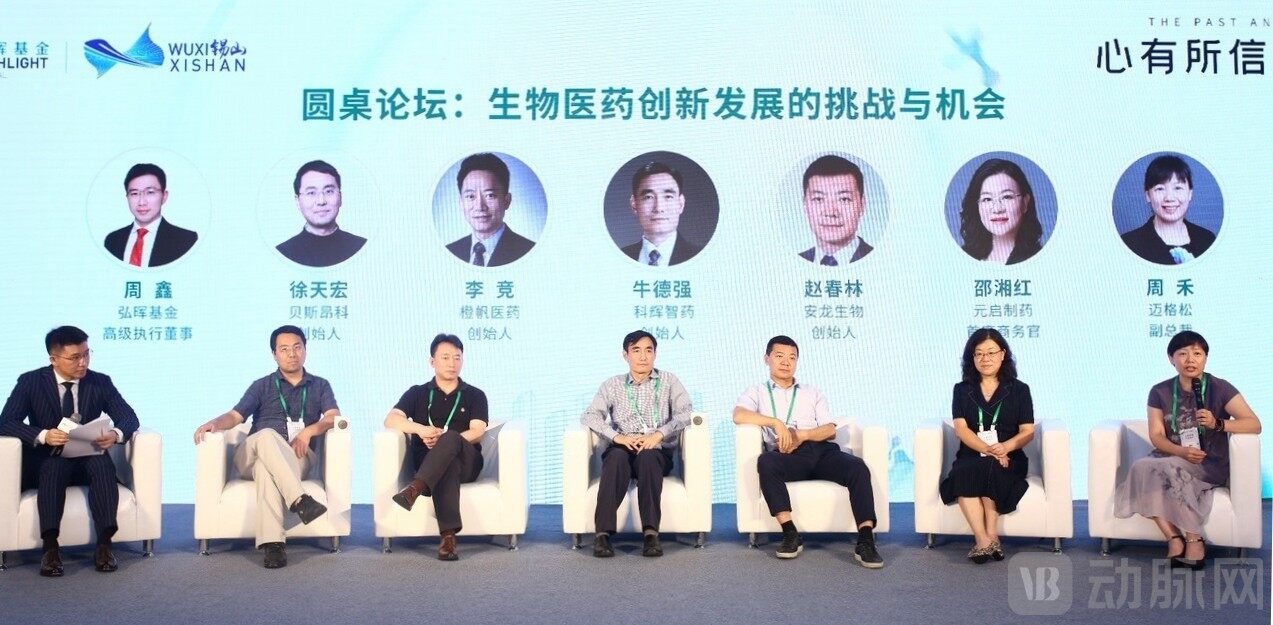
As the wave of biopharmaceutical innovation rises again, what underlying logic and action paths should companies within the industry have? What sparks will their dialogue ignite? VCBeat has compiled the following insights from the event.
Hillhouse Capital Zhou Xin:Gene editing and NK cell therapy are very popular. Dr. Xu, when you founded Base Therapeutics, how did you consider combining these two? What are their advantages?
Founder of Base Therapeutics, Xu Tianhong:Base Therapeutics focuses on底层 editing technologies such as base editing and prime editing, which have a wide range of application scenarios. Our current applications are mainly in two directions: one is NK base editing, and the other is ophthalmic base editing therapy.
Especially in the NK field, our team has been working on gene editing since 2014, and later advanced to base editing NK. Therefore, after our company was established, the most cutting-edge development has been in base editing NK. Notably, our base editing entered clinical treatment last Friday. Currently, the advanced liver cancer patient has not experienced any side effects and has shown excellent tolerance. This should be one of the leading base editing NK products to enter clinical trials internationally, as to our knowledge, a U.S.-based company targeted the liver for PCSK9 elimination two weeks ago.
First, let me briefly explain why base editing was first applied to NK cells. We considered two aspects: the first is safety. We know that for new biotechnologies like gene editing, whether from a regulatory perspective or drug development standpoint, safety is the primary concern. The application in NK cells is evaluated as the safest scenario. Firstly, it involves ex vivo editing, which allows for additional quality control standards.
Actually, NK cells are responsible for clearing mutated cells, so our biggest concern is their off-target effects. If they do go off-target, the resulting mutated cells will be cleared by the NK cells. Therefore, with safety in mind, we initially opted to use NK cells.
Another consideration is that for NK, the use of base editing best aligns with biological properties and can maximize the function of NK. This method was also the first to be adopted internationally, even including the application of gene editing. Therefore, we named it Super NK at the time.
Hillhouse Capital Zhou Xin:You have provided the industry with excellent ideas. Do you think the competition in this field will become increasingly intense in the future?
Founder of Base Therapeutics, Xu Tianhong:Now we see that several companies have started to lay out plans in the direction of gene editing or base editing NK. However, there are two major barriers in this field. One is the barrier of gene editing technology; editing technology has very strong patent barriers, and without patented technology, progress is difficult. Base Therapeutics owns the core underlying base editing patent technology. The other is the research on NK itself and the selection of targets, as well as the patent barriers of corresponding products, among others. These two barriers determine that this field will not become too crowded.
Hillhouse Capital Zhou Xin:Thank you. The next question is for Dr. Zhao. Our company also spans across the two very popular fields of gene therapy and small nucleic acids. In your opinion, what are the future difficulties and challenges in terms of R&D and commercialization for these two fields?
Anlong Founder Zhao Chunlin:In fact, many investors have asked me this question. Anlong's positioning is to be the leading enterprise in China's gene drug industry, focusing on large-market products within the new technology platform of gene drugs. Currently, there are only a few products in gene therapy and small nucleic acid drugs, which have presented opportunities for Anlong. After years of investment experience, I find that investors generally fall into two categories: those targeting the market and those targeting innovation. In my opinion, it's very challenging to develop innovative drugs domestically. If you look at biology labs abroad, more than half of the researchers are Chinese, another significant portion are Indian, with very few Americans involved. Although we contribute heavily to scientific research, when it comes to actual new drug development, the first hurdle is getting approval from the CDE (Center for Drug Evaluation), followed by difficulties for doctors to adopt it, and then challenges with securing high reimbursement rates from the health insurance bureau. Therefore, I believe that in China’s biopharmaceutical sector, one must focus on products with large markets. And for such large-market products, relatively mature technologies are required. Anlong positions itself in gene drugs because the markets for mature technologies have already been largely taken by other companies. As an investor, I want to enter a new field.
There are few products with large markets in new fields, and in the AAV field, most focus on rare diseases. I believe the market for rare diseases in China is very challenging because payers are unlikely to cover high costs.
So I chose wet age-related macular degeneration as a large market within AAV. The next step might be dry age-related macular degeneration, but the principle hasn't been proven yet, and the risk is significant. I think nucleic acids are a pretty good field.
Where are the difficulties? I will take the lead, and everyone else can follow. This technical threshold will be quickly lowered. In the future, the competition in clinical and market aspects will be more demanding. I am not strong in technology, but I excel in these later stages. Perhaps all of you here are American Ph.D.s, returned overseas students, or have entrepreneurial experience, but you may not have worked as agents or in sales. I started by selling instruments one by one on the streets with a backpack. In terms of external cooperation and commercialization, I can handle both high-level negotiations and practical operations—this is my strength.
Hillhouse Capital Zhou Xin:In the face of the epidemic impact, what countermeasures and suggestions do you have?
Founder of Orange Sail Pharmaceuticals, Li Jing:This year, the pandemic has indeed been a significant challenge. We are constructing a 5,000-square-meter R&D building, but the entire construction schedule has been delayed, causing considerable impact. This includes timely communication with suppliers regarding already purchased instruments and equipment to arrange schedules properly and minimize losses while accelerating progress on the basis of ensuring quality. Additionally, we have made some adjustments to the speed of talent recruitment. Even so, up to now, the development of the company’s entire team has still been very rapid. We now have a team of 35 people, but because the R&D building is not yet ready, we have made three major adjustments.
The first aspect is project-related. We will strengthen external cooperation and leverage our partners to advance the projects. Initially, we collaborated with partners from the Yangtze River Delta region. However, after the impact of the pandemic in Shanghai, we expanded our partnerships to include collaborators from the Pearl River Delta region, as well as other partners unaffected by the pandemic, allowing more partners to assist us in driving the projects forward. Therefore, in this regard, we have not been significantly affected by the pandemic.
The second aspect is that we have established the Orange Sail Scientist Growth Training Camp for talent development. We place newly hired employees with our (close) partners, allowing them to help train these employees. Meanwhile, these employees also provide research and development support to the partners. The Orange Sail Scientist Growth Training Camp has significantly aided in our employee onboarding training and project advancement. For us, the employees, and the partners, it's a win-win situation for all three parties.
Thirdly, we have extensively carried out BD cooperation. Our CBO, Dr. Zhang, has conducted extensive project research with potential partners in China and the United States, and held many online meetings. This is not affected by the epidemic, so we are also actively seeking more opportunities to lay the foundation for future success.
Artivila Founder Niu Deqiang:If the people you recruit are highly capable and can operate independently, the impact on the company is actually not significant, especially since there are many CRO companies available for use in China. With a strong initial team, even if the founder is stranded in the U.S. due to the pandemic, you can guide and communicate through online meetings, and they can direct the CROs to conduct chemistry and biology tests. For the first few months, there’s basically no need for much of our hands-on involvement; we just need to focus on strategic planning.
Shao Xianghong, Chief Business Officer of Yuanqi Pharmaceutical:Timely communication within the team and with CROs during the pandemic is crucial. Our team is mainly based in Suzhou, while some CRO partners are located in Shanghai. During this period, the work of CROs has indeed been somewhat affected. Timely and real-time communication helps in evaluating and advancing the work of CROs. For instance, if a CRO has multiple office locations, could the work be transferred from Shanghai to Beijing or Guangzhou? Additionally, as our company team expands, some experiments can be brought back and directly carried out by the team, minimizing the impact of the pandemic on project progress.
Hillhouse Capital Zhou Xin:In recent years, there have been many innovative companies in the AI pharmaceutical field both in China and overseas. Dr. Niu, as an expert in pharmaceuticals, how do you think AI can help in drug development? What are some valuable entry points?
Artivila Founder Niu Deqiang:AI is a very broad concept that can be applied throughout the entire drug development process. For small-molecule new drug research and development, the most powerful applications are in data analysis, big data mining, machine learning, automatic compound design, prediction of compound activity and other properties, etc. Based on sufficient experimental data, it is not necessary to synthesize a large number of compounds; instead, AI can be used to predict compound activity, properties, binding patterns, and more.
The research and development of new drugs is a highly complex process that involves multiple stages, each with different focuses. It starts with the discovery of lead compounds, followed by lead optimization, which in our profession is called "lead optimization." Since these stages are interconnected, it is impossible to optimize each one individually and then maintain them all in an optimized state. Therefore, given such a complex system, drug development remains an experimental science, and completely solving it with AI at this stage is extremely difficult. Perhaps after many more years of development, when computing power and algorithms have significantly improved and enough data has been collected, it might be achievable.
Our company emphasizes AI + HI. I work in medicinal chemistry, and our co-founder specializes in computational chemistry and AI data analysis. Through 12 years of collaboration on dozens of projects, we have discovered that this combination allows for the seamless integration of AI and drug development expertise (HI), making new drug research more efficient and less resource-intensive.
Hillhouse Capital Zhou Xin:Due to the impact of regulatory collection and procurement, the future space of the domestic market is squeezed to a certain extent. Going overseas seems to be a way to break the deadlock. What are your plans for going overseas? What kind of path do you want to take to go global?
Founder of Base Therapeutics, Xu Tianhong:Base Therapeutics was positioned for the international market from the very beginning, so our products are globally innovative whether from the underlying technology level or the indication level. Our current plan is to file for approval in both China and the U.S., and whichever gets approved first will start clinical trials there. For innovative products, especially those targeting rare diseases, if we only focus on the domestic market, the commercialization path will be quite narrow. Therefore, it's essential to consider the competitiveness of our product in foreign markets.
Artivila Founder Niu Deqiang:There are some very new targets that carry high risks to develop domestically. If companies can't manage them on their own, they can negotiate with large foreign pharmaceutical enterprises. Project collaborations and acquisitions are rare in China but are quite common overseas. However, the premise is that what you’re working on has to be innovative. Early communication with large pharmaceutical companies is key—let them handle the international market at the right time while we focus on the domestic market. We can follow in their footsteps to reduce risks.
Founder of Orange Sails Pharmaceuticals, Li Jing:Going Global is Necessary, but the Key is to Improve the Quality of Project Initiation to Reach Global Standards, for Two Reasons. First, China's pharmaceutical market actually accounts for 10% of the global market, not as large as we might think. If enterprises want to grow bigger, 90% of the market is outside China. It is essential to align with global standards and enhance global competitiveness to have a chance. Second, China’s biopharmaceutical companies must not only face the global market but also the highly competitive domestic market, which is crucial. Even if you aim to capture the Chinese market, given the intense competition in China, if your level does not reach global standards, you will be outcompeted. Therefore, even if you only want to survive in the 10% domestic market, you must possess the capability to go global.
Shao Xianghong, Chief Business Officer of Yuanqi Pharmaceutical:Yuqi's R&D pipeline aims to address unmet clinical needs globally, with an international R&D team and operations in both China and the U.S. Going global is a key objective for Yuqi. The R&D team may focus more on internal project data, and there will be extensive discussions on technologies related to targets. From a business development (BD) perspective, especially when aiming to license the overseas rights of our projects to large multinational pharmaceutical companies, looking outward is crucial.
The first thing to look at externally is that when we evaluate projects, we first consider whether the project can meet the currently unmet global clinical treatment needs. In addition to referring to guidelines, secondary analysis reports, data, etc., we especially recommend communicating and discussing with clinical experts, which will be more targeted and better meet the unmet clinical treatment needs.
The second external perspective is the analysis of the competitive environment. In the corresponding target or indication treatment field, apart from existing treatments, what kind of scenario will be presented by ongoing projects and new technologies in the future? What kind of competition will arise? Whether the projects under evaluation are competitive—this is the second external perspective.
The third point, as Li Bo mentioned earlier, is to communicate and interact more with potential future partners at an early stage. One reason is to better understand their needs, as each large pharmaceutical company has its own pipeline strategy, including a clear plan based on the overall pipeline strategy of the company. They have well-defined external cooperation strategies—what kind of projects they are looking for, at what stage they hope to in-license external projects, and so on. Large pharmaceutical companies generally have clear internal plans, and communicating with them earlier is crucial for planning internal R&D projects. Additionally, during the communication process, large pharmaceutical companies often share their analyses and insights into specific disease areas, expectations for TPP (Target Product Profile), and data requirements, all of which can be helpful for subsequent formal collaboration discussions.
Hillhouse Capital Zhou Xin:Finally, I would like to ask Dr. Zhou, what opportunities and challenges do you think Magnotron faces when conducting research in cutting-edge fields?
Vice President of Magasonic, Zhou He:Maigson mainly focuses on drug development based on migrasome biology, a very new field with many challenges and opportunities. I have two main reflections, both of which are both challenges and opportunities.
First, as a new field, the challenge of migrasome biology lies in many unknowns, especially the lack of clinical data. However, as a new field, it also holds enormous potential for exploration, and every step could lead to a breakthrough. A migrasome is essentially an organelle produced by a cell during migration, mediating the transfer of information between cells. Our company is currently focused on developing treatments for diseases caused by either excessive or insufficient production of migrasomes. Additionally, migrasomes are a naturally evolved, highly efficient delivery system. How we can utilize such a perfect delivery system is a key question. Another focal point of our research is leveraging migrasomes for drug delivery. Because the field is so new, even small discoveries can be expanded into significant advancements, all of which have the potential to become breakthroughs.
The second point is that challenges and opportunities arise as we enter a new field with much to be done. The challenge lies in the field's unlimited potential, while the company's human resources are limited, requiring us to determine what to prioritize. In response to this situation, we have first identified diseases caused by mitochondrial abnormalities as an early R&D breakthrough and positioned the delivery system as a mid-to-long-term development breakthrough for gradual advancement. Additionally, the data and milestones generated during this process will attract more collaborations, which in turn will enhance and refine our existing technical products.
Hillhouse Capital Zhou Xin:Are migrasomes targeted?
Vice President of Maigson, Zhou He:Yes, migrasomes are vesicle-like organelles that are pulled out from the cell during cell migration. Their outer membrane is a specialized cell membrane with reinforced components. Additionally, due to the presence of microstructures like lipid rafts, many adhesion factors are enriched on migrasomes, enabling targeted delivery.
For example, I used to pay close attention to tumor metastasis. Years ago, there was a theory called "pre-metastatic niche," which suggested that before tumor cells metastasize, they prepare the distant organ in advance. For instance, if a tumor is going to metastasize to the lungs, it first creates an environment in the lungs that is conducive to tumor growth. In the past, this theory couldn't explain how tumor cells achieved this because the secreted factors would have the highest concentration around the tumor itself, and it was difficult to explain how they could take effect at a distant site. However, with the concept of migrasomes, we can now understand that it might be migrasomes that are delivered to the distant organ where they release their contents to attract the necessary cells for establishing a pre-metastatic microenvironment. So, I think there's a lot to explore, and it's very exciting.