

Medlander Medical Technology Debuts on STAR Market, Focused on Pelvic Floor Rehabilitation

Medlander
Developer of Intelligent Pelvic Floor Rehabilitation Diagnosis and Treatment System Products
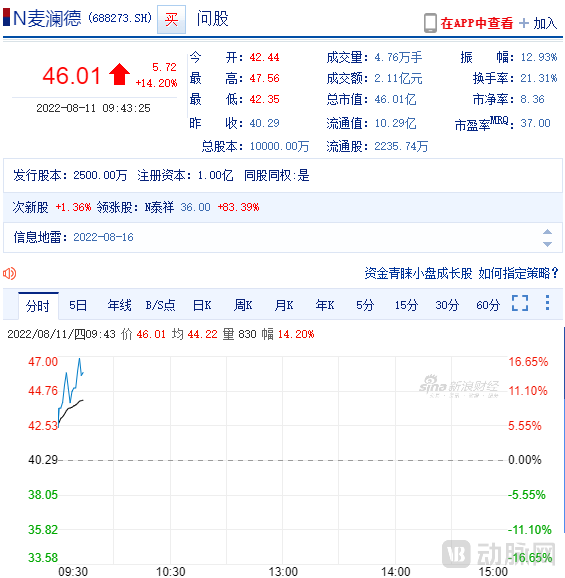
On August 11, Medlander Medical Technology Inc., a leading high-end medical device company in the field of pelvic floor and gynecological rehabilitation in China, was officially listed on the STAR Market. The ancient capital of six dynasties has added another STAR Market listed company. The issue price of Medlander was 40.29 yuan, with an opening price of 42.44 yuan. As of press time, the stock price was 46.01 yuan, an increase of 14.2%, with a market value of 4.6 billion yuan.
Medlander focuses on the research and development and industrialization of high-performance intelligent pelvic floor rehabilitation and treatment system products, providing a one-stop comprehensive solution for patients with pelvic floor dysfunction (PFD). The products have been widely used in nearly 8,000 medical institutions and postpartum care institutions across China.
How many women are aware of the physical abnormalities after childbirth?
How many new mothers pay attention to postpartum physical recovery?
From both commercial and capital perspectives, the maternal and child industry is a key focus worthy of attention. However, in the past, the industries under the spotlight, whether it was assisted reproduction, non-invasive screening, or maternity hospitals, have all concentrated on the prenatal and intrapartum stages, while the postpartum stage has been intentionally or unintentionally overlooked.
The reality is that, women in the postpartum period have a strong demand for rehabilitation.
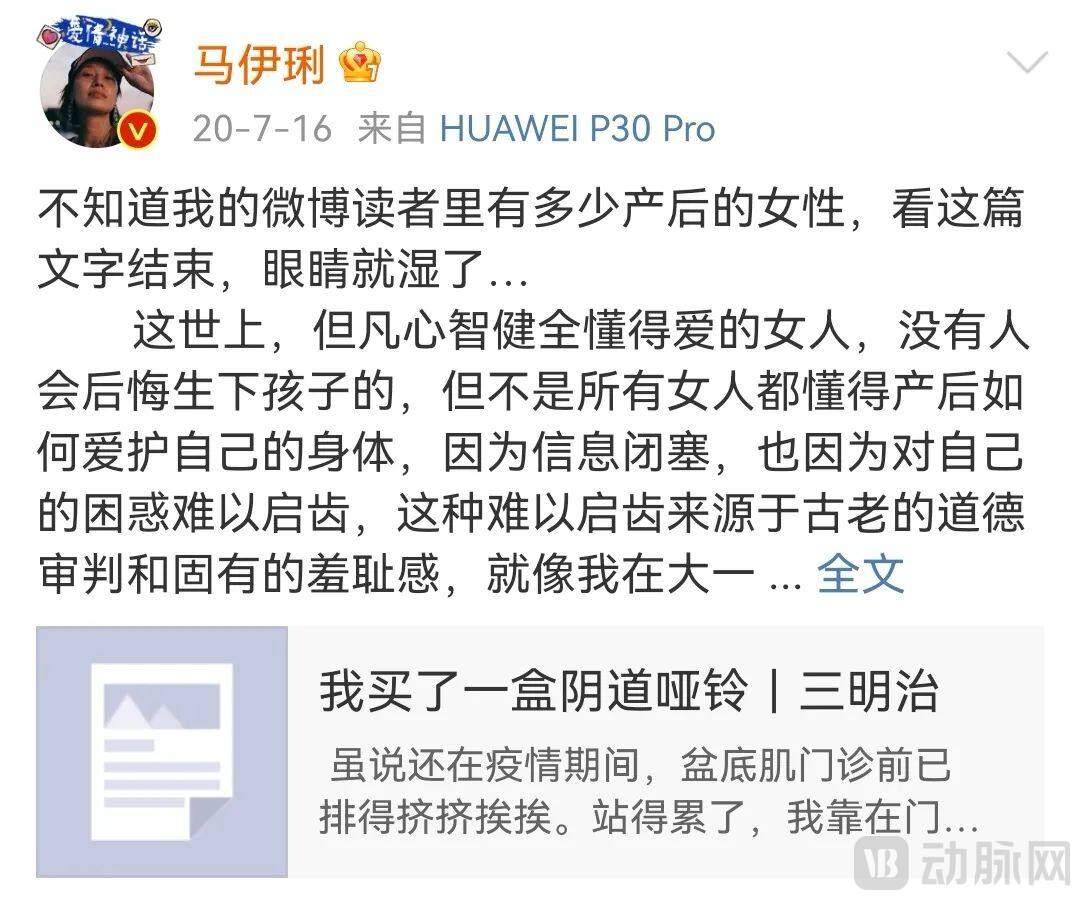
Screenshot of Ma Yili's Weibo
Female star Ma Yili once shared the "hidden pain" of women after childbirth on Weibo. She said: "Any woman who is mentally sound and knows how to love will not regret having children, but most women do not know how to take care of their bodies after giving birth."
The long process of pregnancy and childbirth can have a significant impact on the physiological and psychological well-being of mothers. Especially after 20 weeks of pregnancy, the weight of nearly 20 catties (approximately 10 kilograms) from the uterus, fetus, and amniotic fluid presses on the pelvic floor muscles, causing damage to these muscles. Furthermore, perineal tears or episiotomies during vaginal delivery can further injure the levator ani muscle group of the pelvic floor, leading to a series of pelvic floor dysfunction disorders (PFD).
PFD leads to a series of diseases involving abnormal organ positioning and functional disorders, including urinary incontinence (UI), pelvic organ prolapse (POP), defecation disorders, and sexual dysfunction, among others. Additionally, pregnancy can also cause issues such as abdominal muscle laxity and stretch marks in women.
When women are pregnant, many people teach them how to maintain a healthy pregnancy; however, after they give birth, few remind them of the need for timely "postpartum rehabilitation."
Postpartum Rehabilitation: An Important Category in Rehabilitation Medicine
To address the aging population, the country has implemented a three-child policy, encouraging families who are able to have three children. For women who have gone through childbirth, reducing the risks associated with childbirth makes postpartum recovery even more important. Additionally, the increase in maternal age has objectively driven the growing demand for postpartum recovery among women having subsequent children.
Medically, it is generally believed that the optimal childbearing age for women is between 24 and 30 years old, which means that post-90s generations are currently the main childbearing population. According to data from the "2020 Chinese Family Childbearing Methods White Paper" released by Babytree in 2021, the current population of new mothers in China is mainly composed of post-85s and post-90s, accounting for an overall proportion of 70.8%. Among them, the proportion of post-95s mothers is increasing annually by about 4%, approaching nearly 20%.
Post-85s and post-90s generations, with higher education levels, strong health awareness, and high self-focus, are gradually recognizing and overcoming traditional misconceptions about childbirth. They pursue more scientific and systematic postpartum rehabilitation and are willing to pay for it.
With the development of the postpartum rehabilitation industry, its target population is also gradually expanding.
According to survey data collected by Beijing Union Medical College Hospital from 19,024 women aged 20-90 in six regions of China, the incidence rate of Stress Urinary Incontinence (SUI) among women aged 45 who have given birth is 40%, while the incidence rate among elderly women is as high as 70%. The occurrence rate of Urinary Incontinence (UI) increases with age.
According to the data from the thesis "Analysis of Factors Related to Pelvic Organ Prolapse" by Huazhong University of Science and Technology: Among 274 patients with pelvic organ prolapse (POP), 45.3% were under the age of 60, and postmenopausal patients accounted for the majority at 71.9%. Aging (age greater than or equal to 60) is a risk factor for uterine prolapse.
According to "Observation on Sexual Function Evaluation After Pelvic Floor Muscle Electrical Stimulation Combined with Biofeedback Pelvic Floor Muscle Training" published in Progress in Modern Obstetrics and Gynecology, the incidence of female sexual dysfunction is about 30%~50%. The incidence of female sexual dysfunction is related to age and shows a progressive development.
In other words, although the main target customer group for postpartum rehabilitation is women of childbearing age between 25 and 35, younger women and middle-aged to elderly women also have pelvic floor rehabilitation needs.
The industry barrier for postpartum rehabilitation is relatively low. In recent years, with the increasing awareness of postpartum rehabilitation among women who have given birth, the market scale has been expanding year by year, and various types of enterprises have entered this field. In addition to the original pelvic floor centers in public hospitals and private obstetrics and gynecology hospitals, newly emerging professional postpartum rehabilitation centers, medical aesthetics institutions, confinement centers, beauty salons, and massage and physiotherapy clinics have also started to venture into this area.
With the diversification of demand, medical institutions have expanded from solely providing rehabilitation programs for postpartum pelvic floor dysfunction (PFD) to offering body restoration, psychological rehabilitation, and even non-rehabilitation medical services such as beauty treatments, massage, and maternity and baby product stores; meanwhile, institutions without medical qualifications, such as maternity centers and beauty salons, have also adopted multi-format integrated operations.
Medical-Grade Postpartum Rehabilitation Center: Possessing a medical institution license, generally located in areas with better economic conditions. Small-scale institutions capable of providing both medical and non-medical services, serving the entire postpartum period.
Lifestyle Rehabilitation Center: Most of these postpartum recovery centers have evolved from beauty salons, lack medical qualifications, and focus on body shaping, beauty, and physical conditioning.
Postpartum Care Center: Most of the confinement centers are privately owned. The female customers within these centers have strong purchasing power and are easy to market to, but they lack professional medical qualifications, rehabilitation equipment, and rehabilitation talent.
Postpartum Rehabilitation in Private Maternity Hospitals: Targeting pregnant women who come to the hospital for delivery, the institution's reach is limited. Some hospitals provide medical-grade rehabilitation services by setting up separate confinement centers and postpartum recovery centers.
Postpartum Rehabilitation in Public Hospitals: A few hospitals have established pelvic floor centers, generally only offering pelvic floor muscle and pelvic repair with strong demand, often requiring queuing.
Other Postpartum Rehabilitation Institutions: Including beauty salons, massage, and maternal and infant care institutions, covering the surrounding communities, but lacking relevant medical qualifications, talent, and equipment.
From the perspective of terminal institutions, the postpartum rehabilitation industry is diverse, encompassing multiple attributes such as beauty, rehabilitation, and medical services, with strong industrial extensibility. However, the low entry barrier has also led to a large number of entrants, causing chaos within the industry. In the future, if services and treatment effects fail to meet the requirements of mothers, they will be eliminated in the competition.
There are numerous postpartum rehabilitation programs, mainly focusing on three aspects: diet, mental health, and exercise. In the exercise portion, solutions are targeted towards three major areas: the reproductive system, mammary glands, and body shape.
Among these, pelvic floor rehabilitation in the reproductive system is particularly important. The pelvic floor muscles in women are closely connected to many vital organs; as the saying goes, "A single pull on one hair can move the entire body." Damage caused by pregnancy and childbirth reduces the elasticity of a mother's pelvic floor muscles, potentially leading to consequences such as organ prolapse and urinary incontinence, affecting both the physical and mental health of the mother.
Pelvic Floor Rehabilitation Equipment: An Important Tool for Pelvic Muscle Exercise. Devices such as pelvic floor rehabilitation equipment fall under the category of medical devices, requiring compliance with various medical device standards. Both market entry and technical thresholds are relatively high. As a result, only a few medical technology companies compete in the market for medical-specialized rehabilitation equipment.
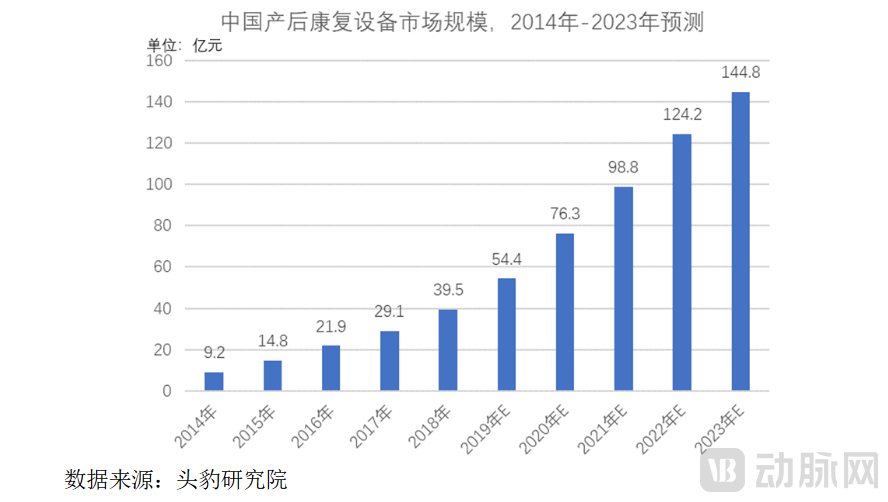
Market Size Forecast of Postpartum Rehabilitation Equipment in China, Sourced from the Prospectus
According to the disclosure in Medlander's prospectus, the market size of China's postpartum rehabilitation equipment industry (calculated based on terminal sales) rapidly increased from 920 million yuan in 2014 to 3.95 billion yuan in 2018, with an annual compound growth rate of 43.9%. In the future, China's postpartum rehabilitation equipment market will grow at a high annual compound growth rate of 29.7%, and it is expected that the market size will reach 14.48 billion yuan by 2023.
According to Frost & Sullivan data, the number of mothers in China in 2018 was 15.17 million. Meanwhile, according to the "2018 White Paper on Women and Children's Medical Institutions in China," by 2020, the number of women of childbearing age (20-35 years old) in China will reach 156 million. China has a large population of mothers and women of childbearing age, indicating a huge demand for pelvic floor and postpartum rehabilitation services.
In addition, according to the data from "Analysis of Related Factors of Urinary, Reproductive, and Pelvic Floor Functional Disorders in Middle-aged and Elderly Women in Beijing Communities," the prevalence rate of pelvic floor disorders among women aged (53.61±7.06) years in Beijing was 65.24% in 2018. With the continuous improvement of health awareness among middle-aged and elderly women and the high attention paid to pelvic floor disorders, an increasing number of middle-aged and elderly women will actively undergo pelvic floor rehabilitation treatment.
In the future, with the enhancement of residents' health awareness, the implementation of the three-child policy, and other factors, the market size of pelvic floor and postpartum rehabilitation medical devices in China will maintain a rapid growth trend.
As a common global women's health issue, PFD is considered one of the five major chronic diseases affecting people's quality of life. Since its establishment, Medlander has been deeply committed to the field of female pelvic floor rehabilitation diagnosis and treatment. It has independently developed a rich product line including a series of pelvic floor diagnostic and treatment equipment, postpartum recovery equipment, home-use devices, and matching consumables. These products have been widely used in the obstetrics and gynecology departments, women's health departments, gynecological clinics, pelvic floor rehabilitation centers, confinement centers, postpartum recovery centers, and maternal and child care centers of medical institutions.
Relying on years of industry experience, technical research and development capabilities, and channel expansion in the pelvic floor and postpartum rehabilitation fields, Medlander's business scale has continued to grow in recent years. Revenue increased from 143 million yuan in 2018 to 342 million yuan in 2021, with a three-year compound annual growth rate of 33.55%. During the same period, net profit attributable to shareholders rose from 55.99 million yuan to 118 million yuan, averaging an annual growth rate of 28.35%. The gross profit margin and net profit margin remained above 72% and 35%, respectively, indicating robust profitability.
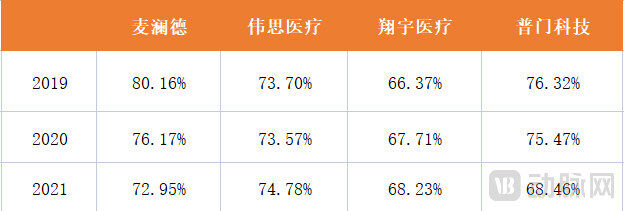
Comparison of Gross Profit Margin of Main Business between Medlander and Peers in the Past Three Years, Data from the Prospectus
In terms of revenue composition, Medlander's income mainly comes from two parts: pelvic floor and postpartum rehabilitation equipment, and consumables and accessories.
In 2021, pelvic floor and postpartum rehabilitation equipment generated revenue of approximately 212 million yuan, accounting for 62.69%, while consumable accessories represented by vaginal electrodes and vaginal probes achieved revenue of 99.4019 million yuan, accounting for 29.35%.
Rehabilitation equipment products can be further divided into three major series: pelvic floor diagnosis and treatment, postpartum recovery, and home use. 45.44% of Medlander's revenue comes from biofeedback stimulation devices, which are mainly used for pelvic floor diagnosis and treatment equipment in the hospital market.
Moreover, the sales scale and proportion of magnetic stimulators, which represent the cutting-edge technology in the industry, are increasing year by year. In 2021, the revenue reached 31.0969 million yuan, and the total revenue proportion has increased from less than 1% in 2018 to 9.10% in 2021, with an average annual growth rate of 273.80%. The postpartum recovery product series mainly includes pelvic floor exercisers and portable postpartum recovery devices, which are mostly used in professional institutions such as maternity centers and postpartum recovery centers. In 2021, the revenue was approximately 55.6425 million yuan.
The pelvic floor and postpartum rehabilitation device industry is a typical talent-intensive industry driven by innovation, with not only high technical, talent, and brand barriers but also thresholds for market entry.
Currently, there are not many companies in China that have obtained registration certificates for pelvic floor diagnosis and treatment equipment. Medlander has established a leading position in the industry by virtue of its technical research and development and brand advantages. It was successively recognized as a 2018 Nanjing Gazelle Enterprise and a specialized, refined, distinctive, and innovative "Little Giant" enterprise by the Ministry of Industry and Information Technology.
In terms of technology research and development, according to the prospectus, Medlander invested a total of 104 million yuan in R&D from 2019 to 2021, accounting for 11.14% of cumulative revenue. As of July 22, Medlander has obtained 7 Class I and 27 Class II medical device registration certificates, with some products receiving EU CE certification.
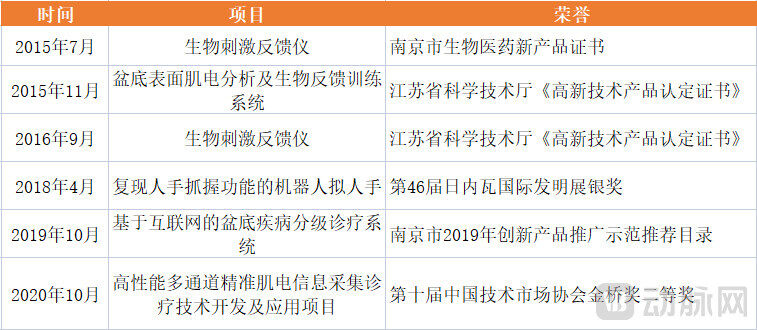
Some award-winning R&D projects, data from the prospectus
In specific products, Medlander's pelvic floor and postpartum rehabilitation equipment adopts a highly integrated design, capable of independent 8-channel electromyographic information acquisition, electrical stimulation, biofeedback, and one independent tension detection channel. During the assessment of pelvic floor muscle function, it can simultaneously detect the involvement of the lower back and abdomen muscles, gluteal muscles, and inner thigh muscles, and enable simultaneous pelvic floor screening evaluation or treatment for two patients, effectively improving medical efficiency.
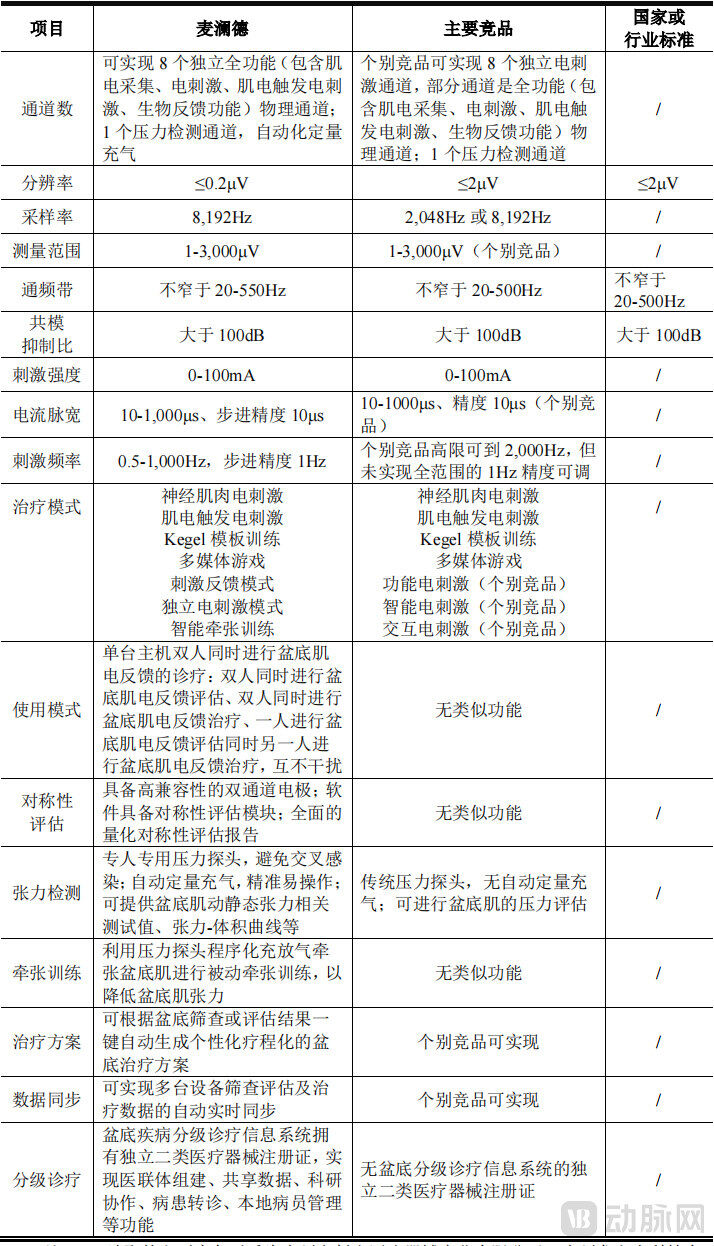
Comparison of Medlander Pelvic Floor and Postpartum Rehabilitation Equipment with Competitors, Source: Prospectus
As can be seen from the table above, Medlander's pelvic floor and postpartum rehabilitation equipment is more competitive in multiple performance indicators such as number of channels, resolution, sampling rate, measurement range, passband, current pulse width, stimulation frequency, and treatment modes. According to the prospectus, Medlander plans to raise 574 million yuan, of which 369 million yuan will be used for the construction of the headquarters production base, 152 million yuan will be invested in R&D center construction, and 52.9161 million yuan will be spent on marketing services and information construction projects. The construction period for all projects will be three years.
Childbirth is an unavoidable topic for women. Distorted expressions and heart-wrenching screams are followed by a loud cry that shifts attention away from the pain, replacing it with universal relief. This is the audio-visual portrayal of "childbirth" in film and television, but for women, reality is far more perilous.
In the technology era, the post-90s generation, who have become the main force in childbirth, are gradually recognizing and breaking through traditional misconceptions about fertility, pursuing more scientific and systematic postpartum rehabilitation. Medlander, which has successfully gone public on the STAR Market, will strive towards the grand vision of becoming "a world-class medical health company dedicated to women's health and beauty."