

Weiniao Technology Files IPO Prospectus: Pioneering EEG-Based Control Technology to Empower Stroke Patients' Self-Care

WEKNOW
Brain-Controlled Intelligent Hardware and Wearable Hardware R&D Manufacturer
In April 2019, CCTV4 International Channel reported a medical device innovation: Mr. Zhang, a stroke patient, used an innovative brain-controlled mechanical hand at Hangzhou Second People's Hospital to independently perform daily tasks, achieving self-care in daily life.
In August 2019, a patient in the Stroke Department of Shenzhen People's Hospital used a brain-controlled robotic hand to perform actions such as drinking beverages, washing, and self-massage.
According to reports, the brain-controlled mechanical hand applied at Hangzhou Second People's Hospital and Shenzhen People's Hospital was independently developed by WEKNOW (Zhejiang Weinao Technology Co., Ltd.). The brain-controlled mechanical hand mainly consists of a brainwave headband, a brainwave-driven controller, and a mechanical hand. It is an interdisciplinary innovative product that integrates technologies such as neuronal imaging, motor imagery, biofeedback, biosignals, simulation, bionics, and mechanics, suitable for conscious stroke-paralyzed individuals.
WEKNOW stated: "The brain-controlled mechanical hand can perform more than thirty kinds of actions under the patient's brain control, such as drinking beverages, eating, and shaking hands, which can meet the needs of patients for self-care and freedom of movement, thus gaining recognition from hospitals and patients' families."
Data shows that WEKNOW is a company providing brain-control technical services for people with deficiencies such as stroke patients, the blind, and the deaf-mute. It focuses on the brain-computer interface field, with electroencephalogram (EEG) sensing and control technology as its core, developing and producing brain-controlled intelligent hardware and wearable devices.
WEKNOW plans to promote smart hardware to help more patients achieve self-care and mobility freedom, while collecting user data to operate users' personal living spaces in the background. WEKNOW will build an open EEG application platform, which will empower other industries through the EEG platform in the future.
Today, brain science research has become a global consensus, with regions such as the United States, China, Japan, and the European Union all issuing policies to support brain science research. For example, the U.S. launched the "National Brain Initiative" in 1989 to kickstart brain research; China has listed "brain science and cognition" as one of the eight major frontier scientific issues in basic research.
Among them, brain-computer interface, as an application area of brain science, has been highly favored by governments, research institutes, enterprises, investment institutions, and other entities in recent years. Currently, many institutions worldwide are optimistic about the market prospects of brain-computer interfaces. WEKNOW is an innovative enterprise focusing on the field of brain-computer interfaces. Its initially launched brain-controlled mechanical hand primarily addresses the self-care needs of stroke patients with paralysis.
According to the "China Stroke Report 2019," the number of stroke patients in China has reached 13 million. Data shows that stroke is divided into ischemic stroke and hemorrhagic stroke, with hemorrhagic stroke potentially causing paralysis. Meanwhile, according to data from the National Bureau of Statistics, by the end of 2019, there were over 40 million elderly people in China who were either disabled or semi-disabled.
WEKNOW CEO Wu Hua stated: "Based on the large number of patients, the market space for brain-controlled robotic hands is worth hundreds of billions, with enormous market potential. Currently, the utilization rate of devices for stroke patients is less than 5%, leaving significant room for growth."
For people who have lost the ability to move due to stroke, limb amputation, motor neuron disease, Parkinson's disease, etc., they are unable to move freely and require care from family members or caregivers. This undoubtedly imposes a heavy burden on the patient’s family. Meanwhile, those who lose their freedom and the ability to take care of themselves may also develop psychological issues such as depression and anxiety.
The emergence of brain-controlled robotic hands has brought good news to disabled individuals and their families. Brain-controlled robotic hands enable disabled individuals to independently perform more than thirty actions such as eating, drinking, washing, and shaking hands, without the need for assistance from others. Moreover, brain-controlled robotic hands not only assist disabled individuals but also free up caregivers, offering significant socio-economic value.
According to reports, the reason why brain-controlled robotic hands can achieve the aforementioned functions and realize commercialization is that WEKNOW has made technological breakthroughs in EEG signal acquisition, neural network modeling, EEG signal decision-making collaboration, and interface systems.
Specifically, the brain-controlled robotic hand utilizes novel sensing and brain feedback technologies. By employing non-invasive neuroimaging and a new continuous tracking paradigm, it overcomes noisy EEG signals, significantly enhancing EEG-based neural decoding to achieve real-time, continuous control of robotic devices.
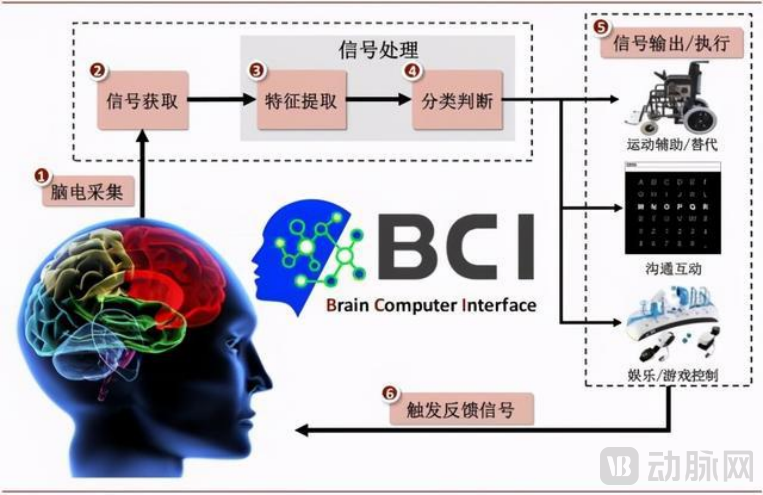
It is worth mentioning that WEKNOW has developed a neuromorphic chip, which uses the neuromorphic chip to perceive brain waves to match the target standard model. Through brain feedback technology, it continuously corrects errors and interacts, achieving a 99.2% accuracy rate in controlling the brain-controlled mechanical hand, with a delay of less than 0.5 seconds.
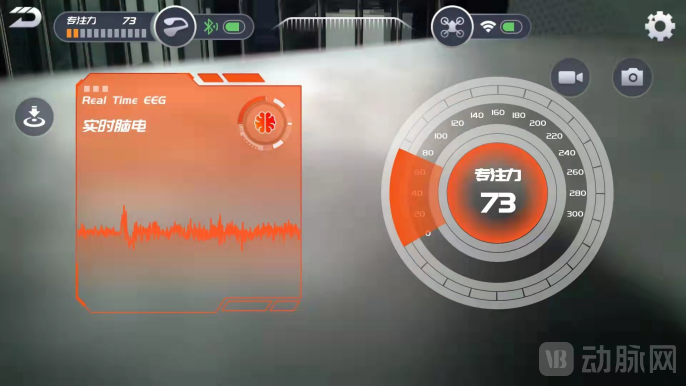
After achieving innovation in brain-control technology, WEKNOW has not only developed a brain-controlled mechanical hand but is also researching and developing brain-controlled drones, as well as brain-controlled bionic eyes for the blind and brain-controlled sound simulators for the deaf and mute.
Take the brain-controlled bionic eye as an example. After blind patients wear devices that collect EEG signals, the bionic eye is activated through these EEG signals. Then, the bionic eye feeds back external visual information, which is decoded, encoded, and transmitted to the patient's optic nerve, allowing the blind patient to "see" the external world.
Wu Hua stated: "In 2018, WEKNOW developed the first brain-controlled robotic hand through forward research and completed clinical trials on more than 1,000 stroke patients. In 2019, WEKNOW established industry standards for brain-controlled robotic hands and achieved revenue that year."
As we all know, brain science has extremely high technical barriers. The reason why WEKNOW has been able to achieve a technological breakthrough is because it has a strong technical team.
WEKNOW CEO Wu Hua is a master of bioengineering, a high-level talent in Shenzhen, and a serial entrepreneur with 8 years of background in biomedical research, specializing in embedded development. Wu Hua has worked for several brain science and medical device companies such as Macrotellect and Dierma, and won second place in the entrepreneurship competition "Rongchuang China."
Zhao Jian, a partner of WEKNOW, is a dual Ph.D. in biomedicine and neuromedicine, as well as an expert in brain-robot interaction. He has published more than 20 research papers on brain-computer interfaces, brain signal processing, artificial intelligence, machine learning, and robotics. Meanwhile, Zhao Jian also has 10 years of experience and resource accumulation in stroke treatment.
WEKNOW CTO Chen Haiping is a Ph.D. from Saint Leo University in the United States, specializing in pattern recognition and intelligent systems. He has worked on medical device research and development at the JRJ Industries Research Institute in California, U.S., engaged in biopharmaceutical research and development at the Replicor Pharmaceutical Research Institute in the U.S., and served as a tenured professor at the America P&G Co Research Institute while working on nanobiomedical engineering technology research and development.
WEKNOW CTO Zhang Qinghao is a master's graduate from the University of Sydney's engineering department, specializing in physical electronics (EEG signals). He has served as the chief architect for brain-computer interface system engineering and has worked as a senior engineer at NeuroSky and Macro Intelligence, accumulating 15 years of expertise in EEG technology.
WEKNOW's Technical Director, Liu Li, is proficient in mechanical and electronic circuit design and has over a decade of experience in mechanical equipment.
In addition to its strong R&D and innovation team, WEKNOW has also established brain science laboratories through collaborations with renowned universities such as Zhejiang University, Tsinghua University, and Sichuan University, promoting the development of brain science technologies.
Finally, WEKNOW told VCBeat: It currently has funding and site requirements and hopes for strategic investment from institutions with a background in medical devices and hospitals.
About the 2022 "Maker Guangdong" Biomedical Specialty Competition
The 2022 "Maker Guangdong" Biomedical SME Innovation and Entrepreneurship Competition, guided by the Guangdong Provincial Department of Industry and Information Technology and the Guangdong Provincial Department of Finance, is hosted by Guangdong Medical Valley. Since undertaking the competition, it has focused on the biomedical field, uncovering high-quality projects related to COVID-19 prevention and control as well as health protection. It has accumulated nearly 400 projects, with many recommended projects winning major awards in the provincial finals. Guangdong Medical Valley was awarded the "2021 Outstanding Organization."
Founded in 2014, Guangdong Medical Valley is committed to becoming a world-class biopharmaceutical industry cluster service provider. It has currently developed over 1 million square meters of projects (including those under construction) in cities such as Guangzhou, Zhuhai, and Foshan. By creating an industrial ecosystem that integrates "industry cluster × industry services × industry investment," it promotes the convergence and development of innovative elements in the biopharmaceutical sector. The Max+ Industrial Service Platform offers enterprises within the park comprehensive and diversified industry services, including talent, technology, finance, and policy support.