

The Race for Next-Gen COVID-19 Vaccines: Who Will Win the Second Half?

Sanofi
Pharmaceutical Manufacturer

GSK
Pharmaceutical R&D Manufacturer
Novavax
Innovative Vaccine Developer

WANTAI BioPharm
Biological Diagnostic Reagents and Vaccine R&D, Manufacturer
In the race for COVID-19 vaccine development, traditional vaccine giants Sanofi and GSK had a shaky start but have since made a strong comeback, becoming highly anticipated contenders in the field of COVID-19 booster shots.
GSK stated that among subjects who received approved mRNA or adenovirus-based primary vaccinations, the Sanofi-GSK booster vaccine significantly increased neutralizing antibody levels by 18 to 30 times across different vaccine platforms and age groups.
At the same time, the booster may protect against multiple virus variants, including Omicron BA.1 and BA.2. In subjects who had already received two doses of mRNA vaccines, the Sanofi-GSK recombinant protein vaccine showed a 14-fold increase in neutralizing antibodies against Omicron BA.1, compared to only a 7-fold increase with the Pfizer-BioNTech booster.
The clinical data released by Sanofi and GSK has brought a ray of hope to companies dedicated to the development of recombinant protein vaccines. At the same time, these companies have recognized the situation, found their positioning, and their strategy of primarily targeting booster shots for the market promotion of recombinant protein vaccines has also provided some direct insights into how COVID-19 vaccine enterprises can make a leap forward in the second half of the pandemic.
As the COVID-19 pandemic enters its "second half," humanity still faces numerous challenges. The emergence of new viral variants, each more transmissible than the last, continues unabated; existing vaccines can prevent severe illness but struggle to stop infections altogether. It can be said thatThe competition for the COVID-19 vaccine is far from over. How will the second half play out, and who will be the winner?
"The Rising Wave": Recombinant Protein Vaccines Emerge
The "pioneers" of the COVID-19 vaccine are undoubtedly the mRNA vaccines from pharmaceutical companies such as Pfizer and Moderna. Although recombinant protein vaccines did not take the lead, the clinical trial data published so far are indeed relatively excellent.
Compared with other COVID-19 vaccines, the Sanofi-GSK recombinant protein vaccine has demonstrated superior booster effects and a stronger ability to respond to variant viruses. Additionally, recombinant protein vaccines tend to have fewer adverse reactions after vaccination.
At the same time, recombinant protein vaccines have much lower requirements for production, storage, and transportation, making it more conducive to transferring this proven vaccine technology to low- and middle-income countries.
In the actual R&D process, the proportion of choosing the recombinant protein technology route is also higher.On June 14 this year, the WHO released the latest list of global COVID-19 vaccine candidates, showing that the number of candidate vaccines using the recombinant protein technology platform ranks first: among 166 clinical-stage candidate vaccines, 54 use the recombinant protein technology platform, accounting for 33%; among 198 preclinical research candidate vaccines, 77 use the recombinant protein technology platform, accounting for 39%.
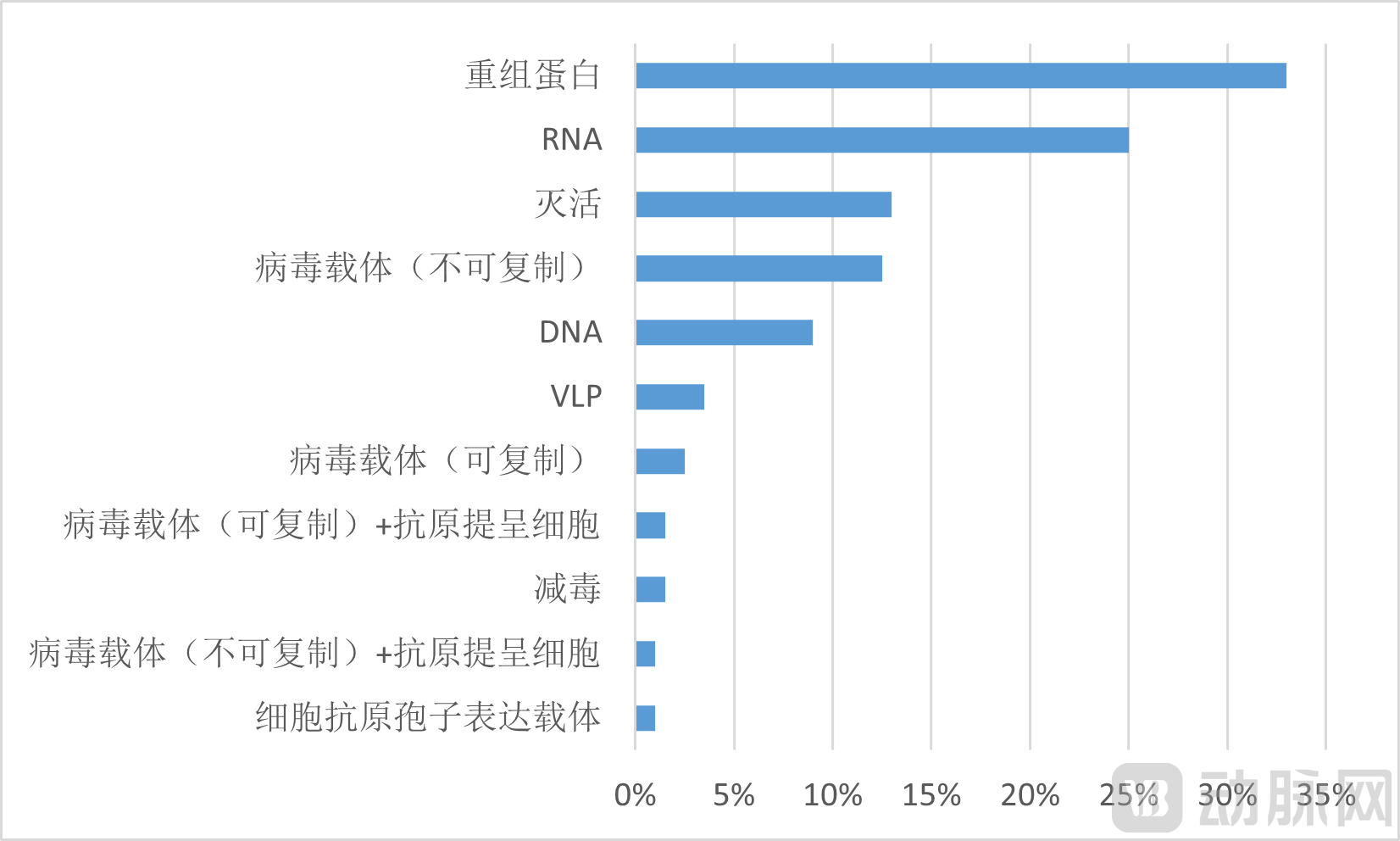
Chart 1 | Selection of COVID-19 Vaccine Technology Platforms Worldwide: Clinical Stage
Data source: WHO
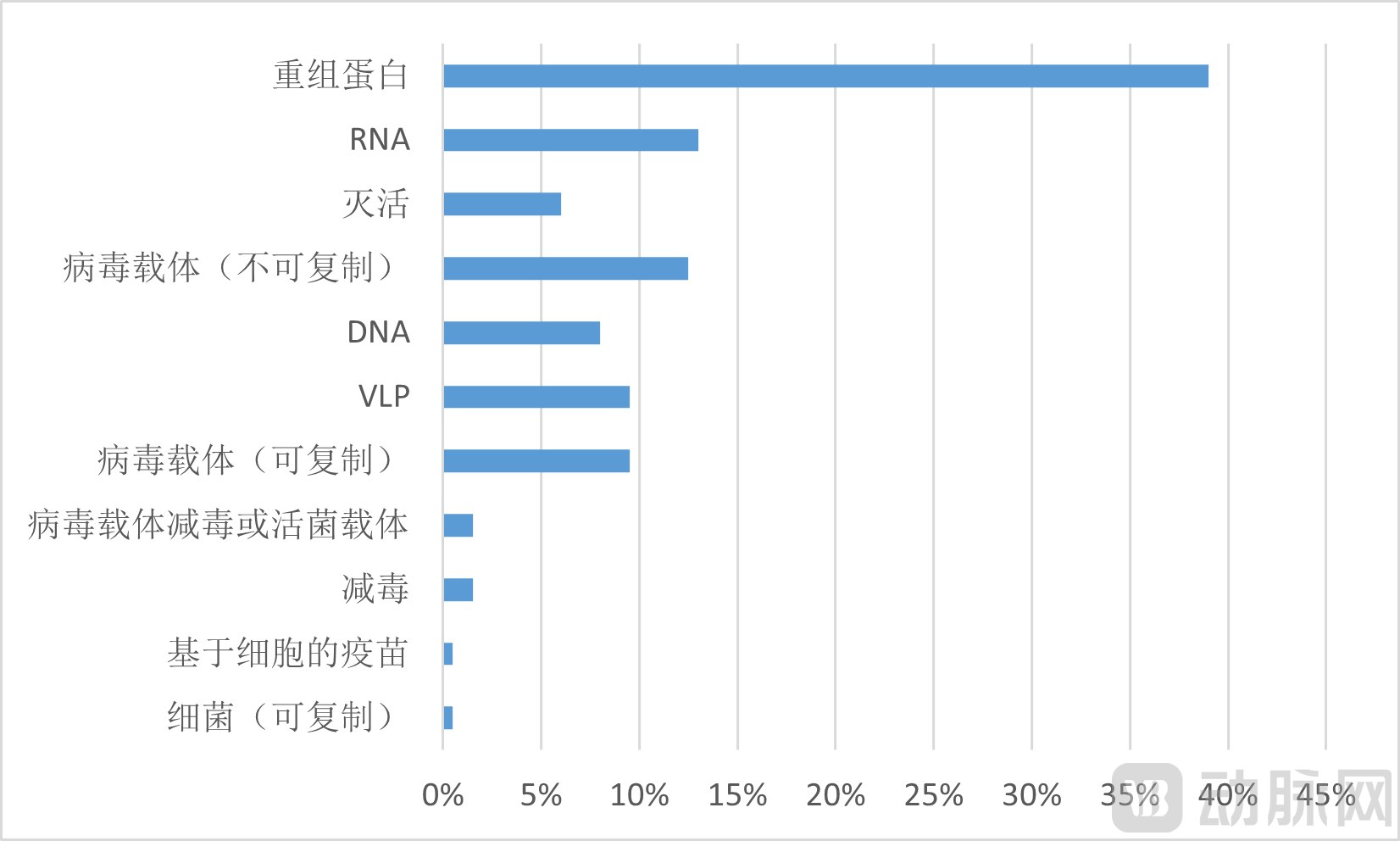
Chart 2 | Selection of COVID-19 Vaccine Technology Platforms Worldwide: Preclinical Stage
Data Source: WHO
The development of the COVID-19 recombinant protein vaccine has not been smooth sailing; the journey has been slow and tortuous, with risks and opportunities coexisting.
Although major companies are familiar with the process of large-scale production of purified proteins, this process is very cumbersome, and each step still requires innovative optimization design. Vaccine manufacturers have also made some mistakes—when Sanofi and GSK initially collaborated on a project, they used defective reagents to analyze the product, resulting in dose calculation errors, and the recombinant protein vaccine had to temporarily step back from the forefront of the COVID-19 vaccine competition.
A news story from December last year brought the COVID-19 recombinant protein vaccine back into the public spotlight — Novavax, Inc. announced that its recombinant protein nanoparticle COVID-19 vaccine NVX-CoV2373, containing Matrix-M adjuvant, had once again been approved by the World Health Organization for inclusion on the Emergency Use Listing (EUL).
Novavax stated that its vaccine was 96% effective against the original coronavirus, 86% effective against the B.1.1.7 variant, and 49% effective against the B.1.351 variant.At that time, in the vaccine market, this data had a significant advantage for mutant strains.
NVX-CoV2373 uses transmembrane proteins, encapsulating the modified trimeric full-length S protein in nanoparticles and combining it with Novavax's proprietary amphiphilic Matrix-M adjuvant to create the vaccine. Two major innovative modifications were made to the S protein. The Matrix-M amphiphilic adjuvant further stimulates the body to produce high levels of neutralizing antibodies by enhancing antigen presentation efficiency at the injection site and in lymph nodes. Meanwhile, the recombinant protein nanoparticle retains the spatial conformation of the natural virus but cannot replicate or cause infection, making it highly safe.
Moreover, compared with the mRNA vaccines developed by Pfizer-BioNTech and Moderna, Novavax's vaccine can remain stable in a refrigerator for up to three months, making it easier to distribute and store.
The preparation method is innovative enough, with convenient storage and transportation, and the market has high hopes for this recombinant protein vaccine. However, the initial focus on the first two doses of the market did not actually bring returns to Novavax.
Novavax's second-quarter financial report for this year shows that the sales of NVX-CoV2373 in the second quarter were $55 million, a 90% drop compared to $586 million in sales in the first quarter. The net loss in the second quarter of 2022 was $510 million, compared to $352 million in the same period in 2021.
Novavax Cuts Full-Year Revenue Forecast in Half in Early August After Q2 Sales Miss Estimates, Sending Shares Plunging.
As of this year, Novavax's stock price has fallen by 70.4%.Exceeding the industry-wide decline of 17.9%.
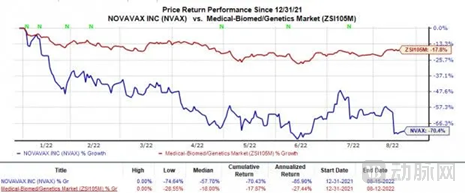
Chart 3 | Novavax Stock Price Situation
Image Source: Zacks Investment Research
For Novavax, the innovative preparation process of NVX-CoV2373 has increased the pressure for mass production, slowing down the overall marketization process, barely catching the "last train" for the first two doses.
Previously, NovavaxThe clinical progress has been continuously delayed. In Europe, it entered the market only in December last year and received the FDA's Emergency Use Authorization (EUA) for the first two doses only last month.ButTheir products can only be used for the first two doses, but the market situation for the first two doses has long been clear, already dominated by Pfizer, Moderna, Johnson & Johnson, and AstraZeneca.
The first two doses of the COVID-19 vaccine market no longer have much profit space, but the competition is far from over, and the booster market still shows an upward trend. Recognizing the situation, finding the right positioning, and expanding the market are the only ways to potentially overtake competitors in the second half of the pandemic.
Novavax Recently Submits Another Regulatory Application to FDA, Seeking to Expand Emergency Use Authorization for Its Recombinant Protein COVID-19 Vaccine (Novavax COVID-19 Vaccine, Adjuvanted (NVX-CoV2373)) in Adults (Aged 18 and Above)Authorization for Use as Homologous and Heterologous Booster Shots。
If authorization for the booster shot is obtained, Novavax may significantly expand its market and overcome its current difficulties. At that time, Novavax's target groups could include those who have not yet been vaccinated, those who have not yet received a booster shot, and those who will need to be continuously vaccinated in the future.
In addition, other recombinant protein vaccines under development are also worth noting.Including Clover Biopharmaceuticals' SCB-2019 vaccine, CIGB-66 vaccine from Cuba's Center for Genetic Engineering and Biotechnology, FINLAY-FR-1 and FINLAY-FR-2 vaccines from Cuba's Finlay Institute, as well as the UB-612 vaccine led by United Biomedical, Inc. (UBI).
Many companies have begun to compete in the booster market. The aforementioned Sanofi-GSK recombinant protein vaccine is mainly marketed for booster shots; Moderna is accelerating its layout in the booster market, and last week, British medical regulators approved Moderna's bivalent COVID-19 vaccine, which targets both the Omicron variant and the original coronavirus, for adult booster vaccinations.
The view that the coronavirus will coexist with humans for a long time has gained market recognition.
Until now, antigen self-testing, oral small molecule drugs, masks, high molecular plastic consumables, and diagnostic instrument manufacturers have yet to exit the bonus period. Moderna's CEO Stéphane Bancel compared booster shots to smartphones, stating that in the future, everyone might receive an annual injection to protect against coronaviruses, influenza viruses, and respiratory syncytial viruses.
Whether recombinant protein vaccines can have their moment of glory in the booster market is worth our continued attention.
Blocking Transmission, Nasal Spray Vaccines Show Promise
Vaccines reduce the probability of severe illness or death. However, new variants of the coronavirus continue to emerge, and the recent Omicron variant has diminished the effectiveness of existing vaccines in preventing infection and mild symptoms. Major pharmaceutical companies are working hard to develop vaccines specifically targeting Omicron.
At the recently convened Second White House "Anti-Epidemic Summit," experts stated that chasing variants is not the best or most sustainable approach to vaccine development.
The White House medical team discussed and identified two directions for improvement: one is a pan-coronavirus vaccine that can target multiple variants of the coronavirus, and even cover potential future mutations, providing people with longer-lasting protection. The other is a nasal spray vaccine that directly achieves mucosal blocking when the virus enters the body through the nasal cavity.
These two directions of improvement are not simple. Vaccine developers have been striving to develop a universal flu vaccine for many years, but progress has been limited. Meanwhile, the nasal spray COVID-19 vaccine remains experimental, with no definitive results yet.
In fact, as early as June 3 last year, at the plenary session of the Pujiang Innovation Forum, Chen Wei, a researcher at the Academy of Military Sciences, vice chairman of the China Association for Science and Technology, and an academician of the Chinese Academy of Engineering, stated,Compared with the humoral immunity and cellular immunity formed by injectable COVID-19 vaccines, inhalable COVID-19 vaccines can also form mucosal immunity. These three types of immunity represent the most ideal state.
With only the existing vaccines, public health efforts and social activities will still be caught in a race against the virus. In the long run, we indeed need significant breakthroughs.
China's nasal spray COVID-19 vaccine development started relatively early, but no definitive results have been officially announced yet. The research and development process is accelerating, and early entrants still have the opportunity to become the "COVID-19 winners" in the second half.
The team of Xia Ning邵 from Xiamen University, together with the University of Hong Kong and WANTAI BioPharm, is jointly developing a nasal spray influenza virus vector COVID-19 vaccine. Regarding the clinical trial progress of the nasal spray COVID-19 vaccine, WANTAI BioPharm stated on the interactive platform on July 14 that the phase III clinical trial of the nasal spray COVID-19 vaccine is proceeding smoothly in four countries, including the Philippines and South Africa.
It remains unknown how long the second half of the COVID-19 pandemic will last. Whether recombinant protein vaccines and nasal spray vaccines can bring new opportunities to the industry, and who will be the winner in the second half, remains to be seen.
References
1. The Recombinant Protein Technology Route in the Post-COVID-19 Vaccine Era – Monthly Special Topic and Tracking of the Vaccine Sector
2. Shinde V, Bhikha S, Hoosain Z, Archary M 2019nCoV-501 Study Group. Efficacy of NVX-CoV2373 Covid-19 Vaccine against the B.1.351 Variant. N Engl J Med. 2021 May 20;384(20):1899-1909. doi: 10.1056/NEJMoa2103055. Epub 2021 May 5. PMID: 33951374; PMCID: PMC8091623.
3. Heath PT, Galiza EP, 2019nCoV-302 Study Group. Safety and Efficacy of NVX-CoV2373 Covid-19 Vaccine. N Engl J Med. 2021 Sep 23;385(13):1172-1183. doi: 10.1056/NEJMoa2107659. Epub 2021 Jun 30. PMID: 34192426; PMCID: PMC8262625.
4..2022-08-08-Novavax-Reports-Second-Quarter-2022-Financial-Results-and-Operational-Highlights
5. Sanofi and GSK to Submit COVID-19 Vaccine Registration Application | GSK China (gsk-china.com)
6.https://finance.yahoo.com/news/novavax-nvax-seeks-fda-authorization-163204564.html
7. https://www.investors.com/news/technology/nvax-stock-buy-now/?src=A00220
8.https://finance.yahoo.com/video/maryland-based-novavax-submits-application-151415029.html