

ZhenHealth Secures NMPA Class III Medical Device Certification for AI-Powered Diabetic Retinopathy Screening Software, Advances Universal Access to Early Detection

Zhizhen Health
Intelligent Eye Health Management Service Platform Provider
Recently, Zhizhen Health's independently developed"Diabetic Retinopathy Fundus Image Auxiliary Diagnosis Software"Officially obtained the third-class medical device registration certificate issued by the National Medical Products Administration (NMPA). This diabetic retinopathy fundus image auxiliary diagnosis software can assist endocrinology, physical examination, general practice, and ophthalmology departments in conducting diabetic retinopathy diagnosis and screening, promoting early detection and treatment of diabetic eye diseases.
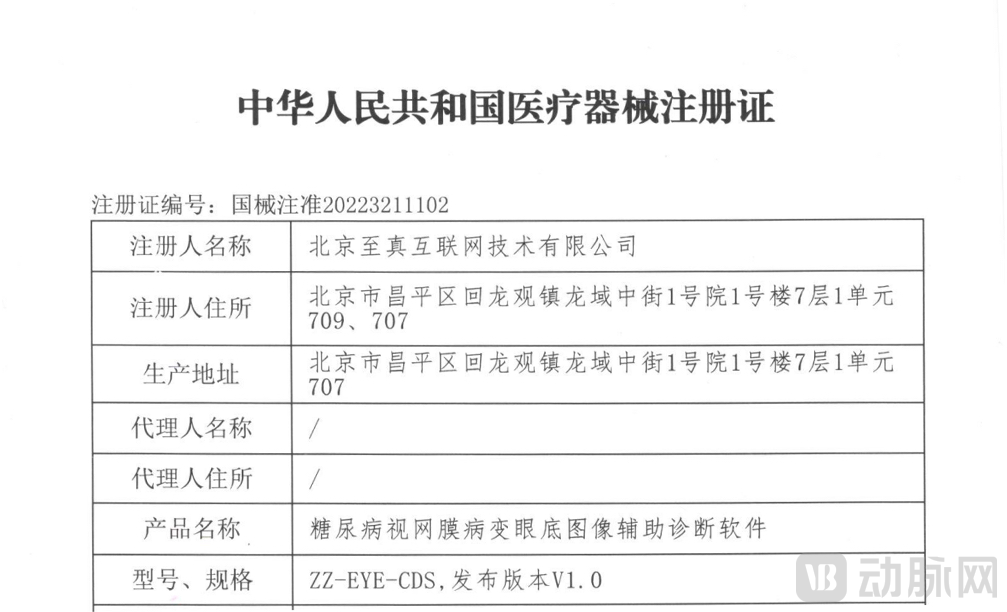
Zhizhen Health continues to focus on the artificial intelligence eye health track,深耕于人工智能在医疗影像临床辅助诊断等场景的应用, and has currently accumulated a dataset of 20 million ophthalmic images. The diabetic retinopathy auxiliary diagnosis software recently approved isThe First in China to Pass the "Diabetes" Certification by Peking Union Medical College HospitalSoftware for the validation of the "Standard AI Database for Color Fundus Photography in Retinopathy."
It is reported that in 2018, Zhizhen Health was the first to propose the concept of an AI-powered integrated hardware and software intelligent fundus camera. Currently, itsThe third-generation self-developed intelligent fundus camera has obtained the Class II medical device registration certificate, andOne-stop intelligent fundus screening solution completes clinical service capability docking in top hospitals both in China and abroad.The market share of top 100 tertiary hospitals exceeds 50%, covering 26 provinces and regions across China.
The Number of People with Diabetes is Increasing Year by Year: The Prevention and Treatment of Diabetic Retinopathy Should Not Be Overlooked
China, the country with the largest number of diabetes patients in the world.
In the past 20 years, the prevalence of diabetes in China has been on a continuous rise. In 2021, the number of people with diabetes in China reached 140 million.Nearly 1 in 10 people has diabetes.. With the development of the economy and society, as well as the intensification of the aging population process, it is expected that by 2045, the number of diabetes patients in China will increase to 170 million.
In the diabetic population, the prevalence of Diabetic Retinopathy (DR, hereinafter referred to as "Diabetic Eye Disease") ranges from 22% to 37%. Among patients with a diabetes duration exceeding 10 years, the prevalence of Diabetic Eye Disease is 50%, while for those with a duration exceeding 20 years, the prevalence is nearly 100%.The progression of diabetic retinopathy is irreversible, and without timely treatment, there is a risk of blindness..Once it occurs, it will affect people's quality of life and happiness, bringing a great burden to families and society.
Since early-stage diabetic retinopathy (DR) usually presents no obvious symptoms, many diabetic patients often wait until their vision significantly deteriorates before visiting an ophthalmologist, missing valuable treatment opportunities. The most effective way to prevent DR is through routine fundus screening and annual follow-ups.90% of vision loss in patients with diabetic retinopathy can be prevented through early detection and treatment.
Uneven Distribution of Ophthalmic Medical Resources: Demand for Diabetic Retinopathy Screening Far from Met
"The 14th Five-Year Plan for National Eye Health in China" explicitly proposes to improve the screening capacity of primary healthcare institutions for fundus diseases such as diabetic retinopathy, implement the technical solutions for hierarchical medical services for eye diseases like diabetic retinopathy, and promote the early detection, early diagnosis, and early treatment of fundus diseases.
However, the widespread screening for diabetic retinopathy faces challenges across China, especially in grassroots areas where implementation is difficult. The main reason lies in the weak ability of most endocrinologists, physicians in physical examination departments, and general practitioners to interpret fundus images, making it impossible for them to complete the initial screening. As a result, this group of patients relies on ophthalmologists in hospitals, increasing their workload.
According to the "China Eye Health White Paper" released by the National Health Commission, China has only 44,800 ophthalmologists. The distribution of ophthalmologist resources is highly uneven, with a severe shortage of ophthalmologists in primary healthcare institutions, leading to an imbalance between doctor supply and patient demand.; In addition, the insufficient screening ability of grassroots doctors, the difficulty in operating screening equipment, and the lack of full coverage have all become obstacles to the nationwide, especially grassroots, implementation of DR screening in China.
AI Empowers Diabetic Retinopathy Screening, Building a National Eye Health Defense Line
In traditional diabetic retinopathy screening, it is difficult for doctors to quickly make accurate and objective analyses of fundus lesions through the naked eye and subjective judgment. Meanwhile, the method of manual identification not only consumes a great deal of doctors' time but also leads to omission and misjudgment. This not only significantly increases the workload and difficulty for ophthalmologists but also causes delays in patients' diagnosis and treatment. Therefore, introducing artificial intelligence-assisted diagnostic systems in clinical practice has become a new development trend.
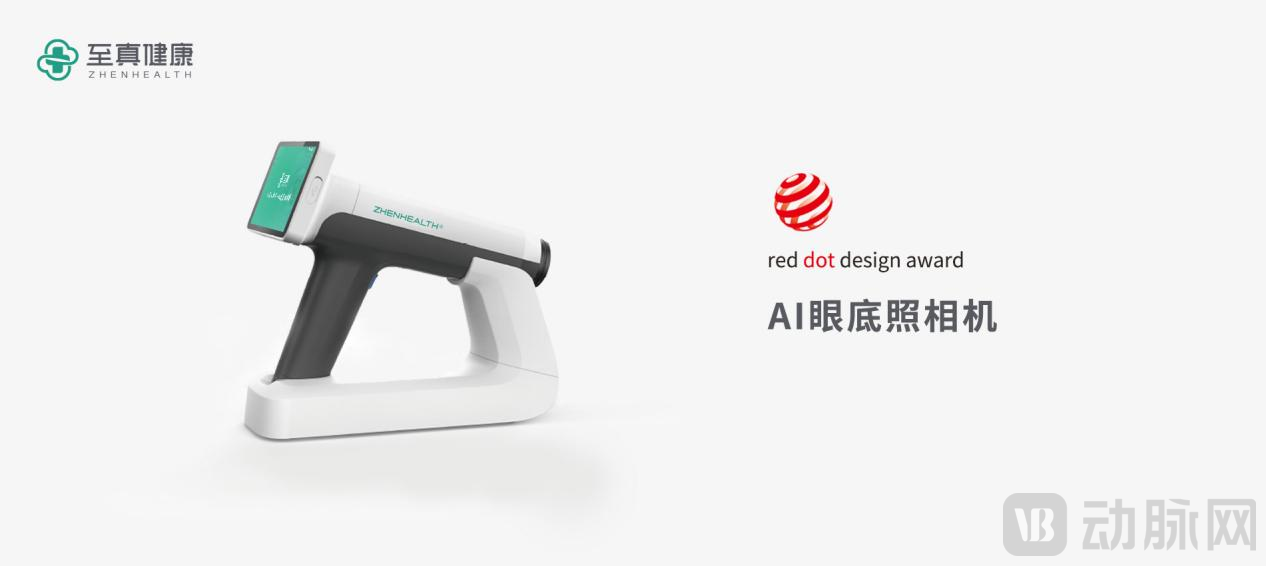
Zhizhen Health's Self-Developed "AI Fundus Camera" Integrates Intelligent Fundus Photography and Disease Screening. The device, which incorporates artificial intelligence technology, features three core advantages: compact portability, intelligent photography, and intelligent interpretation. It addresses various challenges posed by traditional fundus screening equipment, such as high cost, large size, and difficult operation.
Moreover, Zhizhen Health's recent approval"Diabetic Retinopathy Fundus Image Auxiliary Diagnosis Software" uses deep learning algorithms to calculate and analyze fundus images, accurately identifying diabetic retinopathy patients, precisely distinguishing and classifying the severity of the disease, differentiating diagnoses from fundus images, and determining the severity of the condition., identify the progression of diabetic complications, and help endocrinology departments, physical examination departments, internal medicine departments, and primary medical institutions solve the problem of difficult film reading, improving diagnostic accuracy.
Not only that, but Zhizhen Health's integrated hardware and software solution alsoCan greatly improve the efficiency and effectiveness of sugar network screening, assisting doctors in faster, more efficient, and more accurate identification of fundus images in diabetic retinopathy patients; providing patients with efficient, timely, and convenient ophthalmic screening, thereby significantly reducing the number of patients with eye diseases, eye injuries, and blindness; effectively alleviating issues such as strained ophthalmic medical resources in hospitals, insufficient coverage of grassroots equipment, and inadequate capabilities of ophthalmologists, promoting comprehensive and inclusive diabetic retinopathy screening.
Currently, Zhizhen Health's one-stop intelligent fundus screening solution has taken the lead in completing clinical service capability integration with top hospitals both in China and internationally. For example, Zhizhen Health's one-stop intelligent fundus screening solutionIt has been used in top-tier hospitals such as Peking Union Medical College Hospital, Chinese PLA General Hospital, Sichuan Provincial People's Hospital, and the First Affiliated Hospital of Zhengzhou University, accumulating rich service experience and capabilities in clinical aspects. Additionally, Zhizhen Health products...The market share of China's top 100 tertiary hospitals exceeds 50%, covering 26 provinces and regions across the country.
In the future, Zhizhen Health will continue to leverage its integrated software and hardware capabilities, adhering to the value concept of "technology for good."Aiming for "Scenario Innovation + High Coverage," Continuously Promoting the Popularization of Diabetic Retinopathy Screening, By collaborating with various scenarios, the full-process management model inside and outside the hospital will be connected to improve the quality and effectiveness of full-process management services for diabetic retinopathy patients. Further leverage the role of AI to build a high-quality and efficient eye health service system, providing people with eye health services covering the entire life cycle.
About Zhizhen Health
Zhizhen Health (ZHENHEALTH), established in 2015, is an AI-driven eye health technology service and management company. The team originates from top global academic research institutions and Fortune 500 high-tech companies. Leveraging years of profound technical expertise in artificial intelligence, cloud computing, big data, and internet operation models, the company integrates and optimizes high-quality medical service resources both in China and internationally, achieving seamless interconnectivity among users, medical services, and medical technologies.
Zhizhen Health products focus on the management of visual health for all people in China, covering the entire lifecycle of eye health needs. Several self-developed hardware and software products have obtained medical device registration certificates issued by the Chinese National Medical Products Administration, with nearly a hundred global patents. In the future, Zhizhen Health will continue to uphold the corporate vision of "ensuring every family member has a pair of healthy eyes," further strengthen investment in clinical research and health technology achievements, and provide high-quality, affordable eye health management services for all people in China!