

6 Billion RMB IPO in Electrophysiology: Can Domestic Players with Only 10% Market Share Break Through the Toughest Volume-Based Procurement?

MicroPort
High-end Medical Device R&D and Manufacturer
On the last day of August, the electrophysiology field welcomed an IPO, with MicroPort's fifth listed subsidiary, MicroPort Electrophysiology, going public on the STAR Market.
MicroPort EP's issue price was 16.51 yuan per share, opening at 15.50 yuan. The stock fell below the issue price on its first day of trading, closing with a market value exceeding 6 billion yuan. MicroPort EP's post-investment valuation in the previous round was 4.8 billion yuan.
The listing of MicroPort EP marks the beginning of the development stage for China-produced electrophysiology market.
The electrophysiology market has experienced high growth globally for over two decades. In 1998, Biosense Webster, a subsidiary acquired by Johnson & Johnson for 400 million USD, launched the world's first radiofrequency catheter ablation product for cardiac electrophysiology, pioneering the field of electrophysiology and initiating the rapid growth of the global electrophysiology market.
The electrophysiology market in China also maintains rapid growth, but Chinese manufacturers have not been able to secure a significant position, with several domestic companies holding less than 10% of the market share.
In fact, Chinese companies entered the market not too late. In 2004, Sichuan Jinjiang Electronics began contract manufacturing for Bard, which was then one of the top three players in the electrophysiology field. In 2006, MicroPort, which had already achieved considerable success in the coronary stent sector, sought to diversify its business and set its sights on the atrial fibrillation electrophysiology market, marking the beginning of what would eventually lead to the IPO of MicroPort Electrophysiology today.
In the past two years, Chinese domestic enterprises that have obtained 3D system registration certificates have finally matched imported enterprises in terms of product portfolios. Chinese domestic electrophysiology companies have also gained widespread attention at the capital level. In addition to MicroPort EP and Shanghai MicroPort Medical (Group) Co., Ltd. completing their IPOs, Jinjiang Electronics has also secured 700 million yuan in Series A and B funding in the primary market.
Chinese companies have just prepared their chips, but the rules of the electrophysiology market are about to change dramatically.Fujian has gradually begun to carry out the procurement of electrophysiology products. Although the procurement of electrophysiology is known as the most challenging, this does not stop its unstoppable momentum.
Why is the domestic production in the electrophysiology market difficult to breakthrough, known as the hardest centralized procurement track? What new growth will MicroPort's electrophysiology bring to the market after its listing? VCBeat (WeChat ID: vcbeat) conducted an analysis.
In the field of cardiac medicine, electrophysiological technology plays a crucial role, primarily in the diagnosis and treatment of arrhythmia disorders. In addition to conventional drug management, catheter ablation (also known as electrophysiological surgery) not only controls arrhythmia symptoms and improves quality of life but also enhances prognosis and reduces the incidence of stroke, cardiovascular events, and mortality.
According to Frost & Sullivan analysis, the market size of electrophysiology devices for cardiac applications in China increased from 1.48 billion yuan in 2015 to 5.15 billion yuan in 2020, with a compound annual growth rate (CAGR) of 28.3%. With the intensification of population aging, an increase in the number of patients with arrhythmia, and the popularization and technological upgrading of electrophysiology surgical products, the market size of electrophysiology surgery-related products is expected to reach nearly 20 billion yuan by 2024.
Electrophysiology products are generally divided into three major categories, including mapping systems (3D/2D), mapping catheters, and radiofrequency ablation catheters.Taking Johnson & Johnson of the United States as an example, in the field of electrophysiology, Johnson & Johnson's main products include the Carto 3D system, star-shaped magnetic and electrical dual-position mapping catheter, radiofrequency ablation catheter, and body surface reference electrode, etc.
The reason why the collection of cardiac electrophysiology is difficult lies in the fact that the rate of Chinese production is less than 10%, and many Chinese enterprises have not yet completed the construction of a complete solution of "system + equipment + consumables".
According to statistics from Frost & Sullivan, in 2020, in China's cardiac electrophysiology device market, calculated by sales revenue, international giants Johnson & Johnson, Abbott, and Medtronic collectively occupied over 85% of the market share.
In the most core 3D electrophysiology market within the field of electrophysiology, the dominance of international giants is even stronger.According to the 2020 ranking of China's 3D cardiac electrophysiology procedures, Johnson & Johnson and Abbott together held over 90% of the market share, while MicroPort EP's market share in 3D electrophysiology was only 4.2%.
The low market share of domestically produced products poses a challenge to the volume-based procurement, as the motivation for foreign companies to lower prices during such procurement processes is not strong, making it difficult to achieve the expected centralized procurement results. For instance, in the previous pacemaker procurement, the market share of domestically produced pacemakers was only 5%. In 2019, Jiangsu Province carried out the first domestic centralized procurement of cardiac pacemakers, with an average price reduction of 15.86%.
The main reason for the low market share of domestically produced products is the high technological barrier in the 3D electrophysiology field, where domestically produced 3D electrophysiology products have only just come to market in recent years.Import manufacturers have already built a series of advanced catheter product matrices around the 3D cardiac electrophysiological mapping system, which can effectively meet the treatment needs of various arrhythmia diseases.
In terms of product performance, there is still a certain gap between the technical maturity of China-produced 3D cardiac electrophysiology mapping systems, the development progress of core modules, the market entry progress of supporting catheters, and clinical accumulation compared to imported manufacturers. The combined performance of equipment and catheters still lags behind international manufacturers.
At the same time, from the perspective of commercialization, the entry of electrophysiology devices into hospitals is relatively difficult. Electrophysiology surgeries are classified as Level 4 surgeries, and hospitals that perform these surgeries frequently are mostly equipped with imported devices. Hospitals that conduct fewer surgeries show little interest in acquiring electrophysiology equipment.
How difficult is it to promote electrophysiology products? In the history of China's electrophysiology development, the market share of domestically produced products has even declined at one point. According to statistics from Frost & Sullivan, between 2015 and 2019, in China's cardiac electrophysiology device market, the market share of domestically produced electrophysiology medical devices, calculated by sales revenue, continuously decreased from 11.6% to 9.0%; in 2020, the market share of domestically produced electrophysiology medical devices rebounded slightly to 9.6%.
To promote the entry of their products into hospitals, domestic companies currently rely on a combination of "equipment sales + equipment placement + equipment follow-up" as their main business model. This strategy is primarily led by the equipment follow-up approach, with equipment sales accounting for a smaller proportion compared to imported manufacturers.
The second reason for the difficulty in centralized procurement in the electrophysiology field lies in the design of the procurement plan.The electrophysiology centralized procurement involves atrial septal puncture needles, electrophysiological catheter sheaths, diagnostic catheters (divided into linear mapping, circular mapping, and irregular mapping), and therapeutic catheters. Each category has multiple classifications, with some products requiring配套使用, posing certain challenges to the grouping and pricing design of the procurement plan.
MicroPort EP, with over 16 years of experience in the electrophysiology field, is now at the point of going public. What products has it developed? Can it compete with Johnson & Johnson and Abbott?
From the pipeline reserve, MicroPort EP has launched six mapping catheters, three 3D ablation catheters, two 2D ablation catheters, a 3D mapping system, and two other devices.
Compared with its peers, MicroPort EP has a relatively rich pipeline reserve, with the number of pipelines in the same tier as Johnson & Johnson and Abbott.
But at this stage, the company's diverse product portfolio has yet to translate into revenue. From 2019 to 2021, MicroPort EP achieved operating revenues of RMB 117 million, RMB 140 million, and RMB 190 million respectively, with net profits of -RMB 15.12 million, RMB 5.74 million, and -RMB 11.97 million; after deducting non-recurring gains and losses, net profits were -RMB 25.14 million, -RMB 15.9755 million, and -RMB 29.62 million respectively, holding only a 2.7% market share.
From the perspective of core product competitiveness, how much potential does MicroPort EP have in the future?
In the electrophysiology market, the 3D electrophysiology system is the core competitiveness of major manufacturers, and the 3D system is also the key to expanding the market share of domestically produced products in the future.The 3D Cardiac Electrophysiology Mapping System creates a three-dimensional model of the heart on a computer, clearly displaying the 3D structure of the heart and blood vessels. It effectively integrates intracavitary electrocardiograms with the spatial structure of the heart, guiding clinicians in catheter manipulation and positioning. This improves the success rate of radiofrequency ablation, reduces radiation exposure, and meets the mapping requirements for ablation targets in the treatment of complex arrhythmias. Currently, 3D cardiac electrophysiology procedures have become one of the significant trends in the development of electrophysiological surgeries.
MicroPort EP has completed a full layout of equipment and consumables in the 3D market, but still lags behind Johnson & Johnson.
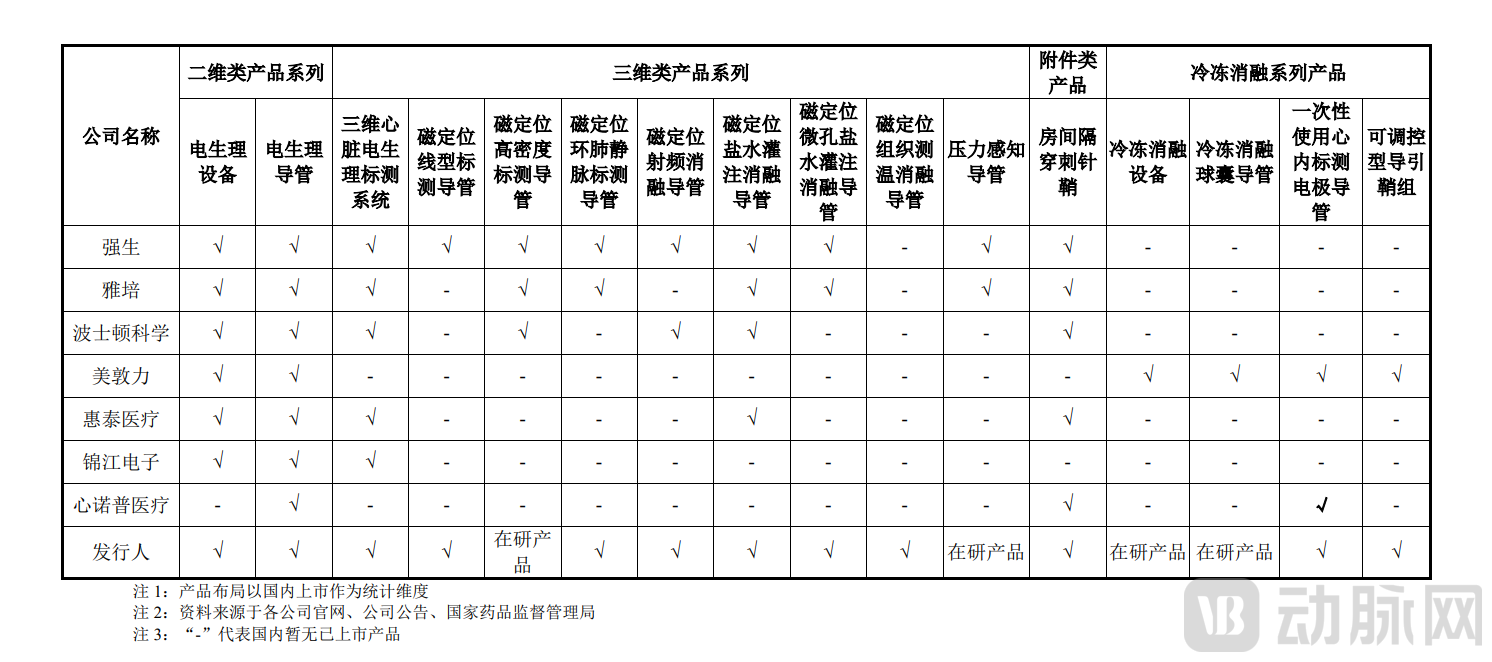
In the field of 3D electrophysiological mapping systems, Johnson & Johnson's Carto-3 system has the highest market share. The competitive advantage of the Carto-3 system lies in its use of advanced magnetic and electrical composite mapping technology, which features accurate positioning, catheter visibility, rapid modeling, efficient workflow, and platform compatibility. It can precisely locate cardiac lesion sites and perform accurate radiofrequency ablation, thereby reducing operation time, improving operation efficiency and success rate, and lowering radiation exposure during the procedure.
MicroPort EP's 3D Cardiac Electrophysiology Mapping System includes a high-density mapping module and a pressure-sensing module. However, due to the matching catheters not yet being on the market, MicroPort EP's high-density mapping module and pressure-sensing module have not been commercialized. The lack of this product配套 has impacted the commercialization of MicroPort EP's 3D system.
The difference in product line layout between MicroPort Electrophysiology and Johnson & Johnson lies in the fact that, apart from radiofrequency ablation, MicroPort Electrophysiology has also expanded into cryoablation and renal artery ablation.
However, the current indications for cryoablation technology are limited, and its overall share in the entire electrophysiology market is relatively low. In 2020, a total of 81,900 atrial fibrillation ablation procedures were performed in China, of which 9,800 were cryoablation and 72,100 were radiofrequency ablation. Currently, only Medtronic's cryoablation product has been approved in China.
Renal artery denervation: Currently, no domestically produced products have been approved yet.
Currently, MicroPort EP holds approximately 2.7% of the market share in the electrophysiology market, ranking fifth. In terms of pipeline competitiveness, it will take longer for MicroPort EP to surpass Johnson & Johnson in market breakthrough.
Although the electrophysiology market has been strongly dominated by imported enterprises, this does not affect the activity of China-produced electrophysiology market.
In the secondary market, the main participants in the electrophysiology market are HT Medical, MicroPort EP, and Kangfeng Medical, which has submitted its prospectus; in the primary market, there are companies that have received large-scale financing such as Jinjiang Electronics, Xinpulse, Aikangmai, Antech, and Xuanyu Medical.
Although MicroPort EP relies on the well-established MicroPort Group, in the field of electrophysiology, MicroPort has not yet pulled ahead of its competitors. According to data from Frost & Sullivan, in the competitive landscape of China's cardiac electrophysiology device market in 2020, no domestically produced brand had a market share exceeding 5%.
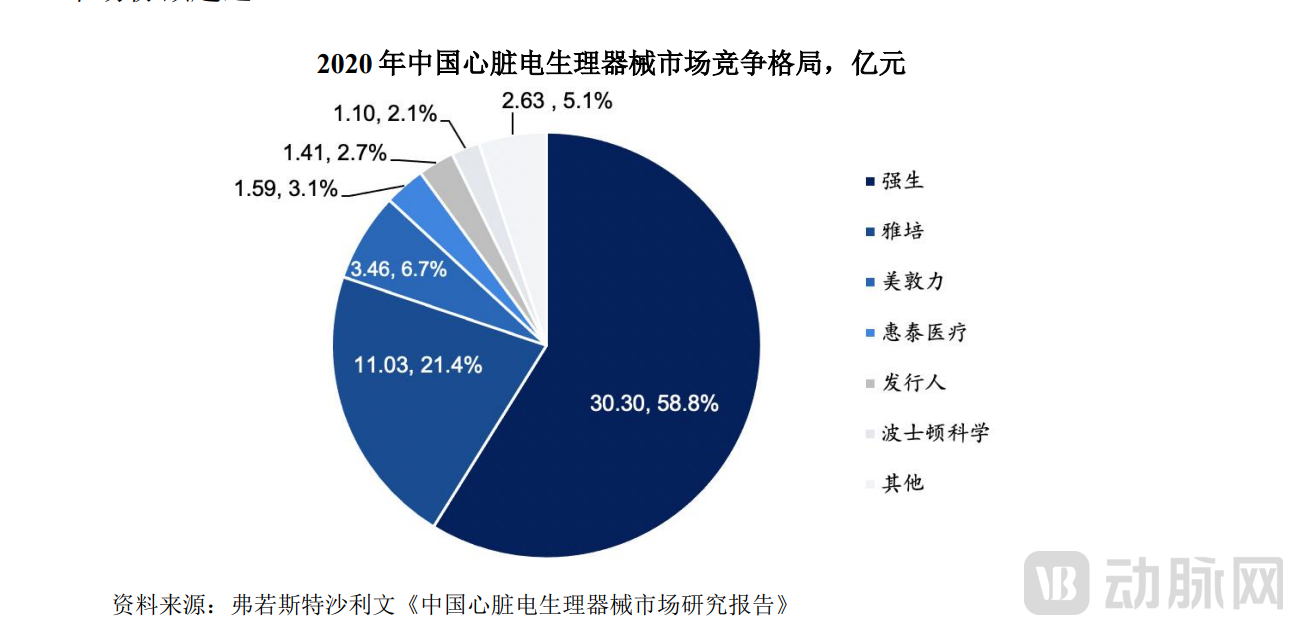
Among Chinese brands, the strongest competitor of MicroPort Electrophysiology at this stage is HT Medical.In terms of sales revenue, although the market share of domestically produced products is generally low, HT Medical ranks first among Chinese-produced products. In 2021, HT Medical's electrophysiology business segment generated revenue of 233 million yuan.
HuiTai Medical's 3D mapping system was launched in 2021, completing over 600 electrophysiology surgeries in 200 hospitals that year. In the first half of 2022, more than 1,100 3D electrophysiology surgeries were completed in over 300 hospitals, with a rapid increase in surgical volume.
MicroPort Electrophysiology's advantage among domestically produced enterprises is mainly reflected in the 3D market. In 2020, MicroPort Electrophysiology ranked third in the volume of 3D cardiac electrophysiology procedures in China and ranked first among domestic manufacturers. Since the launch of MicroPort Electrophysiology’s 3D surgical system products, they have been applied in over 30,000 3D cardiac electrophysiology procedures in China.
What direction will the electrophysiology market in China develop towards in the future? Currently, there are two main factors that will influence the landscape of the electrophysiology market in China.
On the one hand, it is centralized procurement, which may reshape the domestic electrophysiology market landscape, similar to the centralized procurement of artificial joints, significantly increasing the market share of domestically produced products.
Currently, the market share gap among domestic companies is not significant, and all have the potential to expand their market share through centralized procurement. MicroPort EP, with its rich product pipeline among domestically produced products, has certain advantages in centralized procurement.
Another major change driving the transformation of the market landscape comes from technological iteration and updates. PFA (Pulsed Field Ablation) is a technology that has been highly regarded in the electrophysiology market. Currently, PFA technology is favored by several giants such as Boston Scientific, Medtronic, and Johnson & Johnson. Compared with radiofrequency and cryoablation, PFA for atrial fibrillation ablation boasts high success rates (100% immediate pulmonary vein isolation success rate), superior safety (non-thermal ablation and strong tissue selectivity, extremely low complication rates), low surgical difficulty, and a short learning curve, which could potentially disrupt the electrophysiology market in the future. The advantage of Jinjiang Electronics, which received substantial financing in the primary market, lies in its mastery of the new technology in the electrophysiology field: 3D mapping + PFA.
Although it took 16 years to reach the initial public offering, MicroPort EP's journey has just begun, as the potential of China’s electrophysiology market is far from being fully tapped. The number of patients with atrial fibrillation in China is nearly 20 million, comparable to the number of patients with coronary heart disease, yet the number of surgeries performed is significantly lower. In 2020, the total number of atrial fibrillation surgeries was approximately 80,000, while the number of coronary intervention surgeries in the same year had already exceeded 1 million.
The cardiac electrophysiology market has been one of the fastest-growing segments in the past decade, and the next decade will be a critical phase for domestically-produced enterprises to catch up.
As a representative of domestically produced electrophysiology, can MicroPort EP convert its extensive product portfolio and reserves into a market advantage? Can it capture more market share in the 3D electrophysiology market? In the rapidly advancing electrophysiology market driven by new technologies, whether MicroPort EP can maintain continuous innovation will be key to narrowing the gap with imported enterprises after its IPO.
Reviewing the history of Johnson & Johnson becoming a global electrophysiology leader, the company has continuously expanded market boundaries with innovative products. Currently, electrophysiology in China is still in the stage of following innovation. In the future, with the continuous development of domestic electrophysiology companies, it is believed that truly pioneering Chinese electrophysiology enterprises that lead technological innovation and market trends will emerge.
References:
Interview with MicroPort CTO and MicroPort Electrophysiology Director Luo Qi: More Than a Decade of Close Pursuit – "Technological Independence" Within Reach — Securities Daily
"2021 Yicai Capital China Health Industry White Paper"