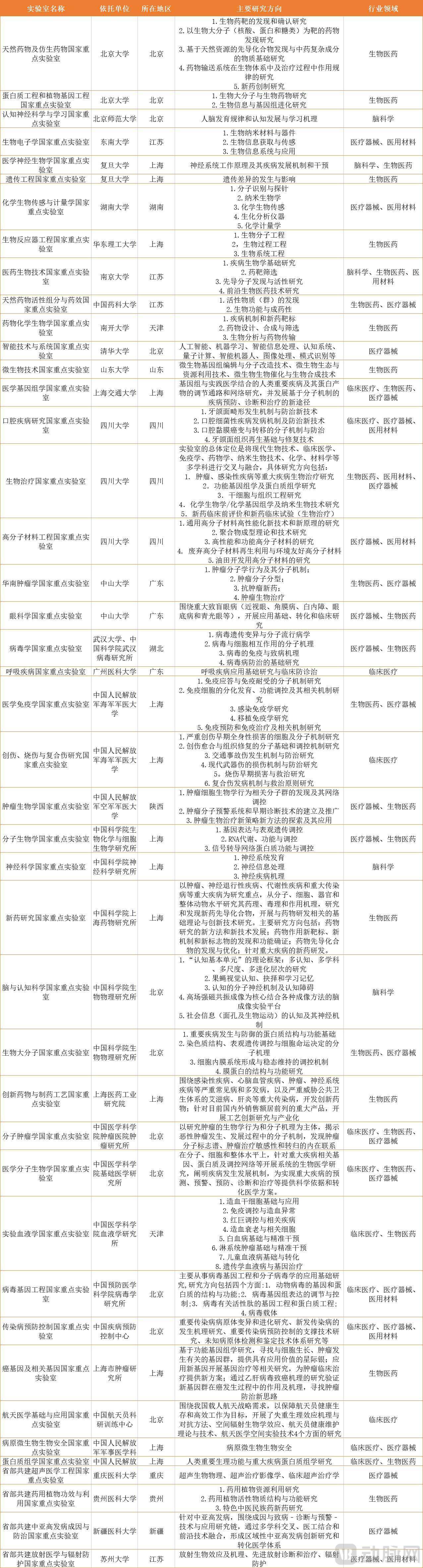
43 National Key Laboratories Driving Medical Innovation in Drug Delivery, Gene Therapy, and Cell Therapy

Edigene
Genome Editing Technology Developer
In China's scientific and technological innovation system, the State Key Laboratories are an important component. These research entities, established in universities and research institutes, focus on national development strategies. They provide significant support for scientific research in related fields through internationally influential, systematic original achievements, and also offer scientific evidence for national macro-decision-making.
National Key Laboratories gather outstanding academic leaders, high-quality research backbones, as well as highly skilled technical personnel and management staff in this field. To a certain extent, these laboratories represent the highest research level in this field in China.
China launched the construction plan for State Key Laboratories in 1984, and has since developed a comprehensive system and management mechanism. By 2020, the number of State Key Laboratories in China had remained at around 700. These laboratories cover disciplines such as mathematics, physics, chemistry, earth sciences, biology, medicine, and other related fields, with research extending to cutting-edge areas like stem cells, synthetic biology, horticultural biology, brain science, and brain-inspired intelligence. From these over 700 laboratories, we have identified 43 State Key Laboratories (including those co-built by provinces and ministries) that are highly relevant to the field of medical innovation. Through analyzing their research focus and characteristics, we aim to provide directions and resource exploration leads for industrial innovation.
For the convenience of statistics, we roughly classify the main research directions of these laboratories into five categories: biomedicine (including natural medicines, biopharmaceuticals, chemical drug R&D and production, biotherapeutic solutions, synthetic biology, and other biotechnology-dominated fields), medical devices (including in vitro diagnostics, medical imaging, biochemical testing, and related medical device technologies, products, and component research), clinical medicine (clinical medical research), brain science, and medical materials. From the research heat distribution of these laboratories, biomedicine-related research has the highest level of interest.
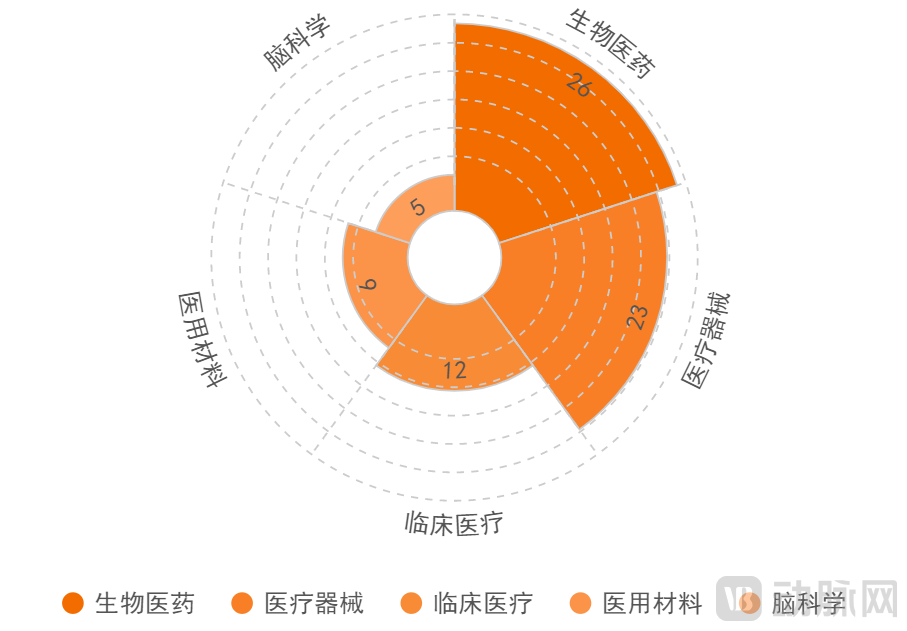
Research Heatmap of National Key Laboratories Related to Medical Field
From the perspective of regional distribution, it is clear that the distribution of national key laboratories aligns with the distribution of educational and research resources. The majority of national key laboratories are located in Beijing and Shanghai, with 11 and 13 respectively. Jiangsu Province ranks third, with a total of four national key laboratories. Despite Jiangsu's medical innovation industry being among the top in China, there remains a significant gap in research resource distribution compared to Beijing and Shanghai.
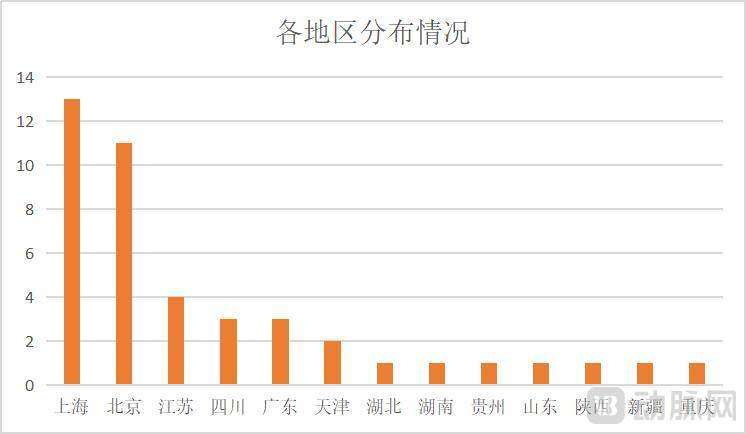 Regional Distribution of National Key Laboratories Related to Medical Field
Based on the distribution and research areas of the laboratories, we believe that the research focus of national key laboratories in each region is closely related to the distribution of local research resources. Laboratories engaged in clinical medical research are mostly located in Beijing and Shanghai, where medical resources and clinical research resources are most concentrated. In the fields of medical devices and brain science research, Beijing and Shanghai are equally matched. However, in the field of biomedicine, Shanghai's advantages and concentration of research resources are very prominent, with all 10 laboratories conducting research related to biomedicine.
Despite not having an advantage in research resources in the previously mentioned areas, Jiangsu and Sichuan have formed unique strengths in innovative fields where Shanghai is relatively weak. Each of these two regions has three key laboratories engaged in medical materials-related research. Among them, the State Key Laboratory of Polymer Materials Engineering, located in Chengdu, stands as an academic highland for polymer materials research in China.
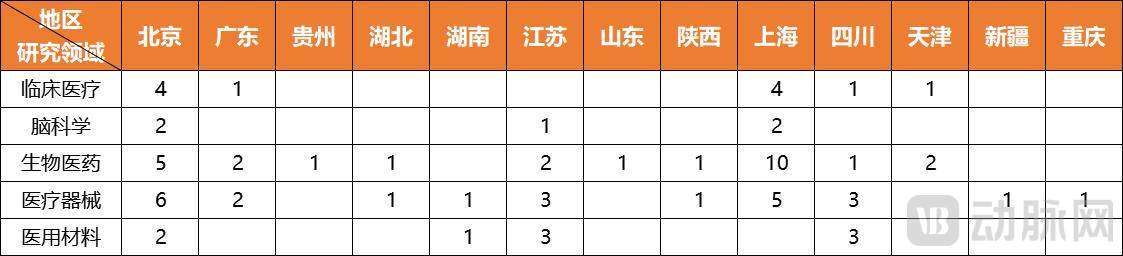
Regional-Research Field Distribution
1With both foundation and application
One of the responsibilities of the State Key Laboratory is to promote original innovation in basic research in this field. However, basic research always goes hand in hand with applied research, and in this process, the extensive applied research results achieved by PIs have driven the overall innovation level of the industry.
Taking the State Key Laboratory of Natural and Biomimetic Drugs as an example. Established in 1985, this laboratory is the earliest state key laboratory for drug research in China's universities. Relying on Peking University’s multidisciplinary strengths and its research environment that encourages free exploration, the lab has achieved multiple systematic and original research results in addressing fundamental scientific issues related to the druggability of complex components in natural products. Based on fundamental research, it has also conducted several industry-recognized applied research projects in biomedicine, including nucleic acid chemistry and anti-tumor/antiviral drug research, novel antiviral small molecules, protein-based biologics, and drug delivery systems.
Similarly, the State Key Laboratory of Protein Engineering and Plant Gene Engineering, which also relies on Peking University, takes gene and protein structure-function research as its starting point. It conducts basic theoretical and applied basic research on the relationship between macromolecular structure and function, plant development and functional genes, plant-microbe interactions, and bioinformatics and gene evolution. The laboratory has also achieved numerous results and transformations in protein diagnostics, protein and small molecule drug design, and genetic disease treatment. Applied research transformation projects led by Principal Investigators (PIs) such as Professor Wei Wensheng and Professor Tu Pengfei have also gained significant attention within the industry.
2Research Direction: Focus on International Trends While Considering National Conditions
We often compare domestic industries with international standards, but in fact, the academic community also has its own international competition. Almost all the PIs in these laboratories have corresponding overseas research or exchange study backgrounds. Just as the entrepreneurs and investors in the industry closely follow global trends, China's scientific researchers also keep a close watch on the dynamics of international research.
Take brain science as an example. Since Professor George Church proposed the "Brain Science Initiative," brain science research has drawn significant global attention. In 2013, the United States officially launched the "Brain Research through Advancing Innovative Neurotechnologies" (BRAIN) initiative. In fact, before this, brain science research in China had already begun to take shape.
In 2005, the Ministry of Science and Technology established the State Key Laboratory of Cognitive Neuroscience and Learning at Beijing Normal University. The laboratory focuses on the developmental rules of the human brain and the mechanisms of cognitive development and learning, primarily conducting fundamental theoretical research on brain development patterns and their relationship with individual comprehensive intelligence, various learning abilities, and psycho-behavioral development. The State Key Laboratory of Medical Neurobiology, which leans more towards research on neurological diseases and sports injuries, was approved for construction even earlier in 1992. It has published a series of high-quality research papers in high-impact SCI journals such as Nature, Cell, New England Journal of Medicine, Nature Genetics, Nature Neuroscience, PNAS, Brain, and Journal of Neuroscience.
If the cutting-edge international research reflects the "global" aspect of national key laboratories, then another part of the research, which is tailored to national conditions, demonstrates the localization of high-level research.
As is known to all, China has a high incidence of liver diseases, with about 10% of the population affected, and nearly 45% of the world's total liver cancer patients. Against this backdrop, the prevention and treatment of liver diseases and liver cancer have become a distinctive focus in China’s medical research and clinical practice. Several key laboratories dedicated to biotechnology and clinical medicine — including the State Key Laboratory of Genetic Engineering, the State Key Laboratory of Oncology in South China, the State Key Laboratory of Virology, and the State Key Laboratory of Molecular Oncology — have identified the diagnosis and treatment of liver diseases and liver cancer as one of their key research areas. Among them, the State Key Laboratory of Genetic Engineering has established a specialized research group on the molecular genetics of liver cancer, led by Academician Jia Fan. This team has conducted extensive studies on liver transplantation and injury repair, the genetic mechanisms of liver cancer development, as well as research on liver cancer therapeutic drugs, personalized treatment strategies, and clinical applications.
3The Convergence of Applied Research and Industrial Innovation Trends

Word Cloud of Application Research Fields
To more accurately reflect the focus of academic research and industrial innovation, we have compiled statistics on the main application research areas of these laboratories and visually presented them through a word cloud.
It can be seen that drug research and development and in vitro diagnostics are the central focus of applied research for laboratory principal investigators (PIs). Around these two central areas, the highest research interest lies in subfields such as gene therapy, brain science, regenerative medicine, drug delivery, synthetic biology, and medical materials. Coincidentally, these subfields have also garnered significant attention from investors in recent years, rapidly emerging as key industry segments. Moreover, compared to fields like chemical drugs and biologics, these segments have relatively smaller gaps with international standards. Not only that, but due to their high level of technological innovation and higher industry entry barriers, these subfields are also the areas where scientist-entrepreneurs are most frequently found.
In the past, we often thought that there was a serious disconnection between academic research and industry, or that the feasibility was not high.
But from the distribution and direction of these studies, it is not difficult to see that academic research and industry research are highly aligned in the general direction. In some of our previous interviews, some researchers had already pushed products to the pilot or even mid-trial stage in the laboratory.
We boldly speculate that in the field of applied research, the distance between academic research and industrial innovation may not be as far as imagined.
4Research Features: Above the Industry
Although they converge in general direction, there are still significant differences between academic research and industrial research.
Specifically, industrial research leans more towards "development," with the aim of completing the process of "from 1 to N," meaning developing certain products and solving specific problems. Academic research, on the other hand, is more focused on "Research," emphasizing a step-by-step progression from foundational to applied aspects, representing "from 0 to 1" innovation. Moreover, applied research in academia tends to be multi-directional, exploring potential applications based on fundamental research, which often leads to multiple product forms. In contrast, industrial research involves three-dimensional shaping at a specific point within the scope of applied research.
Similarly, academic research often tends to be more comprehensive than industrial research. This phenomenon is closely related to the functions, positioning, and sources of funding of the two. Enterprises usually need to raise their R&D funds on their own, so they must consider the output and benefits before investing in R&D. In balancing R&D investment with benefits, companies often choose to focus on weaker areas. Additionally, China's industrial innovation started relatively late, leading to gaps in upstream segments across multiple markets.
Research in scientific institutes can receive funding support from multiple sources such as the Ministry of Education, the Ministry of Science and Technology, and enterprises. Their research often extends from the foundational level to the surface. Against the backdrop of converging directions in academic research and industrial innovation, the outcomes of academic research are expected to gradually fill the gaps in the industry.
5Drive Local Industrial Development
For local areas, national laboratories are their important and core R&D resources, having a profound impact on the development of local industries.
In Changsha, Hunan province, a number of large IVD enterprises such as Sansure Biotech, Disun Biotech, Fico Biotech, and Sinocare are gathered, covering upstream, midstream, and downstream segments in fields like chemiluminescence, blood glucose testing, and molecular diagnostics. The State Key Laboratory of Chemo/Biosensing and Chemometrics located here focuses on molecular recognition, biochemical analysis, and chemometrics. The State Key Laboratory of Polymer Materials Engineering is located in Chengdu, relying on the advantages of West China Hospital to become an industry hub in areas like medical polymer materials for dentistry and orthopedics. As for Shanghai, there’s no need to say more—multiple state key laboratories here are closely related to the biopharmaceutical industry, forming a strong synergy and closed loop with Zhangjiang Hi-Tech Park in terms of industry and research.
6Transformation and Innovation May Become a Trend
Academic research must provide support to the industry, and transformation is an essential task. Under the wave of transformative innovation, the transformation of achievements from national key laboratories also seems to be forming a natural process.
The transformation methods of achievements include authorization, transfer, and self-transformation. National key laboratories are independent from their supporting units in terms of personnel, finance, and materials, so they all have independent achievement transformation departments. Among them, the State Key Laboratory of Biotherapy has also established a dedicated achievement transformation platform to promote transformation work.
Most of the transformation of scientific achievements is still realized through horizontal projects and patent transfers. For instance, in 2016, Guizhou Bailin Enterprise acquired Wei Yuquan Academician's gene therapy anti-tumor project for 50 million yuan. In addition, Academician Wei has also delivered more than 10 monoclonal antibody candidate drugs to the industry.
Since the transition from applied research to product development requires a lengthy R&D process, most companies still maintain long-term connections and collaborations with scientists. Cases of cooperation ranging from patent transfers to joint incubation are not uncommon. For example, GuanHao Biologics established a wholly-owned subsidiary, BeiHao Research Institute, based on Professor Deng Hongkui's CiPS and EPS technologies from Peking University, to continuously advance research on bio-artificial liver cell therapy technology. The two parties also jointly founded a regenerative medicine company, HongGuan Regenerative Medicine.
Compared with the first two types, the proportion of achievements independently transformed by scientific researchers is relatively small, but this part of the achievements is still remarkable. These highly innovative companies have frequently secured financing within the industry. For instance, Aiweide Biotechnology, a company incubated by Professor Gu Zhongze that focuses on organoid development, has completed a nearly 100-million-yuan Pre-A round of financing; Synbio Technologies, co-founded by academicians Zhao Guoping and Yue Jianmin in the field of synthetic biology, received tens of millions of yuan in angel funding at the end of 2021; two biotech companies co-founded by Professor Wei Wensheng from Peking University have each completed hundreds of millions of yuan in financing, while Editas Medicine (Beijing) Biotechnology Co., Ltd., an earlier-established gene therapy company, has raised over 1 billion yuan; VacSir Biopharmaceuticals, a vaccine R&D company co-founded by Academician Wei Yuquan and more than ten scientists from the State Key Laboratory of Biotherapy, raised 300 million yuan in 2021, with a valuation nearing 7 billion yuan...
Moreover, almost every national key laboratory in China has established channels for showcasing achievements and patents. Amidst the incessant demand for industrial collaboration and the wave of industrial innovation, researchers are no longer conservatively archiving their results as mere "papers." Instead, they are adopting an open attitude to embrace, and even actively seek, reliable and trustworthy industrial transformation and cooperation. Perhaps in the near future, these national key laboratories will not only be crucial centers for scientific research but also become significant pillars of industrial innovation.
List of relevant laboratories: