

Zhiyao Tech's Huang Tao: AIDD Faces Challenges but Holds Bright Prospects
In July 2022, the development of DSP-1181, the world's first AI-designed drug to enter clinical trials, was halted as the Phase I clinical study failed to meet expected standards. The drug, a long-acting serotonin 5-HT1A receptor agonist for the treatment of obsessive-compulsive disorder (OCD), was jointly developed by British AI company Exscientia and Japanese pharmaceutical firm Sumitomo Dainippon Pharma. After years of prosperity and high-profile breakthroughs, is the future of the AIDD (AI-Driven Drug Discovery) industry no longer clear?
Recently, VCBeat conducted an exclusive interview with Dr. Huang Tao, the founder of Shenzhen Zhiyao Information Technology Co., Ltd. (hereinafter referred to as "Zhiyao Technology"), to witness the growth of Zhiyao Technology together with Dr. Huang Tao and analyze the development of the AIDD industry at this pivotal moment in time.
Since 2021, ZhiiPharmTech has collaborated with a top biology team from Sun Yat-sen University on a project to jointly develop a First-in-Class oral small-molecule drug for COVID-19. In August this year, the project received special support from Shenzhen Science and Technology Innovation Commission under the program "Anti-Epidemic Special Project 2022036: AI-based Development of Oral Drugs Targeting New Targets or Structures Against SARS-CoV-2."
VCBeat: What is the starting point of this cooperation?
Dr. Huang Tao: The main methods for combating the current COVID-19 pandemic, aside from regular nucleic acid testing, are vaccines and drugs. Among these, oral small-molecule drugs are very important as they allow patients to take medication at home, easing the burden on hospitals.
Currently, there are two representative oral small-molecule drugs on the market: Merck's Molnupiravir (M drug) and Pfizer's Paxlovid (P drug). The former acts on the virus's RdRp enzyme, inhibiting viral gene synthesis; the latter targets the 3CL protease, inhibiting viral protein splicing maturation.
Since the coronavirus is an RNA virus with a high mutation rate, the risk of drug resistance will significantly increase once medications are widely used. Given that the types of COVID-19 targets addressed by currently marketed drugs remain very limited, developing drugs for new targets undoubtedly holds great potential from a clinical perspective in the future: on one hand, as a reserve to address potential drug resistance crises; on the other hand, to be used in combination with existing marketed drugs to enhance efficacy.
VCBeat: When did the two parties start to have the intention to cooperate? What are their respective advantages and division of labor?
Dr. Huang Tao: At the end of 2021, after several meetings, the two teams decided to leverage their respective strengths and collaborate on a research and development project.
The RNA Virus Research Team of the Infection and Immunity Platform at Sun Yat-sen University's School of Medicine has been studying a novel target within coronaviruses since the SARS outbreak. The function of this target is related to the virus's immune escape mechanism. After more than a decade of research accumulation, their understanding of this target is very profound, with a solid biological foundation. During the project development process, the Sun Yat-sen University team is responsible for overall project coordination and planning, chemical synthesis, and biological evaluation.
The advantage of Intellicure lies in its mature AIDD small molecule drug discovery platform. During the R&D process of this project, we first screened nearly 2 billion virtual compound libraries through ultra-large-scale virtual screening technology and identified compounds with new core structures targeting novel targets. Then, we used AI molecular generation technology to structurally modify the hit compounds, enhancing their activity and drug-likeness.
VCBeat: What stage has the project currently reached?
Dr. Huang Tao: The lead compound obtained at this stage shows antiviral inhibitory activity in cell models comparable to M drug, and also demonstrates very promising in vivo efficacy. During the research process, led by Sun Yat-sen University with ZhiiPharm Technology as the supporting unit, we were fortunate to receive special support from Shenzhen Science and Technology Innovation Commission's "Anti-Epidemic Special Project 2022036: Development of Oral Antiviral Drugs with New Targets or Structures Based on Artificial Intelligence." This has provided sufficient funding for the project, allowing us to accelerate its progress and complete the preclinical research work as soon as possible.
VCBeat: You have a background in science and engineering, and later participated in the founding of CloudScientific and PharmaSmart. What made you shift your focus to computational drug design and pursue serial entrepreneurship?
Dr. Huang Tao: The shift in professional direction was a matter of serendipity. My undergraduate major at Tsinghua University was Vehicle Engineering, which had no connection to pharmaceuticals. However, during my master's studies at the Institute of Mechanics, Chinese Academy of Sciences, my advisor assigned a research topic involving the use of molecular dynamics (MD) to study the self-assembly process of silkworm silk protein. From that point on, I developed a strong interest in using computational methods to study biomolecules. After obtaining my master’s degree in 2007, I started working in Shanghai, where I was exposed to CADD and gradually gained deeper insights into this field.
When I participated in the creation of CloudScientific in 2009, the department I was in charge of was CADD, promoting many excellent drug design software tools, including MOE. To make up for the lack of pharmaceutical knowledge, I went to Hong Kong Baptist University in 2014 to pursue a Ph.D. in Pharmacy.
Graduated with a Ph.D. in 2017, just as AIDD technology was emerging, and have been involved in the AIDD field since then. Until today, I have been engaged in research and application in the field of computational drug design for nearly 18 years, and have just begun to gain some insights.
Compared with the first entrepreneurship, the responsibility of starting a business again is different. During my first venture, I was only responsible for one department, but now I have to oversee the entire company’s product development, operations, and management. There are more problems to solve, and the scope of knowledge required is much broader. Therefore, I’ve recently been attending the Ignite Program training course jointly organized by the United Front Work Department of Pingshan District Committee and Innovation Plaza to supplement my theoretical knowledge in business management and the humanities.
VCBeat: Can you share insights on the implementation and commercialization of AI in the pharmaceutical field based on the experience of Ningbo Yangan Pharmaceutical Technology Co., Ltd.?
Dr. Huang Tao: Listening to customer needs is the starting point; we should avoid the situation of "having a hammer and looking for a nail."
The value that Zhiyao Technology provides to its customers lies firstly in solving problems that they cannot address with their own manpower, and secondly in solving problems more quickly. In this process, open data, private data, algorithms, and experiential knowledge are integrated, and each aspect is crucial.
On the path to commercialization, we have chosen software + service, which allows for relatively rapid iterations of design-validation-feedback-improvement. For enterprises, the primary goal is to ensure survival and longevity, so they can witness the industry's growth and seize opportunities.
VCBeat: Could you introduce the positioning of Zhikang Technology and the current progress of its products?
Dr. Huang Tao: IntelliPharma Tech is positioned as a technology platform company, providing computational drug software and services to pharmaceutical companies and research institutions. Our main focus at this stage is on two aspects: the AI small molecule drug technology platform (DeepMOL) and the AI protein engineering technology platform (DeepPRO).
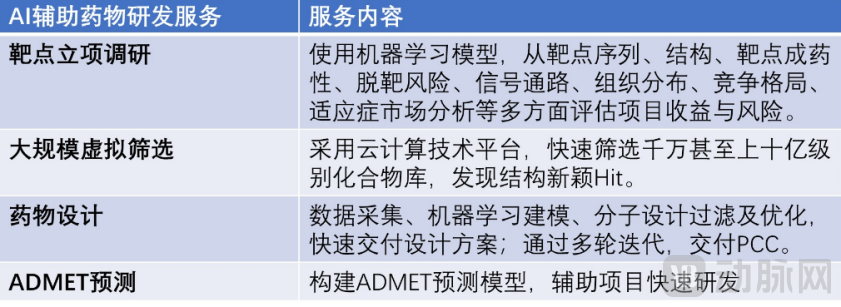
The AI small molecule drug technology platform is relatively mature, having served more than 30 clients, with projects ranging from First-in-Class to Fast-follow. The AI small molecule drug technology platform consists of technical modules such as target druggability prediction, ultra-large-scale virtual screening, molecular dynamics simulation, free energy calculation, molecule generation, and ADMET prediction, focusing on solving challenges at every stage of the process from target screening to PCC (Preclinical Candidate Compound) development.
The AI protein engineering technology platform is a relatively new product, mainly featuring functional modules such as protein modeling, kinetic simulation, and Hotspot site analysis, helping to solve protein design problems in the fields of antibodies, enzymes, and vaccines. This year, in a project, we utilized this platform to help clients achieve excellent results in protein engineering modifications.
In response to customer needs, Zhiyao Technology will develop more new technology platforms in the future to help customers solve pain points. For ourselves, developing new technology platforms can not only deepen our understanding of novel therapeutic drugs but also expand potential markets.
VCBeat: Could you introduce the progress of Zhiyao Technology's cooperation with other companies?
Dr. Huang Tao: In collaborations with downstream pharmaceutical companies and Biotech firms, most of the pipelines that Zhiyao is currently assisting with are in the early stages of research and development. The more advanced pipelines are currently in the preclinical stage, with expectations to enter clinical trials next year or the year after.
The AI-assisted drug discovery services provided by Intellicure cover every aspect from target discovery to ADMET prediction. The company has already partnered with dozens of pharmaceutical companies and research institutions, with multiple projects successfully identifying lead compounds with good activity.
In addition to collaborating with external partners through its self-developed technology platforms, Zhi PharmaTech has also partnered with CloudScientific to collaborate with Nanome Inc., a U.S.-based company, acting as the agent for Nanome (a collaborative virtual reality tool for molecular design) in Greater China (Mainland China, Hong Kong, and Macao).
AI itself represents an advancement in algorithms within the computational drug discovery field, while another crucial application in this domain is 3D visualization. Nanome's products dominate the market in VR-based 3D visualization for drug discovery and are currently the leaders in this industry. Among the top 20 pharmaceutical companies in the U.S., more than half have purchased their products to visualize 3D structures and aid in drug design.
VCBeat: What is the company's future development strategy layout?
Dr. Huang Tao: In the short term, we will focus more on expanding the application areas of our technology platform, developing from the existing fields of small molecules and protein engineering into other emerging therapeutic areas. Regarding our long-term strategy, we will continue to adhere to the software + service business model, helping clients develop good drugs and address unmet clinical needs.
VCBeat: What is the reason that has supported your long-term dedication to computational drug design?
Dr. Huang Tao: Passion can withstand the test of time. My interest in computational drug design began in 2004, and up to this year, it has been 18 years, during which I have never changed my professional direction. Being able to do one thing well and achieve some results is personally satisfying. In the future, I will continue to persist, through the platform of Zhikang Technology, to develop more software products and services that meet customer needs, helping customers research and develop drugs faster and better.
VCBeat: What are your insights on the current development of the AIDD industry domestically and internationally? Can you predict the future prospects?
Dr. Huang Tao: AIDD has been a relatively popular track in the investment field over the past few years, with many related discussions. Even this year, we continue to see new companies emerging, indicating that there are still plenty of opportunities in this field.
Based on my many years of professional experience and research, I have observed two trends in the development of the AIDD industry: One trend is that the application areas of AI in drug discovery are continuously expanding. From the initial use of AI in small molecule drug discovery to the current integration of AI with antibody drugs, nucleic acid drugs, and cell therapy drugs, this has brought about numerous new opportunities.
Another trend is the continuous evolution of business models. In 2019, when AI-driven drug discovery first emerged, the industry was relatively vague about the business model positioning of various companies. The business models at the time included: Biotech companies developing drugs independently, CROs providing services to pharmaceutical companies, software development, and more. Debates over the advantages and disadvantages of each model were also quite intense.
Nowadays, companies have found their own commercialization models. Some focus on being Biotech to develop drug pipelines, some integrate experimental platforms to become CROs, and others develop software for the market. These are all models that each company has discovered through continuous exploration and trials that suit their own needs. However, we can also see that business models are still changing rapidly, and in the future, new business models may emerge, or there could be a hybrid development of existing ones.
Despite the overall industry being a bit "cold" this year, I remain confident in the future of the AIDD field. The role of computation in drug discovery will become increasingly important, and this trend is irreversible.
If the past 40 years were the CADD era, then now is the AIDD era, and the future may be the XXDD new era. But regardless of what computational technology is used, the integration of computational technology with pharmaceuticals brings improvements in efficiency and accuracy for drug development. The constant demand remains to research and develop safe and effective drugs better and faster.
About Zhiyao Technology
PharmAI Technology was founded in August 2018 as a technology platform-based AIDD company. It received an angel round of financing worth tens of millions from Pine Ventures at its inception. PharmAI Technology provides computational drug design software and services to biopharmaceutical companies and research institutions in the Greater China region, helping them develop innovative drugs with independent intellectual property rights. At this stage, PharmAI Technology's products and services cover small molecule drugs, antibodies, enzymes, protein/polypeptide vaccines, and nucleic acid drugs.
About Pingshan Innovation Square
Chuangxin Plaza in Pingshan District is located in the core area of the Pingshan Central Zone, one of Shenzhen's 17 key development areas, and is an important part of Shenzhen’s eastern CBD. Covering an area of 25,500 square meters with a total construction area of 188,000 square meters, Chuangxin Plaza has attracted more than 260 enterprises and platform organizations such as China Construction Technology, BYD Toyota, Junzheng Times, Tianjian Pingshan, Dingxuan Commercial Cryptography, BIT Shenzhen Automotive Research Institute, Inkstone Microelectronics Research Institute, and Angel Island Incubator. The plaza will focus on seven strategic emerging industries including biomedicine, new energy, and next-generation information technology, to create an innovative mega-hub for headquarter enterprises in eastern Shenzhen.