

BoAiTe Files IPO Prospectus: Pioneering Smart Vision Training with China's Only Registered Reversal Lens for Youth Myopia Control

eyecure
Ophthalmic Medical Device Provider
Myopia prevention and control for children and adolescents in China remains a formidable task.
According to the "2018 National Myopia Survey Results for Children and Adolescents" released by the National Health Commission and data from the Ministry of Education, the overall myopia rate among Chinese adolescents is 53.6%. Specifically, the rate is 14.5% for 6-year-old children, 36% for primary school students, 72% for junior high school students, and 81% for senior high school students. China ranks first in the world in terms of both myopia rate and the number of people with myopia.
In July 2021, the National Health Commission of China released new data showing that in 2020, the overall myopia rate among children and adolescents in China was 52.7%. Specifically, the rates were 14.3% for 6-year-old children, 35.6% for primary school students, 71.1% for junior high school students, and 80.5% for senior high school students. Compared to 2018, both the overall myopia rate and the myopia rates across all educational stages have decreased.
However, the overall myopia rate in 2020 still increased by 2.5 percentage points compared to 2019 (50.2%). This is related to the reduction in outdoor activities and eye relaxation time brought about by the pandemic in 2020. With the pandemic still occurring from time to time today, how to better help children and adolescents achieve myopia prevention and control, and further reduce the overall myopia rate among teenagers, remains a major challenge for the industry.
Auxiliary orthokeratology lenses and other products, vision training flip mirrors effectively relieve visual fatigue
Generally speaking, the prevention and control of myopia require comprehensive consideration. Children and adolescents' eye-use habits, sitting posture, viewing distance, indoor lighting environment, and outdoor activity time can all have a certain impact on vision.
How to Slow Down the Progression of Myopia in Already Nearsighted Individuals?
In October 2019, the "Guidelines for Appropriate Technologies for Myopia Prevention and Control in Children and Adolescents" issued by the National Health Commission mentioned, "For myopic children and adolescents, when using low-concentration atropine or wearing orthokeratology lenses (OK lenses) to slow down the progression of myopia, it is recommended to go to a regular medical institution and follow the doctor's guidance and prescriptions."
That is to say, in addition to cultivating healthy eye-use habits, creating a friendly eye-use environment, and increasing outdoor activity time, low-concentration atropine or orthokeratology lenses (OK lenses) have become the main methods for slowing myopia progression under "medical advice."
It is worth mentioning that, due to the persistently high myopia rate among teenagers and the urgent demand for vision improvement, the orthokeratology lens market size continues to expand. According to data from Dongwu Securities Research Institute, the sales volume of orthokeratology lenses in China reached 643,000 pairs in 2015, with a compound annual growth rate of approximately 44.11% from 2011 to 2015. This also demonstrates the enormous development potential of myopia prevention and control products.
"In terms of myopia prevention and control, the current mainstream methods include using low-concentration atropine and orthokeratology lenses (as well as defocus lenses). However, these methods are far from sufficient. From the perspective of myopia causes, it mainly involves excessive eye use and long-term exposure to unfriendly visual environments. How to alleviate eye fatigue caused by excessive use and how to improve the eye-use environment are also breakthrough points for myopia prevention and control," said a founding team member of Nanning Boait Medical Device Co., Ltd. (hereinafter referred to as "eyecure"), a company dedicated to providing solutions for teenagers' eye health.
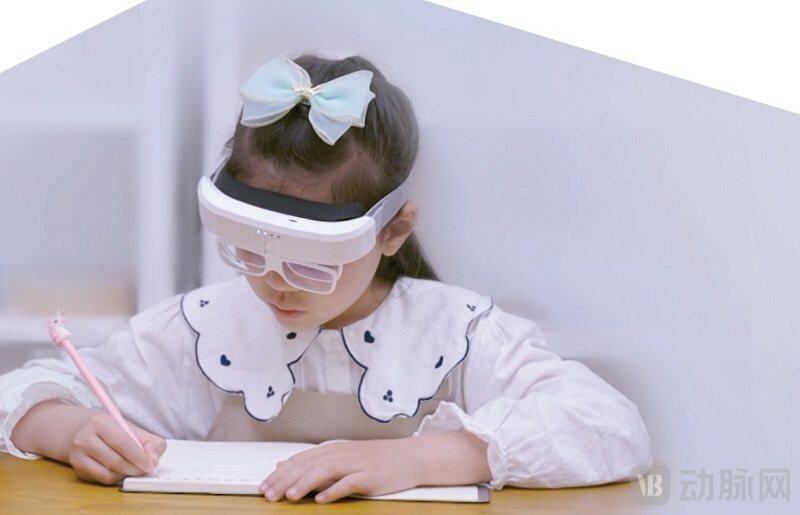
To alleviate visual fatigue caused by excessive eye use, Nanning Boait "eyecure" has developed a "smart" flip mirror device — a Class II medical device approved in July 2021 for vision training flip mirrors. This product helps relax and exercise the eye muscles, primarily by regulating the ciliary muscle, and is mainly used to relieve visual fatigue and treat pseudomyopia.
"We define this product as a 'supplement' to existing myopia prevention and control methods, aiming to create a portable device that integrates software and hardware. When users, in addition to using orthokeratology lenses (OK lenses) and low-concentration atropine, are willing to use our device and ultimately achieve the effect of slowing myopia progression, we consider it a success," the executive added.
From Manual Flipping Lenses to "Smart" Flipping Glasses, "Smart" is the Core of the Product
Behind the creation of the "smart" reversing mirror, there is actually another story.
The senior executive of Nanning Eyecure (eyecure) previously founded another company, which mainly focused on building provincial and municipal myopia prevention and control monitoring and intervention big data platforms for government departments, while also providing myopia screening services for children and adolescents. In the past three years, the company has undertaken the construction of municipal myopia prevention and control platforms in Shenzhen, Shantou, Guangzhou, Jinan, Datong, and Taizhou. Moreover, in 2021, it assisted Hubei Province in completing the construction of a provincial-level myopia prevention platform, serving a total of 15 million people in establishing eye health records. The larger the number of screenings, the more deeply the team members realized that merely completing screening tasks was far from sufficient.
In 2019, it completed the first myopia survey of 1.57 million children and adolescents; in 2020, due to the pandemic, its second myopia screening was postponed until July and August of the same year. The results of the screening were consistent with the conclusions drawn by the National Health Commission—due to factors such as reduced outdoor activities during home quarantine, the proportion of teenagers with myopia had increased; but there were also differences—they found that the proportion of school-age children with myopia in Shenzhen was even higher than the data provided by the National Health Commission.
It is also based on the above situation that, in October 2020, Nanning Boait Medical Device Co., Ltd. (eyecure) was established — unlike the previous company providing myopia screening services, this company has set its sights on "children and adolescent eye health management," taking a step further from screening to myopia prevention, control, and intervention.
And the first product it launched was the "intelligent" flip mirror. This vision training flip mirror product is mainly composed of software, hardware, and a management backend. Its functions are not only for relieving eye fatigue but also for treating pseudomyopia and more. This medical device was jointly developed with many well-known experts in the ophthalmology field, including co-inventors such as Deputy Dean Zhuo Yehong from Zhongshan Ophthalmic Center in Guangdong and Executive Deputy Dean Zhang Mingzhi from Shantou International Eye Center, jointly established by Shantou University and The Chinese University of Hong Kong.
In fact, flipper lenses (also known as butterfly lenses or reversable flippers) have long been available on the market. They improve accommodative flexibility, enhance fusional vergence, and maintain stereoscopic vision at different vergence levels through training that involves reducing and increasing accommodative stimuli using positive and negative spherical lenses.
However, in the past, adolescents faced many pain points while using flip lenses: for instance, the training process was extremely monotonous and boring, causing many children to give up training after only a short period of use; the training mode could not be adjusted according to individual differences, and it was impossible to know the actual training effect, among other issues…
Eyecure’s "Intelligent" Flipping Lens Product: The hardware component mainly consists of a glasses flipping device. This device continuously flips through a stepper motor controlled by AI algorithms, simulating the effect of looking near and far to physically intervene with eye training, solving the discomfort caused by manual flipping lenses. The software, which includes detection and training features, addresses issues such as individual differences in training brought about during use. Its management backend builds patient profiles and clearly presents training data, offering users follow-up reminders and follow-up services.
The introduction of artificial intelligence ensures the stability of the equipment (self-check upon startup, training will only begin if the system is functioning normally), behavioral reliability (each training program is not a repetition of the previous one), treatment effectiveness (providing targeted training and analyzing training data to assess its effectiveness), and more.
"The most unique advantage of the 'Intelligent' Flipping Trainer lies in its 'intelligence.' Before users begin training, the system utilizes AI algorithms to monitor their eye health and customizes a training plan specifically for them. During training, users don’t need to perform any operations as the system automatically adjusts the training intensity. It’s like having professional medical staff supervising and guiding the training," said eyecure. To further improve user compliance, they are also incorporating interactive 'game'-style training, which enhances enjoyment and boosts user engagement.
Focus on Teen Eye Health, Multi-Line Layout of "Eye-Friendly" Products
Eyecure Did Not Only Bring a "Smart" Flipping Mirror Product for C-end Users to Relieve Eye Fatigue and Treat Pseudo-myopia. Currently, Eyecure has two products undergoing NMPA certification. One of them is an eye accommodation training desk lamp, which is expected to obtain a medical device registration certificate by the end of September. The other medical device is a "myopia prediction" software product jointly developed with Professor Wei Wenbin's team from Beijing Tongren Hospital, Capital Medical University. This product is expected to fill the gap in the medical device industry regarding independent software for myopia prediction. It is reported that this product has already obtained a test report in July and is expected to receive its registration certificate by the end of the year.
In fact, poor eye-use behavior and a poor visual environment are the two major "culprits" behind the development and progression of myopia. In terms of myopia prevention and precise intervention, relying solely on a single product or medication is far from sufficient. Eyecure has also developed multiple products targeting these pain points, creating a "toolkit" for myopia control across different scenarios. Examples include phototherapy devices and defogging lenses.
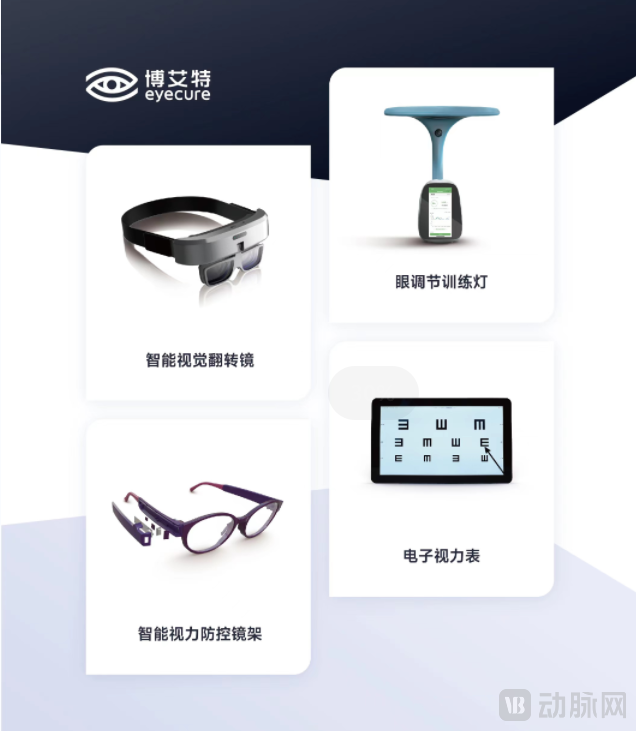
eyecure "Plan" Products
Currently, eyecure has built a team of nearly 20 people, integrating R&D, registration, production, and sales. Among the senior management team of eyecure, there are channel agents with extensive experience in the optometry field, possessing certain medical device R&D resources and related channel resources. It is reported that eyecure plans to further build an eye health management brand by relying on its high-quality software and hardware capabilities, and after establishing a presence in Shandong, Shanxi, Guangdong, and Hubei, it aims to further expand into the broader Chinese market.
Currently, Nanning Boait (eyecure) is conducting its Series A round of financing, planning to raise 15 to 20 million yuan. The funds will mainly be used for team building, hardware product iteration, and expanding production scale.
"In the field of adolescent eye health, the barrier for myopia screening services is extremely low. However, myopia prevention and control require a combination of software and hardware, using hardware as a starting point to build competitive barriers. Eyecure will establish its own brand, develop self-researched medical device products, and gradually upgrade and iterate them to construct and expand the entire ecosystem of eye health management," said an executive of Eyecure.