

Arsenal Bio Secures $220M Oversubscribed Series B Financing to Advance Programmable Cell Therapies for Solid Tumors

Sixth Street
Global Investment Business Platform
Westlake Village BioPartners
Venture Capital Firm

Emerson Collective
Venture Capital Firms

ArsenalBio
Cell Therapy Developer

Byers Capital
Venture Capital Firms
UCSF
UCSF Foundation Investment Company

Waycross Ventures
Boutique Investment Firm

Hitachi Ventures
Startup Venture Capitalists

Euclidean Capital
Hedge Fund

SoftBank Vision Fund
Investment Fund

Green Sands Equity
Boutique Private Equity Investment and Corporate Finance Advisory Firm
Recently, VCBeat reported that ArsenalBio has raised $220 million in its Series B financing – the second-largest single deal in the cell therapy sector in 2022. Investors include SoftBank Vision Fund 2, Bristol-Myers Squibb, Byers Capital, Emerson Collective Investments, Green Sands Equity (GSE), Hitachi Ventures, and Sixth Street Growth (TPG Sixth Street Partners). Existing investors such as the Parker Institute for Cancer Immunotherapy (PICI), Westlake BioPartners, UCSF Foundation Investment Company, Euclidean Capital, Waycross Ventures, and Kleiner Perkins also joined this oversubscribed round. With this latest funding, ArsenalBio’s total capital raised has now surpassed $300 million.
Founded in 2019, ArsenalBio received $80 million in Series A funding in October of the same year from investors including Beth Seidenberg's Westlake BioPartners, the Parker Institute for Cancer Immunotherapy (PICI), and Kleiner Perkins.
In just three years, ArsenalBio has grown from a fledgling startup to a biotechnology company securing an oversubscribed Series B funding round. So, what exactly sets it apart, drawing the attention of major investment firms and helping it quickly raise hundreds of millions in funding?
Founder: From Clinical and Academic to Entrepreneurship
ArsenalBio, a programmable cell therapy company founded in San Francisco, United States, is committed to integrating technologies such as CRISPR-based genomic engineering, synthetic biology, and machine learning to achieve scalable and high-throughput target identification, driving the discovery of new paradigms in immune cell therapy. Currently, ArsenalBio’s first ovarian cancer-targeted candidate drug, AB-1015, is striving for FDA approval later this year, and once approved, it will be immediately administered to patients.
Ken Drazan, co-founder, chairman, and CEO of ArsenalBio, has 13 years of experience in the healthcare industry and is a board-certified liver transplant surgeon. Ken earned a bachelor’s degree in economics from Yale University and later obtained his medical doctorate from the State University of New York. After completing his medical training at UCLA Medical Center, he began taking entrepreneurial leadership roles in the biopharmaceutical industry before transitioning into venture capital.
In 2006, Ken co-founded Bertram Capital Management with other partners, a middle-market private equity firm focused on business services, consumer products, light industry, and healthcare services. From 2014 to 2016, he served as the head of Johnson & Johnson's California Innovation Center. Currently, KenIs a member of the Board of Directors of the California Life Sciences Association (CLSA), the Grace Science Foundation, and the Silicon Valley Leadership Group (SVLG).
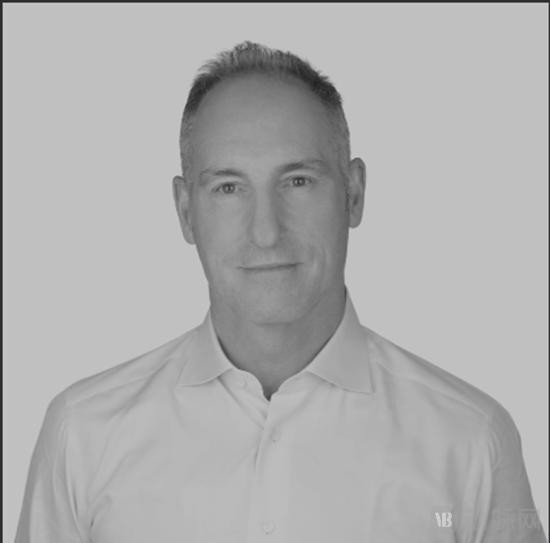 Co-founder, Chairman, and CEO Ken Drazan
Another co-founder and chief scientist of ArsenalBioW. Nicholas HainingHe is a medical scientist, immunologist, and drug developer. He obtained his medical degree from the University of Oxford in the UK and completed his pediatric medical training at Boston Children's Hospital, followed by medical training in pediatric hematology and oncology at the Dana-Farber Cancer Institute.
 Co-founder, Chief ScientistW. Nicholas Haining
As an associate professor of pediatrics at Harvard Medical School and an associate member of the Broad Institute of Harvard and MIT, his lab has defined some key transcriptional and epigenetic regulators of T cell exhaustion and used in vivo genetic screens to identify immunological vulnerabilities in cancer cells within mouse models. His clinical expertise lies in hematopoietic stem cell transplantation, with nearly two decades of experience in bone marrow transplantation services at Boston Children's Hospital.
Recently, he served as the Vice President of Discovery Oncology and Immunology at Merck Research Laboratories, leading a multi-site, multidisciplinary team to develop innovative approaches for treating cancer and immune diseases. Meanwhile, Dr. Haining was elected to the American Society for Clinical Investigation and received the Presidential Early Career Award for Scientists and Engineers.
T Cells Modified with Integrated Circuits Show Promise in Addressing Solid Tumor Challenges
After about a decade of development, CAR-T cell therapy has revolutionized the treatment of malignant hematological tumors such as acute lymphoblastic leukemia. Since the U.S. FDA approved the world's first CAR-T therapy for marketing in 2017, five CD19 CAR-T therapies and one BCMA CAR-T therapy have been approved globally. The cumulative indications include acute lymphoblastic leukemia, diffuse large B-cell lymphoma, primary mediastinal B-cell lymphoma, mantle cell lymphoma, follicular lymphoma, and multiple myeloma.
However, compared with the remarkable achievements in the treatment of hematological tumors, CAR-T cell therapy still faces multiple challenges in combating solid tumors, with slow progress.
The main challenge lies in the issue of target selection. Overexpressed tumor-associated antigens (such as EGFR and HER2) are attractive targets for therapeutic T cells, but CAR-T cells may cross-react with normal tissues expressing low levels of the target antigen, leading to off-target side effects of varying toxicity. From a mechanistic perspective, CAR-T therapy requires the identification of a specific target on cancer cells to kill them; however, not all cancer cells have such clear targets, or some cancer cells may find ways to "hide" these targets.
To address this major challenge, ArsenalBio is building the largest library of therapeutic-enhancing integrated circuit DNA and a full stack of synthetic biology compositions. These integrated circuits incorporate logic gating to improve tumor targeting and synthetic attributes, enabling multiple drug functions and enhancing patient outcomes.
This treatment-enhanced integrated circuit DNA library includes non-viral manufacturing based on CellFoundry™, integrated circuits composed of PrimeR™ logic gates, the CARchitecture™ chimeric antigen receptor library, multi-target gene expression control, and its CAR enhancement capabilities., used to integrate synthetically modified T cells.
Integrated circuits containing multi-functional DNA can program T cells, enabling them to recognize two antigens and only kill tumor cells when both antigens are present. This approach can overcome the challenges of targeting solid tumors and reduce off-target effects. The integrated circuits can also regulate multiple aspects of T-cell biology to enhance cell proliferation and performance, as well as improve resistance to the immunosuppressive tumor microenvironment.
But the first difficulty this method faces is how to deliver integrated circuits containing DNA into cells. The integrated circuits are too large, making it difficult to use viruses for delivery. Regarding this pointAaron Cooper, Senior Director of Synthetic Biology at ArsenalBio, said, "We have to use a CRISPR-based delivery method that can accommodate more DNA and is faster to implement. This allows us to reduce the number of iterations and test, learn, and build systems at a faster pace."
The second challenge is ensuring safety. This technology must guarantee that the DNA is inserted into a location in the genome that is far away from any gene. Cooper responded, "Compared to viruses or transposons that integrate randomly, the need to select a site means we can better predict the dynamics that will occur after the insertion. We will test this in a large number of T-cell samples, and we are confident about the upcoming patient trials."
In January 2021, ArsenalBio announced a strategic collaboration with BMS (Bristol Myers Squibb). BMS paid $70 million upfront for "preclinical candidates targeting multiple objectives." ArsenalBio will be responsible for discovering and developing preclinical candidates targeting multiple objectives, while BMS will have the option to obtain a global exclusive license to develop and commercialize these preclinical candidates. Additionally, BMS agreed to make an undisclosed additional investment in ArsenalBio. In January this year, BMS announced the expansion of its collaboration with ArsenalBio to advance T-cell therapies for solid tumors.
AB-X Plan for Ovarian Cancer Expected to Pass FDA Review
Currently, ArsenalBio has made progress in cell therapies for solid tumors. In nearly three years since its establishment, ArsenalBio has been focusing on using a "stack" of biological compositions to create designed T cells that can be administered at lower doses, better target solid tumors, and prevent severe side effects commonly seen in other immunotherapies.
Ovarian cancer is a type of malignant ovarian tumor. Although its incidence rate is lower than that of cervical cancer and endometrial cancer, ranking third among gynecological malignant tumors, its mortality rate exceeds the combined total of cervical cancer and endometrial cancer, placing it at the top among gynecological cancers as the most serious threat to women's health. In the United States, ovarian cancer ranks fifth in terms of female cancer deaths.
AB-X Integrated Circuit T Cells are ArsenalBio's primary discovery program for ovarian cancer. AB-X employs a dual-antigen sensing logic gate approach, targeting ALPG/P and MSLN, which are co-expressed in over 70% of primary ovarian cancers, to enhance tumor specificity and improve safety. This dual logic gate ensures that T cell killing is only activated at the tumor site, ensuring its safety.
In addition, AB-X is designed to knock down FAS and PTPN2, two key regulators critical for T-cell function and persistence. Compared with non-enhanced MSLN CAR T cells, the knockdown of FAS and PTPN2 renders CAR T cells resistant to FAS-mediated apoptosis, showing enhanced in vivo expansion and demonstrating greater efficacy. Therefore, AB-X integrated circuit T cells are expected to be more specific and potent than conventional CAR T cell approaches. Currently, ArsenalBio is conducting clinical trials on AB-1015 and plans to submit an Investigational New Drug (IND) application for AB-1015 to the U.S. Food and Drug Administration (FDA) within this year, as well as administer the vaccine to the first patient.
ArsenalBio Inc. said that it is still in the early development stage, providing candidate drugs for prostate cancer, kidney cancer, and other cancers.
As Ken Drazan, the founder and CEO, stated: "ArsenalBio's programmable cell therapy technology has shown great promise in preclinical development. We believe our approach can help address unmet medical needs for cancer patients. We look forward to our products entering clinical trials, which will allow us to gain a more comprehensive understanding of the potential of this technology in treating ovarian cancer and other cancers."